Electronic Mosquito Repeller
CN → US| HS Code | Tariff Rate | Origin | Destination | Doc |
|---|---|---|---|---|
| 9503000073 | 10.0% | CN | US | Official Doc |
| 8543709860 | 37.6% | CN | US | Official Doc |
| 9503000090 | 10.0% | CN | US | Official Doc |
| 8543706000 | 35.0% | CN | US | Official Doc |
| 8543709860 | 37.6% | CN | US | Official Doc |
Product Images
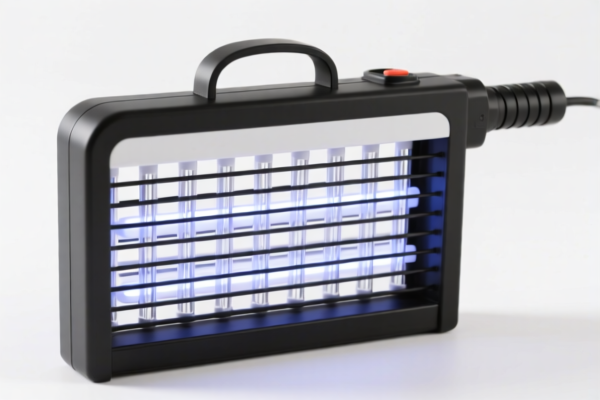
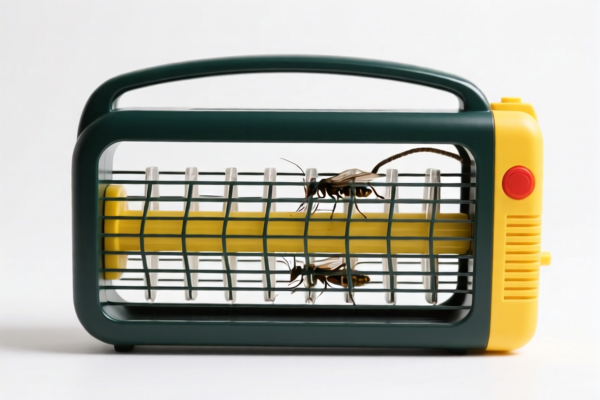
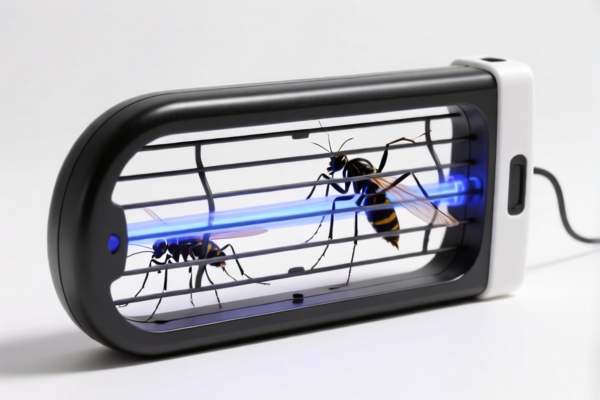
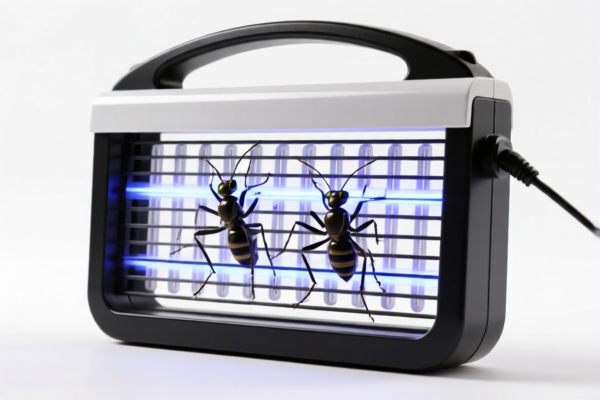
AI Analysis
🦟 Electronic Mosquito Repeller: HS Code Classification & US Customs Clearance Guide (2026)
🌐 HS Code Reference & Customs Clearance Guide | 2026 Latest Tariff Analysis | Professional Strategy
📌 Part 1: Product Definition & Classification Logic
The "Electronic Mosquito Repeller" is a specialized device designed to deter or kill mosquitoes using electronic means (such as UV light, heat, or ultrasonic waves). In international trade, the classification hinges on two critical factors: Function (Is it a toy/entertainment device or an independent electronic appliance?) and Material (Plastic/Electronic components).
Based on the provided data, there are four potential HS Code classifications, ranging from low-cost toy categories to high-cost electronic appliance categories. The choice depends heavily on how the product is marketed and its internal circuitry complexity.
⚠️ Key Distinction:
- If marketed as a "toy" or "game-like" device with simple functionality → Likely falls under Chapter 95 (Toys).
- If marketed as a "home appliance" or "pest control device" with complex circuitry → Likely falls under Chapter 85 (Electrical Machinery & Equipment).
📦 Part 2: HS Code Classification Details (2026 Latest Tariff对照)
| HS Code | Product Description | Applicable Scenario | Total Tax Rate |
|---|---|---|---|
9503.00.00.73 |
Other toys/models (Non-ball/non-balloon); Electronic/Plastic material | Simple electronic repellers, often marketed for children or as novelty items | 10.0% |
9503.00.00.90 |
Other toys/equipment (Catch-all); Plastic/Electronic components | General electronic repellers where "toy" classification is accepted due to lack of specific appliance code | 10.0% |
8543.70.60.00 |
Other electric appliances designed for connection to instruments/networks; Independent electronic devices | More complex devices, possibly IoT-enabled or connected to home networks; "Electronic Rat/Mosquito Repeller" logic | 35.0% |
8543.70.98.60 |
Other machines/devices with independent functions; Core components: Electronic circuits & Transducers | High-end devices with specialized transducers, complex circuitry, and independent functionality not fitting other specific appliance codes | 37.6% |
🔍 Critical Note:
- Chapter 95 (Toys): Lower tax burden. Suitable if the device is simple, plastic-heavy, and lacks advanced electrical features.
- Chapter 85 (Electronics): Higher tax burden. Required if the device is a dedicated pest-control appliance with significant electronic circuitry, transducers, or network connectivity.
💰 Part 3: 2026 Latest Tariff Rate Breakdown (Including Surcharges)
✅ Applicable Country: United States (US)
✅ Origin: China (CN)
✅ Effective Date: From November 10, 2025 (and subsequent imports)
🎯 1. 9503.00.00.73 & 9503.00.00.90 —— Toy/Entertainment Category
| Item | Content |
|---|---|
| Base Tariff | 0% |
| Section 301 Surcharge | 0% |
| IEEPA Surcharge (Section 122) | +10% |
| Total Tax Rate | 10.0% |
| Calculation | CIF Value × 10% |
| De Minimis Eligibility | ❌ No (Deny De Minimis) |
| Legal Basis Path | IEEPA:9903.01.25 → USITC:9503.00.00.73/90 |
📌 Explanation:
- These codes are classified under "Toys," which normally have 0% base duty.
- However, the IEEPA 10% surcharge applies to Chinese-origin goods in this category.
- Total Cost Impact: Only 10% of the CIF value, making this the most cost-effective classification if the product qualifies as a "toy."
🎯 2. 8543.70.60.00 —— Electric Appliance (Network/Instrument Connection)
| Item | Content |
|---|---|
| Base Tariff | 0% |
| Section 301 Surcharge | +25% |
| IEEPA Surcharge (Section 122) | +10% |
| Total Tax Rate | 35.0% |
| Calculation | CIF Value × 35% |
| De Minimis Eligibility | ❌ No (Deny De Minimis) |
| Legal Basis Path | IEEPA:9903.01.24 → USITC:8543.70.60.00 |
📌 Explanation:
- This code applies to electronic devices designed to connect to instruments or networks.
- The 25% Section 301 tariff is a major cost driver.
- Total Cost Impact: 35% of CIF value. Use this if the device is a sophisticated, network-connected pest control system.
🎯 3. 8543.70.98.60 —— Other Independent Electronic Devices
| Item | Content |
|---|---|
| Base Tariff | 2.6% |
| Section 301 Surcharge | +25% |
| IEEPA Surcharge (Section 122) | +10% |
| Total Tax Rate | 37.6% |
| Calculation | CIF Value × 37.6% |
| De Minimis Eligibility | ❌ No (Deny De Minimis) |
| Legal Basis Path | IEEPA:9903.01.24 → USITC:8543.70.98.60 |
📌 Explanation:
- This is a "catch-all" for independent electronic devices not fitting other specific codes (e.g., not amplifiers or effect pedals).
- It incurs the highest burden due to the 2.6% base tariff plus 25% Section 301 and 10% IEEPA.
- Total Cost Impact: 37.6% of CIF value. Reserved for complex, standalone electronic repellers with specialized transducers.
🛠️ Part 4: Customs Clearance Practical Advice
✅ 1. Documentation Checklist (Essential)
| Document | Required? | Notes |
|---|---|---|
| ✅ Product Spec Sheet | ✔️ | Include voltage, power consumption, frequency (if ultrasonic), and material composition. |
| ✅ Circuit Diagram | ✔️ | Critical for distinguishing between Chapter 95 (simple) and Chapter 85 (complex) devices. |
| ✅ Product Photos | ✔️ | Show label, model number, input/output parameters, and FCC/CE marks. |
| ✅ Third-Party Test Reports | ✔️ | FCC (for electronic emissions), RoHS (for material safety), UL (for electrical safety). |
| ✅ Commercial Invoice | ✔️ | Clearly state "Electronic Mosquito Repeller" and intended use. |
| ✅ Packing List | ✔️ | Detail contents to avoid confusion with accessories. |
✅ 2. Classification Strategy (Key Tips)
🔥 "Toy Classification vs. Appliance Classification"
| Scenario | Recommended HS Code | Tax Rate | Risk Level |
|---|---|---|---|
| Simple, low-cost, plastic body, no complex circuitry | 9503.00.00.73 or 9503.00.00.90 |
10.0% | 🟢 Low |
| Mid-range, connected to app/network, or has advanced sensors | 8543.70.60.00 |
35.0% | 🟡 Medium |
| High-end, specialized transducer, independent standalone function | 8543.70.98.60 |
37.6% | 🔴 High |
📌 Strategy:
- If your product is a simple plug-in unit with a UV bulb and a motor, argue for Chapter 95 to save 25-27.6% in taxes.
- If your product has Wi-Fi, Bluetooth, or complex electronic circuitry for precise mosquito detection, Chapter 85 is more accurate, but be prepared for higher duties.
✅ 3. Special Cases & Pitfalls
| Situation | Advice |
|---|---|
| OEM/ODM Products | Provide customer design documents to prove the intended use (toy vs. appliance). |
| Mixed Packaging | If sold with batteries or adapters, declare as a complete set under the main product HS Code. Do not split. |
| FCC Certification | Mandatory for all electronic devices in the US. Ensure FCC ID is on the product. |
| Misclassification Risk | Declaring a complex electronic device as a "toy" (9503) when it clearly belongs to 8543 can lead to back taxes, penalties, and shipment detention. |
🌍 Part 5: Global Market Comparison (2026)
| Region | Recommended HS Code | Est. Tariff (China Origin) | Notes |
|---|---|---|---|
| 🇺🇸 USA | 9503.00.00.73/90 or 8543.70.60/98 |
10% - 37.6% | High variance based on classification. |
| 🇨🇳 China | 8543.70 or 9503 |
0% - 5% | Import duties may be lower, but check local VAT. |
| 🇪🇺 EU | 8543.70 or 9503 |
0% - 4.5% | No Section 301 equivalent, but VAT applies. |
| 🇯🇵 Japan | 8543.70 or 9503 |
0% - 3% | Lower tariffs, but strict PSE certification. |
📌 Conclusion:
- The US market is the most complex due to the Section 301 (25%) and IEEPA (10%) surcharges.
- Classification is critical: A difference between 10% and 37.6% can make or break your profit margin.
📌 Part 6: Common Mistakes & Avoidance Guide
❌ Mistake 1: Assuming all electronic repellers are "Toys"
👉 Consequence: If the device has complex circuitry, Customs may reclassify it to 8543, resulting in 27.6% additional tax.
❌ Mistake 2: Ignoring FCC Certification
👉 Consequence: Shipment held at customs, delayed clearance, or forced return.
❌ Mistake 3: Incorrect Description on Invoice
👉 Consequence: If described as "Pest Control Device" but classified as "Toy," it raises red flags. Use precise terminology.
✅ Best Practice:
"Electronic Mosquito Repeller, Model XYZ, UV Light + Motor, Plug-in, FCC Certified, Plastic Housing"
If simple → Classify as Toy (9503). If complex → Classify as Electronic Device (8543).
🎯 Part 7: Conclusion
🎯 Key Takeaway:
🔹 Simple = Toy (
9503) = 10% Tax
🔹 Complex = Appliance (8543) = 35-37.6% Tax
🔹 Documentation is Key: Provide circuit diagrams and specs to justify your classification.
📌 Action Item:
- Contact a licensed customs broker for an Advance Ruling if the product is borderline.
- Ensure FCC compliance to avoid shipment delays.
- Accurate HS Code selection can save you up to 27.6% in duties.
✨ Professional Clearance Starts with Accurate Classification!
💼 Save costs, ensure compliance, and accelerate your entry into the US market.
Customer Reviews
About HS Code Classification
The Harmonized System (HS) is an internationally standardized nomenclature developed by the World Customs Organization (WCO) to classify traded products. Over 200 countries use the HS system as the basis for customs tariffs, trade statistics, and import/export regulations.
Each HS code follows a hierarchical structure:
- Chapter (2 digits) — Broad category of goods (e.g., Chapter 84: Machinery and Mechanical Appliances)
- Heading (4 digits) — More specific grouping within the chapter
- Subheading (6 digits) — Internationally standardized breakdown, used by all WCO member countries
- National subdivisions (8-10 digits) — Country-specific extensions for further classification, such as US HTSUS 10-digit codes
Correct HS code classification is essential for smooth customs clearance, accurate duty payment, and compliance with trade regulations. Misclassification can lead to customs delays, overpayment of duties, or penalties.
When importing from CN to US, the applicable tariff rates may include:
- Most-Favored-Nation (MFN) rate — The standard duty rate applied to WTO members
- General rate — Applied to countries without trade agreements
- Trade remedy duties — Additional tariffs such as Section 301 (anti-dumping), Section 232 (national security), or countervailing duties
The information provided on this page is for reference purposes only. For official classification, please consult with your local customs authority or a licensed customs broker.