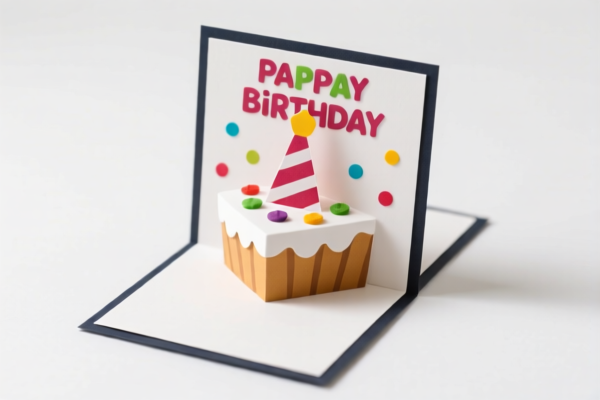
Elephant Birthday Card
CN → US| HS Code | Tariff Rate | Origin | Destination | Doc |
|---|---|---|---|---|
| 4820900000 | 35.0% | CN | US | Official Doc |
| 4911100080 | 17.5% | CN | US | Official Doc |
| 4820104000 | 35.0% | CN | US | Official Doc |
| 4911914040 | 17.5% | CN | US | Official Doc |
Product Images



AI Analysis
🐘🎉 Elephant Birthday Card (Paper Greeting Card)
🌐 HS Code Reference & Customs Clearance Guide | 2026 Latest Tariff Analysis | Professional Clearance Strategy
📌 I. Product Definition & Classification: What Exactly Is an "Elephant Birthday Card"?
An Elephant Birthday Card is a paper-based stationery item or printed greeting card featuring elephant-themed designs, intended for gifting on birthdays. In international trade, its classification depends heavily on whether it is viewed as a stationery supply or a general printed item.
⚠️ Key Distinction Point:
- If marketed primarily as a stationery/accessory (e.g., often sold in packs with other office/paper goods, or emphasizing paper quality/usage as a writeable surface) → It may fall under Chapter 48 (Paper/Paperboard).
- If marketed primarily as a general printed product/gift item (e.g., decorative, standalone, focused on the printed image/design rather than "stationery utility") → It may fall under Chapter 49 (Printed Books/Newspapers/Other Printed Matter).📌 Critical Note: Both classifications are valid depending on commercial intent and description, but they carry significantly different tax rates under current US trade policies.
📦 II. HS Code Classification Details (2026 Latest Tariff Authority Comparison)
| HS Code | Product Description | Application Scenario | Classification Logic |
|---|---|---|---|
4820.90.00.00 |
Other stationery articles of paper or paperboard | Party supplies, children’s stationery sets, writeable cards | ✅ Classified as Stationery/Art & Craft Supplies |
4911.10.00.80 |
Other printed matter (commercial/advertising/gift items) | Decorative greeting cards, standalone gift cards, illustrated cards | ✅ Classified as General Printed Matter |
4820.10.40.00 |
Notebooks, notepads, letterheads, etc. (Paper stationery) | Bulk stationery, write-on cards, office paper goods | ✅ Classified as Paper Stationery |
4911.91.40.40 |
Other printed matter (pictures, designs, artwork) | High-end illustrated cards, art-focused birthday cards, design-heavy cards | ✅ Classified as Printed Artwork/Design |
🔍 Key Reminder:
- Stationery Codes (48xx): Higher tariff burden (35% total) due to "Section 301" + "IEEPA"叠加.
- Printed Matter Codes (49xx): Lower tariff burden (17.5% total) but still subject to surcharges.
- Customs Preference: Clear product description and marketing channel (e.g., "stationery store" vs. "gift shop") influence classification.
💰 III. 2026 Latest Tariff Rate Breakdown (Including Surcharges & Policy Add-ons)
✅ Applicable Country: United States (US)
✅ Origin: China (CN)
✅ Effective Date: 2025 November 10 (and subsequent imports)
🎯 1. 4820.90.00.00 & 4820.10.40.00 —— Paper Stationery Articles
| Item | Detail |
|---|---|
| Base Tariff | 0% (ad valorem) |
| USITC Surcharge (Section 301) | +25% (from USITC Footnote) |
| IEEPA Surcharge | +10% (Targeted at Chinese/HK products, effective Nov 10, 2025) |
| Total Tariff Rate | 35% |
| Tax Calculation | CIF Value × 35% |
| De Minimis Exemption Eligible? | ❌ No (deny_de_minimis applies to Section 301 goods) |
| Legal Basis Path | IEEPA:9903.01.24 → USITC:4820.xxxx → FOOTNOTE:Section301 |
📌 Explanation:
- These codes are classified as "Stationery" under Chapter 48.
- The 35% total tariff is a combination of the standard 0% base rate plus the 25% Section 301 surcharge and the 10% IEEPA surcharge.
- This is a high-cost classification. Misclassifying a printed card as "stationery" to avoid lower rates is risky and can lead to penalties.
🎯 2. 4911.10.00.80 & 4911.91.40.40 —— Other Printed Matter
| Item | Detail |
|---|---|
| Base Tariff | 0% (ad valorem) |
| USITC Surcharge (Section 301) | +7.5% (Reduced rate for certain printed goods under specific provisions) |
| IEEPA Surcharge | +10% (Targeted at Chinese/HK products, effective Nov 10, 2025) |
| Total Tariff Rate | 17.5% |
| Tax Calculation | CIF Value × 17.5% |
| De Minimis Exemption Eligible? | ❌ No (deny_de_minimis applies to Section 301 goods) |
| Legal Basis Path | IEEPA:9903.01.24 → USITC:4911.xxxx → FOOTNOTE:Section301 |
📌 Note:
- These codes are classified as "Printed Matter" under Chapter 49.
- The 17.5% total tariff is significantly lower than the stationery classification.
- Strategic Advantage: If your product is primarily a gift item or decorative card, classifying it under Chapter 49 can save you 17.5% in tariffs.
🛠️ IV. Customs Clearance Practical Advice (Battle-Tested Pitfall Guide)
✅ 1. Document Checklist (All Mandatory)
| Document | Required | Explanation |
|---|---|---|
| ✅ Product Specification Sheet | ✔️ | Must detail material (paper type, GSM), dimensions, packaging |
| ✅ Product Photos | ✔️ | Clear images showing front/back, design, and any writeable surfaces |
| ✅ Commercial Invoice | ✔️ | Must clearly state: "Elephant-themed Birthday Greeting Card" |
| ✅ Packing List | ✔️ | Show unit quantity, total pieces, and gross/net weight |
| ✅ Certificate of Origin (CO) | ✔️ | Required for origin determination; non-China origin may qualify for lower rates |
| ✅ Marketing/Usage Description | ✔️ | Proof that it is used as a gift/decorative item (supports Chapter 49) |
✅ 2. Declaration Tips (Key Mantra)
🔥 "Stationery = 35%, Printed Matter = 17.5%! Choose Wisely!"
| Scenario | Correct Declaration | Wrong Practice |
|---|---|---|
| Sold in stationery stores, bulk packs | 4820.90.00.00 (35%) |
N/A (If intended as stationery) |
| Sold in gift shops, standalone, decorative | 4911.10.00.80 (17.5%) |
Misdeclaring as "stationery" to match store type |
| High-end illustrated/art card | 4911.91.40.40 (17.5%) |
Misdeclaring as generic paper |
| Card with envelope & tag as a set | Declare as One Item | Splitting into "card" + "envelope" → Higher total tax |
📌 Critical Warning:
- Do NOT declare a decorative gift card as "stationery" just to match the sales channel. Customs looks at product nature, not just where it’s sold.
- Do NOT split the card, envelope, and tag into separate HS codes. They are a set and should be classified together under the primary component (the card).
✅ 3. Special Cases
| Situation | Handling Advice |
|---|---|
| Bulk Wholesale (1000+ units) | Provide proof of commercial printing; ensure consistent design for Chapter 49 classification |
| Custom/Personalized Cards | Still classified as printed matter (4911), but provide order details to avoid "handmade" confusion |
| Card with Non-Paper Elements | If >10% by value is non-paper (e.g., plastic foil, glitter), customs may reclassify or impose additional duties |
| Gift Sets (Card + Gift Item) | If the card is a minor component, the primary product determines the HS Code. Do not try to isolate the card’s tax rate if it’s part of a larger gift |
🌍 V. Global Market Clearance Comparison (2026 Latest)
| Country/Region | Recommended HS Code | Tariff (China Origin) | Certification Required | Notes |
|---|---|---|---|---|
| 🇺🇸 USA | 4911.10.00.80 |
17.5% | None | Avoid 4820 (35%) if possible |
| 🇨🇳 China | 4911.10.00.80 |
5% | N/A | Low import duty |
| 🇪🇺 EU | 4909.00.10 |
0% | CE (if applicable) | No Section 301 equivalent |
| 🇬🇧 UK | 4909.00.10 |
0% | N/A | Post-Brexit alignment |
| 🇦🇺 Australia | 4909.00.10 |
5% | N/A | No major surcharges |
📌 Conclusion:
- USA is the only major market with high surcharges on Chinese paper products.
- Strategic Recommendation: For US-bound elephant birthday cards, always argue for Chapter 49 classification (4911) to benefit from the lower 17.5% tariff instead of the 35% stationery rate.
📌 VI. Common Mistakes & Pitfall Guide (Blood & Tears Lessons)
❌ Mistake 1: Declaring a decorative gift card as "Stationery" (4820)
👉 Result: Pay 35% instead of 17.5% → Double the tax cost!
❌ Mistake 2: Not providing product photos or descriptions
👉 Result: Customs cannot determine if it’s "stationery" or "printed matter" → Delay or reclassification penalty
❌ Mistake 3: Splitting a card set (card + envelope + tag) into separate entries
👉 Result: Each item taxed separately, potentially increasing total duty → Unnecessary expense
❌ Mistake 4: Using vague terms like "Paper Goods" on the invoice
👉 Result: Customs assigns a higher default rate → Audit risk and fines
✅ Correct Practice:
"Elephant-themed Birthday Greeting Card, Paper, Decorative Gift Item, Illustrated Design, Model XYZ, Pack of 10"
🎯 VII. Conclusion: Professional Declaration, Save Costs, Ensure Smooth Clearance!
🎯 Remember the Mantra:
🔹 "Stationery is 35%, Printed Matter is 17.5% - Choose Chapter 49 for Gifts!"
🔹 "Clear Description, Correct HS Code, Lower Tariff, Happy Customs!"
📌 Pro Tip:
If your elephant birthday cards are originally produced in Vietnam, Thailand, or Malaysia, you may qualify for IEEPA Exemptions, reducing tariffs to 0%~5%.
Recommendation: Apply for a Pre-Ruling (Advance Ruling) from US Customs to confirm your HS Code before shipment.
📣 Take Action Now:
📞 Contact a Professional Broker + Provide Product Photos + Apply for HS Code Pre-Ruling
🚀 Let your Elephant Birthday Cards Clear Smoothly, Boost Profits, and Delight Recipients!
✨ Professional Customs Clearance Starts with Accurate Classification!
💼 Every Penny Saved is a Penny Earned!
Customer Reviews
About HS Code Classification
The Harmonized System (HS) is an internationally standardized nomenclature developed by the World Customs Organization (WCO) to classify traded products. Over 200 countries use the HS system as the basis for customs tariffs, trade statistics, and import/export regulations.
Each HS code follows a hierarchical structure:
- Chapter (2 digits) — Broad category of goods (e.g., Chapter 84: Machinery and Mechanical Appliances)
- Heading (4 digits) — More specific grouping within the chapter
- Subheading (6 digits) — Internationally standardized breakdown, used by all WCO member countries
- National subdivisions (8-10 digits) — Country-specific extensions for further classification, such as US HTSUS 10-digit codes
Correct HS code classification is essential for smooth customs clearance, accurate duty payment, and compliance with trade regulations. Misclassification can lead to customs delays, overpayment of duties, or penalties.
When importing from CN to US, the applicable tariff rates may include:
- Most-Favored-Nation (MFN) rate — The standard duty rate applied to WTO members
- General rate — Applied to countries without trade agreements
- Trade remedy duties — Additional tariffs such as Section 301 (anti-dumping), Section 232 (national security), or countervailing duties
The information provided on this page is for reference purposes only. For official classification, please consult with your local customs authority or a licensed customs broker.