Elephant Trunk Buckle
CN → US| HS Code | Tariff Rate | Origin | Destination | Doc |
|---|---|---|---|---|
| 3926909989 | 22.8% | CN | US | Official Doc |
| 3923900080 | 38.0% | CN | US | Official Doc |
| 3923500000 | 40.3% | CN | US | Official Doc |
| 3926908500 | 24.0% | CN | US | Official Doc |
Product Images
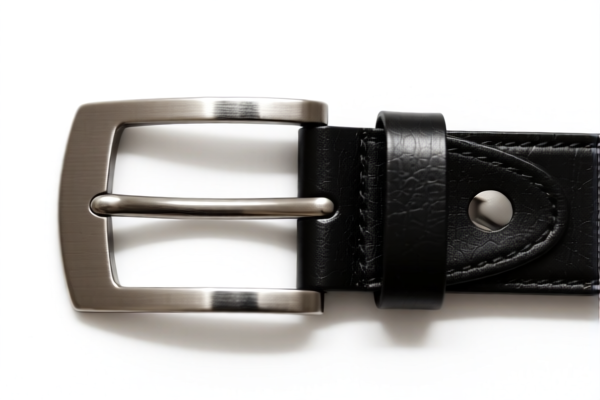
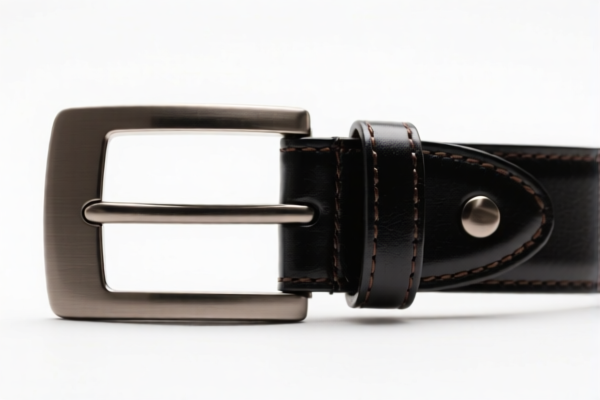
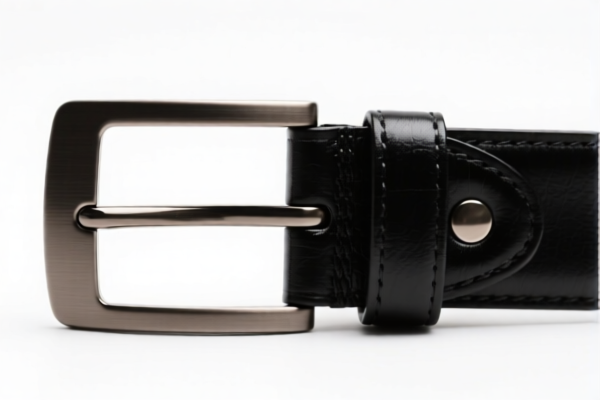
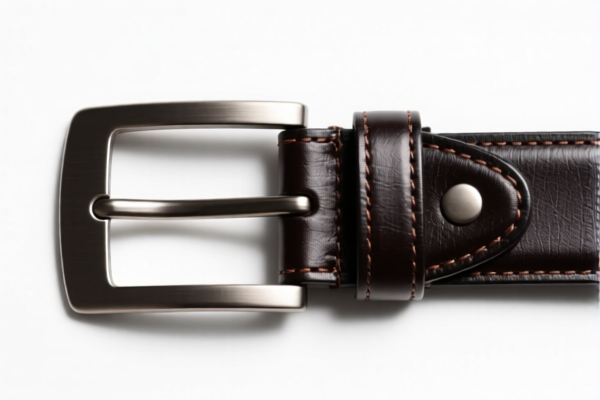
AI Analysis
🐘 Elephant Trunk Buckle: HS Code Classification & US Customs Clearance Guide (2026)
🌐 HS Code Reference & Customs Clearance Guide | Latest Tariff Analysis for Plastic Fasteners | Strategic Entry Strategy
📌 I. Product Definition & Core Characteristics: What is an "Elephant Trunk Buckle"?
The "Elephant Trunk Buckle" is a specialized plastic fastening mechanism, characterized by a long, curved nose or "trunk" that snaps into a corresponding receiver. It is widely used in luggage, backpacks, tool cases, medical equipment, and industrial containers.
⚠️ Key Classification Challenge:
Although it is a plastic item, its function dictates its HS Code. It is NOT simply a "plastic article" (Chapter 39, Section 1). Depending on its specific design and function, it falls into: 1. General Plastic Articles (if used as a generic clip/fitting not specifically described elsewhere). 2. Container Accessories (if used as a seal, lid, or closure for boxes/bottles). 3. Fastening Hardware (if used as a clasp or clamping part for machinery/cases).
📦 II. HS Code Classification Details (Based on Provided Data)
Below is the precise classification analysis based on the provided dataset. Each HS Code represents a different functional interpretation of the "Elephant Trunk Buckle."
1. 3926.90.99.89 – The "General Plastic Article" Route
Summary: Plastic elephant trunk buckle, made of plastic, classified as a plastic article. Function: General-purpose plastic fitting/clip not specifically described in other plastic articles subheadings.
| Item | Detail |
|---|---|
| Base Tariff | 5.3% |
| Section 301 Tariff | 7.5% |
| Section 122 Tariff | 10% |
| Total Tax Rate | 22.8% |
| Tax Detail | Base (5.3%) + Section 301 (7.5%) + Section 122 (10%) |
| Legal Basis | Chapter 39, Heading 3926 (Other articles of plastics) |
📌 Explanation:
- This is the "default" classification if the buckle does not fit neatly into "lids/seals" or "specific fasteners."
- Lowest Tax Rate among the options provided.
- Suitable for buckles used in non-industrial, general consumer goods where the specific "closure" function isn't the primary customs focus.
2. 3923.90.00.80 – The "Other Sealing/Closing Device" Route
Summary: Plastic elephant trunk buckle, made of plastic, classified as other sealing devices, lids, or stoppers. Function: Used primarily to seal or close a container (e.g., a box, bin, or case).
| Item | Detail |
|---|---|
| Base Tariff | 3.0% |
| Section 301 Tariff | 25.0% |
| Section 122 Tariff | 10% |
| Total Tax Rate | 38.0% |
| Tax Detail | Base (3.0%) + Section 301 (25.0%) + Section 122 (10%) |
| Legal Basis | Chapter 39, Heading 3923 (Articles for the conveyance or packing of goods) |
📌 Explanation:
- High Risk: The Section 301 tariff is 25%, significantly higher than Option 1.
- Customs may classify it here if the buckle is integral to the closure system of a shipping container or storage box.
- Warning: Do not use this if you aim for lower tariffs, unless the product is explicitly marketed as a "sealing lid component."
3. 3923.50.00.00 – The "Cap/Lid Accessory" Route
Summary: Plastic elephant trunk buckle, made of plastic, classified as caps, lids, and other closures. Function: Specifically viewed as a cap, lid, or accessory for a bottle, jar, or similar container.
| Item | Detail |
|---|---|
| Base Tariff | 5.3% |
| Section 301 Tariff | 25.0% |
| Section 122 Tariff | 10% |
| Total Tax Rate | 40.3% |
| Tax Detail | Base (5.3%) + Section 301 (25.0%) + Section 122 (10%) |
| Legal Basis | Chapter 39, Heading 3923 (Articles for the conveyance or packing of goods) |
📌 Explanation:
- Highest Tax Rate in the provided list.
- Only applicable if the buckle is technically a cap or lid (e.g., for a plastic bottle or jar) rather than a latch for a box.
- Avoid this classification unless the product is literally a cap for a container.
4. 3926.90.85.00 – The "Clamping/Fastening Part" Route
Summary: Plastic elephant trunk buckle, made of plastic, classified as clamping or fastening parts. Function: Used as a specific mechanical fastener, clip, or clamping component for machinery, cases, or equipment.
| Item | Detail |
|---|---|
| Base Tariff | 6.5% |
| Section 301 Tariff | 7.5% |
| Section 122 Tariff | 10% |
| Total Tax Rate | 24.0% |
| Tax Detail | Base (6.5%) + Section 301 (7.5%) + Section 122 (10%) |
| Legal Basis | Chapter 39, Heading 3926 (Other articles of plastics) |
📌 Explanation:
- Second Lowest Tax Rate (24.0%).
- This is the optimal classification for industrial or heavy-duty buckles used as mechanical fasteners (e.g., on toolboxes, medical devices, or luggage frames).
- It distinguishes the product from "packaging seals" (3923), thereby avoiding the 25% Section 301 tariff.
💰 III. Tariff Breakdown & Policy Explanation (US Market)
✅ Applicable Country: United States (US)
✅ Origin: China (CN)
✅ Effective Date: Current Trade Policy (2025-2026)
🎯 Understanding the Tax Components
-
Base Tariff (MFN Rate):
- Determined by the Harmonized Tariff Schedule of the United States (HTSUS).
- Ranges from 3.0% to 6.5% depending on the specific subheading.
-
Section 301 Tariff (Trump/Biden Era Trade War):
- 7.5% vs. 25.0%.
- Crucial Distinction:
- If classified under 3926 (General/Other Plastic Articles), the rate is typically 7.5%.
- If classified under 3923 (Packing/Sealing Goods), the rate is typically 25.0%.
- Strategy: Aim for 3926 to save 17.5% in duties.
-
Section 122 Tariff (Presidential Proclamation 9486):
- 10% flat rate for imports from China.
- This is non-negotiable and applies to all three HS Codes in your dataset.
📊 Total Tax Comparison Table
| HS Code | Description | Base | Sec 301 | Sec 122 | Total Tax | Recommendation |
|---|---|---|---|---|---|---|
3926.90.99.89 |
General Plastic Article | 5.3% | 7.5% | 10% | 22.8% | ✅ Best Value (Lowest Tax) |
3926.90.85.00 |
Clamping/Fastening Part | 6.5% | 7.5% | 10% | 24.0% | ✅ Good Value (If mechanical) |
3923.90.00.80 |
Other Sealing Device | 3.0% | 25.0% | 10% | 38.0% | ❌ High Risk (High Tax) |
3923.50.00.00 |
Cap/Lid Accessory | 5.3% | 25.0% | 10% | 40.3% | ❌ Avoid (Highest Tax) |
🛠️ IV. Customs Clearance Practical Advice (Step-by-Step)
✅ 1. Product Description for Customs Entry
To ensure the lowest tax rate, your commercial invoice and customs entry must clearly define the function to align with 3926 (General/Fastening) rather than 3923 (Packing/Sealing).
Recommended Description Format:
"Plastic Elephant Trunk Buckle, Model XYZ, Used as a Clamping Fastener/Clip for [Product Name, e.g., Luggage/Toolcase], Not Intended for Liquid Sealing or Container Closure."
Avoid:
❌ "Plastic Closure for Box"
❌ "Sealing Lid"
❌ "Container Cap"
✅ 2. Documentation Checklist
| Document | Requirement | Reason |
|---|---|---|
| Commercial Invoice | Must specify "Plastic Fastener" or "Clamp" | Supports 3926 classification |
| Product Photos | Show the "trunk" snapping into a frame/strap, not a bottle mouth | Proves mechanical fastening use |
| Technical Datasheet | Highlight material (e.g., ABS, Nylon) and tensile strength | Confirms industrial/commercial use |
| Origin Certificate | Proof of Chinese Origin | Determines eligibility for Section 122/301 |
✅ 3. Common Pitfalls & Risk Mitigation
| Pitfall | Consequence | Solution |
|---|---|---|
| Misclassification as 3923 | Tax jumps from ~23% to ~39% | Ensure product photos show usage on cases/luggage, not containers. |
| Vague Description | Customs officer selects highest default rate | Use specific keywords: "Fastening," "Clamp," "Clip." Avoid "Seal," "Cap," "Closure." |
| Ignoring Section 122 | Unexpected 10% charge | Factor in 10% regardless of HS Code. Plan cash flow accordingly. |
🌍 V. Global Market Comparison (Quick Reference)
| Market | Recommended HS Code | Est. Total Tax | Key Requirement |
|---|---|---|---|
| 🇺🇸 USA | 3926.90.99.89 |
22.8% | Avoid 3923 to escape 25% Sec 301 |
| 🇪🇺 EU | 3926.90 (Varies) |
~4.5% - 6.0% | No Section 301/122 equivalent. Standard NMF rate applies. |
| 🇨🇳 China | 3926.90 (Varies) |
~5.0% - 6.0% | Standard import duty. No retaliatory tariffs. |
| 🇬🇧 UK | 3926.90 (Varies) |
~4.0% - 6.0% | Post-Brexit UK Global Tariff applies. |
📌 Conclusion:
For US Imports, the goal is to classify under 3926 to avoid the punitive 25% Section 301 tariff.
- Winner:3926.90.99.89at 22.8% total tax.
- Runner-Up:3926.90.85.00at 24.0% (if clearly a mechanical clamp).
📌 VI. Final Checklist for Importers
- Confirm Function: Is it a strap buckle/latch? → Go with 3926. Is it a bottle cap? → Go with 3923 (but pay higher tax).
- Draft Invoice: Use terms like "Fastener," "Clip," "Latch." Never use "Seal" or "Cap" for case buckles.
- Calculate Landed Cost:
- Landed Cost = CIF Value + (CIF Value × 22.8%) + Duties/Fees
- Example: On a $1,000 shipment, expect ~$228 in duties.
- Pre-Ruling: If unsure, file an Advance Ruling with US Customs to lock in the 3926 classification before shipping.
🎯 Pro Tip:
"Fasten the Frame, Don't Seal the Bottle."
If your elephant trunk buckle is used on a backpack, suitcase, or toolbox, insist on the 3926 classification. This simple distinction saves you 15%+ in duties.
✨ Accurate Classification = Lower Costs. Clear Documentation = Faster Clearance.
💼 Partner with a seasoned broker to validate the "Fastener" vs. "Sealer" argument.
Customer Reviews
About HS Code Classification
The Harmonized System (HS) is an internationally standardized nomenclature developed by the World Customs Organization (WCO) to classify traded products. Over 200 countries use the HS system as the basis for customs tariffs, trade statistics, and import/export regulations.
Each HS code follows a hierarchical structure:
- Chapter (2 digits) — Broad category of goods (e.g., Chapter 84: Machinery and Mechanical Appliances)
- Heading (4 digits) — More specific grouping within the chapter
- Subheading (6 digits) — Internationally standardized breakdown, used by all WCO member countries
- National subdivisions (8-10 digits) — Country-specific extensions for further classification, such as US HTSUS 10-digit codes
Correct HS code classification is essential for smooth customs clearance, accurate duty payment, and compliance with trade regulations. Misclassification can lead to customs delays, overpayment of duties, or penalties.
When importing from CN to US, the applicable tariff rates may include:
- Most-Favored-Nation (MFN) rate — The standard duty rate applied to WTO members
- General rate — Applied to countries without trade agreements
- Trade remedy duties — Additional tariffs such as Section 301 (anti-dumping), Section 232 (national security), or countervailing duties
The information provided on this page is for reference purposes only. For official classification, please consult with your local customs authority or a licensed customs broker.