Elevator, Escalator, or Moving Walk
CN → US| HS Code | Tariff Rate | Origin | Destination | Doc |
|---|---|---|---|---|
| 8428100000 | 17.5% | CN | US | Official Doc |
| 8428400000 | 35.0% | CN | US | Official Doc |
Product Images
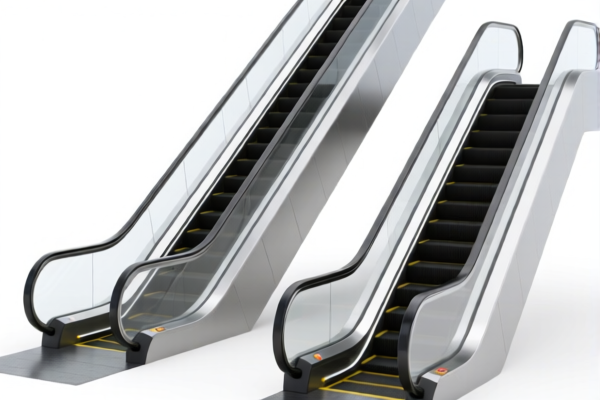
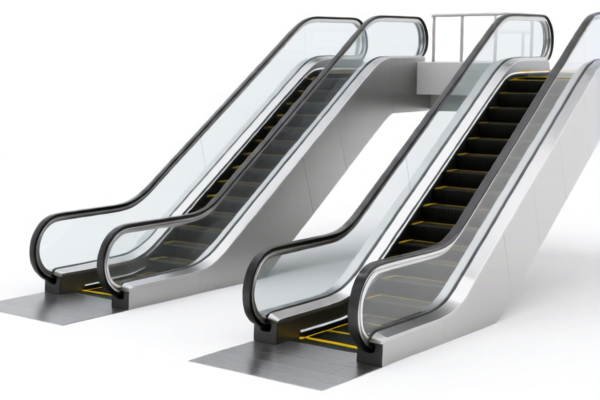
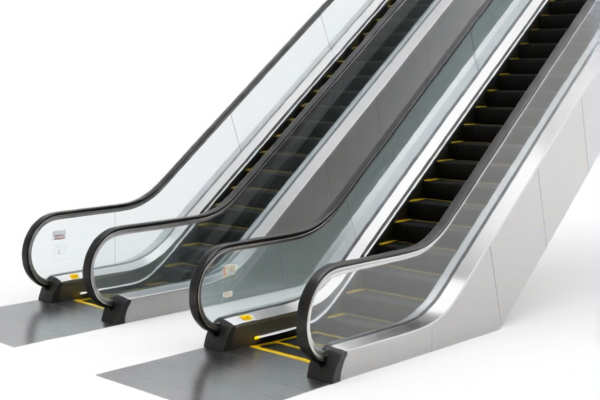
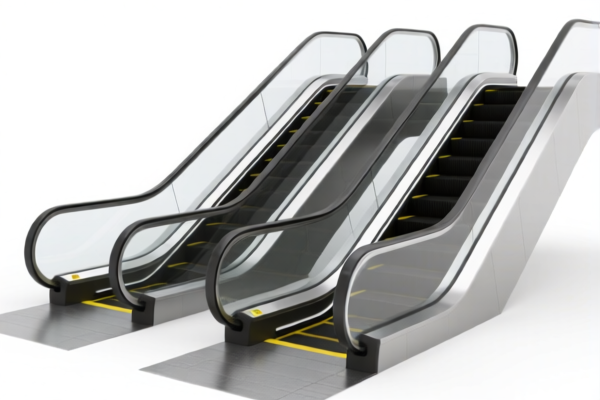
AI Analysis
🏗️ Elevators, Escalators, and Moving Walkways (Lifting & Handling Machinery)
🌐 HS Code Reference & Customs Clearance Guide | 2026 Latest Tariff Analysis | Professional-Level Clearance Strategy
📌 I. Product Definition & Classification: Do You Really Understand "Elevators" and "Escalators"?
In international trade, lifting, handling, loading, or unloading machinery is broadly categorized under Chapter 84. However, the specific function and operation mode dictate the precise HS Code and, consequently, the tariff burden.
Passenger/Freight Elevators (Non-Continuous): Includes standard cab elevators, skip hoists, and lifts that operate intermittently (stop and go).
Escalators and Moving Walkways: Continuous action machines designed for transporting people or goods between different levels or along a horizontal/angled plane.
⚠️ Key Distinction Point:
- If the machine is an elevator (vertical transport, intermittent action) or skip hoist →归入 8428.10.00.00
- If the machine is an escalator (stairs moving continuously) or moving walkway (conveyor for people) →归入 8428.40.00.00
- ❌ Do NOT confuse with "Conveyors" (8428.33) or "Other machinery" (8428.90). These specific categories have their own dedicated headings.
📦 II. HS Code Classification Details (2026 Latest Tariff Authority Comparison)
Based on the provided data, here are the two primary classifications for these lifting machinery types:
| HS Code | Product Description | Applicable Scenarios | Action Type |
|---|---|---|---|
8428.10.00.00 |
Other lifting machinery: Passenger or freight elevators other than continuous action; skip hoists | Vertical cab elevators, dumbwaiters, skip hoists for industrial waste/materials | ⏸️ Intermittent |
8428.40.00.00 |
Other lifting machinery: Escalators and moving walkways | Mall escalators, airport moving sidewalks, stadium entry/exit ramps | ➡️ Continuous Action |
🔍 Key Reminder:
- Escalators are NOT "elevators." They are classified separately due to their continuous operation mechanism.
- Moving Walkways (horizontal/angled conveyors for people) fall under8428.40, not general cargo conveyors.
- Skip Hoists (often used in construction or industrial settings for vertical material transport) are grouped with elevators under8428.10.
💰 III. 2026 Latest Tariff Rate Breakdown (Detailed Tax Terms)
✅ Applicable Country: USA (US)
✅ Origin: China (CN)
✅ Effective Date: Current tariffs as per provided data
🎯 1. 8428.10.00.00 —— Passenger/Freight Elevators & Skip Hoists
| Item | Content |
|---|---|
| Base Tariff Rate | 0.0% (Ad Valorem) |
| Additional Tariff (Section 301/Trade Action) | +7.5% |
| Total Tax Rate | 7.5% |
| Tax Calculation Basis | CIF Value × 7.5% |
| De Minimis Exemption | ❌ Not Applicable (High-value machinery) |
| Legal Basis Path | HS:8428.10.00.00 → Base:0% → Additional:7.5% |
📌 Explanation:
- "Base Tariff 0%" indicates that under normal Most Favored Nation (MFN) treatment, elevators are duty-free.
- "Additional Tariff 7.5%" is applied specifically to Chinese-origin elevators. This is a significant but relatively moderate penalty compared to other machinery categories.
- Total Burden: 7.5%. While lower than electronics or high-tech goods, for high-value elevator systems, this 7.5% can represent substantial costs.
🎯 2. 8428.40.00.00 —— Escalators and Moving Walkways
| Item | Content |
|---|---|
| Base Tariff Rate | 0.0% (Ad Valorem) |
| Additional Tariff (Section 301/Trade Action) | +25.0% |
| Total Tax Rate | 25.0% |
| Tax Calculation Basis | CIF Value × 25.0% |
| De Minimis Exemption | ❌ Not Applicable |
| Legal Basis Path | HS:8428.40.00.00 → Base:0% → Additional:25.0% |
📌 Warning:
- Despite having a 0% base tariff, escalators face a stiff 25% additional tariff.
- This high rate reflects stricter trade restrictions on certain mechanical infrastructure components.
- Total Burden: 25%. This is a critical cost factor that must be accounted for in pricing strategies.
- Note: This is significantly higher than the 7.5% for elevators, highlighting the importance of correct classification.
🛠️ IV. Customs Clearance Practical Advice (Avoid Pitfalls)
✅ 1. Required Documentation Checklist (None Can Be Skipped)
| Document | Must Provide | Description |
|---|---|---|
| ✅ Product Specification Sheet | ✔️ | Must clearly state: "Escalator" OR "Elevator (Non-Continuous)", capacity (kg/passengers), speed (m/s), dimensions. |
| ✅ Technical Drawings | ✔️ | Schematic diagrams showing power source, control panel, and mechanism (continuous vs. intermittent). |
| ✅ Product Photos (Nameplate) | ✔️ | Clear photo of the model plate, including Manufacturer, Model, Year, and Power Rating. |
| ✅ Commercial Invoice | ✔️ | Description must match HS Code exactly: e.g., "Escalator for Passenger Transport" or "Hydraulic Elevator". |
| ✅ Packing List | ✔️ | Detailing main units, spare parts, and installation tools. |
| ✅ Origin Certificate (CO) | ✔️ | To prove Chinese origin (for tariff calculation) or other origin (for potential exemptions). |
| ✅ Safety Certifications | ✔️ | ASME A17.1 (USA) or EN 115 (EU) compliance certificates may be requested by CBP for safety verification. |
✅ 2. Declaration Tips (Key Mantra)
🔥 "Classify by Action: Continuous for Escalator, Intermittent for Elevator. Wrong Class = 17.5% Extra Cost!"
| Scenario | Correct Declaration | Common Mistake |
|---|---|---|
| Standard Mall Escalator | 8428.40.00.00 (Tax: 25%) |
Misdeclaring as "Elevator" (8428.10) → 7.5% → Underpayment Penalty & 17.5% Back Tax! |
| Vertical Cab Elevator | 8428.10.00.00 (Tax: 7.5%) |
Misdeclaring as "Conveyor" → Potential delays and reclassification. |
| Moving Walkway (Airport) | 8428.40.00.00 (Tax: 25%) |
Misdeclaring as "Elevator" → Underpayment Penalty & 17.5% Back Tax! |
| Skip Hoist (Industrial) | 8428.10.00.00 (Tax: 7.5%) |
N/A (Correctly grouped with elevators). |
💡 Critical Insight:
- The tax difference between8428.10and8428.40is 17.5 percentage points.
- Escalators are taxed much higher. If you can argue a product is a "lift" (elevator) rather than a "continuous conveyor" (escalator/moving walk), you might save 17.5%. However, misclassification is illegal. Ensure the product description matches the actual physical operation.
- Escalators inherently move continuously in a loop. Elevators move up/down and stop. This operational difference is the legal basis for the split.
✅ 3. Special Handling Cases
| Case | Handling Advice |
|---|---|
| Spare Parts for Escalators | Usually classified under 8428.90 (Other lifting machinery parts). Tax may vary; check specific part HS codes separately. Do NOT ship parts as a whole escalator to avoid the 25% duty on the main unit if not declared correctly. |
| Used Escalators/Elevators | CBP may require additional inspection for safety and age. Ensure all certifications are up-to-date. Tariff rate remains 25% or 7.5% based on HS code. |
| Hydraulic vs. Traction Elevators | Both fall under 8428.10.00.00 (7.5%). The mechanism (hydraulic/piston vs. traction/cable) does not change the HS Code, but the technical description must be accurate. |
| Moving Walkway (Flat) | Even if flat, if it’s for people, it’s 8428.40 (25%). Do not confuse with cargo conveyors (8428.33). |
🌍 V. Global Market Clearance Comparison (2026 Latest)
| Country/Region | Recommended HS Code | Tariff (China Origin) | Certification Required | Notes |
|---|---|---|---|---|
| 🇺🇸 USA | 8428.40.00.00 (Escalator) |
25% | ASME A17.1 / NFPA 70 | High tariff barrier. |
| 🇺🇸 USA | 8428.10.00.00 (Elevator) |
7.5% | ASME A17.1 / NFPA 70 | Lower tariff, but still significant. |
| 🇪🇺 EU | 8428 40 / 8428 10 | 0% (General) | CE Marking / EN 81-20 | No additional US-style tariffs. |
| 🇨🇳 China | 8428 40 / 8428 10 | 0-10% (Import Duty) | CCC (if applicable) | Varies by specific component. |
| 🇬🇧 UK | 8428 40 / 8428 10 | 0% (General) | UKCA Marking | Post-Brexit rules apply. |
📌 Conclusion:
- USA has the highest tariffs for lifting machinery, especially for escalators (25%).
- EU and UK are more favorable with 0% general tariffs, focusing instead on safety certifications (CE/UKCA).
- Cost Strategy: If exporting to the USA, ensure accurate classification. If the product is borderline, consult a customs broker. For escalators, the 25% tariff is a major cost driver; consider local assembly or sourcing non-Chinese components if possible to mitigate duties (though origin rules are strict).
📌 VI. Common Errors & Pitfall Guide (Lessons Learned)
❌ Error 1: Declaring an Escalator as a "Lift" or "Elevator"
👉 Consequence: Underpayment of 17.5% tax. CBP will assess back taxes, penalties, and interest. Total cost increases by ~25-30%.
❌ Error 2: Not specifying "Escalator" or "Moving Walkway" in the commercial invoice
👉 Consequence: CBP may hold shipment for classification review. Delays of 2-4 weeks. Potential for forced reclassification to higher tariff.
❌ Error 3: Including installation tools or spare parts as "Main Escalator"
👉 Consequence: Inflated CIF value leads to overpayment on accessories. Keep spare parts on separate lines if they have different HS codes.
❌ Error 4: Using generic terms like "Lifting Machine"
👉 Consequence: CBP will ask for clarification. If unclear, they may assign the highest possible duty rate. Always be specific.
✅ Correct Declaration Example:
"Commercial Escalator, Stainless Steel, 900mm Width, Speed 0.5m/s, Model XYZ, ASME Certified, Made in China" → HS: 8428.40.00.00 (25%)
🎯 VII. Conclusion: Precise Classification Saves Money!
🎯 Remember the Mantra:
🔹 "Escalator = 25%, Elevator = 7.5%. One letter difference (S vs E) changes tax by 17.5%!"
🔹 "Continuous Action means 25%. Intermittent Action means 7.5%. Know your machine!"
📌 Pro Tip:
If you are shipping both escalators and elevators, ensure your customs broker knows the difference. Do not bundle them under one generic HS Code.
For USA imports, consider applying for a Tariff Classification Ruling from CBP if the product design is innovative or hybrid. This provides legal certainty.
📣 Take Action Now:
📞 Contact your customs broker with technical specs and operation mode (continuous vs. intermittent).
🚀 Accurate classification is your first step to profitable global trade!
✨ Professional Customs Clearance Starts with Precision!
💼 Every percentage point counts in machinery trade.
Customer Reviews
About HS Code Classification
The Harmonized System (HS) is an internationally standardized nomenclature developed by the World Customs Organization (WCO) to classify traded products. Over 200 countries use the HS system as the basis for customs tariffs, trade statistics, and import/export regulations.
Each HS code follows a hierarchical structure:
- Chapter (2 digits) — Broad category of goods (e.g., Chapter 84: Machinery and Mechanical Appliances)
- Heading (4 digits) — More specific grouping within the chapter
- Subheading (6 digits) — Internationally standardized breakdown, used by all WCO member countries
- National subdivisions (8-10 digits) — Country-specific extensions for further classification, such as US HTSUS 10-digit codes
Correct HS code classification is essential for smooth customs clearance, accurate duty payment, and compliance with trade regulations. Misclassification can lead to customs delays, overpayment of duties, or penalties.
When importing from CN to US, the applicable tariff rates may include:
- Most-Favored-Nation (MFN) rate — The standard duty rate applied to WTO members
- General rate — Applied to countries without trade agreements
- Trade remedy duties — Additional tariffs such as Section 301 (anti-dumping), Section 232 (national security), or countervailing duties
The information provided on this page is for reference purposes only. For official classification, please consult with your local customs authority or a licensed customs broker.