Elevator, Escalator or Moving Walk
CN → US| HS Code | Tariff Rate | Origin | Destination | Doc |
|---|---|---|---|---|
| 8428100000 | 17.5% | CN | US | Official Doc |
| 8428400000 | 35.0% | CN | US | Official Doc |
Product Images
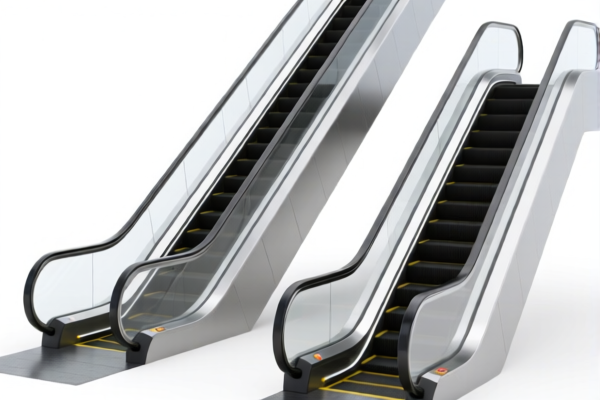
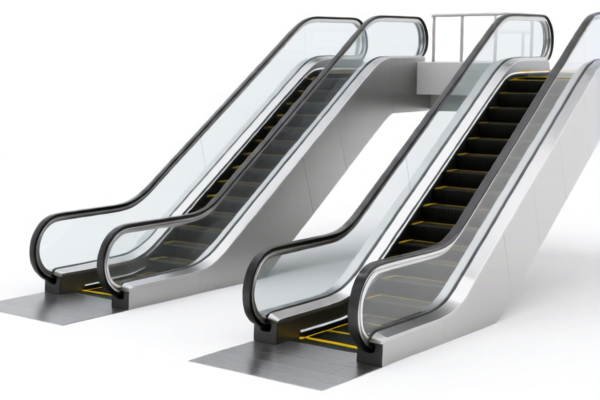
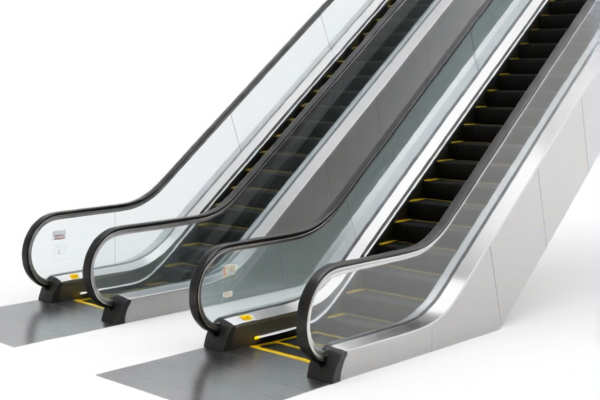
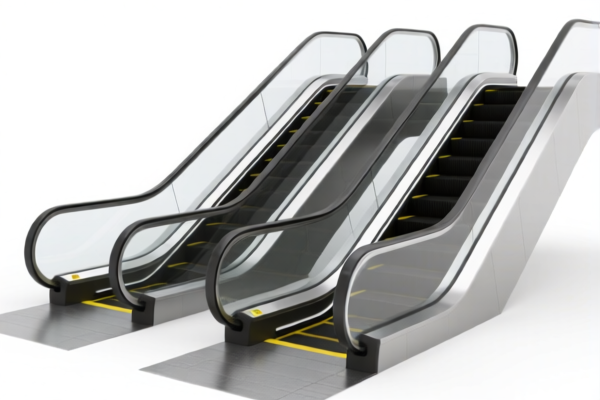
AI Analysis
🏗️ Elevators, Escalators & Moving Walkways (Lifting Machinery)
🌐 HS Code Reference & Customs Clearance Guide | 2026 Latest Tariff Analysis | Professional Entry Strategies
📌 I. Product Definition & Classification: Do You Really Understand "Lifting Machinery"?
Elevators, escalators, and moving walkways are the backbone of vertical and horizontal transportation in modern architecture. In international trade, they fall under Chapter 84: Nuclear reactors, boilers, machinery and mechanical appliances; parts thereof.
They are strictly divided into three functional categories:
- Passenger/Freight Elevators (Non-Continuous): Traditional lifts that move in discrete stops. Includes skip hoists for freight.
- Escalators & Moving Walkways: Continuous action machinery for moving people between levels or across flat surfaces.
- Other Lifting Machinery: Conveyors, teleferics, etc. (Not covered in this specific
<DATA>set, but part of HS 8428).
⚠️ Key Distinction:
- Elevators: Classified under 8428.10 if they are not continuous action (i.e., traditional cab-based systems).
- Escalators/Moving Walks: Classified under 8428.40 if they are continuous action for people.
- Misclassification Risk: Do not confuse "elevator parts" with complete units. Complete units are taxed differently than components.
📦 II. HS Code Classification Details (2026 Latest Tariff Authority)
Based on the provided <DATA>, there are two primary classifications for these products. Note that the tax rates provided are specific to imports from China to the United States (implied by the "Additional Tariff" context).
| HS Code | Product Description | Applicable Scenario | Key Characteristics |
|---|---|---|---|
8428.10.00.00 |
Other lifting, handling, loading or unloading machinery: Passenger or freight elevators other than continuous action; skip hoists | Traditional passenger elevators, freight lifts, dumbwaiters, skip hoists for construction/mining. | ✅ Discrete Movement: Stops at floors. ❌ Not Continuous Action (like escalators). |
8428.40.00.00 |
Other lifting, handling, loading or unloading machinery: Escalators and moving walkways | Shopping mall escalators, airport moving walkways, hotel slope transports. | ✅ Continuous Action: Moves constantly. ✅ For People: Specifically designed for passenger transport. |
🔍 Critical Reminder:
- Elevators (cabs moving up/down in stops) → 8428.10
- Escalators/Walkways (steps/flat belts moving continuously) → 8428.40
- Do Not Mix: An "escalator" cannot be declared as an "elevator" to avoid taxes. The mechanism type (continuous vs. discrete) is the legal differentiator.
💰 III. 2026 Latest Tariff Rate Breakdown (Including Additional Taxes)
✅ Applicable Country: United States (US)
✅ Origin: China (CN)
✅ Effective Date: Current policies (Section 301 & Additional Tariffs)
🎯 1. 8428.10.00.00 —— Passenger/Freight Elevators (Non-Continuous)
| Item | Content |
|---|---|
| Base Tariff | 0.0% (Free Trade/General Rate) |
| Additional Tariff | +7.5% (Section 301 / USTR Designation) |
| Total Tax Rate | 7.5% |
| Tax Calculation | CIF Value × 7.5% |
| De Minimis Eligibility | ❌ Not Eligible (Usually exceeds $800 threshold or is excluded from exemption) |
| Legal Basis Path | USITC:8428.10.00.00 → USTR:301_List3 (or applicable current list for 7.5%) |
📌 Explanation:
- The base rate is 0%, meaning these products are not subject to the standard Most Favored Nation (MFN) duty.
- However, the 7.5% additional tariff applies to Chinese-origin goods.
- Total Cost Impact: A $10,000 elevator incurs $750 in duties.
🎯 2. 8428.40.00.00 —— Escalators and Moving Walkways
| Item | Content |
|---|---|
| Base Tariff | 0.0% (Free Trade/General Rate) |
| Additional Tariff | +25.0% (Section 301 / USTR Designation) |
| Total Tax Rate | 25.0% |
| Tax Calculation | CIF Value × 25.0% |
| De Minimis Eligibility | ❌ Not Eligible |
| Legal Basis Path | USITC:8428.40.00.00 → USTR:301_List1 or List4 (Higher tier tariffs) |
📌 Explanation:
- Like elevators, the base rate is 0%.
- However, escalators and moving walkways are subject to a much higher additional tariff of 25%.
- Total Cost Impact: A $10,000 escalator incurs $2,500 in duties.
- ⚠️ High Cost Alert: This is a high-duty category compared to elevators. Pricing strategies must account for this significant difference.
🛠️ IV. Customs Clearance Practical Advice (Real-World Pitfall Guide)
✅ 1. Required Documentation Checklist (No Exceptions)
| Document | Must Provide | Explanation |
|---|---|---|
| ✅ Product Specification Sheet | ✔️ | Must clearly state: Type (Elevator/Escalator), Lift Capacity, Speed, Number of Stops, Power Requirements. |
| ✅ Technical Drawings | ✔️ | For elevators: Shaft dimensions, machine room details. For escalators: Truss length, inclination angle. |
| ✅ Commercial Invoice | ✔️ | Must explicitly state: "Electric Elevator" or "Escalator for Public Transport". Avoid vague terms like "Machinery". |
| ✅ Packing List | ✔️ | Detail components (Cab, Tracks, Motors, Control Panels). If shipped as a kit, declare as such. |
| ✅ Country of Origin Certificate | ✔️ | Crucial for verifying China origin to apply correct 7.5% or 25% tax. |
| ✅ Safety Certifications | ✔️ | ASME A17.1 (USA) or EN 81 (EU) compliance certificates may be required by customs or state inspectors. |
✅ 2. Declaration Tips (Key Mantras)
🔥 "Classify by Motion: Stops=10, Continuous=40. Tax Differs Huge!"
| Scenario | Correct Declaration | Incorrect Action |
|---|---|---|
| Traditional Lift (Cab moves up/down) | 8428.10.00.00 (7.5% Tax) |
Declaring as "Escalator" → 25% Tax (Overpay!) |
| Escalator (Steps move continuously) | 8428.40.00.00 (25% Tax) |
Declaring as "Elevator" → 7.5% Tax (Underpay/Illegal!) |
| Moving Walkway (Flat belt for airports) | 8428.40.00.00 (25% Tax) |
Declaring as "Conveyor" → May be wrong chapter (8424/8438) |
| Spare Parts Only | Check if "Parts of Elevator/Escalator" | Declaring parts as "Complete Unit" → Wrong HS Code |
💡 Pro Tip:
- If shipping elevator parts (e.g., doors, cables), ensure they are not classified as "complete equipment" to avoid triggering the full unit tariff incorrectly. However, parts may fall under different subheadings (e.g., 8431.31) with different tax rates. Consult a specialist for parts-only shipments.
✅ 3. Special Situations Handling
| Situation | Handling Advice |
|---|---|
| Kit-Shipped Elevators | If shipped in pieces for on-site assembly, still declare as Complete Elevator under 8428.10. Do not split into "Metal Frame" + "Motor" to avoid penalty. |
| Escalator with Integrated Motor | Must be declared under 8428.40. The motor is part of the machinery, not a separate item. |
| Refurbished/Used Elevators | May require additional sanitation/safety inspections. Tax rate remains the same, but clearance time increases. |
| Small Residential Dumbwaiters | If "non-continuous" and for goods only, still 8428.10. If for people, ensure it meets safety codes. |
🌍 V. Global Market Comparison (2026 Latest)
| Country/Region | Recommended HS Code | Tariff Rate (China Origin) | Certification Requirements | Notes |
|---|---|---|---|---|
| 🇺🇸 USA | 8428.10 / 8428.40 |
7.5% (Elevators) 25% (Escalators) |
ASME A17.1 / OSHA Compliance | High Additional Tax for Escalators. |
| 🇨🇳 China | 8428.10 / 8428.40 |
~2% - 5% (Most Favored) | GB Standards + CCC | Lower base duty, but check VAT (13%). |
| 🇪🇺 EU | 8428.10 / 8428.40 |
0% (Most Favored) | CE Marking + Machinery Directive | No additional "Section 301" style tariffs. |
| 🇬🇧 UK | 8428.10 / 8428.40 |
0% | UKCA Marking | Post-Brexit rules apply; verify UKCA. |
| 🇦🇺 Australia | 8428.10 / 8428.40 |
~5% | SAA Approval | Moderate duties, strict safety rules. |
📌 Conclusion:
- USA is the most expensive market for these products due to additional tariffs.
- Escalators (25%) are significantly more costly to import into the US than Elevators (7.5%).
- EU/UK/AU have much lower tariff barriers, making them attractive for cost-sensitive projects.
📌 VI. Common Errors & Pitfalls (Blood & Tears Lessons)
❌ Error 1: Declaring an Escalator as an Elevator to save tax.
👉 Consequence: Customs audit → Back taxes (17.5% difference) + Penalties + Seizure of Goods.
Why? Customs officers know the physical difference. Photos of continuous steps are undeniable proof.
❌ Error 2: Declaring Elevator Parts as Complete Elevator.
👉 Consequence: If parts are classified under 8428.10, you pay 7.5%. If they are "parts" (8431.31), the rate might be different. Misclassification can lead to under/overpayment.
Fix: Be specific. "Spare Door Operator" vs. "Elevator".
❌ Error 3: Ignoring ASME/Local Safety Codes during declaration.
👉 Consequence: Even if cleared by US Customs, the product may be rejected by State Building Inspectors before installation, causing massive delays.
Fix: Ensure documentation includes US-compliance certificates.
✅ Correct Approach:
"Electric Passenger Elevator, Hydraulic/Hoist, 10-Person Capacity, Model XYZ, ASME A17.1 Compliant"
"Escalator, 30° Inclination, 60cm Width, Continuous Movement, Model ABC"
🎯 VII. Conclusion: Professional Classification Saves Money!
🎯 Remember This Rule:
🔹 "Stops = 7.5% | Continuous = 25%"
🔹 "One Mistake, 17.5% Loss. Precision is Profit!"
📌 Tips for Importers:
- If you are shipping escalators to the US, consider Value Engineering or Supply Chain Diversification (e.g., third-country assembly) to mitigate the 25% tariff.
- For elevators, the 7.5% tariff is manageable but still significant for large units.
- Always apply for a Pre-Ruling from CBP (Customs and Border Protection) if unsure about the classification of complex lifting machinery.
📣 Immediate Action:
📞 Contact a licensed Customs Broker
📸 Provide clear photos of the Mechanism (Steps vs. Cab)
🚀 Ensure ASME/Local Compliance Documents are ready before shipment.
✨ Professional Clearance Starts with Accurate Classification!
💼 Your Duty Bill is Only as Good as Your HS Code!
Customer Reviews
About HS Code Classification
The Harmonized System (HS) is an internationally standardized nomenclature developed by the World Customs Organization (WCO) to classify traded products. Over 200 countries use the HS system as the basis for customs tariffs, trade statistics, and import/export regulations.
Each HS code follows a hierarchical structure:
- Chapter (2 digits) — Broad category of goods (e.g., Chapter 84: Machinery and Mechanical Appliances)
- Heading (4 digits) — More specific grouping within the chapter
- Subheading (6 digits) — Internationally standardized breakdown, used by all WCO member countries
- National subdivisions (8-10 digits) — Country-specific extensions for further classification, such as US HTSUS 10-digit codes
Correct HS code classification is essential for smooth customs clearance, accurate duty payment, and compliance with trade regulations. Misclassification can lead to customs delays, overpayment of duties, or penalties.
When importing from CN to US, the applicable tariff rates may include:
- Most-Favored-Nation (MFN) rate — The standard duty rate applied to WTO members
- General rate — Applied to countries without trade agreements
- Trade remedy duties — Additional tariffs such as Section 301 (anti-dumping), Section 232 (national security), or countervailing duties
The information provided on this page is for reference purposes only. For official classification, please consult with your local customs authority or a licensed customs broker.