Embroidered Fabric
CN → US| HS Code | Tariff Rate | Origin | Destination | Doc |
|---|---|---|---|---|
| 5111909000 | 60.0% | CN | US | Official Doc |
| 5208398090 | 47.5% | CN | US | Official Doc |
| 5208498090 | 49.7% | CN | US | Official Doc |
| 5111117060 | 60.0% | CN | US | Official Doc |
| 5407522040 | 49.9% | CN | US | Official Doc |
Product Images
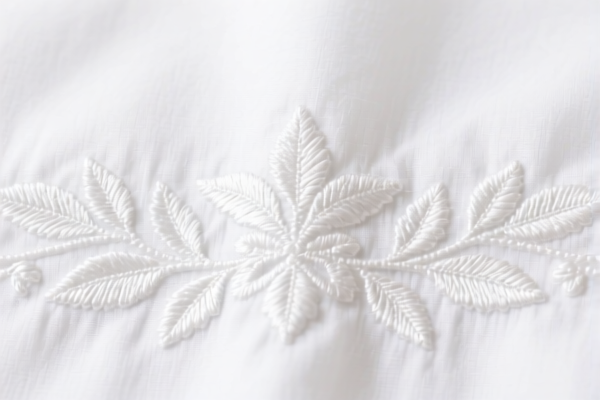
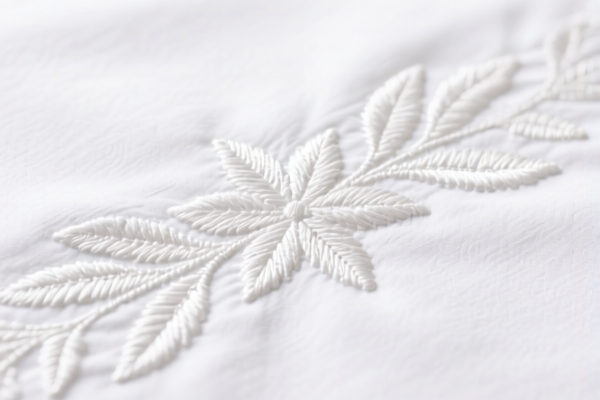
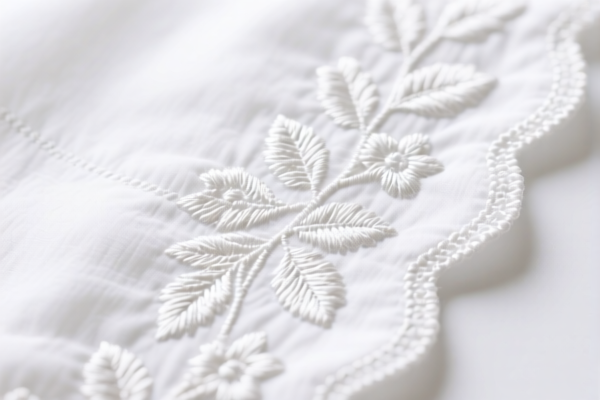
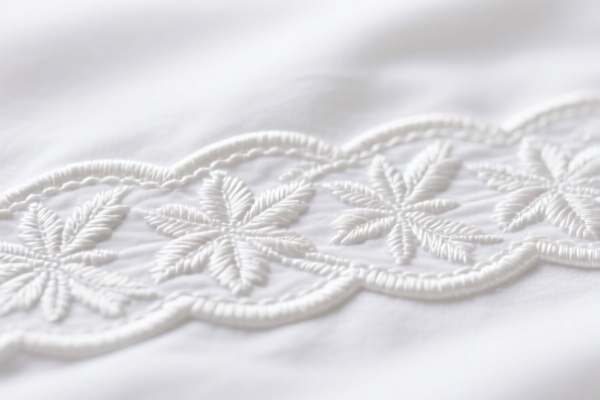
AI Analysis
🧵 Embroidered Fabric (Machine-Made Textiles)
🌐 HS Code Reference & Clearance Guide | 2026 Latest Tariff Analysis | Professional Customs Strategy
📌 I. Product Definition & Classification: What Exactly is "Embroidered Fabric"?
Embroidered fabric, in the context of international trade customs classification, is primarily categorized under Chapter 50-60 of the HS Code System. Crucially, customs authorities typically classify embroidered fabrics based on their base material composition (e.g., Wool, Cotton, Synthetic Fiber) rather than just the decorative embroidery itself. The embroidery is considered an integral part of the woven fabric.
The classification follows the "Governing Principle for Other Articles" (兜底原则) if no specific embroidery chapter applies, or is classified under the specific fiber chapter (Wool, Cotton, Man-Made) based on the dominant component of the base cloth.
⚠️ Key Distinction Point:
- If the fabric is made of Wool/Fine Animal Hair → Classified under Heading 51.
- If the fabric is made of Cotton → Classified under Heading 52.
- If the fabric is made of Synthetic Staple/Continuous Filament (e.g., Polyester) → Classified under Heading 54 or 55.
📦 II. HS Code Classification Details (2026 Latest Tariff Authority Comparison)
Based on the provided data, here are the specific HS Codes and their corresponding tax implications for Embroidered Fabrics:
| HS Code | Product Description | Inferred Material/Characteristic | Total Tax Rate |
|---|---|---|---|
5111.90.90.00 |
Woven fabric of other materials of wool or fine animal hair | Wool/Animal Hair based; fallback classification for "other" woven fabrics. | 60.0% |
5111.11.70.60 |
Woven fabric of other materials of wool or fine animal hair | Wool/Animal Hair based; specific match for woven morphology. | 60.0% |
5208.39.80.90 |
Woven fabrics of cotton, containing <85% cotton by weight | Cotton based; inferred from woven morphology. | 47.5% |
5208.49.80.90 |
Woven fabrics of cotton, bleached/dyed/piece-dyed | Cotton/Cotton Blend based; inferred from textile form. | 49.7% |
5407.52.20.40 |
Woven fabrics of synthetic staple fibers, containing <85% synthetic | Polyester/Synthetic based; inferred from sewing use/fabric morphology. | 49.9% |
🔍 Key Reminder:
- Embroidered fabrics are treated as Woven Fabrics (机织物). The embroidery process does not change the fundamental nature of the base fabric into a "finished garment" or "non-woven" item. - The Base Material determines the HS Code chapter (51, 52, or 54). - All listed HS Codes are subject to high additional tariffs due to US-China trade policies.
💰 III. 2026 Latest Tariff Rate Details (Including Surcharges & Policy Add-ons)
✅ Applicable Country: United States (US)
✅ Origin: China (CN)
✅ Effective Date: From November 10, 2025 (and subsequent imports)
🎯 1. Wool-Based Embroidered Fabrics (5111.90.90.00 / 5111.11.70.60)
| Item | Detail |
|---|---|
| Base Tariff | 25.0% (Ad valorem) |
| Section 301 Surcharge | +25.0% (USITC Footnote 9903.88.01) |
| Section 122 Surcharge | +10.0% (Specific trade remedy/add-on for China origin) |
| Total Tax Rate | 60.0% |
| Tax Calculation | CIF Value × 60% |
| De Minimis Exemption | ❌ NOT Available (Deny De Minimis) |
| Legal Basis Path | IEEPA:9903.01.25 → USITC:5111.xx → FOOTNOTE:9903.88.01 |
📌 Explanation:
- The 25% base tariff is the standard MFN rate for wool woven fabrics.
- The 25% Section 301 tariff is the major penalty for Chinese-origin goods in this category.
- The 10% Section 122 tariff is an additional layer for specific textile/trade violations or policy add-ons.
- Total 60% is extremely high. This makes exporting wool-based embroidered fabrics to the US highly unprofitable unless priced exceptionally high.
🎯 2. Cotton-Based Embroidered Fabrics (5208.39.80.90 / 5208.49.80.90)
| Item | Detail |
|---|---|
| Base Tariff | 12.5% - 14.7% (Varies by specific cotton content/weave) |
| Section 301 Surcharge | +25.0% (USITC Footnote 9903.88.01) |
| Section 122 Surcharge | +10.0% (Specific trade remedy/add-on for China origin) |
| Total Tax Rate | 47.5% (5208.39.80.90) / 49.7% (5208.49.80.90) |
| Tax Calculation | CIF Value × Total Rate |
| De Minimis Exemption | ❌ NOT Available (Deny De Minimis) |
| Legal Basis Path | IEEPA:9903.01.24 → USITC:5208.xx → FOOTNOTE:9903.88.01 |
📌 Note:
- Cotton fabrics generally have a lower base tariff than wool (12.5%-14.7% vs 25%).
- However, the fixed 25% + 10% surcharges push the total rate to nearly 50%.
- Even with a lower base, the final cost burden is massive.
🎯 3. Synthetic (Polyester) Embroidered Fabrics (5407.52.20.40)
| Item | Detail |
|---|---|
| Base Tariff | 14.9% |
| Section 301 Surcharge | +25.0% (USITC Footnote 9903.88.01) |
| Section 122 Surcharge | +10.0% (Specific trade remedy/add-on for China origin) |
| Total Tax Rate | 49.9% |
| Tax Calculation | CIF Value × 49.9% |
| De Minimis Exemption | ❌ NOT Available (Deny De Minimis) |
| Legal Basis Path | IEEPA:9903.01.24 → USITC:5407.xx → FOOTNOTE:9903.88.01 |
📌 Note:
- Synthetic fabrics (like Polyester) are common for embroidery due to durability.
- The base tariff is 14.9%, but the surcharges result in a 49.9% total rate, which is comparable to cotton fabrics.
🛠️ IV. Practical Clearance Advice (Battle-Tested Pitfall Avoidance Guide)
✅ 1. Required Documentation Checklist (None Can Be Missing)
| Document | Must Provide | Description |
|---|---|---|
| ✅ Product Specification Sheet | ✔️ | Must detail base fabric composition (e.g., "100% Cotton Warp, 100% Polyester Weft"), weave type, and embroidery thread material. |
| ✅ Fabric Composition Declaration | ✔️ | Critical for determining the correct HS Code (Wool vs. Cotton vs. Synthetic). |
| ✅ Product Photos (Including Label) | ✔️ | Clear images of the fabric texture, embroidery pattern, and any selvage labels indicating composition. |
| ✅ Commercial Invoice | ✔️ | Must explicitly state "Embroidered Woven Fabric" and specify the base material. Avoid vague terms like "Textile Material." |
| ✅ Packing List | ✔️ | Detail roll length, width, and weight to help customs verify the nature of the goods. |
| ✅ Country of Origin Certificate | ✔️ | Essential for proving Chinese origin (which triggers the surcharges). |
✅ 2. Declaration Tips (Key Mantras)
🔥 "Base Material First, Embroidery Second, HS Code Depends on Fiber!"
| Scenario | Correct Declaration | Wrong Practice |
|---|---|---|
| Cotton Base + Embroidery | 5208.xx (Cotton Chapter) |
Misdeclaring as "Synthetic" or "Other" → Risk of penalty. |
| Wool Base + Embroidery | 5111.xx (Wool Chapter) |
Misdeclaring as "Cotton" → 60% vs 47.5% rate difference! |
| Polyester Base + Embroidery | 5407.xx (Synthetic Chapter) |
Misdeclaring as "Cotton" → Incorrect classification. |
| Blended Base + Embroidery | Determine dominant fiber by weight | Guessing → Customs may reclassify and apply higher base rates. |
📌 Critical Warning:
- Do NOT declare simply as "Embroidery" or "Lace." If the base is woven, it is a Woven Fabric (51-55).
- Embroidery is considered a processing method, not a separate product category for the base fabric.
✅ 3. Special Case Handling
| Scenario | Handling Advice |
|---|---|
| Mixed Composition Fabric | If multiple fibers, use the weight percentage of the predominant fiber to determine the chapter. |
| Small Sample Swatches | Still subject to the same tariffs if declared as commercial samples for sale. Do not under-declare value. |
| OEM Custom Embroidery | Provide the original design file and specification sheet. Customs may verify the "embroidery" is not a separate decorative item attached later. |
| Transshipment (e.g., Vietnam) | If fabricated in Vietnam but materials are Chinese, Rule of Origin rules apply. May still be subject to US tariffs if Chinese content exceeds thresholds. |
🌍 V. Global Market Clearance Comparison (2026 Latest)
| Country/Region | Recommended HS Code | Tariff (China Origin) | Certification Requirements | Notes |
|---|---|---|---|---|
| 🇺🇸 USA | 5111, 5208, 5407 series |
47.5% - 60.0% | No specific tech cert, but high duty | Extremely High Duty. 25% + 10% surcharges apply. |
| 🇨🇳 China | Same HS Codes | 8% - 14% (Import Duty) | N/A | Low duty for raw material import. |
| 🇪🇺 EU | Same HS Codes | 9% - 12% (General MFN) | CE (if end-use is tech) | No Section 301 equivalent, but may have carbon border tax (CBAM) later. |
| 🇦🇺 Australia | Same HS Codes | 5% | N/A | Low duty, but check for anti-dumping if applicable. |
| 🇯🇵 Japan | Same HS Codes | 7% - 10% | PSE (if electronic textile) | Low duty, FTA benefits possible if Japan-CHINA EPA applies. |
📌 Conclusion:
- The USA is the most difficult market for embroidered fabrics from China due to the cumulative 35-40% surcharges on top of base duties.
- Total Cost of Duty: Up to 60% for wool, ~50% for cotton/synthetic.
- Strategy: Consider sourcing from Vietnam/Mexico (if rules of origin allow) to avoid US surcharges, or absorb the cost in high-end luxury pricing.
📌 VI. Common Mistakes & Pitfall Guide (Lessons Learned)
❌ Mistake 1: Declaring "Embroidery" as a separate product from the fabric.
👉 Consequence: Customs may classify the embroidery thread separately (higher tariff) or reject the classification → Delays & Fines.
❌ Mistake 2: Misidentifying the base material (e.g., saying "Polyester" when it's "Cotton").
👉 Consequence: Wrong HS Code → Underpayment of Tax → Back Taxes + Penalties (Up to 60% vs 47.5%).
❌ Mistake 3: Ignoring the "Section 122" tariff.
👉 Consequence: Assuming only 301 (25%) applies, leading to unbudgeted costs. The 10% add-on is real and mandatory.
❌ Mistake 4: Using "Textile" as a generic term in the invoice.
👉 Consequence: Customs will assign a catch-all HS Code with the highest possible duty rate → Maximum Tax.
✅ Correct Approach:
"Woven Embroidered Fabric, 100% Cotton, 200gsm, Roll Width 150cm, HS Code 5208.39.80.90, Origin: China"
🎯 VII. Conclusion: Professional Declaration Saves Money!
🎯 Remember the Mantra:
🔹 "Base Material Dictates HS Code, Embroidery is Just Decoration."
🔹 "Wool 60%, Cotton 50%, Synthetic 50% — US Duties Are Brutal!"
🔹 "Declare Accurately, Avoid Penalties, Or Pay the 60% Penalty!"
📌 Pro Tip:
If your embroidered fabric is destined for the US market, calculate your Landed Cost including the 47.5%-60% total duty.
Consider pre-ruling (Advance Ruling) with US CBP if the classification is ambiguous (e.g., mixed fibers).
For high-volume exports, explore Free Trade Agreements (FTAs) with other markets (EU, Japan, ASEAN) where duties are <10%.
📣 Immediate Action:
📞 Contact a Licensed Customs Broker + Provide Fabric Composition Details + Verify HS Code Pre-Ruling
🚀 Ensure Your Embroidered Fabrics Clear Customs Smoothly, Avoid Costly Delays, and Protect Margins!
✨ Professional Clearance Starts with Precise Classification!
💼 Every Percent of Duty Matters — Know Your HS Code, Know Your Costs!
Customer Reviews
About HS Code Classification
The Harmonized System (HS) is an internationally standardized nomenclature developed by the World Customs Organization (WCO) to classify traded products. Over 200 countries use the HS system as the basis for customs tariffs, trade statistics, and import/export regulations.
Each HS code follows a hierarchical structure:
- Chapter (2 digits) — Broad category of goods (e.g., Chapter 84: Machinery and Mechanical Appliances)
- Heading (4 digits) — More specific grouping within the chapter
- Subheading (6 digits) — Internationally standardized breakdown, used by all WCO member countries
- National subdivisions (8-10 digits) — Country-specific extensions for further classification, such as US HTSUS 10-digit codes
Correct HS code classification is essential for smooth customs clearance, accurate duty payment, and compliance with trade regulations. Misclassification can lead to customs delays, overpayment of duties, or penalties.
When importing from CN to US, the applicable tariff rates may include:
- Most-Favored-Nation (MFN) rate — The standard duty rate applied to WTO members
- General rate — Applied to countries without trade agreements
- Trade remedy duties — Additional tariffs such as Section 301 (anti-dumping), Section 232 (national security), or countervailing duties
The information provided on this page is for reference purposes only. For official classification, please consult with your local customs authority or a licensed customs broker.