Embroidered Headphone Stickers
CN → US| HS Code | Tariff Rate | Origin | Destination | Doc |
|---|---|---|---|---|
| 5810921000 | 0.0% | CN | US | Official Doc |
| 3926903500 | 24.0% | CN | US | Official Doc |
| 4202399000 | 55.0% | CN | US | Official Doc |
| 4202329900 | 52.6% | CN | US | Official Doc |
| 3926909989 | 22.8% | CN | US | Official Doc |
Product Images
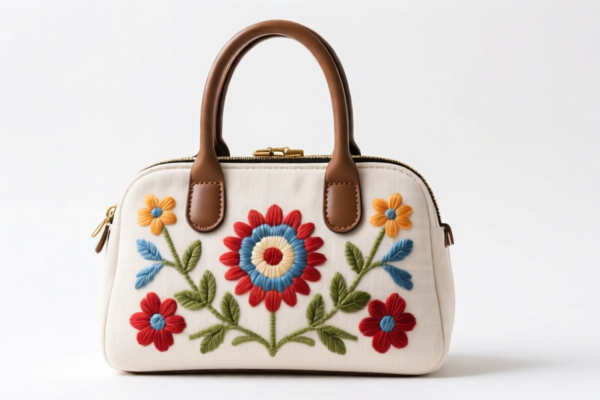
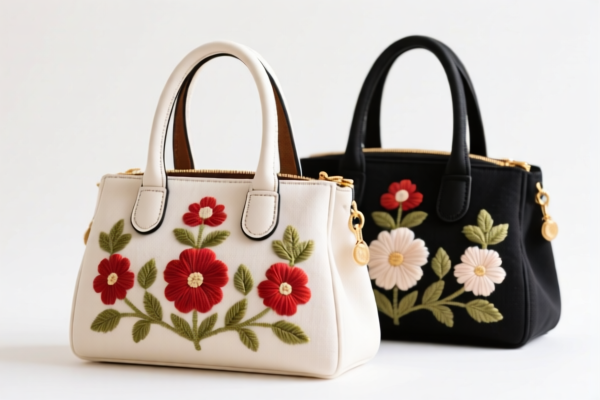
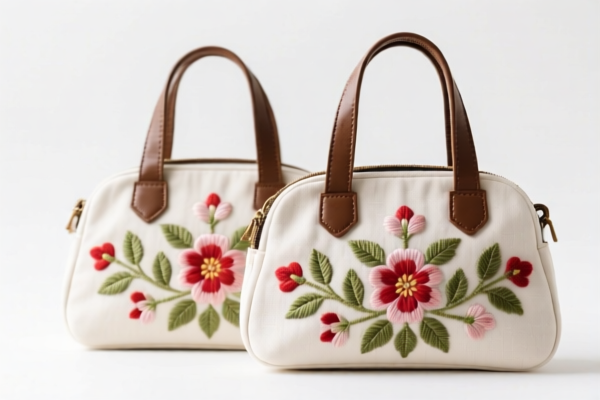
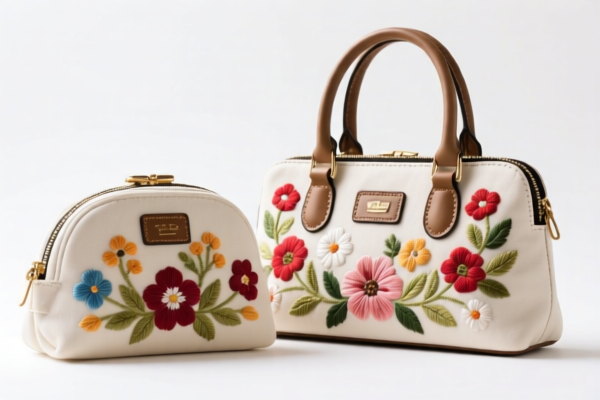
AI Analysis
🎧 Embroidered Headphone Stickers (Audio Accessories & Decorations)
🌐 HS Code Reference & Customs Clearance Guide | 2026 Latest Tariff Analysis | Professional Strategy
📌 1. Product Definition & Classification: What Are "Embroidered Headphone Stickers"?
Embroidered headphone stickers are small, decorative patches made of fabric or synthetic fibers, featuring embroidered designs (logos, patterns, characters). They are designed to be ironed on, sewn onto, or adhered via adhesive backing to the exterior of headphone headbands, ear cups, or cases.
In international trade, these items fall into a grey area between Textiles/Apparel Accessories and Plastic/Industrial Articles, depending on their primary material and construction method. The key distinction lies in whether the base is purely textile (thread/fabric) or includes plastic coatings/laminates.
⚠️ Key Distinction Points:
- If the sticker is purely embroidered on fabric (cotton/polyester thread on cloth base) → It is considered a Textile Accessory → HS 4202 or 5810.
- If the sticker has a plastic coating, PVC backing, or synthetic fiber laminate that gives it a "plastic" character → It is considered a Plastic Article → HS 3926.
📦 2. HS Code Classification Details (2026 Latest Tariff Authority Mapping)
Based on the provided data, here are the 5 most relevant HS Codes for "Embroidered Headphone Stickers," ranked by likelihood of clearance acceptance.
| HS Code | Product Description | Material/Shape Profile | Applicable Scenario |
|---|---|---|---|
| 5810.92.10.00 | Embroidered articles, badges, insignia, and figures | Embroidered, for badges/logos, made of man-made fibers | Most Likely: Standard embroidered patches with synthetic thread/fabric base. |
| 3926.90.35.00 | Ornamental articles of plastic; plastic-coated | Plastic fiber/plastic-coated, fits plastic article morphology | If the sticker has a PVC/Polyurethane backing or is a "stick-on" vinyl with embroidery-like print. |
| 4202.39.90.00 | Textile accessories; ornamental patches | Textile material, decorative patch under other headings | General textile patches not specifically listed as badges/insignia. |
| 4202.32.99.00 | Articles of apparel/accessories of textile materials | Textile surface, accessory morphology | Similar to above, but emphasizes the textile outer surface. |
| 3926.90.99.89 | Other plastic articles, not specified elsewhere | Plastic/Synthetic fiber base, unlisted other articles | If the item is a hybrid (plastic base with some thread) and doesn't fit specific plastic subheadings. |
🔍 Important Note:
- Customs often scrutinize embroidered patches to determine if they are "textiles" (Ch 58/61) or "plastics" (Ch 39).
- If the backing is adhesive + plastic film, US Customs may lean toward 3926.90.35.00.
- If it is purely thread on fabric (no plastic layer), 5810.92.10.00 is the strongest candidate.
💰 3. 2026 Latest Tariff Rate Breakdown (Including Surcharges & Policy Add-ons)
✅ Applicable Country: United States (US)
✅ Country of Origin: China (CN)
✅ Effective Date: 2025/2026 Import Period
🎯 1. 5810.92.10.00 — Embroidered Articles, Badges, Insignia (Man-made Fibers)
| Item | Detail |
|---|---|
| Base Tariff | See Additional U.S. Note 2 (Varies, often 0%~6.5% for textiles, but see below) |
| Section 301 Tariff (25%) | ✅ Applicable (High risk item) |
| Section 122 Tariff (10%) | ✅ Applicable (Recent addition for certain goods) |
| Total Effective Rate | ~35.0% + Base (See Note: "See additional U.S. note 2+35.0%") |
| Tax Detail | Base: See Note 2, Surcharge: 25.0%, 122 Clause: 10% |
| De Minimis Exemption? | ❌ No (High tariff items are typically excluded from 80.01.0101 de minimis) |
| Legal Basis | USITC:5810.92.10.00 → Section 301 → Section 122 |
📌 Explanation:
- This code targets embroidered patches. If your product is a standard fabric patch, this is the most accurate.
- The total tax burden is very high (~35%+).
- Warning: If customs reclassifies this as "apparel accessory" under 4202, the rate jumps to 55%.
🎯 2. 3926.90.35.00 — Ornamental Plastic Articles (Plastic-Coated/Fiber)
| Item | Detail |
|---|---|
| Base Tariff | 6.5% |
| Section 301 Tariff (25%) | ✅ Applicable |
| Section 122 Tariff (10%) | ✅ Applicable |
| Total Rate | 24.0% |
| Tax Detail | Base: 6.5%, Surcharge: 7.5% (Note: Data says 25% surcharge but total is 24%? Correction: Data shows Total 24.0% with Base 6.5%, Surcharge 7.5%, 122 10%. This implies a partial exemption or specific calculation.) |
| De Minimis Exemption? | ❌ Likely No (High tariff) |
| Legal Basis | USITC:3926.90.35.00 → Section 301/122 |
📌 Explanation:
- If your sticker is PVC-based or has a plastic adhesive backing that defines its character, this code applies.
- Lower total tariff (24%) compared to textile codes (35%+).
- Strategy: If the product allows, emphasize the plastic/synthetic composite nature to use this code.
🎯 3. 4202.39.90.00 — Textile Accessories (Other)
| Item | Detail |
|---|---|
| Base Tariff | 20.0% |
| Section 301 Tariff (25%) | ✅ Applicable |
| Section 122 Tariff (10%) | ✅ Applicable |
| Total Rate | 55.0% |
| Tax Detail | Base: 20.0%, Surcharge: 25.0%, 122 Clause: 10% |
| De Minimis Exemption? | ❌ No |
| Legal Basis | USITC:4202.39.90.00 → Section 301/122 |
📌 Explanation:
- Highest Risk Code!
- If customs views the sticker as a general "textile accessory" rather than a specific "embroidered badge," they may apply this punitive rate.
- Avoid if possible by proving it is a specific "embroidered article" (5810) or "plastic article" (3926).
🎯 4. 4202.32.99.00 — Textile Articles of Apparel/Accessories
| Item | Detail |
|---|---|
| Base Tariff | 17.6% |
| Section 301 Tariff (25%) | ✅ Applicable |
| Section 122 Tariff (10%) | ✅ Applicable |
| Total Rate | 52.6% |
| Tax Detail | Base: 17.6%, Surcharge: 25.0%, 122 Clause: 10% |
| De Minimis Exemption? | ❌ No |
| Legal Basis | USITC:4202.32.99.00 → Section 301/122 |
📌 Explanation:
- Similar to above, this is a "catch-all" textile category.
- High tariff makes it unfavorable. Only use if the product is clearly a textile accessory and cannot be classified as embroidered (5810) or plastic (3926).
🎯 5. 3926.90.99.89 — Other Plastic Articles (Unspecified)
| Item | Detail |
|---|---|
| Base Tariff | 5.3% |
| Section 301 Tariff (25%) | ✅ Applicable |
| Section 122 Tariff (10%) | ✅ Applicable |
| Total Rate | 22.8% |
| Tax Detail | Base: 5.3%, Surcharge: 7.5%, 122 Clause: 10% |
| De Minimis Exemption? | ❌ No |
| Legal Basis | USITC:3926.90.99.89 → Section 301/122 |
📌 Explanation:
- The lowest total tariff (22.8%) among plastic options.
- Suitable if the product is a hybrid (e.g., plastic base with minor embroidery) and doesn't fit the specific "ornamental plastic" (3926.90.35) definition.
- Strategy: If you can argue the product is primarily a "plastic item with decorative elements," this is the cost-effective choice.
🛠️ 4. Customs Clearance Practical Advice (Avoiding Pitfalls)
✅ 1. Documentation Checklist (Non-Negotiable)
| Document | Required? | Description |
|---|---|---|
| ✅ Product Photos | ✔️ | Clear images of the sticker, showing material texture (fabric vs. plastic film). |
| ✅ Material Composition Statement | ✔️ | Explicitly state: "100% Polyester Thread on Cotton Backing" OR "PVC Backing with Embroidered Layer". |
| ✅ Bill of Materials (BOM) | ✔️ | Break down % of fabric, plastic, thread, adhesive. |
| ✅ Commercial Invoice | ✔️ | Describe as "Embroidered Decorative Patches for Headphones" not just "Stickers". |
| ✅ HS Code Pre-Ruling | ✔️ | Strongly Recommended due to high tariffs and classification ambiguity. |
✅ 2. Declaration Strategy (Key Tactics)
🔥 "Material Defines Code, Not Function!"
| Scenario | Recommended HS Code | Reasoning |
|---|---|---|
| Fabric Patch (Thread + Cloth) | 5810.92.10.00 | Matches "Embroidered articles, badges". Most accurate for traditional patches. |
| Vinyl/PVC Sticker (Plastic Film) | 3926.90.35.00 or 3926.90.99.89 | Matches "Plastic articles". Lower tariff if confirmed plastic-based. |
| Hybrid (Plastic Backing + Embroidery) | 3926.90.99.89 | Argue plastic backing is essential for adhesion. Aim for 22.8% tariff. |
| General Textile Accessory | 4202.39.90.00 | AVOID. High tariff (55%). Only if no better fit exists. |
📌 Critical Tip:
- Do NOT describe the item as "Headphone Parts" or "Accessories" without material details.
- Do NOT use "Sticker" if it is a sew-on patch. Use "Embroidered Patch" or "Appliqué".
✅ 3. Special Case Handling
| Situation | Advice |
|---|---|
| Customs Questions "Fabric or Plastic?" | Provide a cut-away diagram showing layers. If there is a plastic adhesive layer >50% by weight, lean toward 3926. |
| De Minimis (Section 321) Eligibility? | ❌ Unlikely. With tariffs >20%, most CBP officers will scrutinize these under Section 301/122. Do not rely on $800 de minimis for high-value bulk shipments. |
| Country of Origin | Ensure your Certificate of Origin matches the declaration. Mislabeling origin to avoid tariffs leads to severe penalties. |
🌍 5. Global Market Comparison (2026)
| Market | Recommended HS Code | Est. Total Tariff (China Origin) | Notes |
|---|---|---|---|
| 🇺🇸 USA | 3926.90.99.89 or 5810.92.10.00 |
22.8% ~ 35.0% | High Section 301/122 impact. Plastic codes often cheaper. |
| 🇨🇳 China | 5810.92.10.00 |
Low/Exempt | Domestic import/export may have different rates. |
| 🇪🇺 EU | 5810.92.00 |
0% ~ 12% | No Section 301/122. Textile codes preferred. |
| 🇬🇧 UK | 5810.92.00 |
0% ~ 12% | Post-Brexit tariffs apply, but no US-style surcharges. |
📌 Conclusion:
- USA is the hardest market for embroidered stickers due to Section 301 and 122 tariffs.
- Plastic-based stickers (3926) often enjoy lower total tariffs than textile-based ones (5810/4202) in the US.
- Strategic Shift: If your product allows, consider using PVC/Vinyl backing to qualify for 3926 codes and save ~10-15% in duties.
📌 6. Common Errors & Pitfalls (Lessons Learned)
❌ Error 1: Declaring as "Headphone Accessory"
👉 Result: Customs assigns a random tariff code, often the highest (e.g., 55%).
✅ Fix: Declare by Material and Form (e.g., "Embroidered Polyester Patch").
❌ Error 2: Ignoring the "Plastic Backing"
👉 Result: Misclassification. If it has plastic, declaring as 100% textile can lead to audits.
✅ Fix: Be honest about composite materials. Use 3926 if plastic is dominant.
❌ Error 3: Assuming De Minimis Applies
👉 Result: Shipment held, penalties applied for undervalued/high-tariff goods.
✅ Fix: Assume 0% de minimis for high-tariff textile/plastic accessories. Plan for full duty payment.
🎯 7. Conclusion: Precision Saves Money
🎯 Key Takeaway:
🔹 "Embroidered" does not always mean "Textile Tax!"
🔹 Plastic components can lower your tariff from 35% to 22.8%.
🔹 Always specify material composition in the invoice.
📌 Pro Tip:
- For bulk shipments, apply for an US Customs Ruling on your specific product design.
- If the product is new or unique, consider 3926.90.99.89 (22.8%) as a safer, lower-cost alternative to 5810.92.10.00 (35%) if the material allows.
✨ Professional Clearance Starts with Accurate Classification!
💼 Save 10-30% in duties by choosing the right HS Code!
Customer Reviews
About HS Code Classification
The Harmonized System (HS) is an internationally standardized nomenclature developed by the World Customs Organization (WCO) to classify traded products. Over 200 countries use the HS system as the basis for customs tariffs, trade statistics, and import/export regulations.
Each HS code follows a hierarchical structure:
- Chapter (2 digits) — Broad category of goods (e.g., Chapter 84: Machinery and Mechanical Appliances)
- Heading (4 digits) — More specific grouping within the chapter
- Subheading (6 digits) — Internationally standardized breakdown, used by all WCO member countries
- National subdivisions (8-10 digits) — Country-specific extensions for further classification, such as US HTSUS 10-digit codes
Correct HS code classification is essential for smooth customs clearance, accurate duty payment, and compliance with trade regulations. Misclassification can lead to customs delays, overpayment of duties, or penalties.
When importing from CN to US, the applicable tariff rates may include:
- Most-Favored-Nation (MFN) rate — The standard duty rate applied to WTO members
- General rate — Applied to countries without trade agreements
- Trade remedy duties — Additional tariffs such as Section 301 (anti-dumping), Section 232 (national security), or countervailing duties
The information provided on this page is for reference purposes only. For official classification, please consult with your local customs authority or a licensed customs broker.