Empty Perfume Bottle
CN → US| HS Code | Tariff Rate | Origin | Destination | Doc |
|---|---|---|---|---|
| 7010903010 | 40.2% | CN | US | Official Doc |
| 3923300090 | 38.0% | CN | US | Official Doc |
| 3923300010 | 38.0% | CN | US | Official Doc |
| 7013993000 | 26.5% | CN | US | Official Doc |
| 7010903020 | 40.2% | CN | US | Official Doc |
Product Images
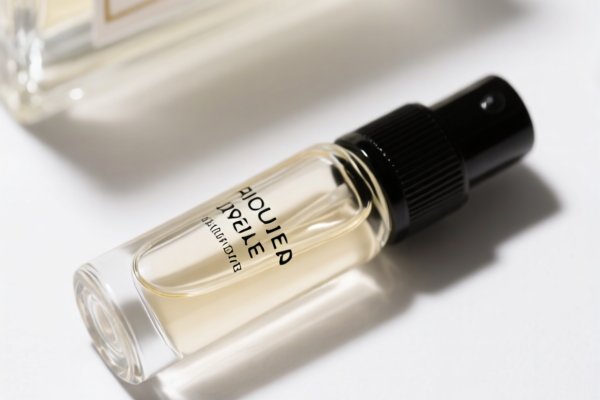
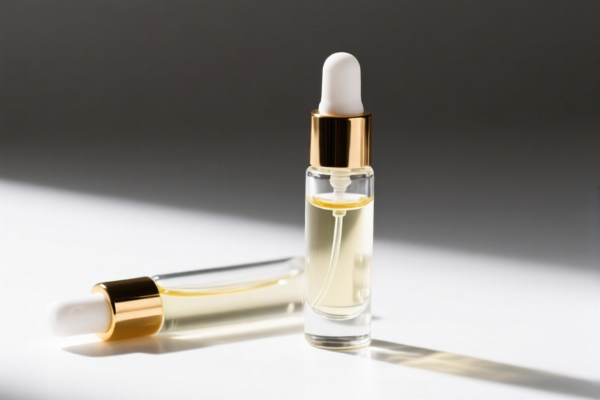
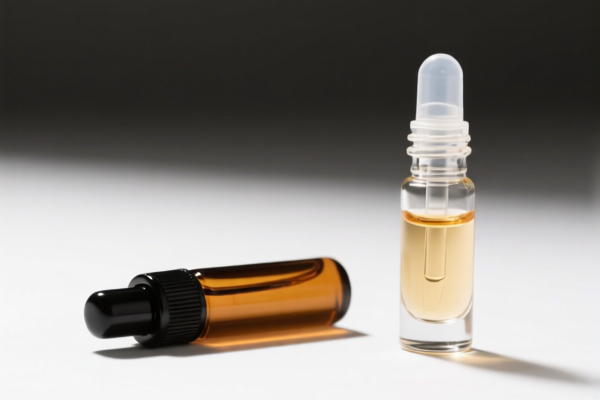

AI Analysis
🧴 Empty Perfume Bottle (Glass & Plastic)
🌐 HS Code Reference & Customs Clearance Guide | 2026 Latest Tariff Analysis | Professional Strategy for Fragrance Packaging
📌 I. Product Definition: What Exactly is an "Empty Perfume Bottle"?
An empty perfume bottle is a container specifically designed for packaging fragrances, essential oils, or cosmetic liquids. In international trade, the classification depends strictly on the material and primary function.
The two main categories are: 1. Glass Bottles: Rigid, transparent or colored, often requiring specific sub-codes for "perfume" vs. general "glass containers." 2. Plastic Bottles: Lightweight, flexible, categorized under "articles for the conveyance or packing of goods."
⚠️ Key Classification Point:
- If the bottle is made of Glass, it falls under Chapter 70 (Glass and Glassware).
- If the bottle is made of Plastic, it falls under Chapter 39 (Plastics and Articles Thereof).
- Note: The presence of sprayers, caps, or pumps does not change the primary material classification of the bottle body itself in this context, unless the component value significantly alters the essential character (which is rare for simple bottles).
📦 II. HS Code Classification Matrix (2026 Latest Tariff Data)
Based on the provided dataset, here is the precise mapping for Empty Perfume Bottles:
| HS Code | Material | Specific Description | Key Characteristic |
|---|---|---|---|
7010.90.30.10 |
Glass | Perfume bottles, glass material, used for packaging perfume | Specific for Perfume: High precision classification |
7010.90.30.20 |
Glass | Perfume bottles, glass material, glass container | General Glass Container: Broader category for glass |
7013.99.30.00 |
Glass | Perfume bottles, glass material, glass container | Other Glassware: Different sub-heading for specific glass types |
3923.30.00.90 |
Plastic | Perfume bottles, plastic material, other containers | Other Plastic Containers: Non-specific plastic packaging |
3923.30.00.10 |
Plastic | Perfume bottles, plastic material, containers for packing | Packing Containers: Specifically for packaging use |
🔍 Critical Distinction:
- Glass vs. Plastic: The tariff rates differ significantly due to the base duty and the specific "122 Provision" application.
- Glass Sub-codes:7010.90.30.10and7010.90.30.20are specifically tailored for perfume packaging, while7013.99.30.00is a broader glass container code.
- Plastic Sub-codes:3923.30.00.10and3923.30.00.90cover plastic packaging, with minor distinctions in specific use cases.
💰 III. 2026 Tariff Rate Breakdown (China Origin → US Market)
✅ Applicable Country: United States (US)
✅ Origin: China (CN)
✅ Effective Date: 2025/2026 (Current Trade Policy)
🎯 1. Glass Bottles (High Sensitivity to Sub-Codes)
| HS Code | Description | Base Duty | Section 301 Duty | 122 Provision Duty | Total Tax Rate | Legal Basis Path |
|---|---|---|---|---|---|---|
7010.90.30.10 |
Glass Perfume Bottle (Specific) | 5.2% | 25.0% | 10.0% | 40.2% | Base:5.2% → Sec301:25% → 122:10% |
7010.90.30.20 |
Glass Container (General) | 5.2% | 25.0% | 10.0% | 40.2% | Base:5.2% → Sec301:25% → 122:10% |
7013.99.30.00 |
Glass Container (Other) | 9.0% | 7.5% | 10.0% | 26.5% | Base:9.0% → Sec301:7.5% → 122:10% |
📌 Analysis:
-7010.90.30.xxattracts the highest tax (40.2%). This is because the base duty (5.2%) is low, but it is subject to the full 25% Section 301 tariff plus the 10% 122 Provision.
-7013.99.30.00offers a lower tax rate (26.5%). Although the base duty is higher (9.0%), the Section 301 component is reduced to 7.5%, resulting in a significant savings.
- Strategy: If the bottle fits the description of7013.99.30.00(other glass containers not specified elsewhere), use this code to save 13.7% in taxes.
🎯 2. Plastic Bottles (Uniform High Tax)
| HS Code | Description | Base Duty | Section 301 Duty | 122 Provision Duty | Total Tax Rate | Legal Basis Path |
|---|---|---|---|---|---|---|
3923.30.00.90 |
Plastic Container (Other) | 3.0% | 25.0% | 10.0% | 38.0% | Base:3.0% → Sec301:25% → 122:10% |
3923.30.00.10 |
Plastic Packing Container | 3.0% | 25.0% | 10.0% | 38.0% | Base:3.0% → Sec301:25% → 122:10% |
📌 Analysis:
- Both plastic codes carry the same 38.0% total tax.
- The structure is identical: Low base (3.0%) + High Section 301 (25.0%) + 122 Provision (10.0%).
- No tax advantage in choosing between.10or.90based on rate alone; choose based on product accuracy (e.g., is it strictly for "packing" or "other containers"?).
🛠️ IV. Customs Clearance Practical Advice
✅ 1. Documentation Checklist (Mandatory)
| Document | Required? | Purpose |
|---|---|---|
| ✅ Product Spec Sheet | ✔️ | Must clearly state material (Glass vs. Plastic) and capacity. |
| ✅ Material Declaration | ✔️ | Explicitly state "100% Glass" or "100% Plastic" to avoid misclassification. |
| ✅ Commercial Invoice | ✔️ | Must describe as "Empty Perfume Bottles" – Do NOT say "Perfume" (which would imply liquid contents). |
| ✅ Photos | ✔️ | Show the bottle empty, without liquid, with clear labeling. |
| ✅ Plastic Declaration (if Plastic) | ✔️ | For 3923.xx, ensure no restricted plastics are used (e.g., certain PVCs may have additional environmental fees). |
✅ 2. Declaration Tips (Critical for Accuracy)
🔥 Golden Rule: "Material First, Function Second, Empty Always!"
| Scenario | Recommended HS Code | Reason |
|---|---|---|
| Glass Bottle, Perfume Specific | 7010.90.30.10 |
Most accurate for "Perfume" use, but highest tax (40.2%). |
| Glass Bottle, General Use | 7013.99.30.00 |
Best for Cost Savings: Lower total tax (26.5%) if product fits description. |
| Plastic Bottle, Packing Use | 3923.30.00.10 |
Accurate for "packing" context. Tax: 38.0%. |
| Plastic Bottle, Other | 3923.30.00.90 |
Alternative if .10 is rejected. Tax: 38.0%. |
⚠️ Warning:
- Do Not declare as "Perfume" or "Liquids." Empty bottles are packaging materials.
- Do Not mix Glass and Plastic in one HS Code line item. They must be separated.
- 122 Provision: The 10% "122 Provision" tariff applies to all these codes. There is no exemption for empty packaging under this provision.
✅ 3. Risk Mitigation Strategies
| Risk | Solution |
|---|---|
| Misclassification Penalty | If declared as 7013.99.30.00 but used exclusively for perfume, Customs may reclassify to 7010.90.30.10 and charge the difference. Ensure product description matches the code's intent. |
| Plastic Composition | Ensure plastic bottles do not contain banned substances (e.g., certain phthalates). Provide a Material Safety Data Sheet (MSDS) if requested. |
| Origin Marking | All bottles must be clearly marked "Made in China" to ensure Section 301 and 122 taxes are correctly applied. |
🌍 V. Global Market Comparison (2026)
| Market | HS Code Reference | Est. Total Duty | Notes |
|---|---|---|---|
| 🇺🇸 USA | 7010.90.30.10 / 3923.30.00.90 |
26.5% - 40.2% | Includes 25% Sec 301 + 10% 122 Provision. High cost. |
| 🇨🇳 China | 7010.90.30 / 3923.30.00 |
5% - 10% | No Section 301 or 122 tariffs. Low cost for import into China. |
| 🇪🇺 EU | 7010.90 / 3923.30 |
0% - 4.5% | Generally no retaliatory tariffs on packaging. |
| 🇬🇧 UK | 7010.90 / 3923.30 |
0% - 4.0% | Post-Brexit, lower duties than US. |
📌 Conclusion:
- USA is the most expensive market due to Section 301 and 122 Provision tariffs.
- EU/UK offer significant cost advantages for glass/plastic packaging exports.
📌 VI. Common Mistakes & Pitfalls
❌ Mistake 1: Declaring "Perfume Bottles" with liquid residue inside.
👉 Consequence: Classified as "Perfume" (Chapter 33) → Different HS Code → Potential seizure for non-compliance.
👉 Fix: Ensure bottles are 100% empty and cleaned.
❌ Mistake 2: Using 7013.99.30.00 for bottles clearly labeled "For Perfume Only."
👉 Consequence: Customs may challenge the code as "not specific enough" and reclassify to 7010.90.30.10 (40.2% tax).
👉 Fix: If the bottle is uniquely shaped for perfume, use 7010.90.30.10. If generic, use 7013.99.30.00.
❌ Mistake 3: Ignoring the "122 Provision" (10% tariff).
👉 Consequence: Underestimating landed cost by 10%.
👉 Fix: Include 10% in all cost calculations for US imports from China.
🎯 VII. Final Strategy: Optimize Your Cost!
🎯 Memory Hook:
🔹 "Glass: Check if 7013 saves you 13%! Plastic: 38% is flat. Always pay the 122% extra!"
🔹 "Empty is Key: Liquids change everything. Keep it dry, keep it cheap."
✅ Action Plan:
- For Glass: Evaluate if your bottle design allows for classification under
7013.99.30.00(26.5%). If it's a standard bottle, this is your best option. - For Plastic: No tax optimization possible between
.10and.90. Focus on accurate description to avoid audits. - Documentation: Always declare as "Empty" and specify "Packaging Material."
📣 Immediate Action:
📞 Contact your customs broker to confirm if your specific bottle shape qualifies for
7013.99.30.00.
🚀 Update your ERP system with the correct HS Codes and tax rates (40.2% for specific glass, 26.5% for general glass, 38.0% for plastic).
✨ Professional clearance starts with precise classification!
💼 Every percentage point saved is profit gained!
Customer Reviews
About HS Code Classification
The Harmonized System (HS) is an internationally standardized nomenclature developed by the World Customs Organization (WCO) to classify traded products. Over 200 countries use the HS system as the basis for customs tariffs, trade statistics, and import/export regulations.
Each HS code follows a hierarchical structure:
- Chapter (2 digits) — Broad category of goods (e.g., Chapter 84: Machinery and Mechanical Appliances)
- Heading (4 digits) — More specific grouping within the chapter
- Subheading (6 digits) — Internationally standardized breakdown, used by all WCO member countries
- National subdivisions (8-10 digits) — Country-specific extensions for further classification, such as US HTSUS 10-digit codes
Correct HS code classification is essential for smooth customs clearance, accurate duty payment, and compliance with trade regulations. Misclassification can lead to customs delays, overpayment of duties, or penalties.
When importing from CN to US, the applicable tariff rates may include:
- Most-Favored-Nation (MFN) rate — The standard duty rate applied to WTO members
- General rate — Applied to countries without trade agreements
- Trade remedy duties — Additional tariffs such as Section 301 (anti-dumping), Section 232 (national security), or countervailing duties
The information provided on this page is for reference purposes only. For official classification, please consult with your local customs authority or a licensed customs broker.