Emulsion SBR for Adhesive Tapes
CN → US| HS Code | Tariff Rate | Origin | Destination | Doc |
|---|---|---|---|---|
| 4002910000 | 35.0% | CN | US | Official Doc |
| 4002110000 | 35.0% | CN | US | Official Doc |
| 4005910000 | 35.0% | CN | US | Official Doc |
| 4008210000 | 35.0% | CN | US | Official Doc |
| 4008115000 | 38.3% | CN | US | Official Doc |
Product Images
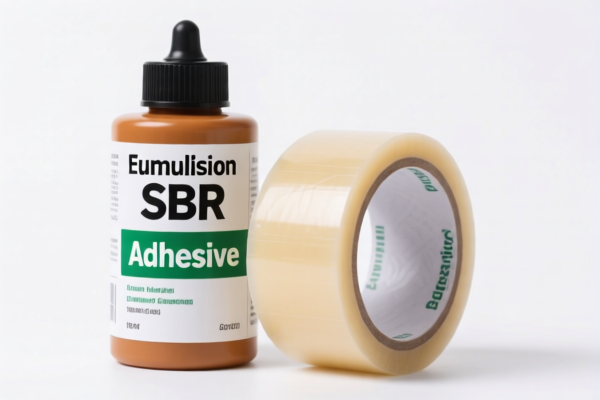
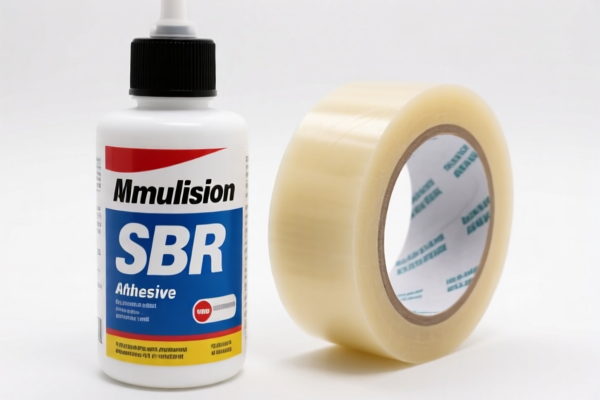
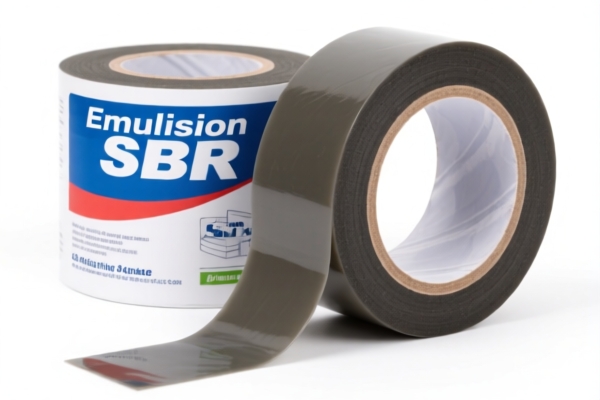
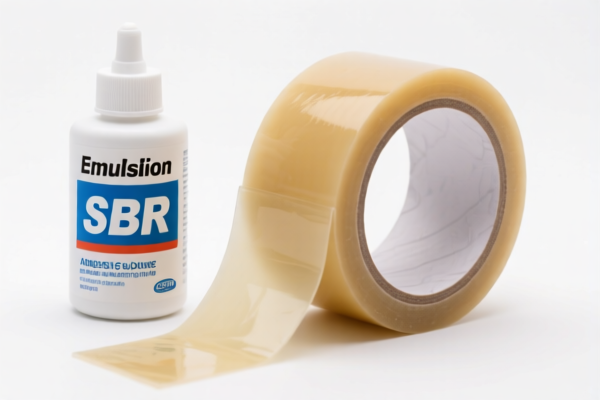
AI Analysis
🧪 Emulsion SBR for Adhesive Tapes (Styrene-Butadiene Rubber)
🌐 HS Code Reference & Customs Clearance Guide | 2026 Latest Tariff Analysis | Professional Strategy
📌 I. Product Definition & Classification: Do You Really Understand "Emulsion SBR"?
Emulsion Styrene-Butadiene Rubber (SBR) is a synthetic rubber produced via emulsion polymerization. In international trade, especially for adhesive tape manufacturing, the form (liquid/emulsion vs. solid/sheet) and processing state (vulcanized vs. unvulcanized) dictate the HS Code.
Key Distinction:
- Liquid Form (Latex/Emulsion): Raw material in liquid state, requiring further processing (drying/mixing).
- Solid Form (Sheets/Slabs): Dried, consolidated rubber, ready for further industrial use.
- Processing State: Unvulcanized (raw) vs. Vulcanized (finished/hardened). This is the single most critical factor for tariff calculation.
⚠️ Critical Note for Adhesive Applications:
- If imported as liquid latex for mixing into adhesive compounds → Chapter 40 (Rubber Goods), Headings 4002 or 4005.
- If imported as pre-formed sheets for direct lamination → Chapter 40, Headings 4005 or 4008.
- Do NOT confuse with "Adhesives" (Chapter 35 or 39); SBR itself is a rubber, not a finished adhesive product.
📦 II. HS Code Classification Details (2026 Latest Tariff Alignment)
Based on your input data, here are the specific classifications for SBR products related to adhesive tapes, ranging from liquid emulsion to solid sheets.
| HS Code | Product Description | Form & State | Key Identifier |
|---|---|---|---|
4002.91.00.00 |
Emulsion SBR Latex | Liquid Emulsion | "Match rubber material & emulsion state"; Raw liquid SBR |
4002.11.00.00 |
Emulsion SBR Latex | Liquid Emulsion | "Material & state classification consistent"; Raw liquid SBR |
4005.91.00.00 |
Unvulcanized SBR Sheets | Solid Sheet (Unvulcanized) | "Unvulcanized mixed rubber sheet"; Dried but not hardened |
4008.21.00.00 |
Vulcanized SBR Sheets | Solid Sheet (Vulcanized) | "Vulcanized non-foam sheet/strip"; Hardened, final form |
4008.11.50.00 |
Vulcanized SBR Slabs/Bars | Solid Slab/Strip (Vulcanized) | "Vulcanized rubber slab/strip classification"; Higher base tariff |
🔍 Important Reminder:
- Codes 4002.xx apply to liquid emulsions.
- Code 4005.xx applies to unvulcanized (soft, raw) solid rubber.
- Codes 4008.xx apply to vulcanized (hardened) rubber.
- Vulcanized rubber (4008) often attracts a higher base tariff (3.3% vs 0%) than unvulcanized or liquid forms, despite similar additional duties.
💰 III. 2026 Latest Tariff Rate Breakdown (Including Surcharges & Policy Add-ons)
✅ Applicable Country: United States (US)
✅ Origin: China (CN)
✅ Effective Date: Post-November 2025 (Current Trade War Context)
🎯 1. Liquid Emulsion SBR (4002.91.00.00 & 4002.11.00.00)
| Item | Content |
|---|---|
| Base Tariff | 0.0% (Ad Valorem) |
| Section 301 Surcharge | +25.0% |
| Section 122 Duty | +10.0% (Specific provision for certain rubber products) |
| Total Tariff Rate | 35.0% |
| Tax Calculation | CIF Value × 35% |
| De Minimis Eligibility | ❌ Not Eligible (deny_de_minimis) |
| Legal Authority Path | USITC:4002.91.00.00 → FOOTNOTE:301-SECTION → SECTION-122 |
📌 Explanation:
- Base 0%: Emulsion SBR is generally considered a raw industrial chemical/rubber material with low base duty.
- 301 Surcharge (+25%): Applies to all Chinese-origin rubber goods under Section 301.
- Section 122 (+10%): A specific additional tariff line for certain elastomers/rubbers.
- Total: 35% is the mandatory cost. No exceptions for small shipments.
🎯 2. Unvulcanized SBR Sheets (4005.91.00.00)
| Item | Content |
|---|---|
| Base Tariff | 0.0% |
| Section 301 Surcharge | +25.0% |
| Section 122 Duty | +10.0% |
| Total Tariff Rate | 35.0% |
| Tax Calculation | CIF Value × 35% |
| De Minimis Eligibility | ❌ Not Eligible (deny_de_minimis) |
| Legal Authority Path | USITC:4005.91.00.00 → FOOTNOTE:301-SECTION → SECTION-122 |
📌 Note:
- Even though it is a solid sheet, because it is unvulcanized, it retains the 0% base rate.
- The total effective tariff remains 35%, identical to the liquid form.
🎯 3. Vulcanized SBR Sheets (4008.21.00.00)
| Item | Content |
|---|---|
| Base Tariff | 0.0% |
| Section 301 Surcharge | +25.0% |
| Section 122 Duty | +10.0% |
| Total Tariff Rate | 35.0% |
| Tax Calculation | CIF Value × 35% |
| De Minimis Eligibility | ❌ Not Eligible (deny_de_minimis) |
| Legal Authority Path | USITC:4008.21.00.00 → FOOTNOTE:301-SECTION → SECTION-122 |
📌 Comparison:
- Similar to unvulcanized sheets, this code has a 0% base rate.
- Total tariff is 35%.
🎯 4. Vulcanized SBR Slabs/Strips (4008.11.50.00) ⚠️ HIGHER COST
| Item | Content |
|---|---|
| Base Tariff | 3.3% |
| Section 301 Surcharge | +25.0% |
| Section 122 Duty | +10.0% |
| Total Tariff Rate | 38.3% |
| Tax Calculation | CIF Value × 38.3% |
| De Minimis Eligibility | ❌ Not Eligible (deny_de_minimis) |
| Legal Authority Path | USITC:4008.11.50.00 → FOOTNOTE:301-SECTION → SECTION-122 |
🚨 Critical Alert:
- This specific subheading (4008.11.50) has a non-zero base tariff (3.3%).
- Total Tariff: 38.3%, which is 3.3 percentage points higher than all other SBR classifications in this list.
- Why? It likely falls under a more specific "finished rubber article" or "strip" category that is not fully exempted by the base rate.
- Recommendation: Avoid this code unless the physical form strictly matches. Prefer4008.21.00.00(Sheets) if possible, which keeps the base at 0%.
🛠️ IV. Customs Clearance Practical Advice (Real-World Pitfall Guide)
✅ 1. Required Documentation Checklist (Non-Negotiable)
| Document | Mandatory? | Purpose |
|---|---|---|
| ✅ Product Specification Sheet | ✔️ | Must state: "Styrene-Butadiene Rubber", Emulsion Polymerization, Solids Content %, Particle Size. |
| ✅ MSDS (Material Safety Data Sheet) | ✔️ | Critical for rubber chemicals. Must confirm non-hazardous for general cargo. |
| ✅ Certificate of Analysis (CoA) | ✔️ | Proves chemical composition (Styrene/SBR ratio) to match HS Code description. |
| ✅ Commercial Invoice | ✔️ | Must clearly state "Unvulcanized" or "Vulcanized" and "Liquid/Emulsion" or "Solid". |
| ✅ Bill of Lading | ✔️ | Weight and volume details for CIF calculation. |
| ✅ Origin Certificate (CO) | ✔️ | To confirm CN origin and trigger/verify 301/122 duties. |
✅ 2. Declaration Tips (Key Mantras)
🔥 “Liquid is 4002, Solid Unvulcanized is 4005, Solid Vulcanized is 4008. Watch the Base Rate!”
| Scenario | Correct HS Code | Risk of Misclassification |
|---|---|---|
| Liquid SBR Latex (in drums/totes) | 4002.91.00.00 or 4002.11.00.00 |
Low risk if described as "Emulsion". |
| Soft, Raw Rubber Sheets (not hardened) | 4005.91.00.00 |
If declared as "Vulcanized", base rate may rise. |
| Hard, Fixed Rubber Sheets (for tape backing) | 4008.21.00.00 |
Preferred over 4008.11.50.00 to save 3.3% base. |
| Rubber Strips/Slabs (specific shapes) | 4008.11.50.00 |
High Cost! Only use if shape strictly fits. |
📌 Warning:
- Do not declare SBR as "Adhesive" (HS 3506/3906). This is a misclassification error. SBR is a raw material for adhesives, not an adhesive itself.
- Ensure the invoice explicitly states "UNVULCANIZED" if using4005codes. If the rubber is hardened, it must be4008.
✅ 3. Special Situations & Optimization
| Situation | Strategy |
|---|---|
| Optimizing Tariff for Vulcanized Sheets | Ensure the product is classified as "Sheets, Plates, Strips" (4008.21) rather than "Slabs/Other Forms" (4008.11). The 3.3% base tariff difference is significant. |
| Liquid vs. Solid Choice | If you can import as Liquid (4002) and process domestically, the tariff is 35% (same as solid), but logistics for liquids are more complex. If importing solid for immediate use, ensure it's Unvulcanized (4005) to keep base at 0%. |
| De Minimis Loophole? | ❌ Do not attempt. Section 301 and Section 122 duties explicitly deny the $800 de minimis exemption for Chinese-origin rubber goods. Every shipment is taxed. |
🌍 V. Global Market Comparison (2026)
| Region | Recommended HS Code | Base Tariff | Total Effective Tariff (China Origin) | Notes |
|---|---|---|---|---|
| 🇺🇸 USA | 4002.91.00.00 / 4005.91.00.00 |
0% | 35% | Includes 301 (+25%) + Sec 122 (+10%). |
| 🇺🇸 USA | 4008.11.50.00 |
3.3% | 38.3% | Avoid if possible due to higher base. |
| 🇨🇳 China | 4002.91.00.00 |
~5-10% | Varies | No 301/122 surcharges. Check local VAT. |
| 🇪🇺 EU | 4002.91.00.00 |
4.5% | 4.5% | No Section 301. Standard EU Common Tariff applies. |
| 🇻🇳 Vietnam | 4002.91.00.00 |
0-5% | 0-5% | Potential for lower tariffs if re-exported or if rules of origin are met. |
📌 Conclusion:
- The USA market is the most expensive due to cumulative surcharges (35-38.3%).
- EU and China offer significantly lower tariff burdens (no political surcharges).
- For US imports, supply chain diversification (e.g., sourcing SBR from Indonesia, Malaysia, or USA itself) can eliminate the 35%+ penalty.
📌 VI. Common Mistakes & Pitfalls (Lessons Learned)
❌ Mistake 1: Classifying SBR Latex as "Adhesive" (HS 3506)
👉 Consequence: Wrong HS Code → Penalty + Back Duties + Possible Audit. SBR is a rubber, not a glue.
❌ Mistake 2: Using HS Code 4008.11.50.00 for standard sheets
👉 Consequence: Paying 3.3% extra base tariff unnecessarily. Use 4008.21.00.00 for sheets/plates.
❌ Mistake 3: Assuming small shipments are tax-free
👉 Consequence: 35% tax applies to every single shipment. The $800 de minimis does not apply to Chinese rubber goods under Section 301/122.
❌ Mistake 4: Ignoring the "Vulcanized" status
👉 Consequence: If you declare "Unvulcanized" but the goods are hardened, CBP will reclassify to a higher-duty code or penalize for fraud.
✅ Correct Action:
"Styrene-Butadiene Rubber, Emulsion Polymerized, Liquid Latex, Solids Content 40%, Unvulcanized, Model SBR-1502"
🎯 VII. Conclusion: Precision Classification Saves Money!
🎯 Remember the Mantra:
🔹 "Liquid is 35%, Solid Sheet is 35%, Solid Slab is 38.3%. No De Minimis!"
🔹 "Check Base Rate: 4008.11 costs more. Choose 4008.21 for sheets."
🔹 "SBR is Rubber, not Adhesive. Don't misclassify!"
📌 Pro Tip:
If your volume is high, consider Advance Ruling (CBP Ruling) for your specific SBR product to lock in the 35% rate and avoid surprise audits. Also, evaluate sourcing from ASEAN countries (Indonesia/Malaysia) where SBR is also produced, to potentially avoid the 35% US surcharge if rules of origin are satisfied.
📣 Immediate Action:
📞 Verify Product State: Is it Liquid, Soft Solid, or Hard Solid?
📝 Select Code:4002(Liquid) or4005(Soft Solid) or4008(Hard Solid).
💸 Budget for 35-38.3% Tax: Include this in your Landed Cost calculation immediately.
✨ Professional Customs Clearance Starts with Accurate Classification!
💼 Every 1% of Tariff Difference Impacts Your Margin. Choose Wisely!
Customer Reviews
About HS Code Classification
The Harmonized System (HS) is an internationally standardized nomenclature developed by the World Customs Organization (WCO) to classify traded products. Over 200 countries use the HS system as the basis for customs tariffs, trade statistics, and import/export regulations.
Each HS code follows a hierarchical structure:
- Chapter (2 digits) — Broad category of goods (e.g., Chapter 84: Machinery and Mechanical Appliances)
- Heading (4 digits) — More specific grouping within the chapter
- Subheading (6 digits) — Internationally standardized breakdown, used by all WCO member countries
- National subdivisions (8-10 digits) — Country-specific extensions for further classification, such as US HTSUS 10-digit codes
Correct HS code classification is essential for smooth customs clearance, accurate duty payment, and compliance with trade regulations. Misclassification can lead to customs delays, overpayment of duties, or penalties.
When importing from CN to US, the applicable tariff rates may include:
- Most-Favored-Nation (MFN) rate — The standard duty rate applied to WTO members
- General rate — Applied to countries without trade agreements
- Trade remedy duties — Additional tariffs such as Section 301 (anti-dumping), Section 232 (national security), or countervailing duties
The information provided on this page is for reference purposes only. For official classification, please consult with your local customs authority or a licensed customs broker.