Endless Synchronous Belt
CN → US| HS Code | Tariff Rate | Origin | Destination | Doc |
|---|---|---|---|---|
| 8483901050 | 37.8% | CN | US | Official Doc |
| 8483908080 | 37.8% | CN | US | Official Doc |
| 4010359000 | 38.3% | CN | US | Official Doc |
| 4010369000 | 38.3% | CN | US | Official Doc |
| 5910001020 | 39.0% | CN | US | Official Doc |
Product Images
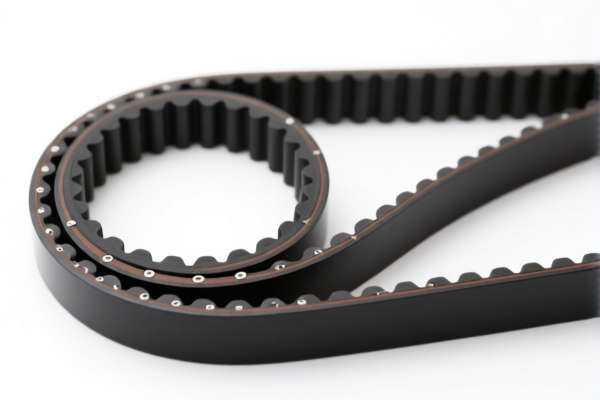
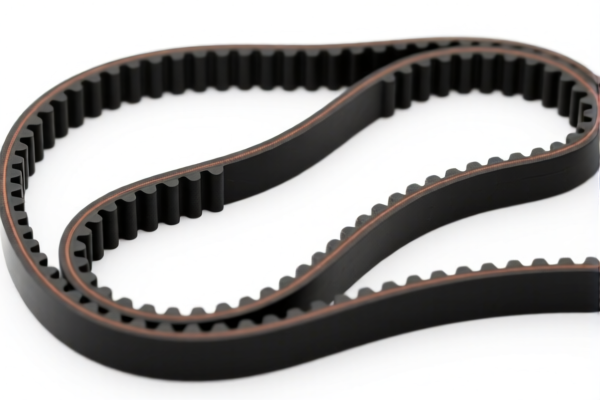
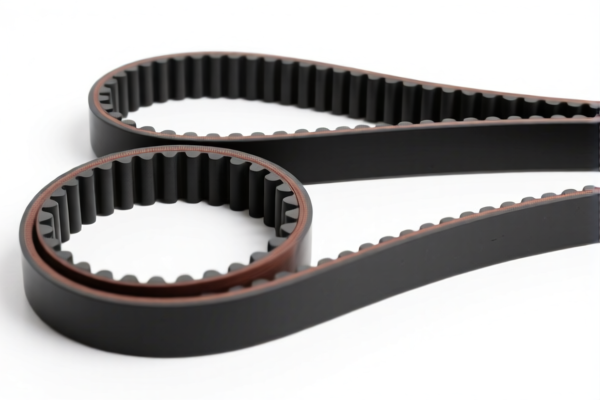
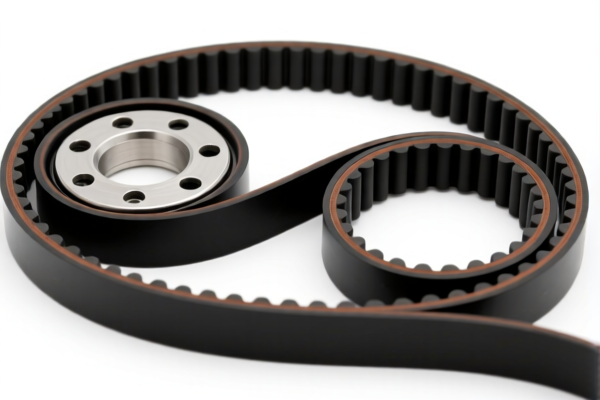
AI Analysis
🔄 Endless Synchronous Belt (Timing Belt)
🌐 HS Code Reference & Customs Clearance Guide | 2026 Latest Tariff Analysis | Professional Clearance Strategy
📌 I. Product Definition & Classification: What Exactly is an "Endless Synchronous Belt"?
An Endless Synchronous Belt (also known as a Timing Belt) is a mechanical power transmission component characterized by teeth on the inner surface that mesh with grooves in pulleys. Key features include: - Endless Structure: No joints or splices; formed into a continuous loop. - Synchronous Transmission: Ensures precise speed ratio and zero slip between driver and driven components. - Common Materials: Rubber, Polyurethane (PU), or fabric-reinforced composite.
⚠️ Critical Classification Distinction:
The HS Code depends heavily on the material composition and functional classification: - If classified as a mechanical transmission component (metal/case context) → Chapters 84/85. - If classified as a rubber product (material-based) → Chapter 40. - If classified as a textile/fabric product → Chapter 59.
📦 II. HS Code Classification Details (2026 Latest Tariff Mapping)
| HS Code | Product Description | Summary from Data | Key Determinant |
|---|---|---|---|
8483.90.10.50 |
Transmission components, other | "Belongs to transmission components, fits the category of other transmission elements" | Functional: Transmission part |
8483.90.80.80 |
Transmission shafts, pulleys, etc. | "Belongs to transmission components, fits transmission devices & pulley-related assemblies" | Functional: Transmission assembly part |
4010.35.90.00 |
Synchronous belts, rubber | "Matches form & use, inferred as rubber material" | Material: Rubber-based |
4010.36.90.00 |
Other synchronous belts, rubber | "Consistent form, inferred as rubber material, other category" | Material: Rubber-based (Other) |
5910.00.10.20 |
Belts, textile/fiber | "Use is identical, inferred as textile or man-made fiber" | Material: Textile/Fabric-reinforced |
🔍 Key Insight:
- HS 8483 codes treat the belt as a machine part.
- HS 4010 codes treat the belt as a rubber good.
- HS 5910 codes treat the belt as a textile/fabric product.
Customs authorities may require material proof (e.g., material composition certificate) to differentiate between these chapters.
💰 III. 2026 Latest Tariff Rate Breakdown (Includes Surtaxes & Policy Add-ons)
✅ Applicable Country: United States (US)
✅ Origin: China (CN)
✅ Effective Date: 2025/2026 Import Terms
🎯 1. 8483.90.10.50 & 8483.90.80.80 —— Mechanical Transmission Components
| Item | Detail |
|---|---|
| Base Tariff | 2.8% (Ad Valorem) |
| Section 301 Surtax | +25.0% |
| Section 122 Tariff | +10.0% |
| Total Tax Rate | 37.8% |
| Tax Calculation | CIF Value × 37.8% |
| De Minimis Exemption | ❌ Not Eligible (High duty rate excludes small package exemptions) |
| Legal Basis Path | USITC:8483.90.10.50/80.80 → Section 301 (Footnote 9903.88.01) → Section 122 |
📌 Explanation:
- These codes are classified under Chapter 84 (Nuclear reactors, boilers, machinery).
- Subject to both the 25% Section 301 tariff (trade remedy) and the 10% Section 122 tariff (national security/emergency powers).
- Total burden: 37.8%. Significant cost impact on mechanical parts.
🎯 2. 4010.35.90.00 & 4010.36.90.00 —— Rubber Synchronous Belts
| Item | Detail |
|---|---|
| Base Tariff | 3.3% (Ad Valorem) |
| Section 301 Surtax | +25.0% |
| Section 122 Tariff | +10.0% |
| Total Tax Rate | 38.3% |
| Tax Calculation | CIF Value × 38.3% |
| De Minimis Exemption | ❌ Not Eligible |
| Legal Basis Path | USITC:4010.35.90.00/36.90.00 → Section 301 → Section 122 |
📌 Note:
- Classified under Chapter 40 (Rubber and articles thereof).
- Slightly higher base rate (3.3% vs 2.8%) leads to a higher total tax (38.3%).
- Material composition must be strictly rubber-dominated to qualify here.
🎯 3. 5910.00.10.20 —— Textile/Fiber Reinforced Belts
| Item | Detail |
|---|---|
| Base Tariff | 4.0% (Ad Valorem) |
| Section 301 Surtax | +25.0% |
| Section 122 Tariff | +10.0% |
| Total Tax Rate | 39.0% |
| Tax Calculation | CIF Value × 39.0% |
| De Minimis Exemption | ❌ Not Eligible |
| Legal Basis Path | USITC:5910.00.10.20 → Section 301 → Section 122 |
📌 Note:
- Classified under Chapter 59 (Impregnated, coated, covered or laminated textile fabrics).
- Highest total tax rate among the options (39.0%).
- Applicable if the belt is primarily constructed of textile or artificial fiber with rubber/polyurethane coating.
🛠️ IV. Customs Clearance Practical Advice (Pitfall Avoidance Guide)
✅ 1. Required Documentation Checklist (Mandatory)
| Document | Mandatory? | Description |
|---|---|---|
| ✅ Material Composition Certificate | ✔️ | Must specify % of rubber, textile, steel cord, or PU to determine correct Chapter (40 vs 59 vs 84). |
| ✅ Product Specification Sheet | ✔️ | Includes tooth profile, pitch, width, length, and operating temperature. |
| ✅ High-Resolution Photos | ✔️ | Show cross-section (to verify material layers) and branding. |
| ✅ Commercial Invoice | ✔️ | Clearly state "Endless Synchronous Belt" and HS Code. |
| ✅ Packing List | ✔️ | Detail net/gross weight and dimensions. |
| ✅ Origin Certificate | ✔️ | Proof of China origin triggers surtaxes; if non-China, may reduce duty. |
✅ 2. Classification Strategy (Key Mantras)
🔥 "Material Defines Code, Function Defines Chapter, Accuracy Saves Money!"
| Scenario | Correct HS Code Approach | Risk of Misclassification |
|---|---|---|
| Rubber Belt with Fabric Cord | Try 4010.35.90.00 (Rubber) |
If deemed "textile dominant" → 5910.00.10.20 (Higher Tax) |
| PU (Polyurethane) Belt | Likely 4010 or 3926 (Plastics) |
Misclassified as 8483 → May face scrutiny on material proof |
| Metal-Reinforced Belt | Try 8483.90.10.50 |
If deemed "rubber product" → 4010 (Slight tax diff, but compliance risk) |
| Complete Assembly with Pulleys | 8483.90.80.80 |
Splitting belt/pulley incorrectly → Dual high tariffs |
💡 Tip:
- Section 122 Tariff (+10%) applies broadly to Chinese imports under specific emergency authorities.
- Section 301 Tariff (+25%) is the dominant cost driver.
- The difference between 37.8% and 39.0% is small, but correct classification is critical for customs compliance and audit trails.
✅ 3. Special Cases & Mitigation
| Situation | Handling Advice |
|---|---|
| OEM Custom Belts | Provide design drawings to prove material composition. |
| High-Performance Pu Belts | Confirm if PU is classified under Chapter 39 (Plastics) or 40 (Rubber). Chapter 39 may have different tariff structures. |
| Small Quantity Samples | ❌ De Minimis Exemption Not Available due to high duty rates. Pay taxes upfront. |
| Transshipment via Third Country | Ensure substantial transformation occurs to change origin. Simple repackaging does not avoid Section 301/122. |
🌍 V. Global Market Clearance Comparison (2026)
| Country/Region | Recommended HS Code | Estimated Duty (China Origin) | Certification Requirements | Notes |
|---|---|---|---|---|
| 🇺🇸 USA | 8483.90.10.50 / 4010.35.90.00 |
37.8% - 39.0% | None specific for belts | High surtax burden |
| 🇨🇳 China | 8483.90.10.50 / 4010.35.90.00 |
1.5% - 2.5% | CCC (if applicable) | Low import duty |
| 🇪🇺 EU | 8483.90.10.50 / 4010.35.90.00 |
3.5% - 4.5% | CE (if part of machinery) | No Section 301 equivalent |
| 🇬🇧 UK | 8483.90.10.50 / 4010.35.90.00 |
3.5% - 4.5% | UKCA (if machinery) | Post-Brexit rules apply |
| 🇦🇺 Australia | 8483.90.10.50 / 4010.35.90.00 |
5.0% - 7.5% | None specific | No major surtaxes |
📌 Conclusion:
- USA is the most expensive market due to the叠加 (stacking) of Section 301 (25%) and Section 122 (10%) tariffs.
- Total Tax >37% significantly impacts profit margins.
- Consider supply chain diversification (e.g., Vietnam, Mexico) if possible to avoid US surtaxes.
📌 VI. Common Mistakes & Pitfalls (Lessons Learned)
❌ Mistake 1: Misclassifying a rubber belt as a "Plastic Part" (Chapter 39)
👉 Consequence: Audit risk, potential penalties for incorrect declaration.
❌ Mistake 2: Ignoring Section 122 Tariff (+10%)
👉 Consequence: Underpayment of duties, leading to fines and delayed clearance.
❌ Mistake 3: Assuming small samples are duty-free
👉 Consequence: No de minimis exemption for these HS codes due to high duty rates. Taxes must be paid.
❌ Mistake 4: Confusing "Transmission Belt" (8483) with "Rubber Belt" (4010) without material proof
👉 Consequence: Customs may reclassify, leading to disputes and storage fees.
✅ Correct Practice:
"Endless Synchronous Belt, Rubber/Polyurethane, Toothed Profile, Width: XXmm, Length: YYmm, For CNC Machinery, Origin: China"
🎯 VII. Conclusion: Precise Classification, Cost Control, Smooth Clearance
🎯 Remember the Mantra:
🔹 "Material First, Function Second, Section 301 & 122 Add 35%!"
🔹 "HS Code Choice Matters: 37.8% vs 39.0%, Small Difference, Big Impact on Compliance!"
🔹 "No De Minimis for High-Duty Belts, Plan Cash Flow Accordingly!"
📌 Pro Tip:
If your belts are not originating from China (e.g., produced in Vietnam, Thailand, or Mexico), you may avoid Section 301 and Section 122 tariffs, reducing the total tax to base rate only (2.8% - 4.0%).
💡 Recommendation: Apply for Advance Ruling from US Customs and Border Protection (CBP) to confirm HS Code classification before shipment.
📣 Immediate Action:
📞 Contact a licensed customs broker + Provide Material Spec + Apply for CBP Advance Ruling
🚀 Ensure compliant, efficient, and cost-effective clearance for your Synchronous Belts!
✨ Professional Clearance Starts with Accurate Classification!
💼 Every Dollar of Duty is Accounted For!
Customer Reviews
About HS Code Classification
The Harmonized System (HS) is an internationally standardized nomenclature developed by the World Customs Organization (WCO) to classify traded products. Over 200 countries use the HS system as the basis for customs tariffs, trade statistics, and import/export regulations.
Each HS code follows a hierarchical structure:
- Chapter (2 digits) — Broad category of goods (e.g., Chapter 84: Machinery and Mechanical Appliances)
- Heading (4 digits) — More specific grouping within the chapter
- Subheading (6 digits) — Internationally standardized breakdown, used by all WCO member countries
- National subdivisions (8-10 digits) — Country-specific extensions for further classification, such as US HTSUS 10-digit codes
Correct HS code classification is essential for smooth customs clearance, accurate duty payment, and compliance with trade regulations. Misclassification can lead to customs delays, overpayment of duties, or penalties.
When importing from CN to US, the applicable tariff rates may include:
- Most-Favored-Nation (MFN) rate — The standard duty rate applied to WTO members
- General rate — Applied to countries without trade agreements
- Trade remedy duties — Additional tariffs such as Section 301 (anti-dumping), Section 232 (national security), or countervailing duties
The information provided on this page is for reference purposes only. For official classification, please consult with your local customs authority or a licensed customs broker.