Energy Saver
CN → US| HS Code | Tariff Rate | Origin | Destination | Doc |
|---|---|---|---|---|
| 8504409580 | 35.0% | CN | US | Official Doc |
| 8504409570 | 35.0% | CN | US | Official Doc |
| 8543709860 | 37.6% | CN | US | Official Doc |
| 8543706000 | 35.0% | CN | US | Official Doc |
Product Images
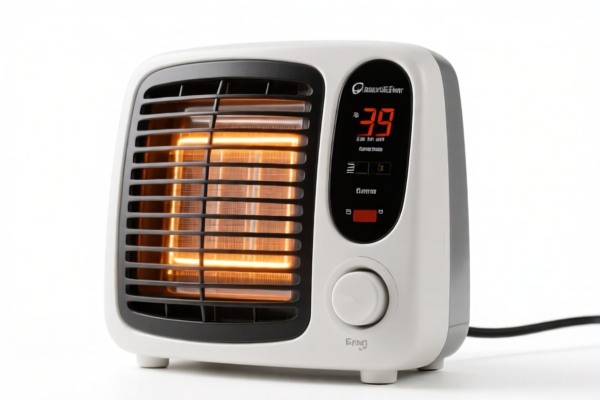
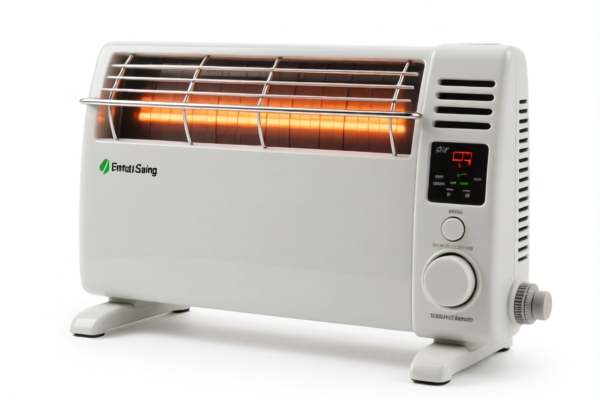
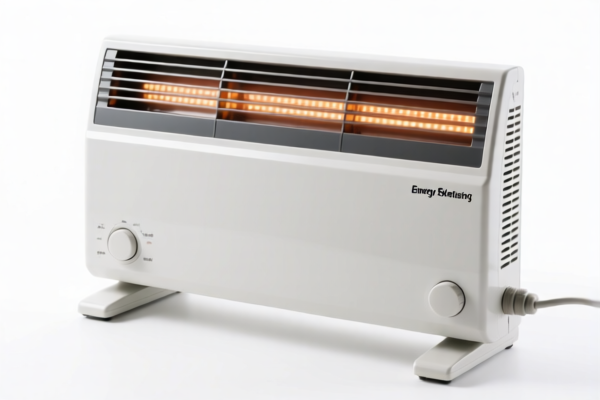
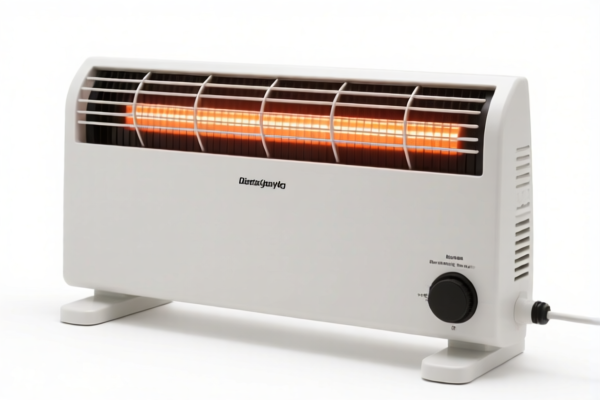
AI Analysis
🌱 Energy Savers & Power Management Devices
🌐 HS Code Reference & Customs Clearance Guide | 2026 Latest Tariff Analysis | Professional Clearance Strategy
📌 1. Product Definition: What is an "Energy Saver"?
In international trade, the term "Energy Saver" is often a generic marketing term rather than a precise technical classification. It typically refers to one of two distinct types of electrical devices:
- Static Converters/Rectifiers/Inverters: Devices that convert electrical energy from one form to another (e.g., AC to DC, or AC to AC with voltage regulation). These are often used for power quality improvement, voltage stabilization, or rectification.
- Intelligent Electrical Apparatus: Machines with individual functions designed to optimize power consumption, control loads, or interface with telecommunication networks to manage energy usage.
⚠️ Critical Distinction:
- If the device is primarily a converter/rectifier/inverter, it falls under Chapter 85, Heading 8504.
- If the device is an intelligent controller or monitoring unit with no conversion function, it may fall under Chapter 85, Heading 8543 (Electrical machines having individual functions).
📦 2. HS Code Classification Details (2026 Latest Tariff Authority)
Based on the provided data, here are the specific HS Codes and their applicability:
| HS Code | Product Description | Application Scenario | Key Identification Feature |
|---|---|---|---|
8504.40.95.80 |
Electrical transformers, static converters (for example, rectifiers) and inductors; parts thereof: Static converters: Other Other | General-purpose static converters not specifically classified elsewhere (e.g., certain power supplies, voltage regulators) | Does not fit specific subcategories like "Inverters"; used for general power conversion |
8504.40.95.70 |
Electrical transformers, static converters (for example, rectifiers) and inductors; parts thereof: Static converters: Other Inverters | Devices that convert DC to AC or change frequency/voltage using electronic components | Specifically identified as an Inverter |
8543.70.98.60 |
Electrical machines and apparatus, having individual functions, not specified or included elsewhere in this chapter; parts thereof: Other machines and apparatus: Other: Other: Other Other | Intelligent energy management units, specialized control apparatus, or non-converter power optimization devices | Has an "individual function" but doesn't fit other specific headings (e.g., not a standard transformer or converter) |
8543.70.60.00 |
Electrical machines and apparatus, having individual functions, not specified or included elsewhere in this chapter; parts thereof: Other machines and apparatus: Articles designed for connection to telegraphic or telephonic apparatus or instruments or to telegraphic or telephonic networks | Energy savers integrated with or designed to interface with telecom/telephone networks | Specifically designed for connection to telegraphic/telephonic networks |
🔍 Key Note:
- Static Converters (8504): These involve physical or electronic conversion of electrical energy. If your "energy saver" changes the form of electricity (AC/DC, frequency, voltage), it likely belongs here. - Individual Function Machines (8543): These are control or monitoring devices. If your "energy saver" is essentially a smart switch, monitor, or controller without direct power conversion, it belongs here.
💰 3. 2026 Latest Tariff Rate Details (Including Surtaxes)
✅ Applicable Country: United States (US)
✅ Country of Origin: China (CN)
✅ Effective Date: Ongoing (as per current data)
🎯 1. 8504.40.95.80 —— Static Converters: Other Other
| Item | Details |
|---|---|
| Base Tariff | 0.0% |
| Additional Tariff | 25.0% (Section 301 Surtax) |
| Total Tariff Rate | 25.0% |
| Tax Calculation | CIF Value × 25% |
| Legal Basis | USITC:8504.40.95.80 → SECTION301:8504.40.95.80 |
📌 Explanation:
- The base tariff is 0%, but the 25% Section 301 surtax applies to Chinese-origin static converters. - This is a high tariff for general power conversion equipment.
🎯 2. 8504.40.95.70 —— Static Converters: Other Inverters
| Item | Details |
|---|---|
| Base Tariff | 0.0% |
| Additional Tariff | 25.0% (Section 301 Surtax) |
| Total Tariff Rate | 25.0% |
| Tax Calculation | CIF Value × 25% |
| Legal Basis | USITC:8504.40.95.70 → SECTION301:8504.40.95.70 |
📌 Explanation:
- Inverters face the same 25% surtax as other static converters. - Ensure your device is correctly identified as an "Inverter" to avoid misclassification penalties.
🎯 3. 8543.70.98.60 —— Electrical Machines: Other Other
| Item | Details |
|---|---|
| Base Tariff | 2.6% |
| Additional Tariff | 25.0% (Section 301 Surtax) |
| Total Tariff Rate | 27.6% |
| Tax Calculation | CIF Value × 27.6% |
| Legal Basis | USITC:8543.70.98.60 → SECTION301:8543.70.98.60 |
📌 Explanation:
- This category has a higher base tariff (2.6%) compared to converters, plus the 25% surtax. - Applies to intelligent energy management devices that do not convert power but have "individual functions."
🎯 4. 8543.70.60.00 —— Articles for Telegraphic/Telephonic Networks
| Item | Details |
|---|---|
| Base Tariff | 0.0% |
| Additional Tariff | 25.0% (Section 301 Surtax) |
| Total Tariff Rate | 25.0% |
| Tax Calculation | CIF Value × 25% |
| Legal Basis | USITC:8543.70.60.00 → SECTION301:8543.70.60.00 |
📌 Explanation:
- If the energy saver is designed to interface with telecom networks (e.g., VoIP power optimization), it falls here. - Base tariff is 0%, but the 25% surtax still applies.
🛠️ 4. Customs Clearance Practical Advice (Pitfall Avoidance Guide)
✅ 1. Document Checklist (All Required)
| Document | Required | Notes |
|---|---|---|
| ✅ Product Specification Sheet | ✔️ | Must clearly state function: "Static Converter," "Inverter," or "Control Apparatus" |
| ✅ Circuit Diagram | ✔️ | Critical for distinguishing between power conversion (8504) and control (8543) |
| ✅ Product Photos (with Label) | ✔️ | Show model number, input/output ratings, and any telecom interface ports |
| ✅ Test Reports | ✔️ | UL, CE, FCC (if applicable) |
| ✅ Commercial Invoice | ✔️ | Describe accurately: e.g., "Static Converter for Power Quality" or "Intelligent Energy Control Unit" |
| ✅ Certificate of Origin | ✔️ | If not from China, may avoid Section 301 surtax |
| ✅ Packing List | ✔️ | List all components to prevent split shipment claims |
✅ 2. Classification Strategy (Key Rules)
🔥 "Converter = 8504, Controller = 8543, Telecom Interface = 8543.60"
| Scenario | Correct HS Code | Incorrect Code | Consequence of Error |
|---|---|---|---|
| Device converts AC to DC or regulates voltage | 8504.40.95.xx |
8543.70.98.60 |
Risk of 25% surtax misapplication or detention |
| Device is an Inverter (DC to AC) | 8504.40.95.70 |
8504.40.95.80 |
Minor tariff difference, but misclassification risk |
| Smart meter/control unit without conversion | 8543.70.98.60 |
8504.40.95.80 |
Higher base tax (2.6%) if misclassified as converter |
| Energy saver with RJ11/Telephone port | 8543.70.60.00 |
8543.70.98.60 |
Incorrect description may lead to additional scrutiny |
✅ 3. Special Cases & Mitigation
| Situation | Recommendation |
|---|---|
| OEM Energy Savers | Provide design documents and client specifications to prove intended function |
| Devices with Mixed Functions | If a device both converts power AND controls telecom, the primary function determines classification. Usually, power conversion (8504) takes precedence. |
| Telecom-Integrated Savers | Explicitly declare "Designed for connection to telephonic apparatus" on the invoice |
| Non-China Origin | If the product is made in Vietnam, Mexico, etc., apply for Section 301 Exclusion to avoid the 25% surtax |
🌍 5. Global Market Comparison (2026)
| Country/Region | Recommended HS Code | Tariff (China Origin) | Certification | Notes |
|---|---|---|---|---|
| 🇺🇸 USA | 8504.40.95.80 or 8543.70.98.60 |
25% - 27.6% | FCC, UL | Section 301 surtax applies to all |
| 🇨🇳 China | 8504.40.95.80 or 8543.70.98.60 |
0% - 2.6% | CCC | No surtax |
| 🇪🇺 EU | 8504.40.95 or 8543.70.98 |
0% - 1.4% | CE, RoHS | No surtax |
| 🇬🇧 UK | 8504.40.95 or 8543.70.98 |
0% - 1.4% | UKCA | No surtax |
| 🇦🇺 Australia | 8504.40.95 or 8543.70.98 |
5% - 10% | RCM | No surtax |
📌 Conclusion:
- USA is the only major market with significant surtaxes (25-27.6%) for these products from China. - EU/UK/AU have low or zero tariffs but strict certification requirements (CE/UKCA/RoHS).
📌 6. Common Mistakes & Pitfalls (Lessons Learned)
❌ Mistake 1: Calling all energy-saving devices "Inverters"
👉 Consequence: If not actually an inverter, customs may reclassify to 8504.40.95.80 or 8543.70.98.60, leading to delays.
❌ Mistake 2: Misclassifying a control unit as a converter (or vice versa)
👉 Consequence: Base tariff difference (0% vs 2.6%) plus potential penalties for incorrect declaration.
❌ Mistake 3: Ignoring the telecom interface
👉 Consequence: If the device connects to telephone networks, it must be declared as 8543.70.60.00 to avoid description discrepancies.
✅ Correct Declaration Example:
"Static Converter for Voltage Regulation, Model XYZ, Input: 110-240V AC, Output: 110V AC, FCC Certified"
🎯 7. Conclusion: Accurate Classification Saves Money!
🎯 Key Takeaways:
🔹 "Converter = 8504, Controller = 8543, Telecom = 8543.60"
🔹 USA Tariff = 25% - 27.6% for Chinese Origin
🔹 Documentation is Key: Provide circuit diagrams and clear function descriptions.
📌 Pro Tip:
If your product is not from China, apply for Section 301 Exclusions to save 25%.
For US imports, consider Advance Rulings from CBP to confirm HS Code before shipment.
📣 Action Plan:
📞 Consult a licensed customs broker
📄 Prepare technical specs and circuit diagrams
🚀 Ensure accurate HS Code declaration to avoid 25-27.6% surtax surprises!
✨ Professional clearance starts with precise classification!
💼 Every dollar saved on duty counts!
Customer Reviews
About HS Code Classification
The Harmonized System (HS) is an internationally standardized nomenclature developed by the World Customs Organization (WCO) to classify traded products. Over 200 countries use the HS system as the basis for customs tariffs, trade statistics, and import/export regulations.
Each HS code follows a hierarchical structure:
- Chapter (2 digits) — Broad category of goods (e.g., Chapter 84: Machinery and Mechanical Appliances)
- Heading (4 digits) — More specific grouping within the chapter
- Subheading (6 digits) — Internationally standardized breakdown, used by all WCO member countries
- National subdivisions (8-10 digits) — Country-specific extensions for further classification, such as US HTSUS 10-digit codes
Correct HS code classification is essential for smooth customs clearance, accurate duty payment, and compliance with trade regulations. Misclassification can lead to customs delays, overpayment of duties, or penalties.
When importing from CN to US, the applicable tariff rates may include:
- Most-Favored-Nation (MFN) rate — The standard duty rate applied to WTO members
- General rate — Applied to countries without trade agreements
- Trade remedy duties — Additional tariffs such as Section 301 (anti-dumping), Section 232 (national security), or countervailing duties
The information provided on this page is for reference purposes only. For official classification, please consult with your local customs authority or a licensed customs broker.