Engine Hood Buffer Rubber Pad
CN → US| HS Code | Tariff Rate | Origin | Destination | Doc |
|---|---|---|---|---|
| 4016931010 | 37.5% | CN | US | Official Doc |
| 4008210000 | 35.0% | CN | US | Official Doc |
| 4008292000 | 37.9% | CN | US | Official Doc |
| 8484900000 | 37.5% | CN | US | Official Doc |
| 4016931050 | 37.5% | CN | US | Official Doc |
Product Images
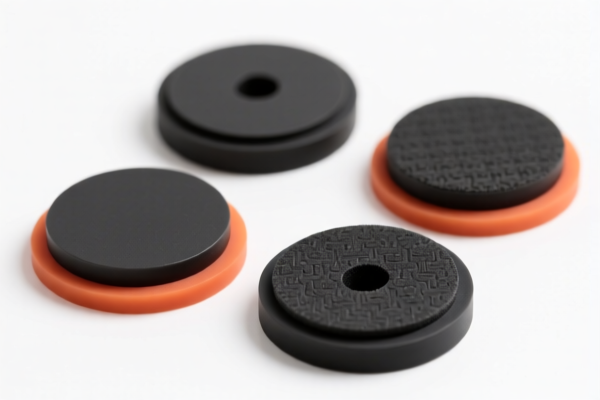
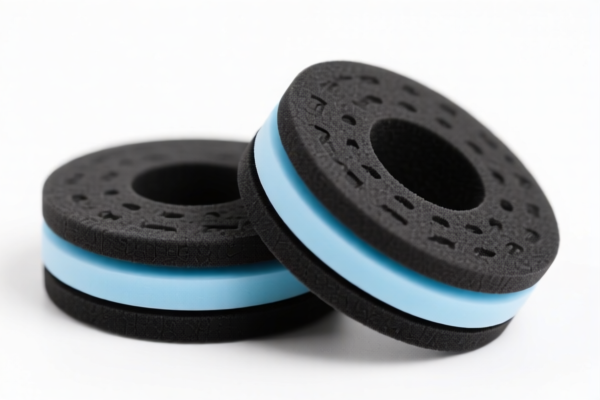
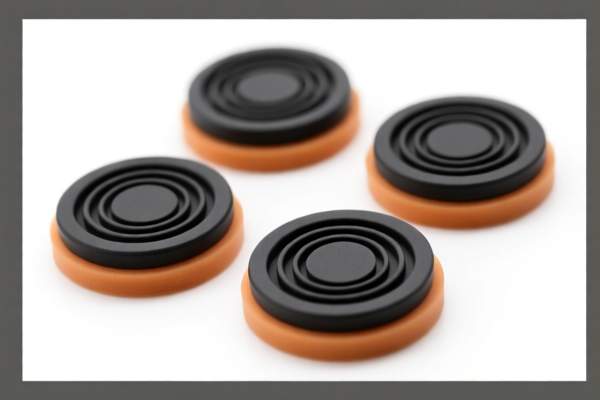
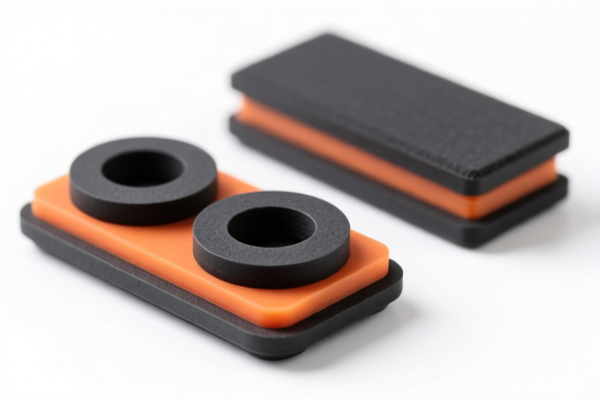
AI Analysis
🚗 Engine Hood Buffer Rubber Pad (橡胶发动机垫片/缓冲块)
🌐 HS Code Reference & Customs Clearance Guide | 2026 Latest Tariff Analysis | Professional Clearance Strategy
📌 1. Product Definition & Classification: What Exactly is an "Engine Hood Buffer"?
An Engine Hood Buffer Rubber Pad is a critical automotive component designed to absorb impact, dampen vibration, and prevent metal-on-metal contact between the vehicle’s hood (bonnet) and the chassis/frame when closed. In international trade, these items are classified under Chapter 40 (Rubber and articles thereof) or Chapter 84 (Machinery and mechanical appliances), depending on their specific material composition, form, and functional integration.
Key Distinctions: * Pure Rubber Gaskets/Pad (40xx Series): Made primarily of vulcanized rubber, often in sheet, strip, or simple gasket forms. Used for basic sealing or buffering. * Composite Gaskets (8484 Series): If the pad contains multiple materials (e.g., rubber bonded with metal backing, adhesive layers, or specific mechanical components) and is specifically designed as a "Gasket" for machinery. * Part vs. Product: While often sold as a replacement part, customs may classify them as "parts of vehicles" or "general mechanical parts." However, the provided data suggests classification under general rubber goods or machinery gaskets rather than specific vehicle parts (like 8708), likely due to the specific HS codes provided in the dataset.
⚠️ Critical Classification Point:
- If it is a simple vulcanized rubber pad/plate used for buffering → HS 4008 or 4016.
- If it is a composite gasket (rubber + other materials) specifically for engine/chassis sealing → HS 8484.
- Do not assume it is a "Vehicle Part" (8708) if the specific HS codes provided in the dataset fall under Chapter 40 or 84. The dataset explicitly lists 40xx and 8484 codes.
📦 2. HS Code Classification Details (Based on Provided Data | 2026 Tariff)
| HS Code | Product Description (Summary) | Form/Material | Use Case | Total Tax Rate |
|---|---|---|---|---|
4016.93.10.10 |
Rubber Engine Gasket | Rubber, Pad Form | Auto Parts (Engine Hood Buffer) | 37.5% |
4008.21.00.00 |
Vulcanized Rubber Pad | Sheet/Plate/Strip (Non-foam) | General Rubber Sheet/Plate | 35.0% |
4008.29.20.00 |
Rubber Gasket/Pad | Plate, Sheet, Strip, Bar | General Rubber Articles | 37.9% |
8484.90.00.00 |
Rubber Gasket | Composite (Rubber + Other Materials) | Machinery Gaskets (Gaskets) | 37.5% |
4016.93.10.50 |
Vulcanized Rubber Product | Pad/Washer Form | Auto Engine Accessories | 37.5% |
🔍 Key Insight:
- All listed HS Codes incur high additional tariffs due to trade restrictions (Section 301 and IEEPA).
- The Base Tariff varies (0% to 2.9%), but the Add-on Tariffs are significant (25% + 10%).
-4008.21.00.00offers the lowest total rate (35.0%) if the product can be strictly classified as a non-foam rubber sheet/plate.
-4016.93.10.10and4016.93.10.50are specifically noted for "Auto Parts" or "Engine Accessories," making them strong candidates for hood buffers if the customs authority accepts the "part" classification within Chapter 40.
💰 3. 2026 Latest Tariff Rate Breakdown (US Market | China Origin)
✅ Applicable Country: United States (US)
✅ Origin: China (CN)
✅ Effective Date: From November 10, 2025 (and subsequent imports)
🎯 1. 4016.93.10.10 & 4016.93.10.50 —— Rubber Engine Gaskets / Vulcanized Rubber Products
| Item | Detail |
|---|---|
| Base Tariff | 2.5% (ad valorem) |
| USITC Additional Tariff (Section 301) | +25.0% |
| IEEPA Additional Tariff | +10.0% (China/HK origin) |
| Total Tariff Rate | 37.5% |
| Tax Calculation | CIF Value × 37.5% |
| De Minimis Exemption | ❌ NOT Eligible (deny_de_minimis) |
| Legal Basis Path | IEEPA:9903.01.25 → USITC:4016.93.10.10 → FOOTNOTE:9903.88.01 |
📌 Explanation:
- The 25% is the standard Section 301 tariff on Chinese rubber products.
- The 10% is the IEEPA tariff on Chinese goods.
- Total 37.5% is a high-cost barrier. Clearing these goods requires accurate documentation to avoid misclassification penalties.
🎯 2. 4008.21.00.00 —— Vulcanized Rubber Sheet/Plate (Non-Foam)
| Item | Detail |
|---|---|
| Base Tariff | 0.0% |
| USITC Additional Tariff (Section 301) | +25.0% |
| IEEPA Additional Tariff | +10.0% |
| Total Tariff Rate | 35.0% |
| Tax Calculation | CIF Value × 35.0% |
| De Minimis Exemption | ❌ NOT Eligible |
| Legal Basis Path | IEEPA:9903.01.25 → USITC:4008.21.00.00 → FOOTNOTE:9903.88.01 |
📌 Note:
- This is the lowest total rate in the dataset.
- If your "Engine Hood Buffer" can be described as a vulcanized rubber sheet or plate without complex composite materials, use this code to save 2.5% compared to the engine-specific gasket codes.
- However, you must prove it is not "foam" rubber (which might have different codes) and is not a complex mechanical gasket.
🎯 3. 4008.29.20.00 —— Rubber Gasket (Plate/Strip/Bar)
| Item | Detail |
|---|---|
| Base Tariff | 2.9% |
| USITC Additional Tariff (Section 301) | +25.0% |
| IEEPA Additional Tariff | +10.0% |
| Total Tariff Rate | 37.9% |
| Tax Calculation | CIF Value × 37.9% |
| De Minimis Exemption | ❌ NOT Eligible |
📌 Note:
- Slightly higher than the engine-specific codes due to a higher base tariff (2.9%).
- Use only if the product is clearly a "strip" or "bar" shape and not a pre-formed "pad."
🎯 4. 8484.90.00.00 —— Gaskets of Two or More Materials
| Item | Detail |
|---|---|
| Base Tariff | 2.5% |
| USITC Additional Tariff (Section 301) | +25.0% |
| > IEEPA Additional Tariff | +10.0% |
| Total Tariff Rate | 37.5% |
| Tax Calculation | CIF Value × 37.5% |
| De Minimis Exemption | ❌ NOT Eligible |
📌 Note:
- Use this if the hood buffer is a composite item (e.g., rubber bonded to a metal backing plate, or includes adhesive layers).
- The key is the "Gaskets of Two or More Materials" definition. If it’s pure rubber, this classification might be challenged.
🛠️ 4. Customs Clearance Practical Advice (Avoiding Pitfalls)
✅ 1. Required Documentation (Non-Negotiable)
| Document | Mandatory? | Description |
|---|---|---|
| ✅ Product Spec Sheet | ✔️ | Must detail: Material composition (100% rubber? composite?), Hardness (Shore A), Dimensions, Temperature resistance. |
| ✅ Product Photos | ✔️ | Clear images showing the item’s shape (pad, gasket, sheet) and any bonding layers. |
| ✅ Commercial Invoice | ✔️ | Must describe item as "Vulcanized Rubber Buffer Pad for Engine Hood" or "Rubber Gasket." Avoid vague terms like "Auto Part" without detail. |
| ✅ Packing List | ✔️ | Item count, gross/net weight. |
| ✅ Certificate of Origin (CO) | ✔️ | If not from China, may allow duty-free entry. For China-origin, confirms IEEPA applicability. |
✅ 2. Declaration Strategy (Key Tips)
🔥 "Shape & Material Define Code! Don't Just Say 'Part'!"
| Scenario | Correct Declaration | Incorrect Declaration | Consequence |
|---|---|---|---|
| Pure Rubber Pad | "Vulcanized Rubber Pad, Non-Foam, for Engine Hood Buffer" | "Engine Part" | Risk of misclassification → Higher duty or detention. |
| Composite Gasket | "Rubber and Metal Composite Gasket, 20mm x 20mm" | "Rubber Pad" | Might be forced to 8484 (37.5%) vs 4008 (35.0%). |
| Sheet/Strip Material | "Vulcanized Rubber Sheet, Cut to Shape" | "Gasket" | Can use 4008.21 (35.0%) if proven to be sheet material. |
✅ 3. Special Cases
| Situation | Recommendation |
|---|---|
| OEM vs. Aftermarket | No difference in HS Code, but ensure the description matches the physical item. |
| Sample Shipments | Even samples are subject to 45%+ effective duty if over $800 de minimis threshold is exceeded (but since deny_de_minimis, even small values are taxed). |
| Composite Items | If the pad has a metal plate glued to it, must use 8484.90.00.00 to avoid penalties for under-declaring complexity. |
🌍 5. Global Market Comparison (2026)
| Country/Region | Recommended HS Code | Approx. Tariff (China Origin) | Certification | Notes |
|---|---|---|---|---|
| 🇺🇸 USA | 4008.21.00.00 |
35.0% | None (Rubber) | Highest additional tariffs globally. |
| 🇨🇳 China | 4016.93.10 |
~5-10% | RoHS (if electronic) | Low base tariff, no Section 301. |
| 🇪🇺 EU | 4016.93 |
0-4% | REACH | No additional tariffs on rubber goods. |
| 🇲🇽 Mexico | 4016.93 |
0-5% | NOM | USMCA may apply if manufactured in NA. |
📌 Conclusion:
- The US market is the most challenging due to the 35-37.9% total tariff burden.
- Mexico/Vietnam/Thailand production can avoid these tariffs if USMCA or specific FTAs apply.
- For US imports, accurate material declaration is critical to select the lowest possible code (4008.21.00.00at 35%).
📌 6. Common Errors & Pitfalls (Blood & Tears Lessons)
❌ Mistake 1: Declaring as "Auto Part" (8708) without justification
👉 Result: Customs may reject because the dataset shows Chapter 40/84 codes. Even if 8708 is correct in theory, if the dataset doesn't support it, you risk delays. Stick to the provided dataset codes.
❌ Mistake 2: Ignoring the "Composite" nature
👉 Result: If the pad has metal, declaring as 4016 (pure rubber) leads to penalties and back-taxes for misclassification. Use 8484.
❌ Mistake 3: Assuming De Minimis ($800) applies
👉 Result: NO! These HS codes are on the deny_de_minimis list. Even small shipments are fully taxed.
❌ Mistake 4: Vague Description "Rubber Pad"
👉 Result: Customs may assign a higher default rate or request additional info, causing port detention fees.
✅ Correct Approach:
"Vulcanized Nitrile Rubber Buffer Pad, Non-Foam, 50mm x 50mm, For Engine Hood Closure, HS Code 4008.21.00.00"
🎯 7. Conclusion: Precision Saves Money
🎯 Remember the Rule:
🔹 "Pure Rubber = 35-37.9% | Composite = 37.5% | No De Minimis!"
🔹 "Use4008.21.00.00if possible to save 2.5%!"
🔹 "Accurate material description is your best defense against audits."
📌 Pro Tip:
If you are importing into the USA, calculate the Landed Cost including the 35-37.9% tariff. Consider shifting production to Vietnam or Mexico if volume is high to save 30%+ in duties.
For domestic US or non-US markets, the duty burden is significantly lower.
📣 Immediate Action:
📞 Confirm Material Composition: Is it 100% rubber or composite?
📄 Prepare Spec Sheet: Clearly state "Vulcanized Rubber, Non-Foam."
🚀 Calculate Landed Cost: Include 35-37.9% tariff in your margin analysis.
✨ Professional Clearance Starts with Accurate Classification!
💼 Your Margin Depends on These Percentages!
Customer Reviews
About HS Code Classification
The Harmonized System (HS) is an internationally standardized nomenclature developed by the World Customs Organization (WCO) to classify traded products. Over 200 countries use the HS system as the basis for customs tariffs, trade statistics, and import/export regulations.
Each HS code follows a hierarchical structure:
- Chapter (2 digits) — Broad category of goods (e.g., Chapter 84: Machinery and Mechanical Appliances)
- Heading (4 digits) — More specific grouping within the chapter
- Subheading (6 digits) — Internationally standardized breakdown, used by all WCO member countries
- National subdivisions (8-10 digits) — Country-specific extensions for further classification, such as US HTSUS 10-digit codes
Correct HS code classification is essential for smooth customs clearance, accurate duty payment, and compliance with trade regulations. Misclassification can lead to customs delays, overpayment of duties, or penalties.
When importing from CN to US, the applicable tariff rates may include:
- Most-Favored-Nation (MFN) rate — The standard duty rate applied to WTO members
- General rate — Applied to countries without trade agreements
- Trade remedy duties — Additional tariffs such as Section 301 (anti-dumping), Section 232 (national security), or countervailing duties
The information provided on this page is for reference purposes only. For official classification, please consult with your local customs authority or a licensed customs broker.