Engineering Truck Toy
CN → US| HS Code | Tariff Rate | Origin | Destination | Doc |
|---|---|---|---|---|
| 9503000071 | 10.0% | CN | US | Official Doc |
| 8705900080 | 35.0% | CN | US | Official Doc |
| 9503000073 | 10.0% | CN | US | Official Doc |
| 3926909989 | 22.8% | CN | US | Official Doc |
| 3926904800 | 13.4% | CN | US | Official Doc |
Product Images
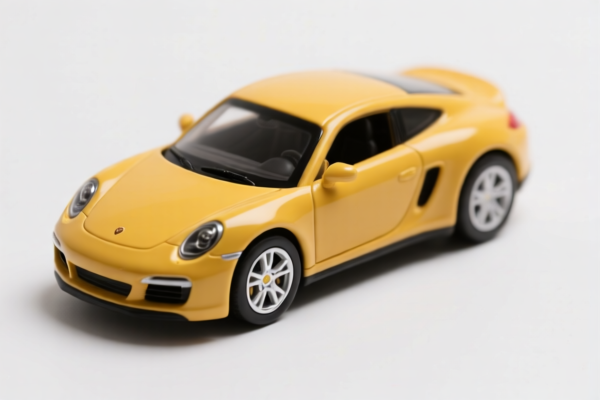
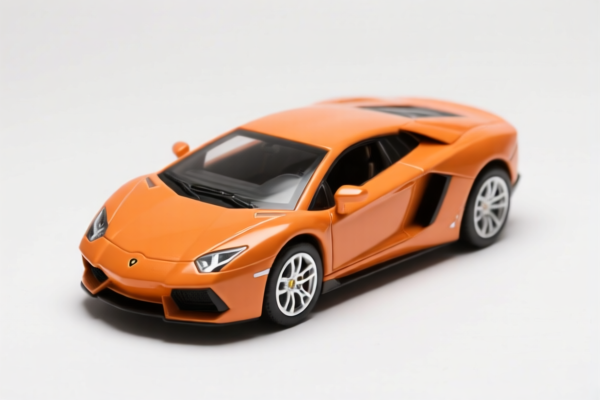
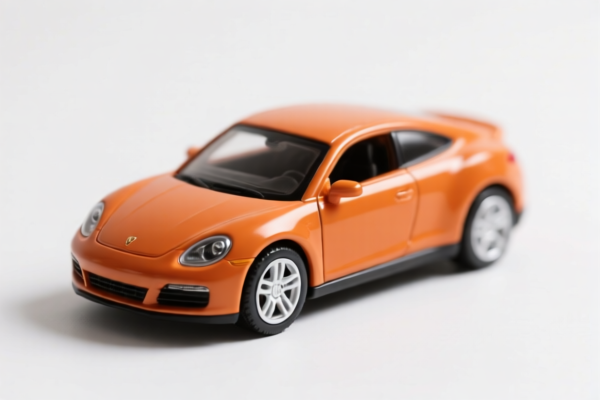
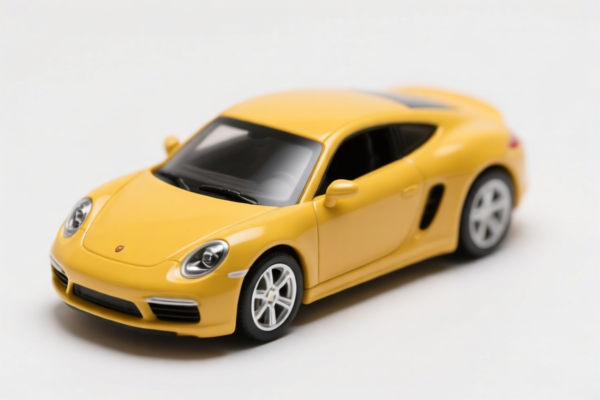
AI Analysis
🚚 Engineering Truck Toy (Construction Vehicle Models)
🌐 HS Code Reference & Customs Clearance Guide | 2026 Latest Tariff Analysis | Professional通关 Strategy
📌 Part I: Product Definition & Classification: Do You Really Understand "Engineering Truck Toys"?
An "Engineering Truck Toy" generally refers to miniature replicas of construction vehicles (excavators, dump trucks, bulldozers, cranes, etc.) designed for play, collection, or educational purposes. In international trade, its classification is critical because it sits at the intersection of Toys, Models, and Industrial Vehicles. Misclassification can lead to massive tariff differences (from 10% to 35%+).
Key Distinctions:
- True Toy (Play-oriented): Designed for children's recreation, durable, bright colors, simple mechanisms → HS 9503
- Die-cast Model/Collectible (Display-oriented): High precision, metallic materials, often scaled down, not for rough play → HS 9503.73 or 8705 (if deemed a vehicle)
- Non-Vehicle Plastic Parts: If the toy is essentially a plastic accessory or lacks vehicle-specific features → HS 3926
⚠️ Critical Classification Point:
- If it is explicitly marketed as a toy for children → HS 9503 (Lowest Risk, Lowest Tax)
- If it is marketed as a die-cast model for collectors → HS 9503.73 (Still Low Tax, but stricter documentation)
- If customs authorities believe it is a real vehicle (even a small one) or a special-purpose industrial model → HS 8705 (Highest Risk, Highest Tax)
- If classified as a generic plastic product due to lack of toy/model specificity → HS 3926 (Moderate Tax, High Uncertainty)
📦 Part II: HS Code Classification Details (2026 Latest Tariff Authority Comparison)
Based on the provided data, here are the four possible HS Codes, ranked by tariff efficiency and clarity:
| HS Code | Product Description | Applicable Scenario | Estimated Total Tax Rate (China to US) | Risk Level |
|---|---|---|---|---|
9503.00.00.71 |
Toy, similar wheeled toys Explicitly defined as toy purpose |
Standard plastic/metal toy trucks, ride-on trucks, simple construction sets | 10.0% | ✅ Low (Clear intent) |
9503.00.00.73 |
Scaled models & similar recreational models Toy purpose |
High-fidelity die-cast models, collectible engineering trucks, precision replicas | 10.0% | ✅ Low (Clear intent, but needs "model" proof) |
3926.90.99.89 |
Other articles of plastics Inferred plastic material |
Low-cost plastic toys, generic plastic construction parts, unclear classification | 22.8% | ⚠️ Medium (Material-focused, not function-focused) |
3926.90.48.00 |
Other plastic articles Plastic product category |
Simple plastic accessories, non-toy plastic parts, misclassified items | 13.4% | ⚠️ Medium (Base tariff low, but 10% IEEPA still applies) |
8705.90.00.80 |
Special purpose motor vehicles Inferred toy form |
Misclassification Risk – If deemed a real special-purpose vehicle (e.g., crane, excavator) regardless of size | 35.0% | ❌ High (Severe penalty risk) |
🔍 Key Insight:
- HS 9503 (Toys/Models) is the safest and most cost-effective category.
- HS 8705 is a trap: Even if it’s a toy, if it looks like a real excavator/crane, customs may classify it as a "special purpose vehicle" under Section XVII, triggering 35% total tax.
- HS 3926 is a fallback if the item lacks clear "toy" or "model" features, but it incurs higher base tariffs.
💰 Part III: 2026 Latest Tariff Rate Breakdown (Including Surtaxes & Policy Add-ons)
✅ Applicable Country: United States (US)
✅ Country of Origin: China (CN)
✅ Effective Date: November 10, 2025 (and subsequent imports)
🎯 1. 9503.00.00.71 – Toy, Wheeled Toys (Standard Toy Truck)
| Item | Content |
|---|---|
| Base Tariff | 0.0% |
| USITC Surtax (Section 301) | 0.0% |
| IEEPA Surtax (122 Clause) | +10.0% |
| Total Tax Rate | 10.0% |
| Tax Calculation | CIF Value × 10% |
| De Minimis Eligibility | ❌ No (IEEPA taxes apply to de minimis shipments under $800) |
| Legal Basis Path | IEEPA:9903.01.25 → IEEPA:9903.01.24 → USITC:9503.00.00.71 |
📌 Explanation:
- Toys (HS 9503) enjoy 0% base tariff and 0% Section 301 surtax.
- However, the 10% IEEPA tax (Executive Order 14117/122 Clause) still applies to all Chinese-origin goods.
- Result: 10% flat rate. This is the optimal classification.
🎯 2. 9503.00.00.73 – Scaled Models/Collectibles (Die-Cast Engineering Truck)
| Item | Content |
|---|---|
| Base Tariff | 0.0% |
| USITC Surtax (Section 301) | 0.0% |
| IEEPA Surtax (122 Clause) | +10.0% |
| Total Tax Rate | 10.0% |
| Tax Calculation | CIF Value × 10% |
| De Minimis Eligibility | ❌ No |
| Legal Basis Path | IEEPA:9903.01.25 → IEEPA:9903.01.24 → USITC:9503.00.00.73 |
📌 Note:
- Same tax rate as9503.71.
- Documentation Difference: You must provide proof of "model" nature (e.g., scale 1:50, collector packaging, non-play durability).
- Risk: If customs decides it’s not a "recreational model" but a "toy," no penalty, but if they decide it’s a "vehicle," risk shifts to HS 8705.
🎯 3. 8705.90.00.80 – Special Purpose Vehicles (THE DANGER ZONE)
| Item | Content |
|---|---|
| Base Tariff | 0.0% |
| USITC Surtax (Section 301) | +25.0% |
| IEEPA Surtax (122 Clause) | +10.0% |
| Total Tax Rate | 35.0% |
| Tax Calculation | CIF Value × 35% |
| De Minimis Eligibility | ❌ No |
| Legal Basis Path | IEEPA:9903.01.25 → IEEPA:9903.01.24 → USITC:8705.90.00.80 → FOOTNOTE:9903.88.01 |
📌 Warning:
- 35% is a 3.5x increase compared to toy classification.
- This classification applies if the item is deemed a "motor vehicle of a kind used for special purposes" (e.g., concrete mixer, crane, derrick).
- Why it happens: Large, realistic, metal-heavy engineering trucks may be mistaken for real vehicles.
- Mitigation: Clearly label as "TOY," "MODEL," "FOR PLAY," "NOT FOR ROAD USE."
🎯 4. 3926.90.99.89 – Other Plastic Articles (Fallback Classification)
| Item | Content |
|---|---|
| Base Tariff | 5.3% |
| USITC Surtax (Section 301) | +7.5% |
| IEEPA Surtax (122 Clause) | +10.0% |
| Total Tax Rate | 22.8% |
| Tax Calculation | CIF Value × 22.8% |
| De Minimis Eligibility | ❌ No |
| Legal Basis Path | IEEPA:9903.01.25 → IEEPA:9903.01.24 → USITC:3926.90.99.89 |
📌 Note:
- If the toy is primarily plastic and lacks clear toy/model identification, customs may default to this.
- Higher than 9503, but lower than 8705.
- Avoid this by providing clear product photos and marketing materials showing "toy" use.
🛠️ Part IV: Customs Clearance Practical Advice (Real-World Pitfall Guide)
✅ 1. Required Documentation Checklist
| Document | Must Provide | Explanation |
|---|---|---|
| ✅ Product Photos | ✔️ | Show scale, packaging, "toy" markings, lack of real vehicle features (e.g., no license plate, no engine noise). |
| ✅ Marketing Materials | ✔️ | Brochures, website screenshots showing target audience (children/collectors), not industrial workers. |
| ✅ Material Declaration | ✔️ | Specify plastic/metal content. If >50% metal, emphasize "die-cast model" not "vehicle." |
| ✅ Commercial Invoice | ✔️ | Description: "Plastic Toy Engineering Truck, Model XYZ, Not for Road Use, For Play/Collection" |
| ✅ Packing List | ✔️ | Include quantity, weight, dimensions. Large/heavy items attract more scrutiny. |
| ✅ FCC/RoHS Cert | ✔️ | Electronic components (if any) must be compliant. |
| ✅ CPC (Child Protection Certificate) | ✔️ | If marketed as a toy for children <12, ASTM F963 or CPSIA compliance is mandatory. |
✅ 2. Declaration Tips (Key Mantras)
🔥 "Mark as Toy, Not Truck. Show Play, Not Work. Low Tax, High Speed."
| Scenario | Correct Declaration | Wrong Declaration |
|---|---|---|
| Standard Toy Truck | HS 9503.00.00.71 – "Plastic Toy Truck" |
"Construction Vehicle" → Risk of HS 8705 |
| Die-Cast Collector Item | HS 9503.00.00.73 – "Die-cast Model Truck, 1:50 Scale" |
"Metal Excavator" → Risk of HS 8705 |
| Large Ride-On Toy | HS 9503.00.00.71 – "Electric Ride-On Toy Truck" |
"Electric Utility Vehicle" → Risk of HS 8705 |
| Plastic Construction Set | HS 9503.00.00.71 – "Plastic Toy Construction Set" |
"Plastic Building Blocks" → HS 9503.93 (Still ok, but be specific) |
✅ 3. Special Case Handling
| Case | Handling Advice |
|---|---|
| Large Die-Cast Models (1:24 Scale or Larger) | Provide proof of "model" status: packaging, scale label, collector-focused marketing. If too realistic, risk HS 8705. |
| Ride-On Electric Trucks | Must comply with CPSIA and ASTM F963. Declare as "Toy," not "Vehicle." |
| Metal vs. Plastic | Metal toys are more likely to be misclassified as "vehicles." Provide material tests and "toy" certifications. |
| Mixed Shipments (Toys + Real Parts) | Never mix toys with real industrial parts. Declare separately. Mixing leads to rejection or reclassification. |
🌍 Part V: Global Market Comparison (2026 Latest)
| Country/Region | Recommended HS Code | Total Tax Rate (China Origin) | Certification Requirements | Notes |
|---|---|---|---|---|
| 🇺🇸 USA | 9503.00.00.71 |
10.0% (IEEPA only) | CPSIA, ASTM F963, CPC | Avoid HS 8705 (35%)! |
| 🇨🇳 China | 9503.00.00.71 |
5% | CCC (if electronic), GB 6675 | Low tax, easy clearance |
| 🇪🇺 EU | 9503.00.00 |
0% (if under €150) | CE, EN71, REACH | Low risk, high compliance |
| 🇬🇧 UK | 9503.00.00 |
0% | UKCA, EN71 | Post-Brexit rules apply |
| 🇯🇵 Japan | 9503.00.00 |
0% | ST Mark (if electronic) | High quality standards |
📌 Conclusion:
- USA is the most complex market due to IEEPA and Section 301 taxes.
- HS 9503 is the gold standard for engineering truck toys.
- HS 8705 is a disaster for toys. Avoid at all costs.
📌 Part VI: Common Errors & Pitfall Guide (Lessons Learned)
❌ Error 1: Declaring a toy as "Construction Vehicle"
👉 Consequence: Customs classifies as HS 8705 → 35% tax instead of 10%.
👉 Fix: Use words like "Toy," "Model," "Play," "Replica."
❌ Error 2: Ignoring CPSIA/CPC for children’s toys
👉 Consequence: Goods held at border, fines, or return.
👉 Fix: If target age <12, ensure CPC (Child Protection Certificate) is ready.
❌ Error 3: Mixing toys with real industrial parts in one shipment
👉 Consequence: Entire shipment reclassified to highest tariff item.
👉 Fix: Separate declarations. Toys and parts must be on different invoices.
❌ Error 4: Using vague descriptions like "Plastic Part"
👉 Consequence: Customs defaults to HS 3926 → 22.8% tax instead of 10%.
👉 Fix: Be specific: "Plastic Toy Truck, Model XYZ."
✅ Correct Declaration Example:
"Plastic Toy Engineering Truck, Model XYZ, 1:24 Scale, For Play/Collection, Not for Road Use, Compliant with ASTM F963"
🎯 Part VII: Conclusion: Professional Declaration, Save Cost, Speed Up Clearance
🎯 Remember the Mantra:
🔹 "Toy or Model, Not Truck. Mark it right, pay less light."
🔹 "HS 9503 is your friend. HS 8705 is your enemy."
🔹 "10% vs. 35%: A 25% difference is huge!"
📌 Pro Tip:
If your engineering truck toy is original from Vietnam, Mexico, or Thailand, you may qualify for IEEPA Exemptions (0%~5% tax).
👉 Recommendation: Apply for Pre-Ruling (Advance Ruling) with US Customs and Border Protection (CBP) if you are unsure. This provides legal protection against misclassification.
📣 Immediate Action:
📞 Contact a licensed customs broker + Provide product photos + Request HS Code Pre-Ruling
🚀 Let your engineering truck toys pass smoothly, clear fast, and maximize profit!
✨ Professional customs clearance starts with accurate classification!
💼 Every cent of cost deserves precise calculation!
Customer Reviews
About HS Code Classification
The Harmonized System (HS) is an internationally standardized nomenclature developed by the World Customs Organization (WCO) to classify traded products. Over 200 countries use the HS system as the basis for customs tariffs, trade statistics, and import/export regulations.
Each HS code follows a hierarchical structure:
- Chapter (2 digits) — Broad category of goods (e.g., Chapter 84: Machinery and Mechanical Appliances)
- Heading (4 digits) — More specific grouping within the chapter
- Subheading (6 digits) — Internationally standardized breakdown, used by all WCO member countries
- National subdivisions (8-10 digits) — Country-specific extensions for further classification, such as US HTSUS 10-digit codes
Correct HS code classification is essential for smooth customs clearance, accurate duty payment, and compliance with trade regulations. Misclassification can lead to customs delays, overpayment of duties, or penalties.
When importing from CN to US, the applicable tariff rates may include:
- Most-Favored-Nation (MFN) rate — The standard duty rate applied to WTO members
- General rate — Applied to countries without trade agreements
- Trade remedy duties — Additional tariffs such as Section 301 (anti-dumping), Section 232 (national security), or countervailing duties
The information provided on this page is for reference purposes only. For official classification, please consult with your local customs authority or a licensed customs broker.