Engraving Machine Tool Setter Block
CN → US| HS Code | Tariff Rate | Origin | Destination | Doc |
|---|---|---|---|---|
| 8466201010 | 39.6% | CN | US | Official Doc |
| 8466208040 | 38.7% | CN | US | Official Doc |
Product Images
AI Analysis
⚙️ Engraving Machine Tool Setter Block (Precision Work Holders & Fixtures)
🌐 HS Code Reference & Customs Clearance Guide | 2026 Latest Tariff Analysis | Professional Clearance Strategy
📌 I. Product Definition & Classification: What is a "Tool Setter Block"?
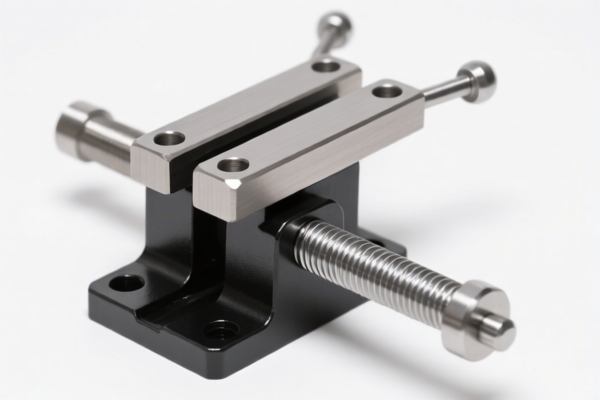
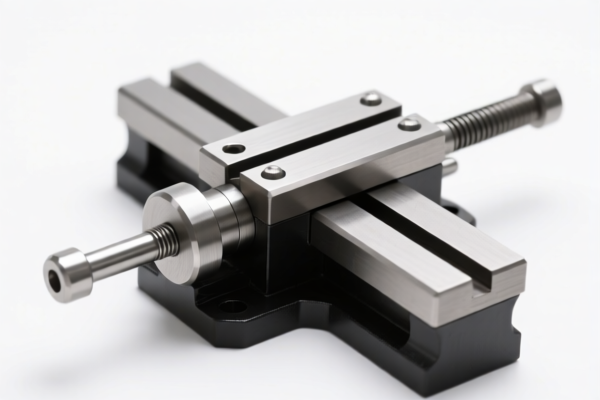
In the context of industrial machining, an Engraving Machine Tool Setter Block is not a tool itself, but a precision auxiliary device used to calibrate, measure, or hold tools/workpieces during setup. It falls under the category of "Parts and Accessories" for machine tools.
It is crucial to distinguish between: 1. Work Holders (Jigs/Fixtures): Devices that hold the workpiece or serve as a reference block for setup. 2. Tool Holders: Devices that hold the cutting tool. 3. Dividing Heads/Special Attachments: Specific indexing devices.
⚠️ Key Classification Point:
- If it is a block/jig/fixture used for setup or holding in engraving/cutting machines (Headings 8456-8465) → HS 8466.20
- It is NOT the engraving machine itself (8456) nor the cutting tool (8207).
📦 II. HS Code Classification Details (2026 Latest Tariff Data)
Based on the provided <DATA>, the product falls under Heading 8466 (Parts and accessories suitable for use solely or principally with machines of headings 8456 to 8465). Specifically, it is classified as a Work Holder or Jig/Fixture.
| HS Code | Product Description | Application Scenario | Tax Rate Details |
|---|---|---|---|
8466.20.10.10 |
Work holders: For machine tools used in cutting gears; Jigs and fixtures | Precision setup blocks, gear-cutting reference holders, specialized jigs for gear engraving | Total Tax: 29.6% (Base: 4.6% + Additional: 25.0%) |
8466.20.80.40 |
Work holders: Other; Other work holders: Jigs and fixtures | General-purpose tool setter blocks, CNC engraving fixture blocks, non-gear specific jigs | Total Tax: 28.7% (Base: 3.7% + Additional: 25.0%) |
🔍 Critical Distinction:
-8466.20.10.10: Use this if the block is specifically designed for gear cutting machines (even if the machine is an engraver configured for gear work).
-8466.20.80.40: Use this for general-purpose tool setter blocks, calibration blocks, or jigs used in standard CNC engraving/milling. This is the most likely code for a generic "Tool Setter Block".
💰 III. 2026 Latest Tariff Rate Detailed Explanation (US Market)
✅ Applicable Country: United States (US)
✅ Origin: China (CN)
✅ Effective Date: 2025-11-10 onwards
🎯 1. 8466.20.80.40 – General Jigs and Fixtures (Most Common)
| Item | Content |
|---|---|
| Base Tariff Rate | 3.7% (Ad Valorem) |
| USITC Additional Tariff (Section 301) | +25.0% |
| Total Effective Tax Rate | 28.7% |
| Tax Calculation Basis | CIF Value × 28.7% |
| De Minimis Eligibility | ❌ Not Eligible (Section 301 duties apply to all shipments) |
| Legal Basis Path | HTSUS:8466.20.80.40 → USITC:Section301 → Total:28.7% |
📌 Explanation:
- The 25% additional tariff is imposed under Section 301 of the Trade Act of 1974 on Chinese-origin goods. - The 3.7% base rate is the standard Most Favored Nation (MFN) rate for "Other work holders" under Heading 8466. - No exemptions are currently available for general jigs and fixtures from China.
🎯 2. 8466.20.10.10 – Gear-Cutting Specific Work Holders
| Item | Content |
|---|---|
| Base Tariff Rate | 4.6% (Ad Valorem) |
| USITC Additional Tariff (Section 301) | +25.0% |
| Total Effective Tax Rate | 29.6% |
| Tax Calculation Basis | CIF Value × 29.6% |
| De Minimis Eligibility | ❌ Not Eligible |
| Legal Basis Path | HTSUS:8466.20.10.10 → USITC:Section301 → Total:29.6% |
📌 Note:
- This code is more expensive (29.6% vs 28.7%) due to a higher base rate (4.6%). - Only use if the product is exclusively for gear cutting machinery. Misclassification can lead to penalties.
🛠️ IV. Customs Clearance Practical Advice
✅ 1. Required Documentation Checklist
| Document | Mandatory? | Notes |
|---|---|---|
| ✅ Product Specification Sheet | Yes | Must clearly state: "Tool Setter Block," "Jig," or "Fixture." Include dimensions, material (e.g., Steel, Aluminum), and tolerance (e.g., ±0.001mm). |
| ✅ Technical Drawings | Yes | Show how the block interfaces with the machine. Does it clamp? Does it hold a probe? |
| ✅ Commercial Invoice | Yes | Must NOT say "Machine Part" vaguely. Use specific terms: "CNC Engraving Machine Tool Setter Fixture." |
| ✅ Packing List | Yes | Detail contents. Avoid mixing with other HS codes. |
| ✅ Certificate of Origin (CO) | Yes | Required for Section 301 determination. |
✅ 2. Declaration Tips (Avoid Pitfalls)
🔥 Golden Rule: "Describe the Function, Not Just the Shape."
| Scenario | Correct Declaration | Incorrect Declaration | Consequence |
|---|---|---|---|
| General Setup Block | "Steel Jig for CNC Engraving Machine Tool Calibration" | "Metal Block" or "Hardware" | Risk of misclassification to higher/tighter codes or rejection. |
| Gear-Specific Block | "Work Holder for Gear Cutting Machine" | "Engraving Accessory" | May be audited for proper sub-heading. |
| Tool Holder (not setter) | "Tool Holder for Engraving Spindle" | "Jig or Fixture" | Incorrect HS Code (8466.30 vs 8466.20). |
⚠️ Common Mistake:
Calling it a "Tool" (HS 8207).
👉 Correction: A setter block is a work holder/jig (HS 8466), not a cutting tool. Cutting tools have sharp edges for material removal; setter blocks are for calibration/holding.
✅ 3. Special Cases
| Case | Advice |
|---|---|
| OEM Custom Blocks | Provide design files to prove specific use. If custom for a specific machine model, cite the machine in the description. |
| Sets with Multiple Blocks | Declare as a single set under the principal item’s HS Code (usually 8466.20.80.40). |
| Used vs. New | Tariff rates are the same, but "Used" goods may require additional inspection for contamination/damage. |
🌍 V. Global Market Comparison (2026)
| Market | Recommended HS Code | Est. Total Tax (CN Origin) | Key Requirement |
|---|---|---|---|
| 🇺🇸 USA | 8466.20.80.40 |
28.7% | Section 301 Duty applies. |
| 🇪🇺 EU | 8466.20.80 |
1.7% - 3.7% | No Section 301 equivalent. |
| 🇨🇳 China | 8466.20.80.40 |
Varies | Check RCEP/FTA if applicable. |
| 🇯🇵 Japan | 8466.20.80 |
0% - 2% | Often duty-free for industrial parts. |
📌 Strategic Insight:
The US market is the most costly due to the 25% additional tariff. If exporting to the US, ensure your pricing model includes this 28.7% cost. For other markets, the duty burden is significantly lower.
📌 VI. Common Errors & Avoidance Guide
❌ Error 1: Declaring as "Machine Part" without specificity.
👉 Result: CBP may classify under a generic "Other" heading with higher uncertainty or audit risk.
❌ Error 2: Misclassifying as "Tool" (HS 8207).
👉 Result: Incorrect duty rate and potential penalty for false declaration. A setter block is a fixture, not a cutter.
❌ Error 3: Ignoring the 25% Section 301 Duty.
👉 Result: Underpayment of duties. The 25% is mandatory for CN origin goods in this category.
✅ Correct Description Example:
"CNC Engraving Machine Tool Setter Block, Steel, for Calibration Purposes, Model XYZ, Made in China"
🎯 VII. Conclusion: Precise Classification Saves Money!
🎯 Key Takeaway:
🔹 "Jig or Fixture? Use 8466.20."
🔹 "Gear-Specific? Use .10.10 (29.6%)."
🔹 "General Use? Use .80.40 (28.7%)."
🔹 "Always Add 25% for US Imports from China."
📌 Pro Tip:
If you are shipping small samples (under $800) to the US, remember that Section 301 duties still apply to most of these items, despite the de minimis exemption for base duties. Verify with your freight forwarder!
📣 Immediate Action:
📞 Provide Technical Drawings to your customs broker.
🚀 Pre-classify using HS8466.20.80.40unless specifically for gear cutting.
💡 Budget for 28.7% duty in your US pricing strategy.
✨ Professional Clearance, From Accurate Classification!
💼 Your Cost Structure Depends on the Right HS Code!
Customer Reviews
About HS Code Classification
The Harmonized System (HS) is an internationally standardized nomenclature developed by the World Customs Organization (WCO) to classify traded products. Over 200 countries use the HS system as the basis for customs tariffs, trade statistics, and import/export regulations.
Each HS code follows a hierarchical structure:
- Chapter (2 digits) — Broad category of goods (e.g., Chapter 84: Machinery and Mechanical Appliances)
- Heading (4 digits) — More specific grouping within the chapter
- Subheading (6 digits) — Internationally standardized breakdown, used by all WCO member countries
- National subdivisions (8-10 digits) — Country-specific extensions for further classification, such as US HTSUS 10-digit codes
Correct HS code classification is essential for smooth customs clearance, accurate duty payment, and compliance with trade regulations. Misclassification can lead to customs delays, overpayment of duties, or penalties.
When importing from CN to US, the applicable tariff rates may include:
- Most-Favored-Nation (MFN) rate — The standard duty rate applied to WTO members
- General rate — Applied to countries without trade agreements
- Trade remedy duties — Additional tariffs such as Section 301 (anti-dumping), Section 232 (national security), or countervailing duties
The information provided on this page is for reference purposes only. For official classification, please consult with your local customs authority or a licensed customs broker.