Envelope Set
CN → US| HS Code | Tariff Rate | Origin | Destination | Doc |
|---|---|---|---|---|
| 4911998000 | 17.5% | CN | US | Official Doc |
| 4817300000 | 35.0% | CN | US | Official Doc |
| 4911996000 | 17.5% | CN | US | Official Doc |
| 4817100000 | 35.0% | CN | US | Official Doc |
Product Images

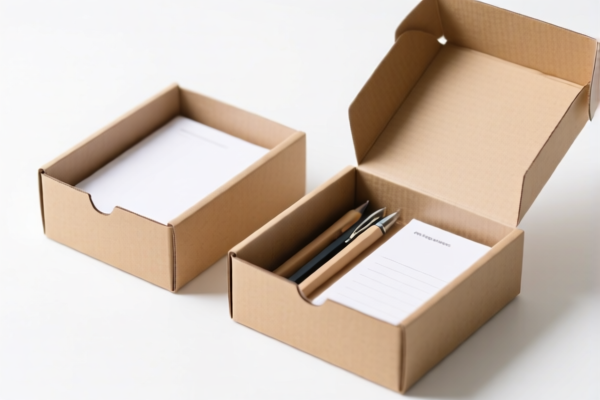


AI Analysis
📦 Envelope Set: The Ultimate Classification & Duty Guide (2026 Edition)
🌐 HS Code Masterclass | Tax Breakdown & Smarter Customs Clearance | Global Trade Strategy
📌 I. What is an "Envelope Set"? Do You Know the Real Category?
An Envelope Set is a commercial bundle containing multiple envelopes, often packaged together as a unit. In international trade, its classification hinges on material composition and packaging format:
- Option A: Pure Paper Stationery Bundle (Paper envelopes only, no rigid container) → Classified under Printing Products (Chapter 49).
- Option B: Stationery in a Container (Envelopes packed inside a paperboard box, bag, or wallet) → Classified under Paper Stationery Containers (Chapter 48).
⚠️ Critical Classification Logic:
- If the set is loose envelopes in a paper bag/wrapper with no rigid structure → It is "Other Printed Matter" (HS Code 4911...). - If the envelopes are packed inside a paper/cardboard box, bag, or wallet (e.g., a "Stationery Kit") → It is "Paper/Cardboard Boxes/Wallets" (HS Code 4817...).
📑 II. HS Code Classification Matrix (Exact Matches from Data)
Based on the specific commodity "Envelope Set" and the provided tax data, here are the two primary classification paths:
| HS Code | Product Description & Logic | Tax Rate (Total) | Tax Details Breakdown |
|---|---|---|---|
| 4911.99.80.00 | "Other Printed Matter" Logic: Envelopes are considered printed products. If not meeting specific sub-categories, they fall under the "Other" bucket for printed goods. |
17.5% | • Base Duty: 0.0% • Additional Duty: 7.5% • Section 122 Tariff: 10% |
| 4911.99.60.00 | "Other Printed Matter" (Variant) Logic: Infer paper material. Classified as printed matter, not fitting specific prior categories, thus "Other". |
17.5% | • Base Duty: 0.0% • Additional Duty: 7.5% • Section 122 Tariff: 10% |
| 4817.30.00.00 | "Paper Stationery Containers" Logic: Paper envelopes forming a stationery set (box/bag/wallet type). Matches "Paper/Cardboard Box/Bag/Wallet". |
35.0% | • Base Duty: 0.0% • Additional Duty: 25.0% • Section 122 Tariff: 10% |
| 4817.10.00.00 | "Paper Cardboard Boxes/Clips" Logic: Specific match to "Paper/Cardboard boxes, bags, wallets, and writing portable clips containing a set of paper stationery". |
35.0% | • Base Duty: 0.0% • Additional Duty: 25.0% • Section 122 Tariff: 10% |
🔍 Key Insight:
- Path A (4911): Lower tax (17.5%). Used when the "set" is just a bundle of envelopes or a soft paper bag. - Path B (4817): Higher tax (35.0%). Used when the envelopes are packaged in a rigid or semi-rigid box, wallet, or specialized stationery container. - Note: The "Additional Duty" (7.5% vs 25.0%) is the main differentiator, driven by the specific HS subheading definition.
💰 III. 2026 Tax Rate Deep Dive (China Origin, USA Import)
✅ Origin: China (CN)
✅ Market: United States (US)
✅ Active Tariff: Section 122 (10%) + Trade Policy Surcharges
🎯 Scenario 1: "Loose" Envelope Set (HS Code 4911.99.80.00 / 60.00)
Best for standard office bundles or gift sets in simple paper packaging.
| Tax Component | Rate | Source / Note |
|---|---|---|
| Base Duty | 0.0% | Standard MFN rate for printed matter. |
| Trade Policy Surcharge | +7.5% | Additional tariff for specific "printed matter" sub-categories. |
| Section 122 Tariff | +10.0% | Mandatory 10% surcharge on Chinese products. |
| 🔴 TOTAL DUTY | 17.5% | CIF Value × 17.5% |
📌 Explanation:
- The 7.5% surcharge applies because these are "Other Printed Matters" (4911). - The 10% Section 122 is a fixed addition for Chinese origin goods. - Total: 17.5%. This is the "Sweet Spot" for simple envelope sets.
🎯 Scenario 2: "Containerized" Envelope Set (HS Code 4817.10.00.00 / 30.00.00)
Best for "Stationery Wallets," "Paper Clutch Sets," or boxed gift sets.
| Tax Component | Rate | Source / Note |
|---|---|---|
| Base Duty | 0.0% | Standard MFN rate for paper containers. |
| Trade Policy Surcharge | +25.0% | High surcharge for "Paper/Cardboard Boxes/Containers". |
| Section 122 Tariff | +10.0% | Mandatory 10% surcharge on Chinese origin. |
| 🔴 TOTAL DUTY | 35.0% | CIF Value × 35.0% |
📌 Explanation:
- The 25% surcharge is significantly higher because the product is classified as a "Paper Cardboard Box/Container" (4817), not just paper. - The 10% Section 122 still applies. - Total: 35.0%. This is a Double Duty scenario if not classified correctly.
🛠️ IV. Customs Clearance Strategy: Avoiding the 35% Trap
✅ 1. Documentation Checklist (Must-Haves)
| Document | Why It Matters | Tip |
|---|---|---|
| Product Photos (Packaging) | Critical | Show if the set is a loose bundle (4911) or inside a box/wallet (4817). |
| Bill of Materials (BOM) | Classify Material | Confirm if the container is rigid (Box) or flexible (Paper Bag). |
| Commercial Invoice | Accurate Description | Use "Envelope Set (Paper)" vs "Stationery Wallet with Envelopes". |
| Packing List | Volume & Weight | Ensure the weight matches the declared packaging type. |
| Origin Certificate | Tariff Eligibility | Must prove China Origin to apply Section 122 correctly. |
✅ 2. Classification Strategy (The "Container Test")
🔥 Rule of Thumb:
"Is the envelope set inside a box, wallet, or hard case?"
| Scenario | Packing Style | Correct HS Code | Tax Rate | Risk |
|---|---|---|---|---|
| A. Simple Bundle | Envelopes tied with ribbon or in a flat paper bag. | 4911.99.80.00 | 17.5% | ✅ Low Risk |
| B. Stationery Wallet | Envelopes inside a paper/cardboard wallet or clip. | 4817.10.00.00 | 35.0% | ⚠️ High Cost |
| C. Gift Box | Envelopes inside a cardboard box. | 4817.30.00.00 | 35.0% | ⚠️ High Cost |
💡 Pro Tip:
If you are selling "Envelope Sets" as a low-cost office item, avoid rigid packaging. Use a flat paper sleeve or simple bag to qualify for HS 4911 (17.5%) instead of HS 4817 (35.0%).
✅ 3. Common Pitfalls & Fixes
| ❌ Mistake | ⚠️ Consequence | ✅ Fix |
|---|---|---|
| Declaring a Boxed Set as "Printed Matter" (4911) | Customs rejects; audits; 35% duty + penalty. | Change declaration to 4817.10.00.00 (Paper Containers). |
| Declaring a Loose Set as "Stationery Box" (4817) | Overpaying 17.5% extra duty. | Provide photos proving no rigid box to use 4911.99.80.00. |
| Ignoring Section 122 | Underpaying; penalty later. | Always add +10% to any calculation for China origin. |
| Vague Description | "Envelope Set" alone. | Add: "Paper Envelope Set, no rigid container" or "Envelopes in Paper Wallet". |
🌍 V. Global Market Quick Compare (2026)
| Market | Recommended HS Code | Effective Rate (China Origin) | Notes |
|---|---|---|---|
| 🇺🇸 USA | 4911.99.80.00 (Best) | 17.5% | If possible, avoid 4817 (35%) to save margins. |
| 🇨🇳 China | 4911.99.80.00 | ~0-5% | Domestic trade; different rules apply. |
| 🇪🇺 EU | 4911.99.80.00 | ~3-4% | No Section 122; lower base duties. |
| 🇬🇧 UK | 4911.99.80.00 | ~3-4% | Post-Brexit tariffs vary; check specific lists. |
📌 Conclusion:
USA is the only market in this data where the 35% vs 17.5% difference is critical due to the Section 122 and Additional Duty structure.
📌 VI. Final Verdict: Actionable Advice
- Design for Tax Efficiency: If targeting the US market, design your "Envelope Set" packaging to be non-rigid (no boxes/wallets). This keeps you in the 4911 bucket (17.5% tax).
- Invoice Description: Explicitly state "Envelopes in Paper Sleeve" (for 4911) or "Envelopes in Cardboard Box" (for 4817). Do not use ambiguous terms like "Gift Set" without specifying the container.
- Verify Packaging: Before shipping, check if the packaging is considered a "container" (4817) or just "wrapping" (4911). The line is thin but the tax difference is double (17.5% vs 35%).
- Budget for Section 122: Always calculate +10% for Chinese origin goods, regardless of the HS Code.
🚀 Summary:
Loose Envelopes = 17.5% Duty
Boxed/Walleted Envelopes = 35% Duty
Choose wisely to protect your profit margin!
✨ Ready to Ship?
📞 Contact Customs Broker: Confirm if your specific packaging counts as a "Container" (4817) or "Printed Matter" (4911).
📸 Send Photos: Proving "No Rigid Box" can save you 17.5% on every unit.
💰 Calculate:CIF Value × 17.5%vsCIF Value × 35.0%. The difference is huge!
🔹 Your Product, Your Strategy, Your Margin.
🔹 Don't let a cardboard box double your taxes!
Customer Reviews
About HS Code Classification
The Harmonized System (HS) is an internationally standardized nomenclature developed by the World Customs Organization (WCO) to classify traded products. Over 200 countries use the HS system as the basis for customs tariffs, trade statistics, and import/export regulations.
Each HS code follows a hierarchical structure:
- Chapter (2 digits) — Broad category of goods (e.g., Chapter 84: Machinery and Mechanical Appliances)
- Heading (4 digits) — More specific grouping within the chapter
- Subheading (6 digits) — Internationally standardized breakdown, used by all WCO member countries
- National subdivisions (8-10 digits) — Country-specific extensions for further classification, such as US HTSUS 10-digit codes
Correct HS code classification is essential for smooth customs clearance, accurate duty payment, and compliance with trade regulations. Misclassification can lead to customs delays, overpayment of duties, or penalties.
When importing from CN to US, the applicable tariff rates may include:
- Most-Favored-Nation (MFN) rate — The standard duty rate applied to WTO members
- General rate — Applied to countries without trade agreements
- Trade remedy duties — Additional tariffs such as Section 301 (anti-dumping), Section 232 (national security), or countervailing duties
The information provided on this page is for reference purposes only. For official classification, please consult with your local customs authority or a licensed customs broker.