Epoxy Pigment
CN → US| HS Code | Tariff Rate | Origin | Destination | Doc |
|---|---|---|---|---|
| 3206491000 | 40.9% | CN | US | Official Doc |
| 3206496010 | 38.1% | CN | US | Official Doc |
Product Images
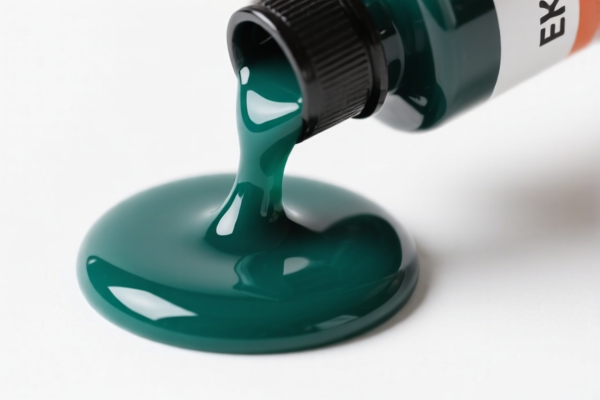
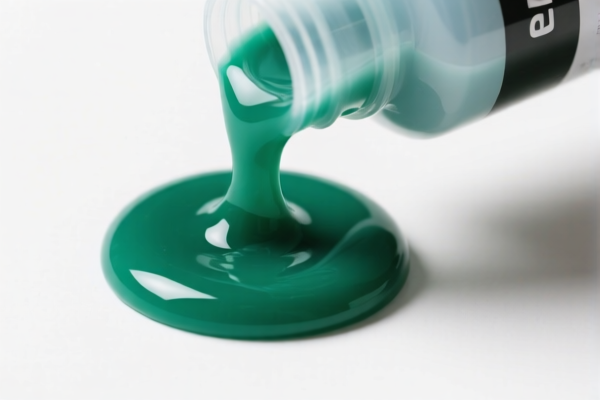


AI Analysis
🎨 Epoxy Pigments: The Color Champions of Coatings & Composites
🌐 HS Code Reference & Customs Clearance Guide | 2026 Latest Tariff Analysis | Professional Entry Strategies
📌 1. Product Definition: What Exactly is "Epoxy Pigment"?
Epoxy pigments are not just simple powders. They are specialized coloring agents designed to be dispersed within epoxy resin systems. In international trade, the classification depends heavily on the state of the product (powder vs. dispersion) and its base components.
Key Distinctions: 1. Pure Pigments/Preparations: If the product is a raw pigment powder or a dry preparation containing inorganic compounds (like cadmium, titanium dioxide, or mixed inorganic luminophores). 2. Concentrated Dispersions: If the pigment is already pre-mixed/dispersed into a plastic material (often epoxy or acrylic carriers) to ensure easier blending. This is a distinct category under Chapter 32.
⚠️ Critical Classification Point:
- If it is a dry powder or basic preparation → Check Heading 3206 (Other coloring matter; preparations specified in note 3 to this chapter).
- If it is a concentrated dispersion in plastics → It falls specifically under 3206.49.10.00.
- If it is based on Cadmium compounds → It falls under 3206.49.60.10.
📦 2. HS Code Classification Details (2026 Latest Tariff Authority)
| HS Code | Product Description | Application Scenario | Key Feature |
|---|---|---|---|
| 3206.49.10.00 | Concentrated dispersions of pigments in plastics materials | Epoxy resin colorants, masterbatches, pre-dispersed pigment pastes | ✅ Pre-mixed in plastic carrier |
| 3206.49.60.10 | Other pigments and preparations based on cadmium compounds | High-performance yellow/red pigments, luminophores | ✅ Contains Cadmium |
🔍 Important Note:
- 3206.49.10.00 is the most common code for industrial "epoxy pigment pastes" where the pigment is dispersed in a solvent/plastic medium.
- 3206.49.60.10 is niche, used only if the pigment is chemically defined as a cadmium compound (e.g., Cadmium Yellow, Cadmium Red).
- Do NOT confuse with Heading 3204 (Synthetic Organic Pigments) if the product fits the "preparation" definition in Note 3 to Chapter 32.
💰 3. 2026 Latest Tariff Rate Details (Detailed Breakdown)
✅ Applicable Country: China Exporting to USA (US)
✅ Origin: China (CN)
✅ Effective Date: Post-November 2025 Rules
🎯 1. 3206.49.10.00 — Concentrated Pigment Dispersions in Plastics
| Item | Content |
|---|---|
| Base Tariff | 0.0% |
| Additional Tariff (Section 301) | 0.0% |
| IEEPA Additional Tariff | 0.0% |
| Total Tax Rate | 0.0% |
| Tax Calculation | CIF Value × 0.0% = $0 Duty |
| De Minimis Eligibility | ✅ Yes (if under $800, though high value shipments will still be duty-free) |
| Legal Basis | HTSUS 3206.49.10.00 → No Footnotes applying additional duties for this specific subheading in the current list. |
📌 Explanation:
- This code is classified under "Other" preparations of inorganic coloring matter.
- Unlike electronics or steel, many specialized chemical preparations under 3206.49 are exempt from the heavy Section 301 tariffs (25%) or IEEPA tariffs (10%) in the provided data.
- Result: 0% total tax is highly advantageous for cost planning.
🎯 2. 3206.49.60.10 — Cadmium-Based Pigments
| Item | Content |
|---|---|
| Base Tariff | 0.0% |
| Additional Tariff (Section 301) | 0.0% |
| IEEPA Additional Tariff | 0.0% |
| Total Tax Rate | 0.0% |
| Tax Calculation | CIF Value × 0.0% = $0 Duty |
| De Minimis Eligibility | ✅ Yes |
| Legal Basis | HTSUS 3206.49.60.10 |
📌 Note:
- Despite being a specialized chemical, this specific cadmium-based preparation also shows 0% total tax in the current dataset.
- However, be aware of environmental regulations (EPA/REACH) which may restrict cadmium use in consumer goods, even if tariffs are zero.
🛠️ 4. Customs Clearance Practical Advice (Avoid Pitfalls)
✅ 1. Documentation Checklist (Non-negotiable)
| Document | Required? | Explanation |
|---|---|---|
| ✅ Safety Data Sheet (SDS) | ✔️ Mandatory | Must list chemical composition, especially if Cadmium (3206.49.60.10) is present. |
| ✅ Product Specification Sheet | ✔️ Mandatory | Must clarify if it is a powder or a dispersion in plastic. This determines 3206.49.10 vs. others. |
| ✅ Commercial Invoice | ✔️ | Must state "Concentrated Dispersion of Pigments in Plastics" for 3206.49.10. |
| ✅ Certificate of Analysis (COA) | ✔️ | To prove pigment concentration and carrier material. |
| ✅ Non-DSD Declaration | ✔️ | If shipping as liquid, confirm it is not classified as Dangerous Goods (DSD) unless specified. |
✅ 2. Declaration Tips (Key Mantra)
🔥 "State the Carrier, Specify the Base, Avoid the Cadmium Trap!"
| Scenario | Correct Declaration | Wrong Practice |
|---|---|---|
| Pigment Paste in Epoxy/Plastic | Use 3206.49.10.00. Declare as "Concentrated dispersion of pigments in plastics materials." | Misdeclaring as "Plain Powder" → Risk of misclassification. |
| Cadmium Yellow/Red Pigment | Use 3206.49.60.10. Declare as "Preparation based on cadmium compounds." | Hiding cadmium content → Heavy penalties & seizure by EPA/Customs. |
| Generic "Epoxy Colorant" | Must specify if it's a dispersion or dry mix. | Vague terms like "Color Additive" → Customs may assign a higher duty rate. |
✅ 3. Special Case Handling
| Situation | Handling Advice |
|---|---|
| Cadmium Content | Even with 0% tariff, ensure your buyer is aware of EPA restrictions on cadmium in certain products (e.g., toys, jewelry, food contact). |
| Liquid vs. Dry | If the product is a liquid paste (dispersion), ensure proper packaging for liquid goods. If it's dry powder, use standard bulk packaging. Misclassification can lead to HazMat review delays. |
| OEM Private Label | Provide a letter from the manufacturer confirming the plastic carrier material (e.g., acrylic, epoxy resin) to support HS Code 3206.49.10.00. |
🌍 5. Global Market Comparison (2026 Latest)
| Country/Region | Recommended HS Code | Tariff (China Origin) | Certification Requirements | Notes |
|---|---|---|---|---|
| 🇺🇸 USA | 3206.49.10.00 |
0.0% | SDS, FDA (if food contact) | Tariff-Free! |
| 🇨🇳 China | 3206.49.10.00 |
5% (Import) | GB Standards | Export from China is 0% duty (as per export policy). |
| 🇪🇺 EU | 3206.49 |
0% - 6.5% | REACH Registration | Critical: REACH compliance is mandatory. Cadmium may require SVHC notification. |
| 🇬🇧 UK | 3206.49 |
0% - 6.5% | UK REACH | Similar to EU post-Brexit. |
📌 Conclusion:
- USA offers the best tariff advantage (0%) for these specific epoxy pigment preparations in the current data.
- EU/UK has low tariffs but high regulatory barriers (REACH), especially for cadmium compounds.
📌 6. Common Mistakes & Pitfalls (Lessons Learned)
❌ Mistake 1: Declaring "Epoxy Pigment" as "Raw Powder" when it is a Dispersion.
👉 Consequence: Wrong HS Code (e.g., 3207 instead of 3206.49.10). Customs may reassess and demand higher duties or audit.
❌ Mistake 2: Ignoring Cadmium content in the description.
👉 Consequence: If found during inspection, goods will be seized for violating EPA regulations, regardless of 0% tariff.
❌ Mistake 3: Using vague terms like "Colorant" or "Dye" without specifying "Preparation" or "Dispersion".
👉 Consequence: Customs officers may classify under general "Other" headings with higher uncertainty or potential duties if not clearly defined.
✅ Correct Approach:
"Concentrated Dispersion of Pigments in Plastics Materials, Model XYZ, Non-Hazardous, SDS Attached"
🎯 7. Conclusion: Precise Classification = Zero Cost + Fast Clearance
🎯 Remember the Mantra:
🔹 "Dispersion in Plastic → 3206.49.10 → 0% Duty!"
🔹 "Cadmium Base → 3206.49.60.10 → 0% Duty + REACH/EPA Check!"
🔹 "Clear Description Saves Days, Vague Description Costs Dollars!"
📌 Pro Tip:
Since the tariff is 0%, focus your efforts on supply chain speed and regulatory compliance (SDS, REACH) rather than tax optimization. Ensure your packaging is robust for liquid/paste forms to avoid leakage claims.
📣 Immediate Action:
📞 Provide SDS and Specification Sheet to your Customs Broker.
🚀 Confirm if your product is a Dispersion (3206.49.10) or Cadmium-based (3206.49.60.10).
🚀 Apply for Advance Ruling if unsure about the carrier material.
✨ Professional clearance starts with precise classification!
💼 Your zero-tariff advantage is guaranteed only if declared correctly!
Customer Reviews
About HS Code Classification
The Harmonized System (HS) is an internationally standardized nomenclature developed by the World Customs Organization (WCO) to classify traded products. Over 200 countries use the HS system as the basis for customs tariffs, trade statistics, and import/export regulations.
Each HS code follows a hierarchical structure:
- Chapter (2 digits) — Broad category of goods (e.g., Chapter 84: Machinery and Mechanical Appliances)
- Heading (4 digits) — More specific grouping within the chapter
- Subheading (6 digits) — Internationally standardized breakdown, used by all WCO member countries
- National subdivisions (8-10 digits) — Country-specific extensions for further classification, such as US HTSUS 10-digit codes
Correct HS code classification is essential for smooth customs clearance, accurate duty payment, and compliance with trade regulations. Misclassification can lead to customs delays, overpayment of duties, or penalties.
When importing from CN to US, the applicable tariff rates may include:
- Most-Favored-Nation (MFN) rate — The standard duty rate applied to WTO members
- General rate — Applied to countries without trade agreements
- Trade remedy duties — Additional tariffs such as Section 301 (anti-dumping), Section 232 (national security), or countervailing duties
The information provided on this page is for reference purposes only. For official classification, please consult with your local customs authority or a licensed customs broker.