Equalizer
CN → US| HS Code | Tariff Rate | Origin | Destination | Doc |
|---|---|---|---|---|
| 8543709860 | 37.6% | CN | US | Official Doc |
| 8518500000 | 35.0% | CN | US | Official Doc |
| 8543709810 | 37.6% | CN | US | Official Doc |
| 8518402000 | 35.0% | CN | US | Official Doc |
Product Images
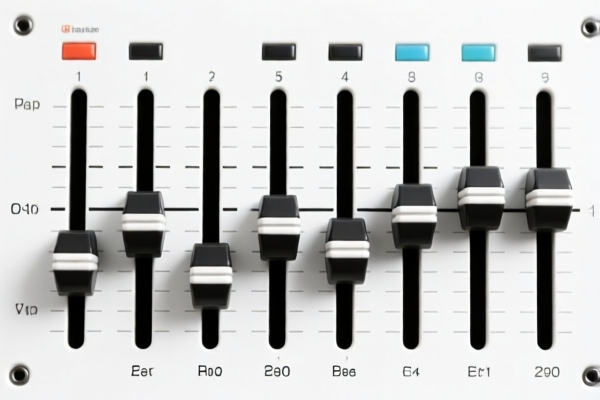
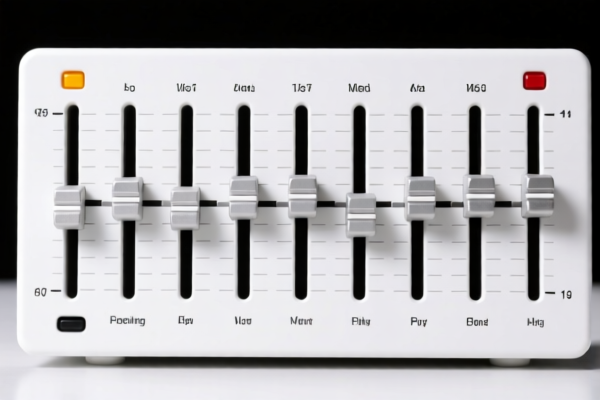
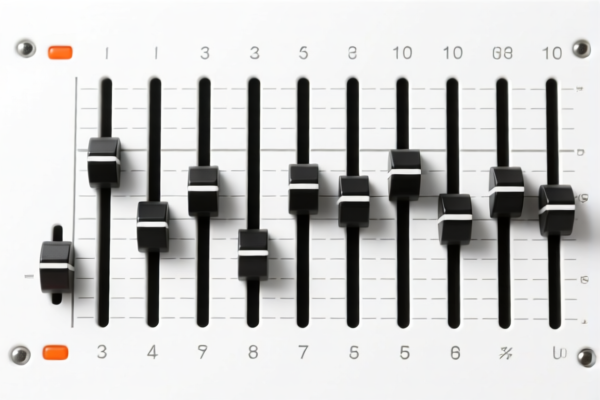
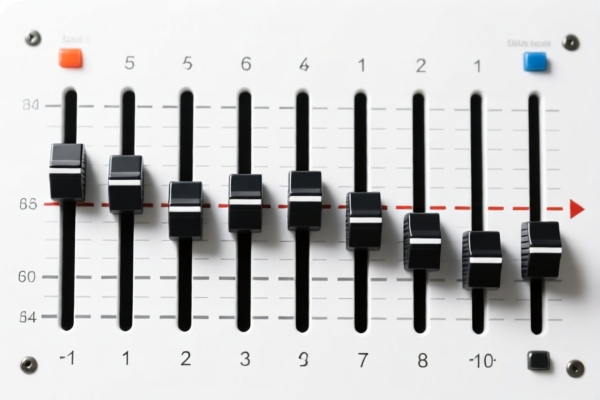
AI Analysis
🎛️ Equalizer (Audio Processors for Frequency Adjustment)
🌐 HS Code Reference & Customs Clearance Guide | 2026最新税则全解析 | Professional Clearance Strategy
📌 I. Product Definition & Classification: Do You Really Understand "Equalizers"?
Equalizers are specialized audio processing devices designed to adjust the balance between frequency components within an audio signal. In international trade, they are primarily categorized based on their functional logic: whether they are considered standalone audio processing machines or subsets of audio frequency amplifiers.
Key Classification Logic: * Audio Processing Machines (8543): Devices that process signals but do not inherently amplify power output in the traditional sense. They are often seen as "standalone" processing units. * Audio Frequency Amplifiers (8518): Devices viewed as part of the broader "audio amplifier" family, where frequency adjustment is an integrated function of amplification.
⚠️ Critical Distinction:
- If the device is viewed strictly as a signal processor without direct power amplification duties → Chapter 8543
- If the device is viewed as an audio frequency amplifier (frequency-specific) → Chapter 8518
📦 II. HS Code Classification Details (2026 Latest Tariff Schedule)
| HS Code | Product Description | Applicable Scenario | Functional Logic |
|---|---|---|---|
8543.70.98.10 |
Other electrical apparatus and machines (Audio Processors) | Standalone equalizers; Logic highly correlated with amplifiers but categorized under "machines & apparatus" | Audio Processing |
8518.40.20.00 |
Audio Frequency Amplifiers | Equalizers considered part of the audio amplifier category due to functional similarity | Amplifier Subset |
8543.70.98.60 |
Other electrical apparatus and machines (Fallback Category) | Equalizers not classified as amplifiers or instrument effect pedals; Fits the "other machines" residual definition | Standalone/Residual |
8518.50.00.00 |
Sound Amplifiers (Audio Frequency) | Equalizers viewed as part of the "electro-acoustic amplifier group" covering audio frequency ranges | Amplifier Group |
🔍 Key Reminder:
- 8543 Codes treat the equalizer as a distinct processing machine.
- 8518 Codes treat the equalizer as a type of amplifier.
- The choice of HS Code significantly impacts the Base Tariff and overall tax liability.
💰 III. 2026 Latest Tariff Rate Breakdown (Including Surcharges & Policy Add-ons)
✅ Applicable Country: United States (US)
✅ Origin: China (CN)
✅ Effective Time: Ongoing (Includes subsequent imports)
🎯 1. 8543.70.98.10 & 8543.70.98.60 —— Audio Processing Machines (Chapter 8543)
Both codes fall under the "Other Electrical Machines and Apparatus" category, which typically carries a standard base tariff.
| Item | Content |
|---|---|
| Base Tariff | 2.6% (ad valorem) |
| Section 301 Surcharge | +25.0% |
| Section 122 Tariff | +10.0% (Specific provision for certain electronic/audio goods from China) |
| Total Tariff Rate | 37.6% |
| Tax Calculation | CIF Value × 37.6% |
| De Minimis Exemption? | ❌ No (High duty rate excludes de minimis benefits for most B2B shipments) |
| Legal Basis Path | USITC:8543.70.98.10/60 → FOOTNOTE:301 → SECTION122 |
📌 Explanation:
- The 2.6% base tariff applies to "other electrical machines."
- The 25% surcharge is standard for Section 301 tariffs on Chinese electronics.
- The 10% Section 122 tariff applies specifically to certain audio equipment categories.
- Total: 37.6%. This is a high-cost classification due to the cumulative surcharges.
🎯 2. 8518.40.20.00 & 8518.50.00.00 —— Audio Frequency Amplifiers (Chapter 8518)
These codes classify equalizers as part of the audio amplifier family, which historically enjoys lower base tariffs.
| Item | Content |
|---|---|
| Base Tariff | 0.0% (ad valorem) |
| Section 301 Surcharge | +25.0% |
| Section 122 Tariff | +10.0% |
| Total Tariff Rate | 35.0% |
| Tax Calculation | CIF Value × 35.0% |
| De Minimis Exemption? | ❌ No |
| Legal Basis Path | USITC:8518.40.20.00/8518.50.00.00 → FOOTNOTE:301 → SECTION122 |
📌 Important Note:
- While the base tariff is 0%, the 301 (25%) and Section 122 (10%) surcharges still apply.
- Total: 35.0%.
- Savings: Compared to the 8543 classification (37.6%), this option saves 2.6% on the CIF value.
- Risk: Requires strong justification that the device is functionally an "audio frequency amplifier" rather than a standalone processor.
🛠️ IV. Customs Clearance Practical Advice (实战避坑指南)
✅ 1. Required Documentation Checklist (Essential)
| Document | Mandatory? | Description |
|---|---|---|
| ✅ Product Specifications | ✔️ | Must clearly state function: "Audio Equalizer," frequency range, input/output impedance. |
| ✅ Functional Diagram | ✔️ | Crucial! Shows signal flow. Must clarify if it includes power amplification stages. |
| ✅ Product Photos (with Label) | ✔️ | Clear view of model number, brand, and any "For Audio Processing" labeling. |
| ✅ Commercial Invoice | ✔️ | Describe as "Audio Equalizer" or "Frequency Adjuster." Avoid vague terms like "Audio Machine." |
| ✅ Packing List | ✔️ | List components. If sold with amplifiers, declare separately to avoid consolidation errors. |
✅ 2. Declaration Strategy (Key Mnemonics)
🔥 "Function Determines Category: Processor vs. Amplifier!"
| Scenario | Recommended HS Code | Why? | Risk if Wrong |
|---|---|---|---|
| Standalone EQ (No power amp) | 8543.70.98.10 or 8543.70.98.60 |
Pure signal processing. | Misclassified as amp → 2.6% base tariff difference. |
| Integrated EQ+Amp Unit | 8518.40.20.00 or 8518.50.00.00 |
Functionally an amplifier. | Misclassified as processor → Potential duty adjustment. |
| Instrument Effect Pedal | Not in DATA (Likely 9206/8543) | If used strictly for musical instruments. | Not covered in this specific data set. |
📌 Pro Tip:
- If your product is a rack-mounted equalizer with no inherent power amplification, 8543 is safer.
- If your product is a graphics equalizer built into a power amp chassis, 8518 is more accurate and cost-effective (35% vs 37.6%).
✅ 3. Special Circumstances Handling
| Situation | Handling Advice |
|---|---|
| OEM/White Label | Provide end-user specs. Customs may look at the primary function. |
| Digital vs. Analog | Both can fall under 8543 or 8518. Ensure the description highlights "audio frequency" function. |
| Small Signal Processors | If very low power, argue for "processing machine" (8543). |
| High Power Units | If it drives speakers, argue for "amplifier" (8518) to save the 2.6% base tariff. |
🌍 V. Global Market Comparison (2026 Latest)
| Country/Region | Recommended HS Code | Total Tariff (China Origin) | Notes |
|---|---|---|---|
| 🇺🇸 USA | 8518 or 8543 |
35.0% - 37.6% | High surcharges due to 301 & Section 122. |
| 🇨🇳 China | 8543.70.98 or 8518 |
~5-10% (Import) | Lower base tariffs, no Section 301. |
| 🇪🇺 EU | 8543.70 or 8518 |
0-4% | Generally lower tariffs; check CE/ErP. |
| 🇯🇵 Japan | 8543 or 8518 |
0-5% | PSE certification required. |
📌 Conclusion:
- The US market is the most cost-sensitive due to 37.6% vs 35.0% differential and additional compliance burdens.
- Classifying as an Amplifier (8518) saves 2.6% on the CIF value.
- Classifying as a Processor (8543) is more technically accurate for pure signal processors but costs more.
📌 VI. Common Errors & Pitfalls (Lessons Learned)
❌ Error 1: Declaring an equalizer as "Part of a Speaker System"
👉 Consequence: May be misclassified under 8518.90 (Parts), leading to incorrect duty calculation and potential penalties.
❌ Error 2: Ignoring Section 122 Tariff
👉 Consequence: Many importers only account for the 25% Section 301 tariff. Missing the 10% Section 122 leads to 10% underpayment.
❌ Error 3: Vague Description "Audio Device"
👉 Consequence: Customs may assign a default higher rate or request additional documentation, delaying clearance.
❌ Error 4: Assuming Base Tariff is 0% for All Audio
👉 Consequence: 8543 has a 2.6% base tariff. 8518 has 0%. Confusing these leads to financial loss.
✅ Correct Practice:
"Audio Equalizer, Model XYZ, 31-Band Graphic, Rack Mount, Input: 600 Ohms, Output: 600 Ohms, No Built-in Power Amplification"
🎯 VII. Conclusion: Professional Classification, Cost Optimization!
🎯 Remember the Golden Rule:
🔹 "Amplifier (8518) = 0% Base + 35% Total"
🔹 "Processor (8543) = 2.6% Base + 37.6% Total"
🔹 "Section 122 (10%) Applies to Both!"🔹 "If it amplifies power, go 8518. If it only processes signal, go 8543."
🔹 "A 2.6% difference adds up on large volumes!"
📌 Pro Tip:
If your equalizer is intended for professional audio systems and includes power amplification stages, strongly consider 8518 to reduce total tax burden. For pure signal processing units, 8543 is the technically correct and safer classification despite the slightly higher rate.
📣 Immediate Action:
📞 Consult a licensed customs broker.
📄 Prepare technical diagrams to justify "Amplifier" vs "Processor" status.
🚀 Ensure Section 122 is explicitly declared to avoid audits.
✨ Professional Clearance Starts with Accurate Classification!
💼 Every percentage point matters in high-volume audio equipment imports!
Customer Reviews
About HS Code Classification
The Harmonized System (HS) is an internationally standardized nomenclature developed by the World Customs Organization (WCO) to classify traded products. Over 200 countries use the HS system as the basis for customs tariffs, trade statistics, and import/export regulations.
Each HS code follows a hierarchical structure:
- Chapter (2 digits) — Broad category of goods (e.g., Chapter 84: Machinery and Mechanical Appliances)
- Heading (4 digits) — More specific grouping within the chapter
- Subheading (6 digits) — Internationally standardized breakdown, used by all WCO member countries
- National subdivisions (8-10 digits) — Country-specific extensions for further classification, such as US HTSUS 10-digit codes
Correct HS code classification is essential for smooth customs clearance, accurate duty payment, and compliance with trade regulations. Misclassification can lead to customs delays, overpayment of duties, or penalties.
When importing from CN to US, the applicable tariff rates may include:
- Most-Favored-Nation (MFN) rate — The standard duty rate applied to WTO members
- General rate — Applied to countries without trade agreements
- Trade remedy duties — Additional tariffs such as Section 301 (anti-dumping), Section 232 (national security), or countervailing duties
The information provided on this page is for reference purposes only. For official classification, please consult with your local customs authority or a licensed customs broker.