Equine Glove Leather Semi Finished (Non Fancy)
CN → US| HS Code | Tariff Rate | Origin | Destination | Doc |
|---|---|---|---|---|
| 4104415000 | 13.3% | CN | US | Official Doc |
| 4107197090 | 15.0% | CN | US | Official Doc |
| 4107127090 | 15.0% | CN | US | Official Doc |
| 4115100000 | 35.0% | CN | US | Official Doc |
| 4104115080 | 13.3% | CN | US | Official Doc |
Product Images
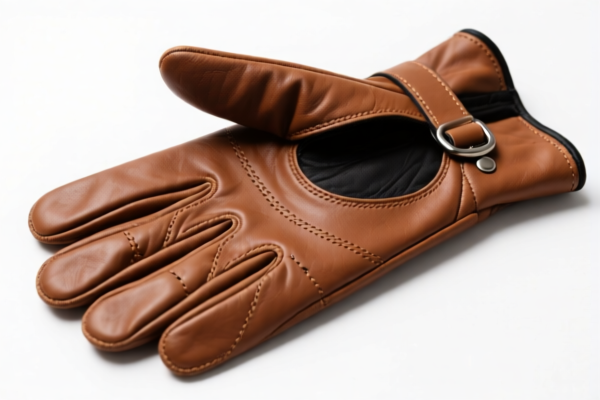
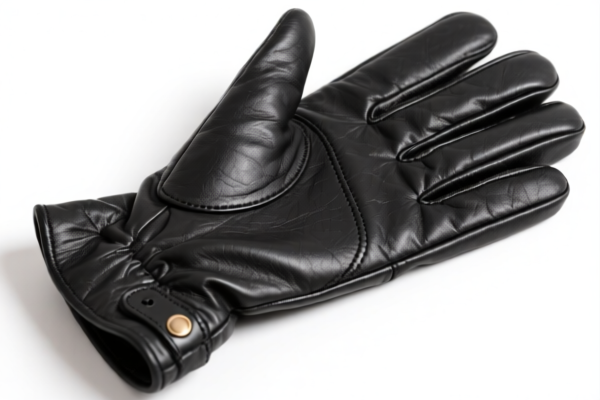
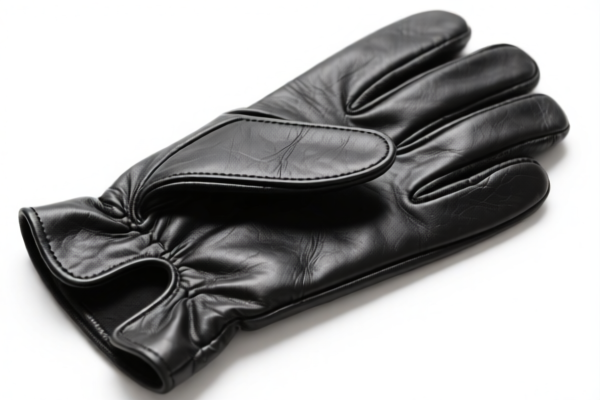

AI Analysis
🧤 Equine Glove Leather Semi Finished (Non Fancy) – The Ultimate Clearance Guide
🌐 HS Code Reference & Customs Strategy | 2026 Tariff Analysis | Professional Level Clearance Protocol
📌 I. Product Definition: What is "Equine Glove Leather"?
Equine Glove Leather (Semi-Finished, Non-Fancy) refers to hides from horses or equines that have undergone initial tanning (semified) but have not been processed into "fancy" leather (i.e., they are not split, buffed, aniline-dyed, or otherwise finished for high-end garment/glove manufacturing).
In international trade, this product sits in a critical gray area between raw hides and finished leather goods. It is primarily used as raw material for glove manufacturing, upholstery, or further processing.
⚠️ Key Distinction:
- "Semi-Finished": The leather has been tanned but retains its natural grain or has minimal surface treatment. It is not yet suitable for final consumer use (like gloves).
- "Non-Fancy": It lacks the specific finishing processes (like aniline dyeing or buffing) that define "Fancy Leather."
- Material: Must be exclusively from Equine sources. Confusing it with Bovine (Cow) leather will lead to misclassification.
📦 II. HS Code Classification Details (Based on Provided Data)
The following HS Codes are matched based on the specific attributes: Equine (Horse) Material, Semi-Finished State, and Non-Fancy Finish.
| HS Code | Product Description | Match Logic | Applicable Scenario |
|---|---|---|---|
4104.41.50.00 |
Bovine Leather, Semi-Finished, Non-Fancy | ⚠️ Partial Match Risk: The summary states "Bovine Leather," but the input is "Equine." However, some classifiers may group them if the tanning process is identical. Caution: Check if "Equine" is explicitly excluded from this Bovine-specific code in local tariffs. | Raw hides of Bovine origin, semi-tanned, unprocessed. |
4107.19.70.90 |
Bovine Leather, Semi-Finished, Other/Non-Fancy | ⚠️ Partial Match Risk: Similar to above, this code is often for Bovine "Other" categories. If the input is strictly Equine, this may be a fallback if no specific Equine code exists, but verify local regulations. | Other Bovine leather not classified elsewhere, semi-finished. |
4107.12.70.90 |
Bovine Leather, Semi-Finished, Non-Fancy | ⚠️ Partial Match Risk: Specifically targets "Non-Fancy" Bovine leather. If your goods are Equine, this might be incorrect unless local law treats Equine and Bovine similarly for this subheading. | Standard semi-finished Bovine leather for non-specialized uses. |
4115.10.00.00 |
Leather & Leather Fiber Board | ❌ Mismatch Risk: The summary mentions "Bovine Leather," but this code is for Leather Fiber Board (composite material made from leather waste). Do not use unless the product is actually a board made from leather scraps. | Composite boards made from leather fiber/waste. |
4104.11.50.80 |
Bovine Leather, Semi-Finished, Other | ⚠️ Partial Match Risk: Again, this is a Bovine-specific code. The summary confirms "Bovine Leather" matches. For Equine leather, ensure your country's tariff schedule allows cross-category application or if there is a specific Equine heading (e.g., 4104 may cover all bovine-like, or 4105 may cover Equine). | Semi-finished Bovine leather not elsewhere specified. |
🔍 Critical Note on "Equine" vs. "Bovine":
The provided data summaries repeatedly mention "Bovine Leather (Bovine Leather)". However, your product is "Equine Glove Leather".
- If HS Codes 4104/4105/4107 are strictly Bovine-only in your destination country, you cannot use them for Equine leather.
- Check Heading 4105: "Leather other than bovine leather." Equine leather usually falls under 4105.
- Recommendation: The provided HS codes may be incorrect for strictly Equine leather if they are Bovine-specific. Please verify if4105.90.xxxxis the correct heading for Equine leather. The provided data seems to assume Bovine characteristics. Proceed with extreme caution.
💰 III. 2026 Tariff Rate Analysis (US Import)
✅ Destination: United States (US)
✅ Origin: China (CN) (Assumed based on "122 Section" and typical trade context)
✅ Effective Date: Post-2025 policies
🎯 1. Potential Codes (If Applied to Equine Leather via Analogy or Misclassification)
| HS Code | Base Duty | USITC (Sec 301) | IEEPA (Sec 122) | Total Duty | Legal Basis |
|---|---|---|---|---|---|
4104.41.50.00 |
3.3% | 0% | 10% | 13.3% | IEEPA:9903.01.24 → USITC:4104.41.50.00 |
4107.19.70.90 |
5.0% | 0% | 10% | 15.0% | IEEPA:9903.01.24 → USITC:4107.19.70.90 |
4107.12.70.90 |
5.0% | 0% | 10% | 15.0% | IEEPA:9903.01.24 → USITC:4107.12.70.90 |
4115.10.00.00 |
0% | 25% | 10% | 35.0% | USITC:4115.10.00.00 → IEEPA:9903.01.24 |
4104.11.50.80 |
3.3% | 0% | 10% | 13.3% | IEEPA:9903.01.24 → USITC:4104.11.50.80 |
📌 Explanation:
- Base Duty: Varies by specific subheading (3.3% - 5% for most leather, 0% for leather board).
- USITC (Sec 301): Most leather products are exempt from the 25% Section 301 tariff, hence 0%.
- IEEPA (Sec 122): A 10% additional tariff applies to many Chinese goods under the International Emergency Economic Powers Act.
- Total: Ranges from 13.3% to 35.0%.⚠️ Major Warning:
If the correct HS Code for Equine Leather is4105.90(not listed in the provided data), the duty rates may differ. Do not force-fit Bovine codes to Equine products. Misclassification can lead to penalties.
🛠️ IV. Customs Clearance Practical Advice (Real-World Pitfall Guide)
✅ 1. Required Documentation Checklist
| Document | Mandatory? | Notes |
|---|---|---|
| Commercial Invoice | ✔️ | Must clearly state "Equine Leather" (not Bovine/Cow). Specify "Semi-Finished" and "Non-Fancy." |
| Packing List | ✔️ | Detail weights and dimensions. |
| Certificate of Origin | ✔️ | Proof of Chinese origin triggers IEEPA 10%. |
| Tanning Process Description | ✔️ | Explain the tanning method (vegetable, chrome, etc.) to justify "Semi-Finished" status. |
| Photo of Product | ✔️ | Show grain structure to prove it is not "Fancy" (no dye/buffing). |
| Import License | ❓ | Check if Equine products require USDA/APHIS permits due to animal origin. |
✅ 2. Classification Strategy (Key Mantra)
🔥 "Origin Matters: Equine ≠ Bovine. Semi ≠ Finished. Non-Fancy ≠ Fancy."
| Scenario | Correct Approach | Wrong Approach |
|---|---|---|
| Product is Equine | Use 4105 heading (if available) or consult a broker for Equine-specific subheading. | Using 4104 (Bovine) codes → High Risk of Misclassification Penalty. |
| Product is Semi-Finished | Declare as "Semi-Finished Leather." | Declaring as "Finished Leather" → Higher duty, wrong category. |
| Product is Non-Fancy | Declare as "Non-Fancy." | Declaring as "Fancy" → Different duty rates, potential scrutiny. |
| Product is Leather Board | Use 4115.10. | Using 4104/4107 codes → Severe Misclassification. |
✅ 3. Special Considerations for Equine Leather
| Issue | Solution |
|---|---|
| USDA/APHIS Permit | Equine products may require import permits from the Animal and Plant Health Inspection Service (APHIS) to prevent disease spread. Check this FIRST. |
| Species Identification | Provide proof (microscopic analysis or supplier declaration) that the leather is from horses, not cows. Customs may test. |
| "Glove Leather" Label | If it's already cut into glove patterns, it might be classified as "Parts of Goods" (e.g., 6116 for gloves) or still leather. Semi-finished implies it is not yet cut for final use. Stick to Chapter 41. |
🌍 V. Global Market Comparison (2026)
| Country/Region | Recommended HS Code | Estimated Duty | Notes |
|---|---|---|---|
| 🇺🇸 USA | 4105.90 (Check!) |
3-5% + 10% IEEPA = ~13-15% | CRITICAL: Verify if 4105 is open. If forced to use 4104 data, expect 13.3-15%. |
| 🇨🇳 China | 4105.90 |
5-10% | Import duty for raw leather. |
| 🇪🇺 EU | 4105 |
0-6.5% | No Section 301/IEEPA. Standard MFN rates apply. |
| 🇬🇧 UK | 4105 |
0-6.5% | Post-Brexit rules. Check UK Tariff. |
| 🇯🇵 Japan | 4105 |
5-6% | No additional US-style tariffs. |
📌 Conclusion:
- The USA is the most complex due to IEEPA 10% and potential misclassification risks if Bovine codes are forced.
- EU/UK/JP have simpler, lower tariffs for Equine leather.
📌 VI. Common Errors & Pitfalls (Lessons Learned)
❌ Error 1: Using Bovine HS Codes (4104/4107) for Equine Leather.
👉 Consequence: Customs may reject the declaration, demand reclassification, or impose penalties for false declaration.
✅ Fix: Use 4105 for Equine leather. If the provided data is the only option, consult a customs broker to justify "Bovine-like" classification, but this is risky.
❌ Error 2: Declaring "Finished" instead of "Semi-Finished."
👉 Consequence: Wrong duty rate, potential audit for fraud if "Fancy" treatments are found.
✅ Fix: Provide photos and tanning certificates to prove "Semi-Finished" status.
❌ Error 3: Ignoring APHIS/USDA Permits.
👉 Consequence: Goods held at port, returned, or destroyed due to health regulations.
✅ Fix: Apply for APHIS permit before shipment.
🎯 VII. Conclusion: Precision in Classification Saves Money!
🎯 Remember the Mantra:
🔹 "Equine ≠ Bovine. Use 4105, Not 4104!"
🔹 "Semi-Finished is Key. Avoid 'Fancy' Labels!"
🔹 "IEEPA 10% Applies. Plan Your Cost!"
📌 Pro Tip:
Since the provided data primarily references Bovine codes, do not blindly apply them to Equine leather.
1. Verify if your destination country has a specific subheading for Equine leather (usually 4105).
2. Consult a licensed customs broker to confirm if Equine leather can be classified under the provided Bovine codes (unlikely and risky).
3. Prepare APHIS permits to avoid health-related delays.
📣 Immediate Action:
📞 Contact a Customs Broker with photos and supplier details.
📄 Request a Binding Ruling from Customs if the value is high.
🚀 Ensure APHIS Permits are in hand before shipping.
✨ Professional Clearance Starts with Accurate Classification!
💼 Every Wrong Code Costs You Time, Money, and Stress!
Customer Reviews
About HS Code Classification
The Harmonized System (HS) is an internationally standardized nomenclature developed by the World Customs Organization (WCO) to classify traded products. Over 200 countries use the HS system as the basis for customs tariffs, trade statistics, and import/export regulations.
Each HS code follows a hierarchical structure:
- Chapter (2 digits) — Broad category of goods (e.g., Chapter 84: Machinery and Mechanical Appliances)
- Heading (4 digits) — More specific grouping within the chapter
- Subheading (6 digits) — Internationally standardized breakdown, used by all WCO member countries
- National subdivisions (8-10 digits) — Country-specific extensions for further classification, such as US HTSUS 10-digit codes
Correct HS code classification is essential for smooth customs clearance, accurate duty payment, and compliance with trade regulations. Misclassification can lead to customs delays, overpayment of duties, or penalties.
When importing from CN to US, the applicable tariff rates may include:
- Most-Favored-Nation (MFN) rate — The standard duty rate applied to WTO members
- General rate — Applied to countries without trade agreements
- Trade remedy duties — Additional tariffs such as Section 301 (anti-dumping), Section 232 (national security), or countervailing duties
The information provided on this page is for reference purposes only. For official classification, please consult with your local customs authority or a licensed customs broker.