Equine Leather Glove Semi Finished
CN → US| HS Code | Tariff Rate | Origin | Destination | Doc |
|---|---|---|---|---|
| 4203291800 | 49.0% | CN | US | Official Doc |
| 6216009000 | 21.3% | CN | US | Official Doc |
| 4203218060 | 39.9% | CN | US | Official Doc |
| 4115100000 | 35.0% | CN | US | Official Doc |
| 4113903000 | 38.3% | CN | US | Official Doc |
Product Images
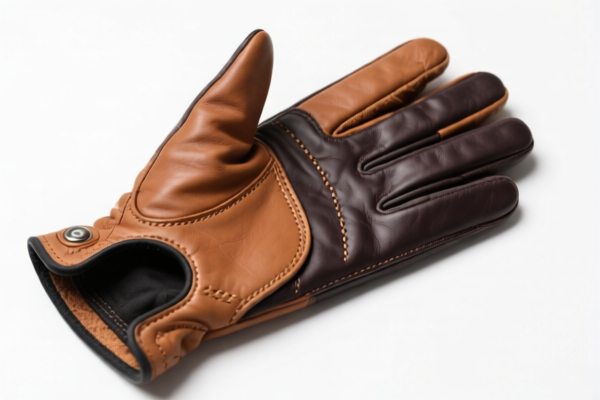
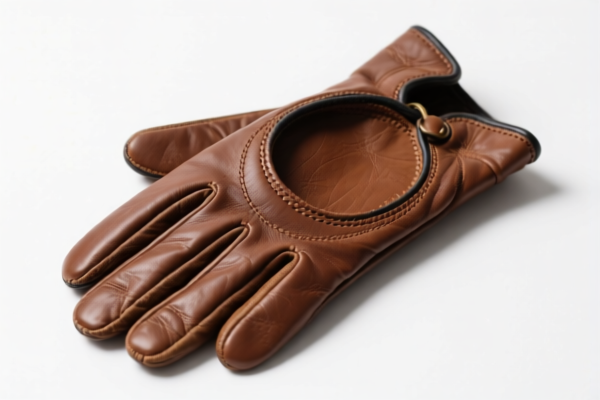
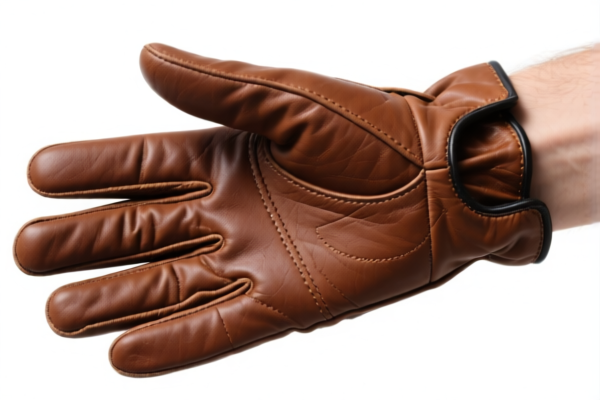
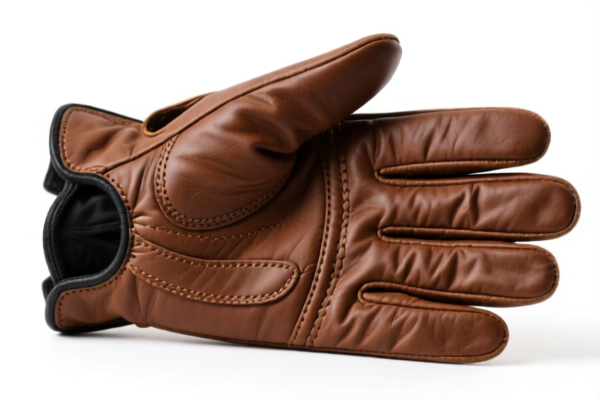
AI Analysis
🐴 Equine Leather Gloves (Semi-Finished)
🌐 HS Code Reference & Customs Clearance Guide | 2026 Latest Tariff Analysis | Professional Entry Strategy
📌 I. Product Definition: What Exactly Are "Equine Leather Gloves (Semi-Finished)"?
In international trade, "Equine Leather Gloves" refers to gloves made from leather, specifically designed or adapted for equestrian use (horse riding). The term "Semi-Finished" in your query is critical. It creates a classification dilemma: are they finished goods ready for sale/use, or unfinished components (like cut leather parts, unlined, or lacking final stitching/hardware) destined for further processing?
Customs classification depends heavily on the state of manufacture: 1. Finished Gloves: Ready for wearing (lined, stitched, with palms/special grips). 2. Semi-Finished/Parts: Cut leather pieces, unlined blanks, or gloves missing essential components (e.g., no palm lining, no wrist closure).
⚠️ Key Distinction:
- If the glove is complete (wrist, fingers, lining, shape formed) → It is a Finished Article (Chapter 42).
- If it is cut leather, unfinished, or intended for further manufacturing → It may fall under Parts of Articles or Leather Goods Parts (Chapter 41/42).
📦 II. HS Code Classification Matrix (2026 Latest Tariff Reference)
Based on the provided <DATA>, here are the applicable HS Codes for Equine Leather Gloves, ranging from Finished to Semi-Finished states.
| HS Code | Product Description | State of Finish | Key Characteristics |
|---|---|---|---|
4203.29.18.00 |
Leather Equestrian Gloves (Finished) | ✅ Finished | Complete gloves for equestrian sports; leather material; ready for use. |
4203.21.80.60 |
Leather Equestrian Gloves (Finished) | ✅ Finished | Complete gloves for equestrian sports; leather material; specific sub-heading for sports gloves. |
6216.00.90.00 |
Leather Gloves (General/Finished) | ✅ Finished | Leather gloves not specified for equestrian use; or general-purpose leather gloves. |
4115.10.00.00 |
Leather Semi-Finished Goods for Horses | 🟡 Semi-Finished | Cut leather, unprocessed hides, or parts intended for making horse gear/gloves. |
4113.90.30.00 |
Leather Semi-Finished Goods (Further Processed) | 🟡 Semi-Finished | Leather goods partially processed (e.g., tanned but not cut/sewn into gloves). |
🔍 Critical Note:
- If your product is "Semi-Finished" (e.g., cut leather pieces not yet sewn into gloves), it cannot be classified under4203.29.18.00or4203.21.80.60.
- Instead, it should likely fall under4115.10.00.00(Leather semi-finished goods) or4113.90.30.00.
- Misclassifying semi-finished parts as finished gloves (4203...) can lead to penalties and duty evasion accusations.
💰 III. 2026 Latest Tariff Rate Breakdown (US Market Focus)
✅ Applicable Country: United States (US)
✅ Origin: China (CN)
✅ Effective Date: From November 10, 2025, onwards
🎯 1. 4203.29.18.00 – Leather Equestrian Gloves (Finished)
| Item | Detail |
|---|---|
| Base Tariff | 14.0% (Ad Valorem) |
| Section 301 Add-on | +25.0% |
| IEEPA Add-on (122) | +10.0% |
| Total Effective Rate | 49.0% |
| Calculation | CIF Value × 49% |
| De Minimis Exemption | ❌ No (Deny De Minimis) |
| Legal Path | IEEPA:9903.01.25 → USITC:4203.29.18.00 → Footnote:301 |
📌 Explanation:
- Base 14%: Standard MFN rate for leather gloves.
- 25% Section 301: Trade war tariff on Chinese goods.
- 10% IEEPA: Additional tariff under International Emergency Economic Powers Act.
- Total 49%: Extremely High. Must be factored into landed cost.
🎯 2. 4203.21.80.60 – Leather Equestrian Gloves (Finished, Sports Category)
| Item | Detail |
|---|---|
| Base Tariff | 4.9% (Ad Valorem) |
| Section 301 Add-on | +25.0% |
| IEEPA Add-on (122) | +10.0% |
| Total Effective Rate | 39.9% |
| Calculation | CIF Value × 39.9% |
| De Minimis Exemption | ❌ No |
| Legal Path | IEEPA:9903.01.25 → USITC:4203.21.80.60 → Footnote:301 |
📌 Explanation:
- This code has a lower base rate (4.9%) compared to4203.29.18.00(14.0%).
- However, with 301 + IEEPA, the total is still nearly 40%.
- Eligibility: Must be clearly identified as "Equestrian/Sports" gloves in commercial invoice and description.
🎯 3. 6216.00.90.00 – Leather Gloves (General Use)
| Item | Detail |
|---|---|
| Base Tariff | 3.8% (Ad Valorem) |
| Section 301 Add-on | +7.5% |
| IEEPA Add-on (122) | +10.0% |
| Total Effective Rate | 21.3% |
| Calculation | CIF Value × 21.3% |
| De Minimis Exemption | ❌ No |
| Legal Path | IEEPA:9903.01.25 → USITC:6216.00.90.00 → Footnote:122 |
📌 Warning:
- This rate is lower (21.3%), but it is ONLY for non-equestrian leather gloves.
- If you declare "Equestrian Gloves" under this code, Customs will reclassify it to4203.21.80.60or4203.29.18.00, leading to back taxes and fines.
- Use only for general fashion/work gloves, not for horse riding.
🎯 4. 4115.10.00.00 – Leather Semi-Finished Goods (For Horses)
| Item | Detail |
|---|---|
| Base Tariff | 0.0% (Ad Valorem) |
| Section 301 Add-on | +25.0% |
| IEEPA Add-on (122) | +10.0% |
| Total Effective Rate | 35.0% |
| Calculation | CIF Value × 35.0% |
| De Minimis Exemption | ❌ No |
| Legal Path | IEEPA:9903.01.25 → USITC:4115.10.00.00 → Footnote:301 |
📌 Explanation:
- Base Rate 0%: Semi-finished leather goods often have low base tariffs.
- However, with 301 + IEEPA, the total is 35%.
- Eligibility: Must be unfinished (e.g., cut leather, unlined, no stitching). Do not use for finished gloves.
🎯 5. 4113.90.30.00 – Leather Semi-Finished Goods (Further Processed)
| Item | Detail |
|---|---|
| Base Tariff | 3.3% (Ad Valorem) |
| Section 301 Add-on | +25.0% |
| IEEPA Add-on (122) | +10.0% |
| Total Effective Rate | 38.3% |
| Calculation | CIF Value × 38.3% |
| De Minimis Exemption | ❌ No |
| Legal Path | IEEPA:9903.01.25 → USITC:4113.90.30.00 → Footnote:301 |
📌 Explanation:
- For leather goods that are tanned/processed but not yet made into final articles.
- Total Rate 38.3% is high, but lower than finished equestrian gloves.
- Use only for partially processed leather materials.
🛠️ IV. Customs Clearance Practical Advice (Avoid Pitfalls)
✅ 1. Documentation Checklist (Must-Have)
| Document | Required | Notes |
|---|---|---|
| ✅ Commercial Invoice | ✔️ | Must clearly state: "Leather Equestrian Gloves" OR "Leather Semi-Finished Parts for Gloves" |
| ✅ Product Photos | ✔️ | Show complete gloves (for 4203) or cut leather (for 4115). No ambiguity. |
| ✅ Technical Spec Sheet | ✔️ | Detail material (leather type), lining, stitching, and final use (equestrian vs. general). |
| ✅ Bill of Lading/Air Waybill | ✔️ | Ensure description matches invoice exactly. |
| ✅ Certificate of Origin | ✔️ | Required for 301 tariff determination. |
✅ 2. Declaration Strategy (Critical Keywords)
🔥 "Be Specific: 'Equestrian' Triggers Higher Base Rate but Avoids Misclassification!"
| Scenario | Correct Declaration | Incorrect Declaration |
|---|---|---|
| Finished Gloves | "Leather Gloves for Equestrian Use, Model XYZ" | "Leather Gloves" (Vague) |
| Semi-Finished Parts | "Cut Leather Parts for Gloves, Unfinished" | "Equestrian Gloves" (Misleading) |
| General Leather Gloves | "Fashion Leather Gloves, Non-Sport" | "Equestrian Gloves" (Wrong Classification) |
⚠️ Risk: Declaring "Semi-Finished" as "Finished" can lead to Customs Audit and Penalties. Declaring "Finished" as "Semi-Finished" may result in Underpayment of Duties.
✅ 3. Special Cases & Solutions
| Situation | Solution |
|---|---|
| Gloves with Removable Liners | Classified as Finished (4203...) if liner is detachable but product is complete. |
| Gloves with Palm Inserts | If inserts are essential for equestrian use, classify as Equestrian (4203.21.80.60). |
| OEM Custom Gloves | Provide Customer Design Specs to prove intended use (equestrian vs. general). |
| Sample vs. Bulk | Samples should still be declared accurately. Do not under-value or misdescribe. |
🌍 V. Global Market Comparison (2026 Latest)
| Country/Region | Recommended HS Code | Tariff (China Origin) | Certification | Notes |
|---|---|---|---|---|
| 🇺🇸 USA | 4203.21.80.60 or 4203.29.18.00 |
39.9% - 49.0% | None specific | High Tariff Zone. 301 + IEEPA applies. |
| 🇪🇺 EU | 4203.21.10 |
~6.5% | CE (if safety) | Lower base rate, but VAT 19-27% applies. |
| 🇨🇳 China | 4203.29.90 |
14% | CCC (if applicable) | Import tariff, but no 301/IEEPA. |
| 🇬🇧 UK | 4203.21.00 |
~6.5% | UKCA | Post-Brexit rules apply. |
| 🇯🇵 Japan | 4203.21.000 |
8.3% | PSE (if safety) | Moderate tariff. |
📌 Conclusion:
- USA is the highest-cost market due to 301 and IEEPA tariffs.
- EU/UK/Japan have lower base rates but apply VAT/GST.
- China (importing to China) has no retaliatory tariffs on leather gloves.
📌 VI. Common Errors & Pitfalls (Lessons Learned)
❌ Error 1: Declaring Semi-Finished parts as Finished Gloves
👉 Consequence: Customs may reclassify, leading to higher duties (39.9-49%) vs. (35-38.3%), plus fines.
❌ Error 2: Declaring Equestrian gloves as General Leather Gloves (6216.00.90.00)
👉 Consequence: Penalties for fraud. Base rate 3.8% + 7.5% + 10% = 21.3% vs. 39.9-49%. High risk.
❌ Error 3: Ignoring IEEPA 10% Add-on
👉 Consequence: All Chinese leather goods face this 10% surcharge since Nov 2025. Budget accordingly.
❌ Error 4: Using "Leather Goods" as a vague description
👉 Consequence: Customs Delay. Must specify: "Gloves," "Equestrian," "Material," "Finish State."
✅ Correct Practice:
"Leather Equestrian Gloves, Finished, with Palm Grip, Model ABC, For Horse Riding"
OR
"Cut Leather Parts for Gloves, Unfinished, Material: Cowhide, For Further Assembly"
🎯 VII. Conclusion: Professional Declaration, Cost Optimization
🎯 Key Takeaways:
1. Finished Equestrian Gloves: HS Code 4203.21.80.60 (39.9%) or 4203.29.18.00 (49.0%).
2. Semi-Finished Parts: HS Code 4115.10.00.00 (35.0%) or 4113.90.30.00 (38.3%).
3. General Leather Gloves: HS Code 6216.00.90.00 (21.3%) – Only if NOT for equestrian use.
4. US Tariffs are High: Budget for 35-49% total duty.
5. Be Accurate: Misclassification leads to penalties, delays, and back taxes.
📌 Pro Tip:
If your product is semi-finished, ensure your commercial invoice clearly states "UNFINISHED" or "PARTS" to avoid being classified as finished goods. If it is finished, emphasize "EQUESTRIAN USE" to avoid misclassification under general leather gloves.
📣 Immediate Action:
📞 Consult a Licensed Customs Broker for Advance Ruling if unsure about the "Semi-Finished" status.
🚀 Optimize Landed Cost: Factor in 35-49% US duties. Consider supply chain diversification if tariffs impact profitability.
✨ Professional Clearance Starts with Accurate Classification!
💼 Every Percent of Duty Counts!
Customer Reviews
About HS Code Classification
The Harmonized System (HS) is an internationally standardized nomenclature developed by the World Customs Organization (WCO) to classify traded products. Over 200 countries use the HS system as the basis for customs tariffs, trade statistics, and import/export regulations.
Each HS code follows a hierarchical structure:
- Chapter (2 digits) — Broad category of goods (e.g., Chapter 84: Machinery and Mechanical Appliances)
- Heading (4 digits) — More specific grouping within the chapter
- Subheading (6 digits) — Internationally standardized breakdown, used by all WCO member countries
- National subdivisions (8-10 digits) — Country-specific extensions for further classification, such as US HTSUS 10-digit codes
Correct HS code classification is essential for smooth customs clearance, accurate duty payment, and compliance with trade regulations. Misclassification can lead to customs delays, overpayment of duties, or penalties.
When importing from CN to US, the applicable tariff rates may include:
- Most-Favored-Nation (MFN) rate — The standard duty rate applied to WTO members
- General rate — Applied to countries without trade agreements
- Trade remedy duties — Additional tariffs such as Section 301 (anti-dumping), Section 232 (national security), or countervailing duties
The information provided on this page is for reference purposes only. For official classification, please consult with your local customs authority or a licensed customs broker.