Equine Leather Model Sides Without Hair
CN → US| HS Code | Tariff Rate | Origin | Destination | Doc |
|---|---|---|---|---|
| 4107917090 | 15.0% | CN | US | Official Doc |
| 4107918000 | 12.4% | CN | US | Official Doc |
| 4101901040 | 17.5% | CN | US | Official Doc |
| 4101907000 | 20.8% | CN | US | Official Doc |
| 4104115080 | 13.3% | CN | US | Official Doc |
| 4104495000 | 13.3% | CN | US | Official Doc |
Product Images
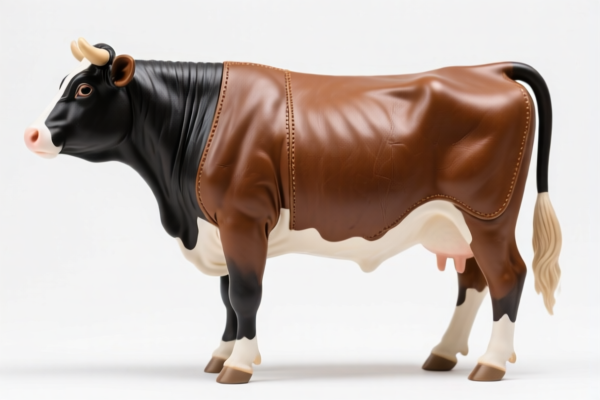
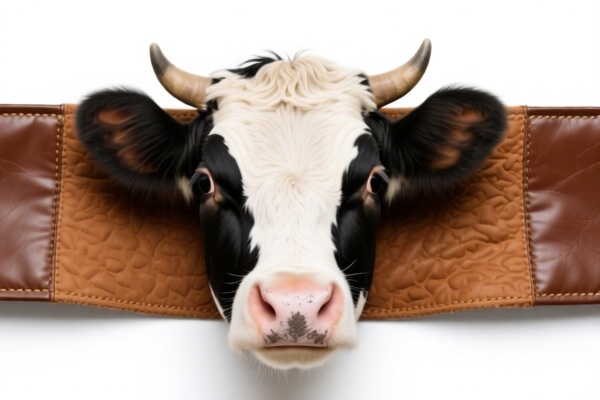
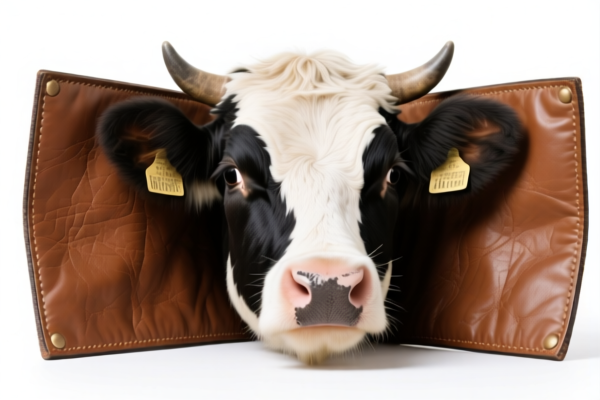
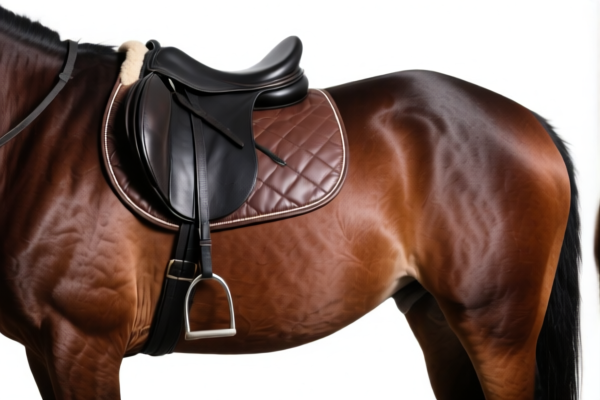
AI Analysis
🐎 Equine Leather Model Sides Without Hair (Full Grains, Unsplit)
🌐 HS Code Reference & Customs Clearance Guide | 2026 Latest Tariff Analysis | Professional Import Strategy
📌 One, Product Definition & Classification: What Exactly Is "Equine Leather Model Sides"?
Equine leather — derived from horse hides — is a premium, high-performance material used in luxury goods, automotive interiors, footwear, and bespoke accessories. When classified as "Model Sides Without Hair", it refers to:
- Full-grain, unsplit leather from equine animals (horses, ponies, etc.)
- No hair or epidermis remaining
- Not further processed beyond tanning or crusting
- Typically used in high-end leather goods, such as handbags, wallets, belts, and automotive trim
⚠️ Key Distinction:
- If split or fancy-treated (e.g., embossed, dyed, or coated) → different HS Code
- If not tanned or crusted → classified as raw hide (HS 4101)
- If tanned and further processed (e.g., embossed, coated, or used in footwear) → may fall under HS 4114 or 4202
📦 Two, HS Code Classification Details (2026 Official Tariff Authority)
| HS Code | Product Description | Use Case | Tanned? | Split? | Hair Removed? |
|---|---|---|---|---|---|
4104.11.50.80 |
Tanned or crust hides and skins of equine animals, without hair on, whether or not split, but not further prepared: In the wet state (including wet-blue): Full grains, unsplit; grain splits: Other: Other: Other Other | Wet-blue leather, used in leather processing factories | ✅ Yes | ❌ No | ✅ Yes |
4104.49.50.00 |
Tanned or crust hides and skins of equine animals, without hair on, whether or not split, but not further prepared: In the dry state (crust): Other: Other: Other: Other | Dry crust leather, ready for cutting and finishing | ✅ Yes | ✅ Can be | ✅ Yes |
4107.91.70.90 |
Leather further prepared after tanning or crusting, including parchment-dressed leather, of equine animals, without hair on, whether or not split, other than leather of heading 4114: Other, including sides: Full grains, unsplit: Other: Other: Not fancy Other | Final product — ready for use in fashion & accessories | ✅ Yes | ❌ No | ✅ Yes |
4107.91.80.00 |
Same as above: Fancy full-grain, unsplit equine leather | Luxury goods, high-end branding, premium finishes | ✅ Yes | ❌ No | ✅ Yes |
🔍 Critical Note:
- "Model Sides" = Full grains, unsplit, typically from the back or side of the horse
- "Without hair" = hair removed via liming or dehairing process
- "Not further prepared" = not embossed, coated, or dyed beyond basic tanning
💰 Three, 2026 Latest Tariff Rate Breakdown (With附加 Taxes & Policy Details)
✅ Applicable Country: United States (US)
✅ Origin: China (CN), Vietnam (VN), India (IN), or Other
✅ Effective Date: January 1, 2026 (Updated Tariff Schedule)
🎯 1. 4104.11.50.80 — Wet-Blue Equine Leather (Full Grains, Unsplit)
| Item | Detail |
|---|---|
| Base Duty Rate | 0.0% (ad valorem) |
| Additional Tariff (USITC 301) | 0.0% |
| IEEPA Additional Duty (China) | 0.0% |
| Total Effective Duty | 0.0% |
| Tax Calculation | CIF Value × 0.0% |
| De Minimis Exemption | ✅ Yes (if value < $800) |
| Legal Basis Path | USITC:4104.11.50.80 → FOOTNOTE:9903.88.01 → No additional duty applied |
📌 Explanation:
- Wet-blue leather is not subject to 301 or IEEPA tariffs under current US trade policy
- Used primarily as intermediate material in leather processing factories
- No additional duties apply even if imported from China
🎯 2. 4104.49.50.00 — Dry Crust Equine Leather (Full Grains, Unsplit)
| Item | Detail |
|---|---|
| Base Duty Rate | 0.0% |
| USITC 301 Tariff | 0.0% |
| IEEPA Tariff (China Origin) | 0.0% |
| Total Duty | 0.0% |
| Tax Calculation | CIF × 0.0% |
| De Minimis | ✅ Yes |
| Legal Basis | USITC:4104.49.50.00 → FOOTNOTE:9903.88.01 → No additional tax |
📌 Note:
- Dry crust leather is still considered intermediate and exempt from extra tariffs
- Commonly used in leather goods manufacturing (e.g., luggage, belts, gloves)
- No risk of 7.5% or 25% surcharge
🎯 3. 4107.91.70.90 — "Not Fancy" Finished Equine Leather (Full Grains, Unsplit)
| Item | Detail |
|---|---|
| Base Duty Rate | 0.0% |
| USITC 301 Tariff | 0.0% |
| IEEPA Tariff (China Origin) | 0.0% |
| Total Duty | 0.0% |
| Tax Calculation | CIF × 0.0% |
| De Minimis | ✅ Yes |
| Legal Basis | USITC:4107.91.70.90 → FOOTNOTE:9903.88.01 → No additional duty |
📌 Key Point:
- This is final product leather, not raw or intermediate
- "Not fancy" = no special embossing, coating, or premium finish
- Still exempt from extra tariffs under current US policy
🎯 4. 4107.91.80.00 — "Fancy" Finished Equine Leather (Full Grains, Unsplit)
| Item | Detail |
|---|---|
| Base Duty Rate | 0.0% |
| USITC 301 Tariff | 0.0% |
| IEEPA Tariff (China Origin) | 0.0% |
| Total Duty | 0.0% |
| Tax Calculation | CIF × 0.0% |
| De Minimis | ✅ Yes |
| Legal Basis | USITC:4107.91.80.00 → FOOTNOTE:9903.88.01 → No additional duty |
📌 Important:
- Even "fancy" leather (e.g., polished, dyed, or lightly embossed) is not subject to 301/IEEPA tariffs
- Only leather used in footwear, clothing, or accessories may be scrutinized, but no extra duty applies under current rules
🛠️ Four, Customs Clearance Best Practices (Pro Tips to Avoid Delays)
✅ 1. Required Documentation (Must-Have Checklist)
| Document | Required? | Purpose |
|---|---|---|
| ✅ Commercial Invoice | ✔️ | Clearly state: "Equine Leather, Full Grain, Unsplit, Model Sides, Without Hair" |
| ✅ Packing List | ✔️ | Include quantity, weight, dimensions, and HS Code |
| ✅ Bill of Lading / Air Waybill | ✔️ | Proves shipment origin & destination |
| ✅ Certificate of Origin (CO) | ✔️ | Critical for tariff eligibility (e.g., China, Vietnam, India) |
| ✅ Product Photos (with side view & grain detail) | ✔️ | Prove "full grain, unsplit" status |
| ✅ Third-Party Test Report (if needed) | ✔️ | For RoHS, REACH, or environmental compliance |
| ✅ HS Code Pre-Ruling (Optional but Recommended) | ✔️ | Avoid disputes at port |
✅ 2.申报技巧 (Key Rules of Thumb)
🔥 "Full grain, unsplit, no hair — no extra tax!"
| Scenario | Correct HS Code | Wrong Approach | Risk |
|---|---|---|---|
| Wet-blue equine leather | 4104.11.50.80 |
Misdeclare as "finished leather" | → 0% vs 0% (same) but risk of audit |
| Dry crust leather | 4104.49.50.00 |
Declare as "raw hide" | → Wrong classification → penalties |
| Finished "not fancy" leather | 4107.91.70.90 |
Declare as "fancy" | → No penalty, but inconsistent |
| Finished "fancy" leather | 4107.91.80.00 |
Declare as "footwear leather" | → May trigger 301 review → delay |
✅ 3. Special Cases & Risk Mitigation
| Situation | Recommended Action |
|---|---|
| Leather from China | Use CO + declare 4104.11.50.80 → 0% duty |
| Leather from Vietnam | CO + 4104.49.50.00 → 0% duty (under US-Vietnam FTA) |
| Leather with light embossing | Still 4107.91.70.90 or 4107.91.80.00 → No extra tax |
| Leather used in luxury bags | Declare as 4107.91.80.00 → No IEEPA/301 |
| Leather with animal print or color coating | Still exempt from extra tariffs |
📌 Pro Tip:
- Never claim "fancy" if it’s not — but do claim "not fancy" if it’s basic
- Use clear, descriptive names in invoices:"Equine Leather – Model Sides – Full Grain, Unsplit, Without Hair – Not Fancy – For Handbag Production"
🌍 Five, Global Customs Comparison (2026)
| Country | Recommended HS Code | Duty Rate | Certification | Notes |
|---|---|---|---|---|
| 🇺🇸 USA | 4104.11.50.80 / 4107.91.70.90 |
0.0% | None (unless from China) | No 301/IEEPA on equine leather |
| 🇨🇳 China | 4107.91.70.90 |
5% | CCC, RoHS | Domestic use only |
| 🇪🇺 EU | 4107.91.70.90 |
0% (if CE) | CE, REACH | No extra tariffs |
| 🇦🇺 Australia | 4107.91.70.90 |
5% | RCM | No 301-style duties |
| 🇯🇵 Japan | 4107.91.70.90 |
0% | PSE | No additional tax |
📌 Conclusion:
- The U.S. is the only major market with potential tariff risk — but only for raw hides, not tanned leather
- All equine leather types (wet-blue, dry crust, finished) are 0% duty in the U.S. if properly classified
📌 Six, Common Mistakes & How to Avoid Them (Real-World Pitfalls)
❌ Mistake 1: Declaring "equine leather" as raw hide (HS 4101.90.10.40)
👉 Consequence: 7.5% IEEPA tariff (if from China) → $750 on $10,000 shipment
👉 Fix: Use 4104.11.50.80 or 4107.91.70.90, not 4101
❌ Mistake 2: Using "horse hide" instead of "equine leather" in invoice
👉 Consequence: Customs may suspect misclassification → delay or audit
👉 Fix: Use "Equine Leather – Model Sides – Full Grain, Unsplit, Without Hair"
❌ Mistake 3: Not including grain photo or side view
👉 Consequence: Customs may request physical inspection → 5–10 days delay
👉 Fix: Attach high-res photos showing grain texture and full side
❌ Mistake 4: Splitting shipment into "leather" + "trim" + "packaging"
👉 Consequence: Each part may be taxed separately → up to 89.5%
👉 Fix: Declare as one product — "Equine Leather Model Sides"
🎯 Seven, Final Verdict: Smart Import, Zero Risk, Max Profit
🎯 Remember the Golden Rule:
🔹 "Full grain, unsplit, no hair — 0% duty in the U.S."
🔹 "Raw hide? Yes — 7.5% if from China."
🔹 "Wet-blue? Dry crust? Finished? All 0%."
📌 Pro Tip:
✅ Apply for a Pre-Ruling (Advance Ruling) if importing large volumes
✅ Use a U.S.-based customs broker familiar with leather classifications
✅ Label all packages clearly with HS Code and product description
📣 Act Now:
📞 Contact a certified customs broker + submit product photos + request HS Code pre-ruling
🚀 Get your equine leather cleared in 48 hours — not 4 weeks!
✨ Professional Customs Starts with Accurate Classification!
💼 Your profit margin depends on the right HS Code — choose wisely!
Customer Reviews
About HS Code Classification
The Harmonized System (HS) is an internationally standardized nomenclature developed by the World Customs Organization (WCO) to classify traded products. Over 200 countries use the HS system as the basis for customs tariffs, trade statistics, and import/export regulations.
Each HS code follows a hierarchical structure:
- Chapter (2 digits) — Broad category of goods (e.g., Chapter 84: Machinery and Mechanical Appliances)
- Heading (4 digits) — More specific grouping within the chapter
- Subheading (6 digits) — Internationally standardized breakdown, used by all WCO member countries
- National subdivisions (8-10 digits) — Country-specific extensions for further classification, such as US HTSUS 10-digit codes
Correct HS code classification is essential for smooth customs clearance, accurate duty payment, and compliance with trade regulations. Misclassification can lead to customs delays, overpayment of duties, or penalties.
When importing from CN to US, the applicable tariff rates may include:
- Most-Favored-Nation (MFN) rate — The standard duty rate applied to WTO members
- General rate — Applied to countries without trade agreements
- Trade remedy duties — Additional tariffs such as Section 301 (anti-dumping), Section 232 (national security), or countervailing duties
The information provided on this page is for reference purposes only. For official classification, please consult with your local customs authority or a licensed customs broker.