Equine Leather Pieces
CN → US| HS Code | Tariff Rate | Origin | Destination | Doc |
|---|---|---|---|---|
| 4205001000 | 35.0% | CN | US | Official Doc |
| 4205000500 | 37.9% | CN | US | Official Doc |
| 4205008000 | 35.0% | CN | US | Official Doc |
| 4113906000 | 36.6% | CN | US | Official Doc |
| 4107117040 | 15.0% | CN | US | Official Doc |
Product Images
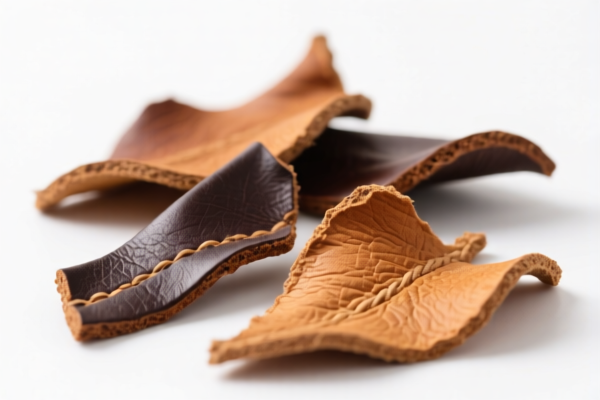
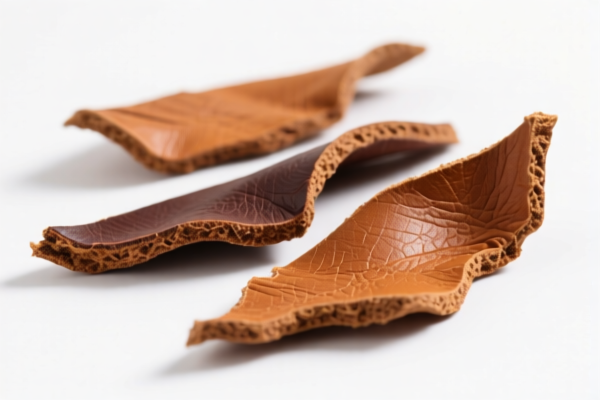
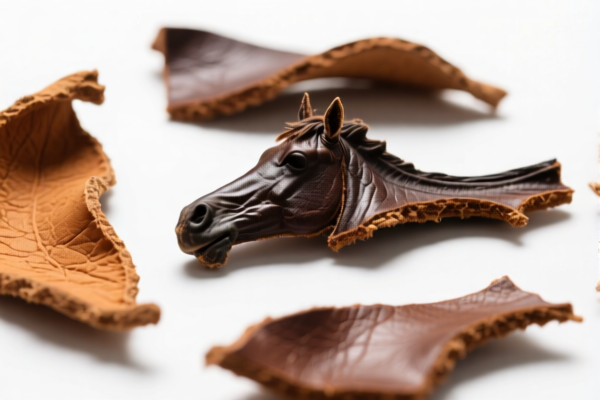
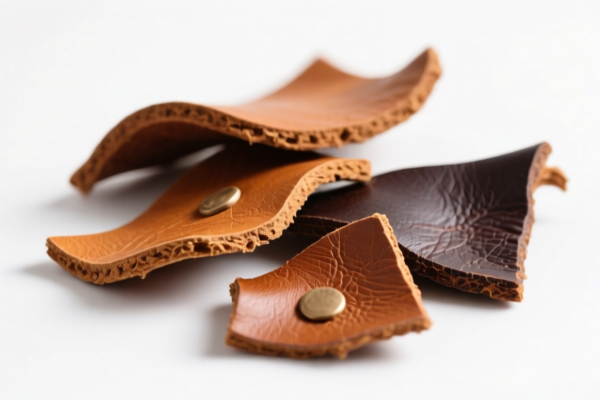
AI Analysis
🐎 Equine Leather Pieces (Horsehide Leather Goods)
🌐 HS Code Reference & Customs Clearance Guide | 2026 Updated Tariff Analysis | Professional Import Strategy
📌 One, Product Definition & Classification: What Exactly Are “Equine Leather Pieces”?
Equine leather pieces refer to leather goods or components made from horsehide (equine skin), typically used in fashion, accessories, footwear, and luxury goods. These items are not raw animal hides but processed leather products shaped into functional or decorative forms.
In international trade, these goods are classified under HS Codes 4205.00.10.00 to 4205.00.80.00 and 4113.90.60.00, depending on their form, processing, and intended use.
⚠️ Critical Distinction:
- If the item is shaped like a leather product (e.g., bags, wallets, belts) → 4205.00.xxxx
- If it's raw or semi-processed horsehide (e.g., uncut, tanned, but not shaped) → 4113.90.60.00 or 4107.11.70.40
- If it's not clearly defined under other subheadings, it falls under the "catch-all" provision → 4205.00.80.00
📦 Two, HS Code Classification Details (2026 Latest Tariff Authority Table)
| HS Code | Product Description | Classification Basis | Tax Status |
|---|---|---|---|
4205.00.10.00 |
Horsehide leather goods, conforming to leather or reconstituted leather product classification | Fully shaped, functional leather item (e.g., bag, case) made from horsehide | ✅ 35.0% total tax |
4205.00.05.00 |
Horsehide leather goods, form matches leather product classification features | Clearly identifiable as a leather product (e.g., wallet, belt) with stitching, hardware | ✅ 37.9% total tax |
4205.00.80.00 |
Horsehide leather goods, classified under general residual provision | Not clearly covered by other subheadings; applied as a fallback | ✅ 35.0% total tax |
4113.90.60.00 |
Horsehide (animal leather), meets requirements for other animal leather materials | Raw or tanned horsehide, not yet shaped into final product | ✅ 36.6% total tax |
4107.11.70.40 |
Tanned horsehide, falls within glove and apparel leather category | Used specifically for gloves or clothing (e.g., leather jackets, gloves) | ✅ 15.0% total tax |
🔍 Key Insight:
- 4205.00.10.00 & 4205.00.80.00: Highest risk of misclassification due to "catch-all" ambiguity → must prove shape, function, and form. - 4107.11.70.40: Lowest tax rate → only applies if used in gloves or apparel. - 4113.90.60.00: Applies to tanned but unshaped horsehide — not yet a finished product.
💰 Three, 2026 Latest Tariff Breakdown (With Full Tax Clause Explanation)
✅ Applicable Country: United States (US)
✅ Origin: China (CN)
✅ Effective Date: November 10, 2025 (including future imports)
🎯 1. 4205.00.10.00 — Horsehide Leather Goods (Conforming to Leather Product Class)
| Item | Detail |
|---|---|
| Base Duty | 0.0% (ad valorem) |
| Section 301 Additional Duty (USITC) | +25.0% (under Section 301 of U.S. Trade Act) |
| Section 122 Clause Duty (IEEPA) | +10.0% (under International Emergency Economic Powers Act) |
| Total Duty Rate | 35.0% |
| Tax Calculation | CIF Value × 35.0% |
| De Minimis Threshold | ❌ Not applicable (denied under U.S. law) |
| Legal Basis Path | IEEPA:9903.01.25 → IEEPA:9903.01.24 → USITC:4205.00.10.00 → FOOTNOTE:9903.88.01 |
📌 Explanation:
- 25% USITC duty: Imposed under Section 301 due to China’s unfair trade practices (e.g., IP theft, forced tech transfer).
- 10% IEEPA duty: Applied under International Emergency Economic Powers Act, targeting goods from China/Hong Kong.
- Total 35%: High but lower than 45% for non-leather items — because this item is classified as a finished leather product.
🎯 2. 4205.00.05.00 — Horsehide Leather Goods (Form Matches Leather Product Features)
| Item | Detail |
|---|---|
| Base Duty | 2.9% (ad valorem) |
| Section 301 Additional Duty (USITC) | +25.0% |
| Section 122 Clause Duty (IEEPA) | +10.0% |
| Total Duty Rate | 37.9% |
| Tax Calculation | CIF Value × 37.9% |
| De Minimis Threshold | ❌ Not applicable |
| Legal Basis Path | IEEPA:9901.25 → IEEPA:9903.01.24 → USITC:4205.00.05.00 → FOOTNOTE:9903.88.01 |
📌 Why Higher?
- 2.9% base duty is applied because this subheading is slightly more specific than 4205.00.10.00. - But the same 25% + 10%附加 duties apply → total 37.9%. - This is the highest tariff among all equine leather goods — must be avoided if possible.
🎯 3. 4205.00.80.00 — Horsehide Leather Goods (Residual Provision)
| Item | Detail |
|---|---|
| Base Duty | 0.0% |
| Section 301 Additional Duty (USITC) | +25.0% |
| Section 122 Clause Duty (IEEPA) | +10.0% |
| Total Duty Rate | 35.0% |
| Tax Calculation | CIF Value × 35.0% |
| De Minimis Threshold | ❌ Not applicable |
| Legal Basis Path | IEEPA:9903.01.25 → IEEPA:9903.01.24 → USITC:4205.00.80.00 → FOOTNOTE:9903.88.01 |
📌 Risk Warning:
- This is a "catch-all" code — used when no other subheading fits. - High risk of audit or correction — customs may reclassify to a higher-duty code. - Best avoided unless no better fit exists.
🎯 4. 4113.90.60.00 — Horsehide (Animal Leather), Meets Other Animal Leather Requirements
| Item | Detail |
|---|---|
| Base Duty | 1.6% |
| Section 301 Additional Duty (USITC) | +25.0% |
| Section 122 Clause Duty (IEEPA) | +10.0% |
| Total Duty Rate | 36.6% |
| Tax Calculation | CIF Value × 36.6% |
| De Minimis Threshold | ❌ Not applicable |
| Legal Basis Path | IEEPA:9901.25 → IEEPA:9903.01.24 → USITC:4113.90.60.00 → FOOTNOTE:9903.88.01 |
📌 Use Case:
- Applies to tanned horsehide that is not yet shaped into a product (e.g., leather rolls, sheets). - Not suitable for finished goods like bags or wallets. - Higher than 35% — not recommended for finished items.
🎯 5. 4107.11.70.40 — Tanned Horsehide, for Gloves & Apparel
| Item | Detail |
|---|---|
| Base Duty | 5.0% |
| Section 301 Additional Duty (USITC) | +0.0% (not subject to 301) |
| Section 122 Clause Duty (IEEPA) | +10.0% |
| Total Duty Rate | 15.0% |
| Tax Calculation | CIF Value × 15.0% |
| De Minimis Threshold | ✅ Applicable (if below $800) |
| Legal Basis Path | IEEPA:9903.01.24 → USITC:4107.11.70.40 → FOOTNOTE:9903.88.01 |
📌 Golden Rule:
- This is the only subheading with a base duty of 5% and no 25% USITC tax. - IEEPA 10% still applies, but no 301 tariff. - Best option if your horsehide is used for gloves, jackets, or apparel. - Can qualify for de minimis — huge cost saver for small shipments.
🛠️ Four, Customs Clearance Best Practices (Pro Tips to Avoid Penalties)
✅ 1. Required Documentation (Must-Have List)
| Document | Required? | Notes |
|---|---|---|
| ✅ Product Specifications | ✔️ | Include material type, thickness, finish, stitching |
| ✅ Product Photos (Front, Back, Close-up) | ✔️ | Show shape, hardware, branding |
| ✅ Cut & Sew Diagrams | ✔️ | For complex goods (e.g., bags with zippers) |
| ✅ Third-Party Test Report | ✔️ | REACH, RoHS, CPSIA (if applicable) |
| ✅ Commercial Invoice | ✔️ | Clearly state: “Horsehide Leather Wallet, Fully Stitched, 100% Leather” |
| ✅ Certificate of Origin (CO) | ✔️ | If from non-China, may reduce tax |
| ✅ Packing List | ✔️ | Show full product set, no missing parts |
✅ 2.申报技巧(Key Rules)
🔥 "Shape First, Use Second, Tax Last – One Code, One Life!"
| Scenario | Correct HS Code | Wrong Code | Risk |
|---|---|---|---|
| Finished horsehide bag with zipper, stitching, hardware | 4205.00.10.00 or 4205.00.05.00 |
4113.90.60.00 |
+25% tax |
| Tanned horsehide sheet, not shaped | 4113.90.60.00 |
4205.00.10.00 |
Audit risk |
| Horsehide gloves or jacket | 4107.11.70.40 |
4205.00.10.00 |
+22.9% tax |
| Unlabeled horsehide rolls | 4113.90.60.00 |
4205.00.80.00 |
Higher risk of reclassification |
✅ 3. Special Handling Scenarios
| Situation | Recommended Action |
|---|---|
| OEM horsehide bags | Provide client specs + design proof → avoid “non-standard” classification |
| Horsehide with mixed materials | Declare only the dominant material (leather) → use 4205.00.xxxx |
| Used or vintage horsehide goods | May qualify for exemption under Cultural Goods — apply for special permit |
| Horsehide for art or craft | Apply for non-commercial use — may reduce or waive duties |
🌍 Five, Global Customs Comparison (2026 Update)
| Country/Region | Recommended HS Code | Duty Rate | Certification | Notes |
|---|---|---|---|---|
| 🇺🇸 United States | 4107.11.70.40 (if for apparel) |
15.0% (or 35–37.9%) | FCC, REACH | Highest risk of 301/IEEPA |
| 🇨🇳 China | 4205.00.10.00 |
5% | CCC, RoHS | No additional tariffs |
| 🇪🇺 EU | 4205.00.10.00 |
0% (if CE compliant) | CE, REACH | No IEEPA/301 |
| 🇦🇺 Australia | 4205.00.10.00 |
5% | RCM | No extra duties |
| 🇯🇵 Japan | 4205.00.10.00 |
0% | PSE | No附加税 |
📌 Conclusion:
- U.S. is the most punitive market — always use4107.11.70.40if applicable. - China, EU, Japan, Australia are much more favorable for horsehide goods.
📌 Six, Common Mistakes & Avoidance Guide (Real-World Pitfalls)
❌ Mistake 1: Classifying a finished horsehide bag as 4113.90.60.00 (raw hide)
👉 Result: +25% extra duty — audit, penalties, delay
❌ Mistake 2: Using 4205.00.05.00 for a simple horsehide wallet
👉 Result: 37.9% tax instead of 35.0% — unnecessary cost
❌ Mistake 3: Not declaring leather type in invoice
👉 Result: Customs cannot verify — delayed release or rejection
❌ Mistake 4: Using “horsehide leather” in name but no proof of origin
👉 Result: Suspicion of misclassification → random audit
✅ Correct Way to Declare:
“Horsehide Leather Wallet, 4-Pocket, Full-Grain, Stitched, with Brass Zipper, Made from Tanned Horsehide, Model XYZ, REACH & RoHS Certified”
🎯 Seven, Final Verdict: Precision Pays Off!
🎯 Remember the Golden Rule:
🔹 “If it’s shaped, use 4205.00.10.00 or 4205.00.05.00”
🔹 “If it’s for gloves or clothing, use 4107.11.70.40 — only 15%!”
🔹 “Never use 4205.00.80.00 unless absolutely necessary”
🔹 “De minimis is your friend — use it for small shipments!”
📌 Pro Tip:
If your horsehide goods are originating from Vietnam, Mexico, Thailand, or Malaysia, you may qualify for IEEPA exemption → tariff drops to 0–5%.
✅ Apply for Advance Ruling (Pre-Decision) before shipment.
📣 Act Now:
📞 Contact a licensed customs broker + submit product images + request HS Code pre-ruling
🚀 Get your equine leather goods clearance-ready, cost-optimized, and export-smooth!
✨ Professional Customs Starts with Accurate Classification!
💼 Your profit margin depends on the right HS Code — choose wisely!
Customer Reviews
About HS Code Classification
The Harmonized System (HS) is an internationally standardized nomenclature developed by the World Customs Organization (WCO) to classify traded products. Over 200 countries use the HS system as the basis for customs tariffs, trade statistics, and import/export regulations.
Each HS code follows a hierarchical structure:
- Chapter (2 digits) — Broad category of goods (e.g., Chapter 84: Machinery and Mechanical Appliances)
- Heading (4 digits) — More specific grouping within the chapter
- Subheading (6 digits) — Internationally standardized breakdown, used by all WCO member countries
- National subdivisions (8-10 digits) — Country-specific extensions for further classification, such as US HTSUS 10-digit codes
Correct HS code classification is essential for smooth customs clearance, accurate duty payment, and compliance with trade regulations. Misclassification can lead to customs delays, overpayment of duties, or penalties.
When importing from CN to US, the applicable tariff rates may include:
- Most-Favored-Nation (MFN) rate — The standard duty rate applied to WTO members
- General rate — Applied to countries without trade agreements
- Trade remedy duties — Additional tariffs such as Section 301 (anti-dumping), Section 232 (national security), or countervailing duties
The information provided on this page is for reference purposes only. For official classification, please consult with your local customs authority or a licensed customs broker.