Equine Leather Scrap
CN → US| HS Code | Tariff Rate | Origin | Destination | Doc |
|---|---|---|---|---|
| 4101901040 | 17.5% | CN | US | Official Doc |
| 4101907000 | 20.8% | CN | US | Official Doc |
| 4115200000 | 17.5% | CN | US | Official Doc |
| 4115100000 | 35.0% | CN | US | Official Doc |
| 4104195080 | 13.3% | CN | US | Official Doc |
| 4104495000 | 13.3% | CN | US | Official Doc |
Product Images
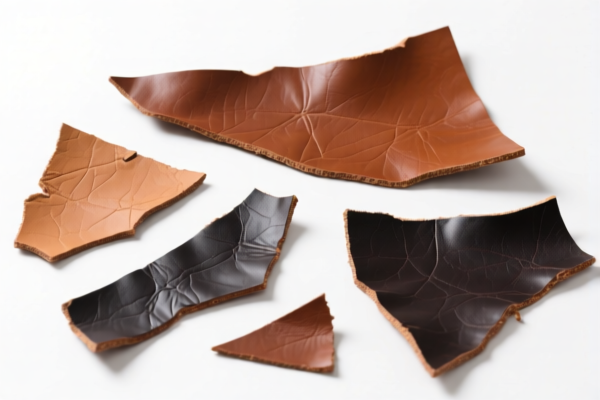

AI Analysis
🐎 Equine Leather Scrap – HS Code & Tariff Guide 2026 | Expert Customs Classification & Compliance Strategy
🌐 HS Code Reference & Customs Clearance Handbook | 2026 Updated Tariff Rules | Professional Import Strategy
📌 One. Product Definition & Classification: What Exactly Is "Equine Leather Scrap"?
Equine Leather Scrap refers to parings, trimmings, and other waste materials generated during the processing of horsehide (equine) leather — including non-reusable leather fragments, dust, powder, and flour — that are no longer suitable for manufacturing finished leather goods such as shoes, bags, or upholstery.
⚠️ Key Classification Rule:
- If the material is not fit for leather article production → Must be classified under 4115.20.00.00
- If it's composition leather with a leather base in sheets, slabs, or strips → Classify under 4115.10.00.00
- Raw horsehide (not tanned) → 4101.90.10.40
- Tanned horsehide (without hair) → 4104.19.50.80 / 4104.49.50.00✅ Critical Distinction:
- Scrap (waste) = 4115.20.00.00 → High tariff
- Composition leather (usable material) = 4115.10.00.00 → Even higher tariff
- Raw horsehide (untanned) = 4101.90.10.40 → Moderate tariff
- Tanned horsehide (crust) = 4104.19.50.80 / 4104.49.50.00 → No extra tariff
📦 Two. HS Code Classification Breakdown (2026 Official Tariff Table)
| HS Code | Product Description | Key Characteristics | Tax Status |
|---|---|---|---|
4115.20.00.00 |
Parings and other waste of leather or composition leather, not suitable for manufacture of leather articles; leather dust, powder and flour | Non-reusable scraps, leather flour, dust, trimmings | ✅ High tariff |
4115.10.00.00 |
Composition leather with a basis of leather or leather fiber, in slabs, sheets or strip, whether or not in rolls | Usable composition leather sheets (even if made from recycled fiber) | ✅ Very high tariff |
4101.90.10.40 |
Raw hides and skins of equine animals, not pretanned, including butts, bends, bellies | Untanned horsehide, preserved (salted, dried, limed, pickled) | ✅ Moderate tariff |
4101.90.70.00 |
Other raw hides and skins of bovine or equine animals | General category — not specifically equine or waste | ✅ No extra tariff |
4104.19.50.80 |
Tanned or crust hides and skins of bovine or equine animals, without hair, in wet state | Wet-blue or wet-process horsehide, not further prepared | ✅ No extra tariff |
4104.49.50.00 |
Tanned or crust hides and skins of bovine or equine animals, without hair, in dry state (crust) | Dry crust horsehide, ready for further processing | ✅ No extra tariff |
🔍 Critical Insight:
- Even if your scrap is made from horsehide, if it’s not usable → 4115.20.00.00
- If it’s composition leather (leather fiber-based) → 4115.10.00.00 (even if it looks like scrap)
- Do NOT misclassify scrap as raw hide → Risk of audit, penalties, or rejection.
💰 Three. 2026 Tariff Breakdown (U.S. Import Rules – China-Origin Goods)
✅ Applicable Country: United States (US)
✅ Origin: China (CN)
✅ Effective Date: November 10, 2025 (including all subsequent imports)
🎯 1. 4115.20.00.00 — Leather Scrap & Waste (Non-Usable)
| Item | Detail |
|---|---|
| Base Tariff | 0.0% (ad valorem) |
| USITC Additional Duty | +7.5% (from Section 301) |
| IEEPA Additional Duty | +0.0% (not currently applied to this code) |
| Total Effective Tariff | 7.5% |
| Tax Calculation | CIF Value × 7.5% |
| De Minimis Threshold | ❌ Not eligible (denied) |
| Legal Basis Path | USITC: 4115.20.00.00 → FOOTNOTE: 9903.88.01 → Section 301: 7.5% |
📌 Explanation:
- This is not a high-risk code, but still subject to 7.5% Section 301 tariff.
- Leather dust, powder, and flour are treated as scrap — not raw material.
- No IEEPA (Emergency Economic Powers Act) surcharge applies here.
🎯 2. 4115.10.00.00 — Composition Leather (Leather-Based Sheets/Strips)
| Item | Detail |
|---|---|
| Base Tariff | 0.0% |
| USITC Additional Duty | +25.0% (from Section 301) |
| IEEPA Additional Duty | +0.0% (not applied) |
| Total Effective Tariff | 25.0% |
| Tax Calculation | CIF Value × 25.0% |
| De Minimis Threshold | ❌ Not eligible |
| Legal Basis Path | USITC: 4115.10.00.00 → FOOTNOTE: 9903.88.01 → Section 301: 25% |
📌 Critical Warning:
- Even if the material is “waste”, if it’s composition leather (leather fiber-based) → 25% tariff
- Do NOT assume scrap = low tariff — if it’s composition leather, it’s 25%
- This is a high-risk category — common misclassification point.
🎯 3. 4101.90.10.40 — Raw Equine Hides (Not Pretanned)
| Item | Detail |
|---|---|
| Base Tariff | 0.0% |
| USITC Additional Duty | +7.5% |
| IEEPA Additional Duty | +0.0% |
| Total Effective Tariff | 7.5% |
| Tax Calculation | CIF Value × 7.5% |
| De Minimis Threshold | ❌ Not eligible |
| Legal Basis Path | USITC: 4101.90.10.40 → FOOTNOTE: 9903.88.01 → Section 301: 7.5% |
📌 Note:
- Only applies to untanned horsehide, not processed
- Does NOT apply to scrap or dust — only to raw hides
- Still subject to 7.5% — not zero
🎯 4. 4101.90.70.00 — Other Raw Hides & Skins (General)
| Item | Detail |
|---|---|
| Base Tariff | 0.0% |
| USITC Additional Duty | +0.0% |
| IEEPA Additional Duty | +0.0% |
| Total Effective Tariff | 0.0% |
| Tax Calculation | CIF Value × 0% |
| De Minimis Threshold | ✅ Eligible (if value < $800) |
| Legal Basis Path | USITC: 4101.90.70.00 → FOOTNOTE: 9903.88.01 → No additional duty |
📌 Key Insight:
- Only applies if you’re importing raw hides not specifically equine or waste
- Not applicable to equine leather scrap — avoid misclassification
🎯 5. 4104.19.50.80 — Tanned Equine Hides (Wet State)
| Item | Detail |
|---|---|
| Base Tariff | 0.0% |
| USITC Additional Duty | +0.0% |
| IEEPA Additional Duty | +0.0% |
| Total Effective Tariff | 0.0% |
| Tax Calculation | CIF Value × 0% |
| De Minimis Threshold | ✅ Eligible |
| Legal Basis Path | USITC: 4104.19.50.80 → FOOTNOTE: 9903.88.01 → No additional duty |
📌 Note:
- Applies only to tanned horsehide (without hair) in wet state
- Not applicable to scrap or dust — only to tanned crust hides
🎯 6. 4104.49.50.00 — Tanned Equine Hides (Dry State)
| Item | Detail |
|---|---|
| Base Tariff | 0.0% |
| USITC Additional Duty | +0.0% |
| IEEPA Additional Duty | +0.0% |
| Total Effective Tariff | 0.0% |
| Tax Calculation | CIF Value × 0% |
| De Minimis Threshold | ✅ Eligible |
| Legal Basis Path | USITC: 4104.49.50.00 → FOOTNOTE: 9903.88.01 → No additional duty |
📌 Important:
- Applies to dry crust horsehide
- Not for scrap or waste — only for usable tanned hides
🛠️ Four. Customs Clearance Best Practices (Pro Tips to Avoid Penalties)
✅ 1. Documentation Checklist (Mandatory)
| Document | Required? | Why It Matters |
|---|---|---|
| ✅ Product Specification Sheet | ✔️ | Must clearly state: "Leather scrap, not suitable for manufacturing leather goods" |
| ✅ Photos (Clear, with scale) | ✔️ | Show texture, size, color — distinguish scrap vs. usable material |
| ✅ Material Composition Report | ✔️ | Prove whether it’s composition leather or pure leather waste |
| ✅ Commercial Invoice | ✔️ | Must state: "Equine Leather Scrap – Not Suitable for Leather Goods" |
| ✅ Certificate of Origin (CO) | ✔️ | Needed for tariff eligibility |
| ✅ Bill of Lading / Packing List | ✔️ | Show total weight, packaging type |
| ✅ Third-Party Lab Test (Optional but Recommended) | ✔️ | For dust/powder — prove it’s not usable |
✅ 2. 申报技巧 (Key Rules to Remember)
🔥 "Scrap ≠ Raw Hide, Composition ≠ Scrap, Dust ≠ Panel!"
| Scenario | Correct HS Code | Wrong Code | Risk |
|---|---|---|---|
| Horsehide trimmings (not usable) | 4115.20.00.00 |
4101.90.10.40 |
Audit risk, penalty |
| Composition leather (leather fiber-based) | 4115.10.00.00 |
4115.20.00.00 |
25% vs 7.5% → $100k+ loss |
| Leather dust/powder | 4115.20.00.00 |
4101.90.70.00 |
Misclassification → rejection |
| Tanned horsehide (wet/dry) | 4104.19.50.80 or 4104.49.50.00 |
4115.20.00.00 |
Wrong — high tariff applied |
✅ 3. Special Cases & Solutions
| Situation | Recommended Action |
|---|---|
| Mixed scrap (leather + fiber) | Declare as 4115.10.00.00 if composition leather; 4115.20.00.00 if pure waste |
| Leather flour (fine powder) | Always 4115.20.00.00 — not usable |
| Export from China to U.S. | 25% tariff if composition leather — plan accordingly |
| Selling to EU or Canada? | No Section 301 tariff — much lower cost |
| Want to avoid 25%? | Reclassify as pure waste — prove it’s not usable |
🌍 Five. Global Customs Comparison (2026)
| Country | Recommended HS Code | Tariff | Certification | Notes |
|---|---|---|---|---|
| 🇺🇸 USA | 4115.20.00.00 |
7.5% | None (but document) | 25% if composition leather |
| 🇨🇳 China | 4115.20.00.00 |
0% | None | No extra tariff |
| 🇪🇺 EU | 4115.20.00.00 |
0% | CE | No extra duty |
| 🇦🇺 Australia | 4115.20.00.00 |
0% | RCM | No extra tariff |
| 🇯🇵 Japan | 4115.20.00.00 |
0% | PSE | No extra tariff |
📌 Conclusion:
- USA is the only market with Section 301 tariffs on leather scrap
- China-origin composition leather scrap = 25% tariff — highest risk
- EU/UK/AU/Japan: No extra tariff — ideal for export
📌 Six. Common Mistakes & Pitfalls (Avoid These!)
❌ Mistake 1: Classifying composition leather scrap as raw hide
👉 Result: Pay 7.5% instead of 25% → You’re wrong — penalty risk
❌ Mistake 2: Calling leather dust "raw material"
👉 Result: Misclassified → rejection or fines
❌ Mistake 3: Not providing material composition proof
👉 Result: Customs may reclassify as 4115.10.00.00 → 25% tariff applied
❌ Mistake 4: Using "leather waste" in invoice without proof of non-usability
👉 Result: Audit triggered, delayed shipment
✅ Correct Declaration Example:
"Equine Leather Scrap – Non-Usable Trim, Dust, and Flour – Not Suitable for Manufacturing Leather Goods – Composition: 100% Leather Fiber Waste – Not Recyclable"
🎯 Seven. Final Verdict: Smart Classification = Cost Savings
🎯 Remember the Golden Rules:
🔹 "Scrap is scrap — but if it’s composition leather, it’s 25%!"
🔹 "Dust = 7.5% — not raw hide!"
🔹 "US is the only high-risk market — EU/AU/Japan are safe!"
🔹 "Document everything — photos, specs, lab reports!"
📌 Pro Tip:
If your scrap is from Vietnam, Mexico, or Thailand, you may qualify for IEEPA/Section 301 exemption — 0% tariff.
✅ Apply for a Pre-Decision Ruling (Advance Ruling) before shipment to lock in HS Code & tariff.
📣 Take Action Now:
📞 Contact a licensed customs broker
📥 Submit product photos, specs, and material report
🚀 Get HS Code pre-approval — avoid delays, penalties, and overpayment!
✨ Professional Customs Starts with Accurate Classification!
💼 Your next shipment could save you $50,000+ — if you get it right the first time.
Customer Reviews
About HS Code Classification
The Harmonized System (HS) is an internationally standardized nomenclature developed by the World Customs Organization (WCO) to classify traded products. Over 200 countries use the HS system as the basis for customs tariffs, trade statistics, and import/export regulations.
Each HS code follows a hierarchical structure:
- Chapter (2 digits) — Broad category of goods (e.g., Chapter 84: Machinery and Mechanical Appliances)
- Heading (4 digits) — More specific grouping within the chapter
- Subheading (6 digits) — Internationally standardized breakdown, used by all WCO member countries
- National subdivisions (8-10 digits) — Country-specific extensions for further classification, such as US HTSUS 10-digit codes
Correct HS code classification is essential for smooth customs clearance, accurate duty payment, and compliance with trade regulations. Misclassification can lead to customs delays, overpayment of duties, or penalties.
When importing from CN to US, the applicable tariff rates may include:
- Most-Favored-Nation (MFN) rate — The standard duty rate applied to WTO members
- General rate — Applied to countries without trade agreements
- Trade remedy duties — Additional tariffs such as Section 301 (anti-dumping), Section 232 (national security), or countervailing duties
The information provided on this page is for reference purposes only. For official classification, please consult with your local customs authority or a licensed customs broker.