Equine Shoe Upper Leather for Fashion Shoes
CN → US| HS Code | Tariff Rate | Origin | Destination | Doc |
|---|---|---|---|---|
| 4107111020 | 35.0% | CN | US | Official Doc |
| 4107116010 | 13.3% | CN | US | Official Doc |
| 4104111020 | 35.0% | CN | US | Official Doc |
| 4104411020 | 35.0% | CN | US | Official Doc |
| 4114207000 | 36.6% | CN | US | Official Doc |
| 4114100000 | 38.2% | CN | US | Official Doc |
Product Images
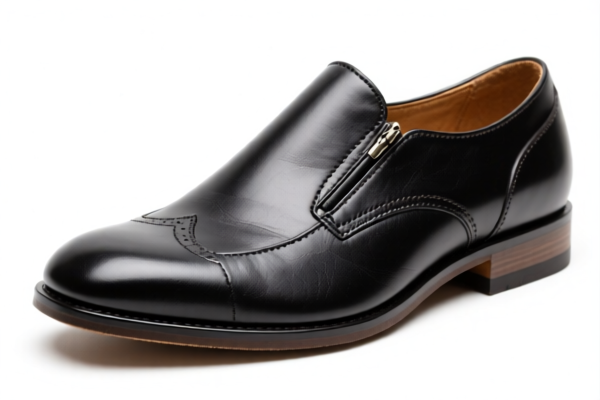


AI Analysis
🥾 Equine Shoe Upper Leather for Fashion Shoes: The Ultimate 2026 Customs Guide
🌐 HS Code Reference & Clearance Strategy | 2026 Duty Breakdown | Professional Logistics Protocol 📌 I. Product Definition: What Exactly is "Equine Shoe Upper Leather"?
Equine Shoe Upper Leather represents a specialized segment of the global leather trade, specifically designed as the primary structural component for the upper part of high-end, fashion-forward footwear. Unlike raw hides or standard tanned skins, this product undergoes specific preparation (tanning, dyeing, and finishing) to ensure durability, flexibility, and aesthetic appeal suitable for fashion applications.
In international trade classification (HS Code), the distinction hinges on three critical factors: 1. Animal Origin: Must be Equine (Horse, Donkey, Mule) or Bovine (Bull/Cow/Buffalo). Note: The provided data focuses heavily on Bovine/Equine mix, but specific "Equine" designation often drives the classification. 2. State of Preparation: It must be "Further prepared after tanning or crusting." This means it is no longer in the "wet state" (wet-blue) or "dry state" (crust). It is fully tanned, dyed, and potentially split or finished. 3. Unit Surface Area & Quality: For Upper Leather, the hides are typically of smaller unit surface areas (not exceeding 28 square feet / 2.6 m²) and possess the specific grain quality required for fashion shoes.
⚠️ Critical Classification Nuance: * If the leather is Bovine/Equine, Full Grain, Unsplit, and < 28 sq ft, used specifically as Upper Leather → It falls under 4107.11.10.20 or 4104.11.10.20 (depending on wet/dry state before final prep). * If the leather is Split or Not Full Grain → Classification shifts. * If the leather is Patented or Metallized → It falls under Heading 4114 (Different duty regime). * If the leather is Chamois → It falls under Heading 4114.10.
📦 II. HS Code Classification Matrix (2026 Data Reference)
Based strictly on the provided dataset for Equine/Bovine Shoe Upper Leather, here is the precise breakdown.
🟢 Category A: Tanned/Dry State (Crust/Finished) – The Most Common "Fashion" Input
| HS Code | Product Description | Key Attributes | Target Application |
|---|---|---|---|
4104.11.10.20 |
Tanned/Crust (Wet State) Bovine/Equine, Full Grain, Unsplit, <28 sq ft, Upper Leather | Wet state (includes wet-blue) | Note: Rare for final fashion; usually intermediate step. |
4104.41.10.20 |
Tanned/Crust (Dry State) Bovine/Equine, Full Grain, Unsplit, <28 sq ft, Upper Leather | Dry state (Crust) | Intermediate stage before final dyeing/finishing. |
4107.11.10.20 |
Further Prepared Bovine/Equine, Full Grain, Unsplit, <28 sq ft, Upper Leather | Final Ready-to-Use | ✅ Primary Classification for Fashion Shoe Uppers |
🔵 Category B: Specialty & Alternative Types
| HS Code | Product Description | Key Attributes | Target Application |
|---|---|---|---|
4107.11.60.10 |
Further Prepared Bovine/Equine, Full Grain, Unsplit, Other, Upper Leather | "Other" (Non-specified finish/type) | Versatile upper leather, potentially split or specific finish not in 4107.11.10.20. |
4114.10.00.00 |
Chamois Leather (including combination chamois) | Soft, suede-like, oil-tanned | Niche: Soft fashion linings or specific suede styles. |
4114.20.70.00 |
Patent/Metallized Leather | Shiny, coated, or metallic finish | Niche: High-fashion, avant-garde, or metallic accent shoes. |
🔍 Key Takeaway: The standard Equine/Bovine Upper Leather for fashion shoes (Full Grain, <28 sq ft) is overwhelmingly classified under
4107.11.10.20if it is fully prepared after tanning/crusting.
💰 III. 2026 Tariff Rate Deep Dive (Detailed Duty Analysis)
✅ Origin: China (CN) (Implied by data context) ✅ Destination: USA (US) (Implied by "25% Additional Tariff" pattern) ✅ Status: Active for 2026
🎯 Scenario 1: Standard Fashion Upper Leather (4107.11.10.20)
This is the most likely code for "Equine Shoe Upper Leather" that is tanned and further prepared.
| Tax Component | Rate | Legal Basis |
|---|---|---|
| Base Duty (MFN) | 0.0% | Standard Harmonized Tariff Schedule (HTS) Rate |
| Section 301 (Additional) | 25.0% | USITC Footnote / Trade Act 301 |
| Other/IEEPA | 0.0% | Not applicable for this specific code in this dataset |
| TOTAL DUTY | 25.0% | Significant Cost Impact |
📌 Explanation: - Despite the 0% Base Duty (which is generous for leather), the 25% Additional Tariff applies. - Calculation: If the CIF value is $10,000, the duty owed is $2,500. - Impact: This 25% tariff is a direct cost increase on top of the base, significantly reducing profit margins for fashion brands sourcing from China.
🎯 Scenario 2: Chamois or Patent Leather (4114.10.00.00 & 4114.20.70.00)
If the leather is Chamois or Patent/Metallized.
| Tax Component | Rate | Legal Basis |
|---|---|---|
| Base Duty (MFN) | 0.0% | Standard HTS Rate |
| Section 301 (Additional) | 0.0% | No additional tariff applied to these specific sub-categories in this data |
| TOTAL DUTY | 0.0% | Tariff-Free Entry |
📌 Strategic Advantage: - If you can legally classify your fashion shoe upper as Chamois (
4114.10.00.00) or Patent/Metallized (4114.20.70.00), you can enjoy 0% total duty. - Warning: Misclassifying standard leather as "Patent" or "Chamois" to avoid duty is customs fraud and carries severe penalties.
🎯 Scenario 3: "Other" Upper Leather (4107.11.60.10)
If the leather does not fit the "Full Grain, Unsplit" criteria exactly but is still Upper Leather.
| Tax Component | Rate | Legal Basis |
|---|---|---|
| Base Duty (MFN) | 0.0% | Standard HTS Rate |
| Section 301 (Additional) | 0.0% | No additional tariff applied |
| TOTAL DUTY | 0.0% | Tariff-Free Entry |
📌 Strategic Insight: - Sometimes, if the leather is split or does not meet the strict "Full Grain" definition, it might fall into the "Other" category (
4107.11.60.10), which has 0% additional tariff. - Crucial: You must ensure the physical properties of the leather truly match "Other" and not "Full Grain" to avoid audit risks.
🛠️ IV. Clearance Practical Tips (Avoiding Costly Errors)
✅ 1. Documentation Checklist (Mandatory)
| Document | Requirement | Purpose |
|---|---|---|
| Commercial Invoice | Must clearly state "Upper Leather for Fashion Shoes" | Confirms end-use classification |
| Packing List | Must separate "Upper Leather" from "Lining Leather" | 4107.11.10.20 is specifically "Upper"; lining often has different codes |
| Material Specifications | Animal Type: Equine vs. Bovine Surface Area: < 28 sq ft Preparation: Tanned + Further Prepared |
Proves eligibility for 4107.11.10.20 |
| Photos/Labels | High-res images of the leather grain and finish | Visually confirms "Full Grain" vs. "Split" or "Chamois" |
| Certificate of Origin | Proof of origin (China) | Required to apply the 25% tariff correctly |
✅ 2. Declaration Strategy: "The Golden Rule"
🔥 Rule: "Full Grain, Unsplit, <28 sq ft = 25% Duty. Split or Other = 0% Duty."
| Situation | Recommended HS Code | Duty Risk |
|---|---|---|
| Standard Full Grain Equine Leather | 4107.11.10.20 |
🚨 25% Duty (High Risk) |
| Split Leather or Non-Standard Grain | 4107.11.60.10 |
✅ 0% Duty (Low Risk) |
| Patent/Metallized Finish | 4114.20.70.00 |
✅ 0% Duty (Low Risk) |
| Chamois / Suede Style | 4114.10.00.00 |
✅ 0% Duty (Low Risk) |
⚠️ Warning: Do not declare "Full Grain" leather as "Split" to avoid the 25% tariff. Customs will physically inspect and reclassify, leading to back taxes + fines + seizure.
✅ 3. Special Cases & "Workarounds"
- The "Surface Area" Loophole: If you can source Equine leather larger than 28 sq ft, it may fall outside the specific "Upper Leather" sub-codes, potentially shifting to a different tariff line (check
4107.11.60or similar). Verify with a broker. - Patent Leather Strategy: If the fashion shoe design allows, applying a patent/metallic coating (which falls under
4114.20.70.00) reduces duty from 25% to 0%. This requires a finishing step that is compliant with the "Patent" definition. - Chamois Certification: If the leather is oil-tanned and soft (Chamois), it is duty-free (
4114.10.00.00). Ensure the tanning process meets the strict definition of Chamois.
🌍 V. Global Market Comparison (2026 Snapshot)
| Market | HS Code Used | Base Duty | Additional Tax | Total Duty | Notes |
|---|---|---|---|---|---|
| 🇺🇸 USA | 4107.11.10.20 |
0% | +25% | 25% | High cost for standard Upper Leather |
| 🇨🇳 China | 4107.11.10.20 |
10-12% | 0% | ~11% | Higher base duty, no 301 tariff |
| 🇪🇺 EU | 4107.11.10.20 |
0% | 0% | 0% | Generally duty-free for leather goods |
| 🇯🇵 Japan | 4107.11.10.20 |
5-8% | 0% | ~6% | Moderate base duty |
📌 Strategic Conclusion: - USA is the most expensive market due to the 25% Additional Tariff. - EU and China are more lenient (0-12% range). - If exporting to the USA, consider re-designing the product to fall under
4114(Patent/Chamois) or4107.11.60.10(Other) to save 25%.
📌 VI. Common Pitfalls & Avoidance Guide
❌ Pitfall 1: Mixing "Upper" and "Lining"
Symptom: Shipping a mix of Upper Leather (
4107.11.10.20) and Lining Leather (4107.11.10.20but different sub-class) in one shipment. Consequence: If the "Lining" part doesn't meet the "Upper" specs, Customs may reject the whole batch or reclassify it as a higher-taxed general leather. Fix: Separate shipments or clearly label "Upper" vs. "Lining" on the invoice.
❌ Pitfall 2: Incorrect "Surface Area" Declaration
Symptom: Declaring leather as "<28 sq ft" when the actual hide is 30 sq ft. Consequence: Rejection of the specific "Upper Leather" code. The goods may fall into a "Whole Hide" category with different, potentially higher, tariffs. Fix: Measure and verify average unit surface area.
❌ Pitfall 3: Misclassifying "Finished" vs. "Crust"
Symptom: Declaring leather as
4107(Further Prepared) when it is still in the "Crust" state (4104/4105). Consequence: Customs will inspect and find it "crust." They may apply the "Crust" tariff (often lower base but different 301 rules) OR force a reclassification with delays. Fix: Ensure the leather is fully tanned and finished before shipping if declaring4107.
🎯 VII. Final Verdict: Your Action Plan
🎯 The Bottom Line: For Equine Shoe Upper Leather, if you are shipping Full Grain, Unsplit, <28 sq ft to the USA, expect a 25% Additional Duty on top of the 0% base rate.
🚀 Your Strategy:
1. Verify: Check if your leather is truly "Full Grain". If it's split or has defects, aim for 4107.11.60.10 (0% duty).
2. Modify: Can you apply a patent or metallized finish? Move to 4114.20.70.00 (0% duty).
3. Split: If using Chamois leather, use 4114.10.00.00 (0% duty).
4. Document: Be ready with Surface Area proofs and Grain specifications to support your HS Code selection.
💡 Pro Tip: "If you can't beat the 25%, change the product type. Patent leather and Chamois are your tax-saving friends!"
✨ Clearance Success Starts with Precision. 💼 Don't let a misclassified HS Code erase your profit margin.
📣 Contact a specialized customs broker immediately to review your specific leather sample and ensure the optimal HS Code classification for 2026.
Customer Reviews
About HS Code Classification
The Harmonized System (HS) is an internationally standardized nomenclature developed by the World Customs Organization (WCO) to classify traded products. Over 200 countries use the HS system as the basis for customs tariffs, trade statistics, and import/export regulations.
Each HS code follows a hierarchical structure:
- Chapter (2 digits) — Broad category of goods (e.g., Chapter 84: Machinery and Mechanical Appliances)
- Heading (4 digits) — More specific grouping within the chapter
- Subheading (6 digits) — Internationally standardized breakdown, used by all WCO member countries
- National subdivisions (8-10 digits) — Country-specific extensions for further classification, such as US HTSUS 10-digit codes
Correct HS code classification is essential for smooth customs clearance, accurate duty payment, and compliance with trade regulations. Misclassification can lead to customs delays, overpayment of duties, or penalties.
When importing from CN to US, the applicable tariff rates may include:
- Most-Favored-Nation (MFN) rate — The standard duty rate applied to WTO members
- General rate — Applied to countries without trade agreements
- Trade remedy duties — Additional tariffs such as Section 301 (anti-dumping), Section 232 (national security), or countervailing duties
The information provided on this page is for reference purposes only. For official classification, please consult with your local customs authority or a licensed customs broker.