Esterification Reaction Catalyst
CN → US| HS Code | Tariff Rate | Origin | Destination | Doc |
|---|---|---|---|---|
| 2931909052 | 38.7% | CN | US | Official Doc |
| 2843290100 | 38.7% | CN | US | Official Doc |
| 3815905000 | 40.0% | CN | US | Official Doc |
| 3815190000 | 35.0% | CN | US | Official Doc |
| 2931906000 | 41.5% | CN | US | Official Doc |
Product Images
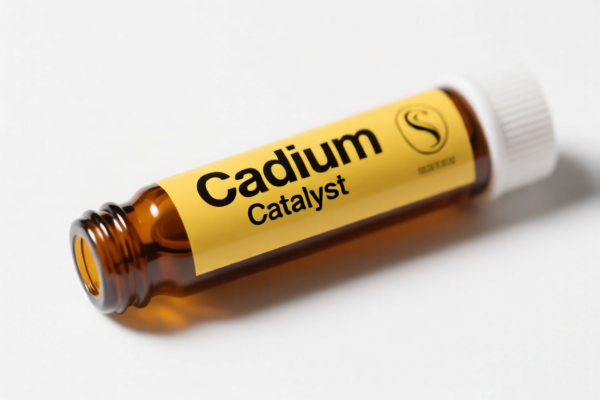
AI Analysis
🧪 Esterification Reaction Catalyst (聚合反应催化剂)
🌐 HS Code Reference & Customs Clearance Guide | 2026 Latest Tariff Analysis | Professional Clearance Strategy
📌 I. Product Definition and Classification: What is an "Esterification Reaction Catalyst"?
In international trade, "Esterification Reaction Catalysts" are chemical substances used to accelerate the reaction between an acid (usually organic carboxylic acid) and an alcohol to form an ester and water. They are critical in the production of plastics, solvents, perfumes, and food additives.
Because catalysts can be chemical compounds, metal complexes, or formulated preparations, their classification often depends on their chemical nature, physical form, and primary function. The data below provides the four most common HS Code classifications based on different material attributes.
📦 II. HS Code Classification Details (2026 Latest Tariff Authority Comparison)
The following HS Codes are derived from the provided data. Each code represents a different regulatory perspective on the catalyst's composition.
| HS Code | Product Description | Logic for Classification | Applicability Scenario |
|---|---|---|---|
2931.90.90.52 |
Other Organic/Inorganic Compounds | Classified as a "catch-all" for organic-inorganic compounds that do not fit specific chemical headings. | General purpose catalysts with complex mixed compositions. |
2843.29.01.00 |
Silver Compounds / Chemical Products | Classified under chemical products logic, specifically leveraging the "Silver Compound" category for inorganic/organic compound nuances. | Catalysts containing silver or falling under specific inorganic chemical headings. |
3815.90.50.00 |
Reaction Initiators/Accelerators (General) | Classified as a "Catalyst Preparation" falling under the general catch-all for reaction initiators or accelerators. | Formulated catalyst blends not specific to one metal or organic structure. |
3815.19.00.00 |
Other Prepared Catalysts (Fallback) | Classified as a "Prepared Catalyst" in the general fallback category, with no material or form conflicts. | Standard prepared catalysts for general industrial use. |
2931.90.60.00 |
Other Aromatic Organic Compounds | Classified under organic compounds, specifically leveraging the "Other Aromatic Compound" material attribute. | Catalysts with significant aromatic organic structures. |
🔍 Key Distinction:
- Chemical Specificity: Codes under 29xx (e.g.,2931.90...) focus on the chemical structure (organic/inorganic).
- Functional Specificity: Codes under 38xx (e.g.,3815.xx) focus on the preparation/function (catalyst preparation).
- Risk Note: Misclassification between3815(Prepared Catalyst) and29xx(Chemical) can lead to significant tariff differences and customs delays.
💰 III. 2026 Latest Tariff Rate Breakdown (Including Surcharges & Policy Add-ons)
✅ Applicable Country: United States (US)
✅ Country of Origin: China (CN)
✅ Effective Date: 2025/2026 (Subject to ongoing trade policies)
🎯 1. 2931.90.90.52 —— Other Organic/Inorganic Compounds
| Item | Content |
|---|---|
| Base Tariff | 3.7% |
| Section 301 Surcharge | +25.0% |
| Section 122 Surcharge | +10.0% |
| Total Tariff Rate | 38.7% |
| Tax Calculation | CIF Value × 38.7% |
| De Minimis Exemption | ❌ Not Applicable |
| Legal Basis Path | HTSUS:2931.90.90.52 → Section 301 → Section 122 |
📌 Explanation:
- This classification treats the catalyst as a complex chemical compound.
- The total rate of 38.7% is high, driven by the 25% Section 301 tariff and 10% Section 122 surcharge on Chinese goods.
🎯 2. 2843.29.01.00 —— Chemical Products (Silver/Inorganic Logic)
| Item | Content |
|---|---|
| Base Tariff | 3.7% |
| Section 301 Surcharge | +25.0% |
| Section 122 Surcharge | +10.0% |
| Total Tariff Rate | 38.7% |
| Tax Calculation | CIF Value × 38.7% |
| De Minimis Exemption | ❌ Not Applicable |
| Legal Basis Path | HTSUS:2843.29.01.00 → Section 301 → Section 122 |
📌 Note:
- Despite being in Chapter 28 (Inorganic Chemicals), the surcharges remain the same.
- This code is often used for catalysts with specific metallic components (like silver).
🎯 3. 3815.90.50.00 —— Reaction Initiators/Accelerators (General Catalyst)
| Item | Content |
|---|---|
| Base Tariff | 5.0% |
| Section 301 Surcharge | +25.0% |
| Section 122 Surcharge | +10.0% |
| Total Tariff Rate | 40.0% |
| Tax Calculation | CIF Value × 40.0% |
| De Minimis Exemption | ❌ Not Applicable |
| Legal Basis Path | HTSUS:3815.90.50.00 → Section 301 → Section 122 |
📌 Warning:
- This is the highest total tariff rate (40.0%) in the list.
- The higher base rate (5% vs 3.7%) makes this the most expensive option for general catalyst preparations.
🎯 4. 3815.19.00.00 —— Other Prepared Catalysts (Fallback)
| Item | Content |
|---|---|
| Base Tariff | 0.0% |
| Section 301 Surcharge | +25.0% |
| Section 122 Surcharge | +10.0% |
| Total Tariff Rate | 35.0% |
| Tax Calculation | CIF Value × 35.0% |
| De Minimis Exemption | ❌ Not Applicable |
| Legal Basis Path | HTSUS:3815.19.00.00 → Section 301 → Section 122 |
📌 Optimization Tip:
- This code offers the lowest total tariff (35.0%) because the base rate is 0%.
- Strategy: If the catalyst can be legally classified as a "Prepared Catalyst" under3815.19, this is the most cost-effective option.
🎯 5. 2931.90.60.00 —— Other Aromatic Organic Compounds
| Item | Content |
|---|---|
| Base Tariff | 6.5% |
| Section 301 Surcharge | +25.0% |
| Section 122 Surcharge | +10.0% |
| Total Tariff Rate | 41.5% |
| Tax Calculation | CIF Value × 41.5% |
| De Minimis Exemption | ❌ Not Applicable |
| Legal Basis Path | HTSUS:2931.90.60.00 → Section 301 → Section 122 |
📌 Caution:
- This is the highest base rate (6.5%), leading to the highest total cost.
- Use only if the aromatic structure is the defining chemical feature and no other classification is more accurate.
🛠️ IV. Customs Clearance Practical Advice (Real-World Pitfall Guide)
✅ 1. Required Documentation Checklist
| Document | Must Provide? | Description |
|---|---|---|
| ✅ Technical Data Sheet (TDS) | ✔️ | Details chemical composition, CAS numbers, and purity. |
| ✅ Safety Data Sheet (SDS) | ✔️ | Required for hazard classification and safe handling. |
| ✅ Formula/Composition Breakdown | ✔️ | Critical for determining if it’s 29xx (Chemical) or 38xx (Preparation). |
| ✅ Statement of Function | ✔️ | Clearly state: "Esterification Catalyst, not for food or drug use." |
| ✅ Commercial Invoice | ✔️ | Must list HS Code and description accurately. |
| ✅ Packing List | ✔️ | Include net/gross weight, package type. |
✅ 2. Classification Strategy (Key Mantra)
🔥 "Chemical Structure vs. Prepared Form: Choose Wisely!"
| Scenario | Correct HS Code | Wrong Code | Consequence |
|---|---|---|---|
| Single pure chemical compound | 2931.90.90.52 or 2931.90.60.00 |
3815.xx |
Misclassification → Audit risk. |
| Mixed formulation/Blend | 3815.19.00.00 (Best Rate) |
2931.xx |
Higher tax (40-41.5% vs 35%). |
| Silver-based catalyst | 2843.29.01.00 |
3815.xx |
Potential penalty for wrong chapter. |
| Aromatic-rich catalyst | 2931.90.60.00 |
3815.xx |
Higher base tax burden. |
📌 Pro Tip:
-3815.19.00.00is the "Gold Standard" for cost-saving if the catalyst is a prepared mixture.
-2931codes are riskier due to higher base rates and strict chemical analysis requirements.
✅ 3. Special Handling Cases
| Case | Handling Advice |
|---|---|
| Mixed Shipments | Do not combine different HS Codes in one shipment unless properly segregated. |
| Sample Shipments | Even small samples are subject to the same tariffs and duties. |
| Re-export from Third Country | Check rules of origin; direct shipment from China is subject to surcharges. |
| Hazardous Materials | Ensure IMDG/ADR compliance if the catalyst is flammable or corrosive. |
🌍 V. Global Market Clearance Comparison (2026)
| Country/Region | Recommended HS Code | Estimated Tariff (CN Origin) | Certification Requirements | Notes |
|---|---|---|---|---|
| 🇺🇸 USA | 3815.19.00.00 |
35.0% (Lowest) | No specific, but SDS mandatory | High risk of audit; provide detailed formula. |
| 🇨🇳 China | 3815.19.00.00 |
0% - 5% (Export Duty?) | N/A | Check export control lists for chemicals. |
| 🇪🇺 EU | 3815.10.90 |
0% - 6.5% | REACH Registration | REACH compliance is critical for entry. |
| 🇯🇵 Japan | 3815.19.00 |
0% - 3.2% | Fertilization Control Law (if applicable) | Check for phytosanitary needs if organic. |
📌 Conclusion:
- USA: Focus on3815.19.00.00for the lowest duty (35%).
- EU: REACH registration is a major hurdle; ensure compliance before shipping.
- China: Export controls may apply for certain catalysts; verify with local customs.
📌 VI. Common Mistakes & Pitfall Guide (Lessons Learned)
❌ Mistake 1: Classifying a prepared mixture as a pure chemical (29xx)
👉 Result: Higher base tariff (6.5% vs 0%) → Increased cost by ~5%.
❌ Mistake 2: Ignoring Section 122 Surcharge
👉 Result: Underestimating total cost by 10%. Total rate should be Base + 25% + 10%.
❌ Mistake 3: Using vague descriptions like "Chemical Catalyst"
👉 Result: Customs delays, requests for more info, or penalty fines.
❌ Mistake 4: Assuming De Minimis exemption applies
👉 Result: Shipments under $800 are NOT exempt from Section 301/122 tariffs for Chinese origin.
✅ Correct Practice:
"Esterification Catalyst, Prepared, Chemical Composition: [Details], CAS No: [Number], For Industrial Use Only."
🎯 VII. Conclusion: Professional Classification Saves Money!
🎯 Remember the Mantra:
🔹 "Prepared Catalyst (
3815) is cheaper than Chemical (29xx)."
🔹 "35% is better than 41.5% – Check your formulation!"
🔹 "Surcharges are mandatory – Plan for 35-40% total duty."
📌 Tip:
If your catalyst is not of Chinese origin (e.g., from Germany, USA, Japan), the 25% Section 301 and 10% Section 122 surcharges may not apply.
👉 Action: Verify Country of Origin on the Bill of Lading.
📣 Immediate Action:
📞 Contact a Professional Broker: Provide the Formula and SDS.
🚀 Apply for Rulings: Consider an Advance Ruling from US CBP to lock in the HS Code and avoid surprises.
✨ Professional Clearance Starts with Precise Classification!
💼 Every percentage point saved is pure profit!
Customer Reviews
About HS Code Classification
The Harmonized System (HS) is an internationally standardized nomenclature developed by the World Customs Organization (WCO) to classify traded products. Over 200 countries use the HS system as the basis for customs tariffs, trade statistics, and import/export regulations.
Each HS code follows a hierarchical structure:
- Chapter (2 digits) — Broad category of goods (e.g., Chapter 84: Machinery and Mechanical Appliances)
- Heading (4 digits) — More specific grouping within the chapter
- Subheading (6 digits) — Internationally standardized breakdown, used by all WCO member countries
- National subdivisions (8-10 digits) — Country-specific extensions for further classification, such as US HTSUS 10-digit codes
Correct HS code classification is essential for smooth customs clearance, accurate duty payment, and compliance with trade regulations. Misclassification can lead to customs delays, overpayment of duties, or penalties.
When importing from CN to US, the applicable tariff rates may include:
- Most-Favored-Nation (MFN) rate — The standard duty rate applied to WTO members
- General rate — Applied to countries without trade agreements
- Trade remedy duties — Additional tariffs such as Section 301 (anti-dumping), Section 232 (national security), or countervailing duties
The information provided on this page is for reference purposes only. For official classification, please consult with your local customs authority or a licensed customs broker.