Ethernet Converter
CN → US| HS Code | Tariff Rate | Origin | Destination | Doc |
|---|---|---|---|---|
| 8543709860 | 37.6% | CN | US | Official Doc |
| 8517620010 | 35.0% | CN | US | Official Doc |
| 8517620090 | 35.0% | CN | US | Official Doc |
| 8471801000 | 35.0% | CN | US | Official Doc |
| 8543706000 | 35.0% | CN | US | Official Doc |
Product Images
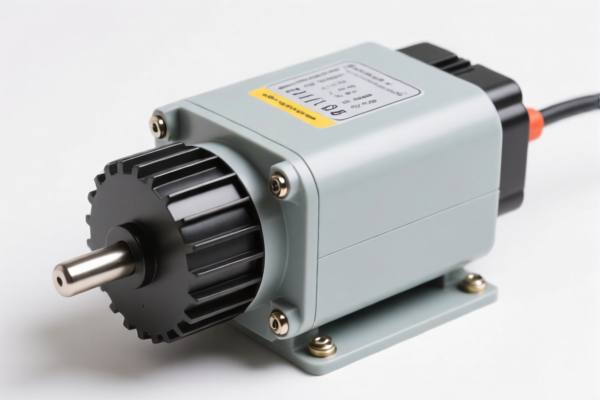
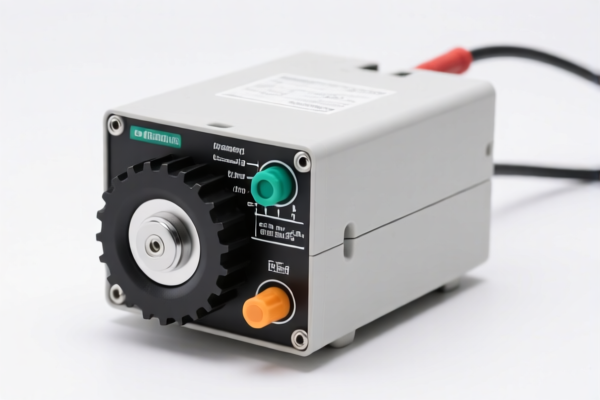
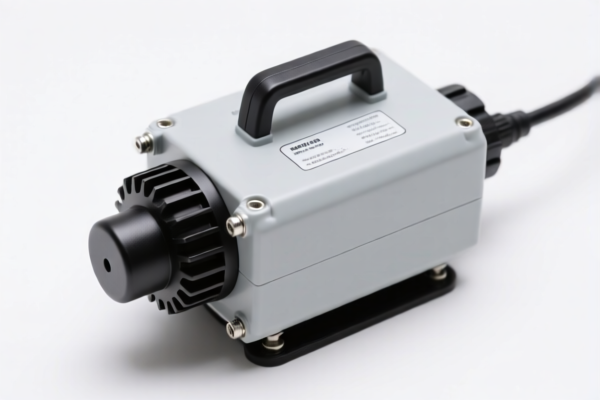
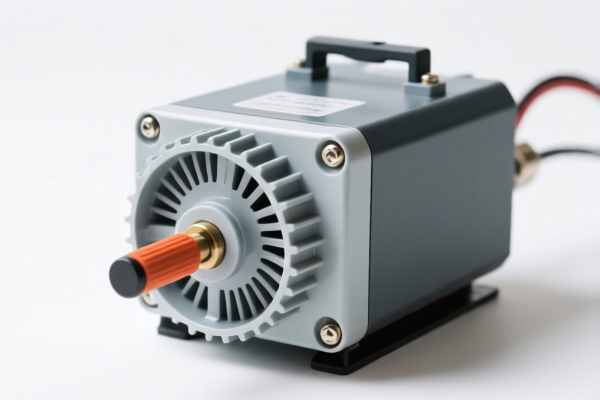
AI Analysis
🔌 Ethernet Converter (Network Interface & Data Transmission Devices)
🌐 HS Code Reference & Customs Clearance Guide | 2026 Latest Tariff Analysis | Professional Strategy
📌 I. Product Definition & Classification: What is an "Ethernet Converter"?
An Ethernet Converter is a critical network communication device that bridges different physical layers or protocols, enabling data transmission across cabling systems (e.g., Coaxial to Ethernet, Fiber to Ethernet, or RS-232 to Ethernet). In international trade, these devices fall under various HS codes depending on their functional specificity and role within a data processing system.
Key Distinctions: * Data Transmission Equipment: Devices primarily used for transmitting/receiving data signals (e.g., 8517.62). * External Units for ADP Machines: Devices acting as extensions/connectors for automatic data processing (e.g., 8471.80). * Other Electric Machines/Devices: Devices with independent functions not strictly defined as amplifiers or musical instruments (e.g., 8543.70).
⚠️ Critical Classification Point:
- If the device is a standard network interface for data transfer → Consider 8517.62.
- If it is an external unit for computers → Consider 8471.80.
- If it has independent electronic functions not covered elsewhere → Consider 8543.70.
📦 II. HS Code Classification Details (2026 Latest Tariff Authority)
The following HS Codes are derived from the provided dataset, explaining the logic for each classification based on U.S. Customs and Border Protection (CBP) guidelines and tariff notes.
| HS Code | Product Description & Logic | Applicable Scenario | Tax Rate (Total) |
|---|---|---|---|
8543.70.60.00 |
Network Comm. Device: Belongs to network communication equipment, connecting to telegraph/telephone networks, instruments, or networks. Material: Electronic components + Plastic/Metal housing. | Standard network converters, signal extenders | 35.0% |
8471.80.40.00 |
ADP External Unit: As an external unit for automatic data processing machines; serves as an extension/connection component for network converters. Fits "residual" category logic. | Computer peripherals, docking stations with conversion | 35.0% |
8543.70.98.60 |
Independent Electronic Device: Has independent function as an electronic network conversion device. No conflict with "other machines/devices." Not an amplifier or musical instrument pedal. | Specialized industrial converters, non-standard signal processors | 37.6% |
8517.62.00.10 |
Data Transmission Device: Fits the definition of devices for transmitting or receiving data. Primary function is signal/data movement. | Basic Ethernet-to-Other media converters | 35.0% |
8517.62.00.90 |
Other Data Transmission/Reception: Used for receiving, converting, and transmitting voice, image, or other data. "Other" category. | Complex converters handling multi-modal data (voice/image) | 35.0% |
🔍 Key Insight:
- 8517.62 is the most common classification for standard network converters because their primary function is data transmission.
- 8543.70 applies when the device has more complex, independent electronic processing features not strictly tied to basic data transmission.
- 8471.80 is used if the converter is explicitly marketed/used as an external component for computers (ADP machines).
💰 III. 2026 Latest Tariff Rate Details (Including Surcharges & Policy Add-ons)
✅ Applicable Country: United States (US)
✅ Origin: China (CN)
✅ Effective Date: From November 10, 2025 (and subsequent imports)
🎯 1. 8543.70.60.00 – Network Communication Equipment
| Item | Detail |
|---|---|
| Base Tariff | 0.0% (ad valorem) |
| Section 301 Surcharge | +25.0% (USITC Footnote) |
| IEEPA Surcharge | +10.0% (122 Provision – China-specific) |
| Total Tariff | 35.0% |
| Calculation | CIF Value × 35% |
| De Minimis Exemption? | ❌ NO (Denied for Section 301/IEEPA goods) |
| Legal Basis Path | IEEPA:122 → USITC:8543.70.60.00 → SECTION301:25% |
📌 Explanation:
- Base 0%: The Harmonized Tariff Schedule (HTSUS) base rate for this subheading is 0%.
- 25% Section 301: Standard U.S. tariff on Chinese electronics.
- 10% IEEPA: Additional surcharge under the International Emergency Economic Powers Act for specific Chinese-origin goods.
- Total 35%: High cost; must be factored into pricing.
🎯 2. 8471.80.40.00 – External Units for ADP Machines
| Item | Detail |
|---|---|
| Base Tariff | 0.0% |
| Section 301 Surcharge | +25.0% |
| IEEPA Surcharge | +10.0% |
| Total Tariff | 35.0% |
| Calculation | CIF Value × 35% |
| De Minimis Exemption? | ❌ NO |
| Legal Basis Path | IEEPA:122 → USITC:8471.80.40.00 → SECTION301:25% |
📌 Explanation:
- Identical tax burden to 8543.70.60.00.
- Classification as "ADP External Unit" triggers the same surcharge structure.
🎯 3. 8543.70.98.60 – Other Electric Machines/Devices (Higher Base Rate)
| Item | Detail |
|---|---|
| Base Tariff | 2.6% |
| Section 301 Surcharge | +25.0% |
| IEEPA Surcharge | +10.0% |
| Total Tariff | 37.6% |
| Calculation | CIF Value × 37.6% |
| De Minimis Exemption? | ❌ NO |
| Legal Basis Path | IEEPA:122 → USITC:8543.70.98.60 → SECTION301:25% |
📌 Explanation:
- Higher Base Rate (2.6%): This subheading (98.60) is a "residual" or "other" category, which often carries a small base duty.
- Total 37.6%: This is the most expensive classification. Avoid if possible.
- Why Higher? Because it doesn't fit neatly into "network communication" (60.00) or standard transmission (8517), so it falls into a general "other" bucket with a non-zero base.
🎯 4. 8517.62.00.10 & 8517.62.00.90 – Data Transmission Devices
| Item | Detail |
|---|---|
| Base Tariff | 0.0% |
| Section 301 Surcharge | +25.0% |
| IEEPA Surcharge | +10.0% |
| Total Tariff | 35.0% |
| Calculation | CIF Value × 35% |
| De Minimis Exemption? | ❌ NO |
| Legal Basis Path | IEEPA:122 → USITC:8517.62.00.xx → SECTION301:25% |
📌 Explanation:
- Best for Standard Converters: Since these have a 0% base rate, they are cheaper than8543.70.98.60.
- Difference between .10 and .90:
- .10: General data transmission.
- .90: "Other" data transmission/voice/image conversion.
- Both carry the same total 35% tax burden.
🛠️ IV. Customs Clearance Practical Advice (Real-World Pitfall Guide)
✅ 1. Documentation Checklist (Mandatory)
| Document | Required | Notes |
|---|---|---|
| ✅ Product Specification Sheet | ✔️ | Must detail: Input/Output ports, Protocols (e.g., RJ45, Fiber, BNC), Data Rates. |
| ✅ Functional Description | ✔️ | Explain primary function: Is it for data transmission (8517) or general network comm (8543)? |
| ✅ Circuit Diagram / Block Diagram | ✔️ | Essential to prove if it has "processing" capabilities (8543) vs. pure "transmission" (8517). |
| ✅ Product Photos (Label & Ports) | ✔️ | Show model number, input/output interfaces clearly. |
| ✅ Commercial Invoice | ✔️ | Clearly state "Ethernet Converter for Data Transmission" or "Network Communication Device." |
| ✅ FCC Certification | ✔️ | Required for all electronic devices emitting radio frequencies or connected to telecom networks. |
✅ 2. Declaration Strategy (Key Mnemonic)
🔥 "Function First, Base Rate Low, Surcharges Equal, Pick 8517!"
| Scenario | Recommended HS Code | Why? |
|---|---|---|
| Standard Ethernet-to-Fiber/Coax Converter | 8517.62.00.10 |
0% Base. Clear "data transmission" function. Lowest risk, same surcharge. |
| Converter used with Computers/Printers | 8471.80.40.00 |
0% Base. If sold as a PC peripheral/docking station. |
| Specialized Signal Processor (Non-Standard) | 8543.70.98.60 |
2.6% Base. Only use if it doesn't fit 8517 or 8471. Higher total tax! |
| Generic Network Bridge | 8543.70.60.00 |
0% Base. If classified as "network comm equipment" rather than pure transmission. |
⚠️ Critical Warning:
- Avoid8543.70.98.60if possible. The 2.6% base rate makes it 2.6% more expensive than the others.
- Do NOT claim De Minimis (Section 321): All these codes are subject to Section 301 and IEEPA tariffs, which cannot be exempted under the $800 de minimis rule. Full duties apply.
✅ 3. Special Handling Tips
| Situation | Advice |
|---|---|
| OEM/White Label | Provide brand authorization if claimed, but focus on technical function for HS classification. |
| Multi-Function Devices | If it also acts as a router/switch, stick to 8517.62 (transmission) as it’s the primary function. |
| Import from Vietnam/Mexico | Excellent Strategy: If manufactured in Vietnam/Mexico, IEEPA 10% surcharge may not apply (check specific origin rules). This can save significant costs. |
| FCC Compliance | Ensure all converters have FCC ID. Lack of FCC certification leads to seizure by CBP. |
🌍 V. Global Market Comparison (2026 Outlook)
| Country/Region | Recommended HS Code | Est. Total Duty (China Origin) | Key Requirements | Notes |
|---|---|---|---|---|
| 🇺🇸 USA | 8517.62.00.10 |
35% | FCC, Section 301 + IEEPA | Highest barrier. Use Vietnam/Mexico supply chain if possible. |
| 🇨🇳 China | 8517.62.00.10 |
~10-15% (Import Duty) | CCC (if applicable) | Lower duties, but focus on domestic market. |
| 🇪🇺 EU | 8517.62.00 |
0% | CE, RoHS | Zero Duty! No surcharges. Best market for margins. |
| 🇬🇧 UK | 8517.62.00 |
0% | UKCA | Post-Brexit alignment with EU tariffs. |
| 🇯🇵 Japan | 8517.62.00 |
0% | PSE | Free trade agreement benefits often apply. |
📌 Conclusion:
- USA is the most expensive market due to 35% combined tariffs.
- EU/UK/Japan offer 0% duty for similar products.
- Supply Chain Shift: To mitigate US costs, consider final assembly in Vietnam or Mexico to avoid IEEPA surcharges (if applicable).
📌 VI. Common Errors & Pitfalls (Lessons Learned)
❌ Error 1: Claiming De Minimis for shipments under $800
👉 Consequence: CBP will deny entry, assess 35% tax + penalties, and delay clearance. Section 301/IEEPA goods are NOT de minimis exempt.
❌ Error 2: Misclassifying as 8543.70.98.60 unnecessarily
👉 Consequence: Paying an extra 2.6% base duty. Always argue for 8517 (data transmission) or 8543.70.60 (network comm) which have 0% base.
❌ Error 3: Vague Description "Network Adapter"
👉 Consequence: CBP may downgrade to "Other Electrical Machinery" with higher duties.
👉 Fix: Use precise terms: "Ethernet to Fiber Media Converter, for Data Transmission, Model XYZ".
✅ Correct Declaration Example:
"ETHERNET CONVERTER, MODEL ABC-100, CONVERTS COAXIAL SIGNAL TO ETHERNET FOR DATA TRANSMISSION, FCC ID: XYZ123, MADE IN CHINA."
🎯 VII. Conclusion: Precision Saves Money
🎯 Key Takeaway:
🔹 For USA Imports: Target
8517.62.00.10or8543.70.60.00for 35% total tax. Avoid8543.70.98.60(37.6%).
🔹 For Non-USA Markets: EU/UK/Japan offer 0% duty – leverage these markets for higher margins.
🔹 Supply Chain: Consider Vietnam/Mexico assembly to potentially bypass US IEEPA surcharges.
📌 Pro Tip:
Always obtain an Advance Ruling from CBP if your product has unique features. It provides legal certainty and prevents post-clearance audits.
📣 Immediate Action:
📞 Verify FCC Certification before shipping.
📦 Ensure Invoice Descriptions match HS Code logic.
🚀 Evaluate Origin: If selling to the US, is Vietnam/Mexico production feasible?
✨ Professional Clearance, From Accurate Classification Onwards!
💼 Your Margin Depends on Your HS Code!
Customer Reviews
About HS Code Classification
The Harmonized System (HS) is an internationally standardized nomenclature developed by the World Customs Organization (WCO) to classify traded products. Over 200 countries use the HS system as the basis for customs tariffs, trade statistics, and import/export regulations.
Each HS code follows a hierarchical structure:
- Chapter (2 digits) — Broad category of goods (e.g., Chapter 84: Machinery and Mechanical Appliances)
- Heading (4 digits) — More specific grouping within the chapter
- Subheading (6 digits) — Internationally standardized breakdown, used by all WCO member countries
- National subdivisions (8-10 digits) — Country-specific extensions for further classification, such as US HTSUS 10-digit codes
Correct HS code classification is essential for smooth customs clearance, accurate duty payment, and compliance with trade regulations. Misclassification can lead to customs delays, overpayment of duties, or penalties.
When importing from CN to US, the applicable tariff rates may include:
- Most-Favored-Nation (MFN) rate — The standard duty rate applied to WTO members
- General rate — Applied to countries without trade agreements
- Trade remedy duties — Additional tariffs such as Section 301 (anti-dumping), Section 232 (national security), or countervailing duties
The information provided on this page is for reference purposes only. For official classification, please consult with your local customs authority or a licensed customs broker.