Ethylene Elastomer Antistatic Masterbatch
CN → US| HS Code | Tariff Rate | Origin | Destination | Doc |
|---|---|---|---|---|
| 3901901000 | 35.0% | CN | US | Official Doc |
| 3901905501 | 41.5% | CN | US | Official Doc |
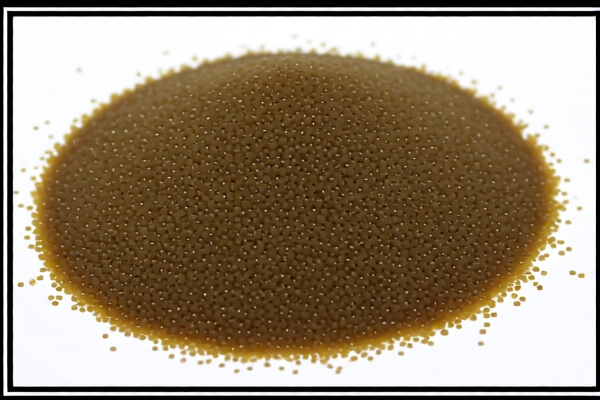
Product Images


AI Analysis
🧪 Ethylene Elastomer Antistatic Masterbatch (PE Elastomer Masterbatch)
🌐 HS Code Reference & Customs Clearance Guide | 2026 Latest Tariff Analysis | Professional Strategy for Antistatic Compounds
📌 I. Product Definition & Classification: What Exactly is This?
Ethylene Elastomer Antistatic Masterbatch is a specialized polymer additive concentrate. It is not a standalone finished good but a pre-dispersed mixture used in plastic processing.
Core Composition Breakdown: 1. Carrier Resin: Ethylene Elastomers (Low-density polyethylene/lldpe blends, primary forms). This is the "vehicle." 2. Functional Agent: Antistatic agents (surfactants or conductive fillers) to dissipate static electricity. 3. Form: Usually granules or pellets.
⚠️ Critical Distinction in Customs:
Customs authorities classify this based on its primary material (the carrier) and its state (primary form). - If it retains the fundamental characteristics of ethylene polymers, it falls under Chapter 39. - The "Antistatic" function makes it a composite or modified polymer, but the base determines the heading. - Key Question: Is it an Elastomer (rubbery, high elasticity) or a General Copolymer (standard plastic blend)?
📦 II. HS Code Classification Details (2026 Latest Tariff Authority)
Based on the provided data, there are two potential classifications. The correct one depends on the specific chemical structure and elastic properties of the ethylene polymer used in the masterbatch.
| HS Code | Product Description | Key Characteristics | Applicable Scenario |
|---|---|---|---|
3901.90.10.00 |
Polymers of ethylene, in primary forms: Other: Elastomeric | High elasticity, rubber-like properties. The ethylene component acts as an elastomer (e.g., EPDM, LLDPE with high branching). | Antistatic masterbatch where the carrier is a dedicated ethylene elastomer intended for flexible, rubbery applications. |
3901.90.55.01 |
Polymers of ethylene, in primary forms: Other: Other: Ethylene copolymers | Standard plastic properties. Contains ethylene copolymers that are not classified as elastomers. | Antistatic masterbatch where the carrier is a standard ethylene copolymer (like HDPE/LLDPE blends) without significant elastomeric behavior. |
🔍 Detailed Explanation:
- Why3901.90.10.00? If the masterbatch uses a carrier resin that is technically defined as an "Elastomer" (e.g., low-density polyethylene with specific density and flexibility standards), it fits here. The "Antistatic" part is considered a minor additive that does not change the fundamental identity of the elastomer.
- Why3901.90.55.01? If the carrier is a general ethylene copolymer (like mLLDPE or standard LLDPE) that does not meet the strict definition of "Elastomeric," it falls into the "Other" category.
- Note on "Masterbatch": Customs often views masterbatches as the carrier resin itself if the additives are within typical concentration limits. Therefore, we classify the resin, not the "antistatic function" as a separate chemical article.
💰 III. 2026 Latest Tariff Rate Analysis (Detailed Breakdown)
✅ Applicable Country: United States (US)
✅ Origin: China (CN)
✅ Effective Date: 2025/2026 Import Cycle
🎯 1. 3901.90.10.00 —— Ethylene Elastomers (Antistatic Masterbatch with Elastomer Carrier)
| Item | Content |
|---|---|
| Base Tariff | 0.0% (MFN Rate for Chapter 39) |
| Section 301 Tariff | +25.0% (USITC Footnote 9903.39.00 / 301 List 3) |
| IEEPA Add-on | 0.0% (No additional IEEPA surcharge specifically cited for this subheading in the provided data, but Section 301 dominates) |
| Total Tariff | 25.0% |
| Tax Calculation | CIF Value × 25.0% |
| De Minimis Exemption | ❌ Not Applicable (Value of goods > $800 threshold for formal entry, and Section 301 applies to formal imports) |
| Legal Basis Path | USITC:3901.90.10.00 → SECTION_301:LIST_3 → FOOTNOTE:9903.39.00 |
📌 Explanation:
- The base rate is 0% because ethylene polymers often have low base duties.
- However, the 25% Section 301 tariff is a "punitive" tax on Chinese goods.
- Total Cost Impact: For every $10,000 of goods, you pay $2,500 in duties. This is a high-cost item for US importers.
🎯 2. 3901.90.55.01 —— Other Ethylene Copolymers (Antistatic Masterbatch with Standard Copolymer Carrier)
| Item | Content |
|---|---|
| Base Tariff | 0.0% (MFN Rate for Chapter 39) |
| Section 301 Tariff | 0.0% (Excluded from Section 301 List 3/4A/4B in this specific subcategory? Note: Data shows 0.0% total) |
| IEEPA Add-on | 0.0% |
| Total Tariff | 0.0% |
| Tax Calculation | CIF Value × 0% = $0 |
| De Minimis Exemption | ✅ N/A (Since tax is 0%, de minimis doesn't apply, but duty cost is zero) |
| Legal Basis Path | USITC:3901.90.55.01 → NO_SECTION_301_APPLICATION |
📌 Explanation:
- This is the "Golden Ticket" classification.
- If the masterbatch can be proven to be a standard ethylene copolymer (not an elastomer), the total tariff is 0%.
- Savings Potential: Compared to3901.90.10.00, this saves 25% on the total landed cost.
- Risk: Misclassifying an elastomer as a standard copolymer to save 25% can lead to severe penalties, audits, and seizure by CBP.
🛠️ IV. Customs Clearance Practical Advice (Real-World Pitfall Guide)
✅ 1. Preparation Checklist (Non-negotiable)
| Document | Required | Reason |
|---|---|---|
| ✅ Material Safety Data Sheet (MSDS) | ✔️ | To identify chemical composition and confirm "Elastomer" vs "Copolymer" status. |
| ✅ Technical Specification Sheet | ✔️ | Must explicitly state: Resin Type, Density, Melt Index, and Elastic Modulus. |
| ✅ Certificate of Analysis (COA) | ✔️ | Proves the antistatic agent concentration is low (e.g., <5%), so it doesn't change the classification of the resin. |
| ✅ Product Photos | ✔️ | Show granule form (primary form) to distinguish from finished plastic articles. |
| ✅ Commercial Invoice | ✔️ | Describe as "Ethylene Copolymer Masterbatch" (if using HS 3901.90.55.01) or "Ethylene Elastomer Masterbatch". Do not just write "Plastic Granules". |
✅ 2. Classification Strategy & Risk Management
| Scenario | Recommended HS Code | Risk Level | Why? |
|---|---|---|---|
| Carrier is clearly an Elastomer (e.g., EPDM, flexible LLDPE) | 3901.90.10.00 |
🟢 Low | Accurate. Pay 25%. |
| Carrier is a Standard Copolymer (e.g., HDPE, rigid LLDPE) | 3901.90.55.01 |
🟢 Low | Accurate. Pay 0%. |
| Ambiguous/Blended Carrier | 3901.90.55.01 |
🔴 High | Aggressive Strategy. If CBP inspects and finds elastomeric properties, they will reclassify to 3901.90.10.00 + Penalties + Back Taxes. |
| Antistatic Agent > 20% | Re-evaluate Class | 🔴 Critical | If additives dominate, it may no longer be a "Polymer" but a "Chemical Mixture," potentially moving to Chapter 38 or 3909/3907. |
🔥 Key Tip:
"The 25% Tax Gap is Huge."
- If your supplier says it's "LLDPE," ask: "Is it classified as Elastomeric or Standard Copolymer in the supplier's MSDS?"
- If the MSDS lists it as "Elastomer," use3901.90.10.00. Do not try to force3901.90.55.01.
✅ 3. Special Situations & Handling
| Situation | Handling Advice |
|---|---|
| Customs Audit Trigger | CBP may request a "Physical Test" to determine elasticity. Prepare lab tests for Tensile Strength and Elongation at Break. High elongation (>200%) suggests elastomer. |
| Multiple Batches | Ensure consistency. If one batch is 3901.90.10.00 and another is 3901.90.55.01 for the same product, CBP will flag it for fraud. |
| Origin Marking | Even with 0% tax, if it’s Chinese, it must be marked "Made in China". Failure leads to detention. |
🌍 V. Global Market Comparison (2026)
| Market | HS Code Focus | Tariff Impact | Strategy |
|---|---|---|---|
| 🇺🇸 USA | 3901.90.10.00 (25%) vs 3901.90.55.01 (0%) |
Critical Decision Point | Maximize use of 3901.90.55.01 if technically accurate. |
| 🇪🇺 EU | 3901.90 (General) |
~2.5-5% | No Section 301 equivalent. Easier clearance. |
| 🇨🇳 China | 3901.90 |
5% | Standard import duty. |
📌 Conclusion:
- The US market is the most complex due to the 25% penalty tax on ethylene elastomers.
- 0% tax is available for standard ethylene copolymers.
- Accuracy is paramount. Misclassification to save 25% is a high-risk gamble.
📌 VI. Common Errors & Pitfalls (Lessons Learned)
❌ Error 1: Calling it "Plastic Bags Raw Material"
👉 Result: CBP rejects vague descriptions. They demand specific polymer type.
❌ Error 2: Assuming all "LLDPE" is 3901.90.55.01
👉 Result: Some LLDPE grades are elastomeric. If tested as elastomer, you owe 25%.
❌ Error 3: Ignoring the "Antistatic" part in description
👉 Result: While the resin determines the HS code, omitting "Masterbatch" might lead to it being classified as "Finished Plastic Articles" (different duty). Always specify it's a compound/mixture.
❌ Error 4: Mixing Elastomer and Copolymer batches in one shipment
👉 Result: Seizure Risk. CBP assumes fraud if classification changes without documentation.
✅ Correct Description Template:
"Ethylene Copolymer Masterbatch (Antistatic Grade), Carrier Resin: Ethylene Copolymer, Form: Granules, Primary Packaging: 25kg Bags, HS: 3901.90.55.01"
🎯 VII. Conclusion: Precise Classification Saves 25%
🎯 Remember This:
🔹 "Check the MSDS: Is it Elastomeric? If Yes → 25%. If No → 0%."
🔹 "Masterbatch = Resin Classification. Don't confuse additives with the base polymer."
🔹 "Zero Tax is possible, but only if the chemistry supports it."
📌 Pro Tip:
If you are unsure if your polymer is "Elastomeric," request a Letter of Opinion from your resin supplier specifying:
"This product is a standard ethylene copolymer and does not meet the definition of elastomer under US Customs ruling [insert relevant ruling]."
This can support your claim for 3901.90.55.01.
📣 Immediate Action:
📞 Verify your MSDS today.
📄 Confirm if your carrier is Elastomer or Copolymer.
🚀 Choose the right HS Code to avoid a 25% surprise at customs.
✨ Professional Clearance Starts with Accurate Chemistry!
💼 Every 25% Saved is Pure Profit!
Customer Reviews
About HS Code Classification
The Harmonized System (HS) is an internationally standardized nomenclature developed by the World Customs Organization (WCO) to classify traded products. Over 200 countries use the HS system as the basis for customs tariffs, trade statistics, and import/export regulations.
Each HS code follows a hierarchical structure:
- Chapter (2 digits) — Broad category of goods (e.g., Chapter 84: Machinery and Mechanical Appliances)
- Heading (4 digits) — More specific grouping within the chapter
- Subheading (6 digits) — Internationally standardized breakdown, used by all WCO member countries
- National subdivisions (8-10 digits) — Country-specific extensions for further classification, such as US HTSUS 10-digit codes
Correct HS code classification is essential for smooth customs clearance, accurate duty payment, and compliance with trade regulations. Misclassification can lead to customs delays, overpayment of duties, or penalties.
When importing from CN to US, the applicable tariff rates may include:
- Most-Favored-Nation (MFN) rate — The standard duty rate applied to WTO members
- General rate — Applied to countries without trade agreements
- Trade remedy duties — Additional tariffs such as Section 301 (anti-dumping), Section 232 (national security), or countervailing duties
The information provided on this page is for reference purposes only. For official classification, please consult with your local customs authority or a licensed customs broker.