Ethylene Elastomer Oil Resistant Material
CN → US| HS Code | Tariff Rate | Origin | Destination | Doc |
|---|---|---|---|---|
| 3901901000 | 35.0% | CN | US | Official Doc |
| 3901905501 | 41.5% | CN | US | Official Doc |
| 4002700000 | 35.0% | CN | US | Official Doc |
| 4002990000 | 35.0% | CN | US | Official Doc |
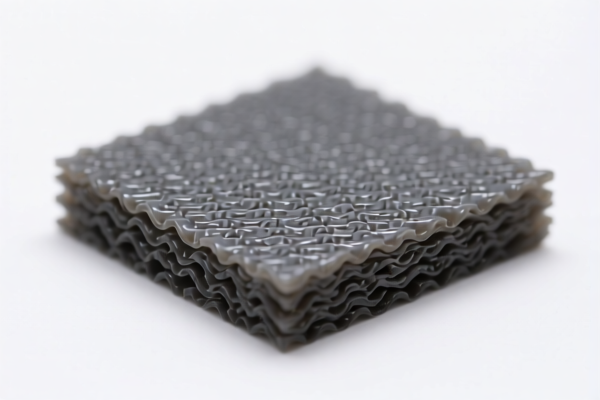
Product Images



AI Analysis
🚗 Ethylene Elastomer Oil Resistant Material (Automotive Exterior Grade)
🌐 HS Code Reference & Customs Clearance Guide | 2026 Latest Tariff Analysis | Professional Clearance Strategy
📌 1. Product Definition & Classification: What is "Ethylene Elastomer"?
Ethylene Elastomers, particularly those used in automotive exterior applications (such as bumpers, spoilers, and trim), are advanced polymer materials known for their flexibility, durability, and resistance to environmental stress cracking. In international trade, the classification depends heavily on the chemical structure and physical form of the material.
The key distinction lies in whether the material is classified as a Plastic/Elastomer (Chapter 39) or a Synthetic Rubber (Chapter 40).
⚠️ Key Classification Point:
- If the material is primarily an ethylene polymer or copolymer in primary form (pellets, granules, powders), it often falls under Chapter 39 (Plastics).
- If the material is chemically distinct as a synthetic rubber (such as EPDM - Ethylene Propylene Diene Monomer), it falls under Chapter 40 (Rubber).
- "Oil Resistant" and "Automotive Exterior" are functional descriptions and do not change the fundamental chemical classification, but they confirm the end-use (automotive parts).
📦 2. HS Code Classification Details (2026 Latest Tariff Authority Comparison)
Based on the provided data, here are the four possible HS Codes and their corresponding tax implications for imports into the US (assuming Chinese origin due to the "122 Clause" reference).
| HS Code | Product Description | Chemical Basis | Total Tax Rate | Tax Detail Breakdown |
|---|---|---|---|---|
3901.90.10.00 |
Ethylene Elastomer Material (Primary Form) | Ethylene Polymer & Elastomer | 35.0% | Base: 0.0% Supplementary: 25.0% Section 301/122: 10% |
3901.90.55.01 |
Ethylene Copolymer Material (Primary Form) | Ethylene Copolymer | 41.5% | Base: 6.5% Supplementary: 25.0% Section 301/122: 10% |
4002.70.00.00 |
EPDM Rubber (Primary Form) | Ethylene Propylene Diene Monomer | 35.0% | Base: 0.0% Supplementary: 25.0% Section 301/122: 10% |
4002.99.00.00 |
Other Synthetic Rubber (Primary Form) | Petroleum-derived Synthetic Rubber | 35.0% | Base: 0.0% Supplementary: 25.0% Section 301/122: 10% |
🔍 Critical Analysis:
-3901.90.55.01is the Most Expensive: If the material is classified as a specific ethylene copolymer under this subheading, the base tariff is 6.5%, leading to a total of 41.5%.
-3901.90.10.00vs.4002.x.x: Both result in a 35% total tax, but the legal basis differs.3901is classified as plastic/elastomer, while4002is classified as rubber.
- Section 122 / 301 Clauses: All codes attract a 25% Supplementary Tariff and a 10% Additional Tariff (often referred to as Section 301 or specific trade remedy duties), regardless of the base rate.
💰 3. 2026 Latest Tariff Rate Details (Including Supplementary Taxes)
✅ Applicable Country: United States (US)
✅ Origin: China (CN) (Inferred from "Section 122/301" context)
✅ Effective Time: Current regulations apply (Post-2018 Trade War Measures)
🎯 1. 3901.90.10.00 – Ethylene Elastomer (Plastic Category)
| Item | Content |
|---|---|
| Base Tariff | 0% (ad valorem) |
| USITC Supplementary Tariff | +25% (Section 301) |
| Additional Tariff (Section 122/Other) | +10% |
| Total Tax Rate | 35.0% |
| Tax Calculation | CIF Value × 35% |
| De Minimis Exemption | ❌ Not Applicable |
| Legal Basis Path | HTS:3901.90.10.00 → Section 301: 9903.88.01 → Additional Duty: 10% |
📌 Explanation:
- Although the base tariff is 0%, the 35% effective rate makes this a high-cost item.
- Classification as "Elastomer" under Chapter 39 requires proof that the material behaves as a plastic/elastomer rather than a vulcanized rubber.
🎯 2. 3901.90.55.01 – Ethylene Copolymer (Highest Tax Risk)
| Item | Content |
|---|---|
| Base Tariff | 6.5% (ad valorem) |
| USITC Supplementary Tariff | +25% (Section 301) |
| Additional Tariff (Section 122/Other) | +10% |
| Total Tax Rate | 41.5% |
| Tax Calculation | CIF Value × 41.5% |
| De Minimis Exemption | ❌ Not Applicable |
| Legal Basis Path | HTS:3901.90.55.01 → Section 301: 9903.88.01 → Additional Duty: 10% |
📌 Warning:
- This is the highest tariff bracket in the dataset.
- Misclassifying a standard ethylene elastomer as a specific "ethylene copolymer" under this code can increase your tax burden by 6.5% on the CIF value.
- Only use this code if the material is strictly defined as an ethylene copolymer not falling under other more specific headings.
🎯 3. 4002.70.00.00 – EPDM Rubber (Common Automotive Material)
| Item | Content |
|---|---|
| Base Tariff | 0% (ad valorem) |
| USITC Supplementary Tariff | +25% (Section 301) |
| Additional Tariff (Section 122/Other) | +10% |
| Total Tax Rate | 35.0% |
| Tax Calculation | CIF Value × 35% |
| De Minimis Exemption | ❌ Not Applicable |
| Legal Basis Path | HTS:4002.70.00.00 → Section 301: 9903.88.01 → Additional Duty: 10% |
📌 Explanation:
- EPDM (Ethylene Propylene Diene Monomer) is the most common "Ethylene Elastomer" used in automotive exterior seals and trims due to its weather and oil resistance.
- Despite being "oil resistant," if it is chemically EPDM, it is classified as Rubber (Chapter 40), not Plastic (Chapter 39).
🎯 4. 4002.99.00.00 – Other Synthetic Rubber
| Item | Content |
|---|---|
| Base Tariff | 0% (ad valorem) |
| USITC Supplementary Tariff | +25% (Section 301) |
| Additional Tariff (Section 122/Other) | +10% |
| Total Tax Rate | 35.0% |
| Tax Calculation | CIF Value × 35% |
| De Minimis Exemption | ❌ Not Applicable |
| Legal Basis Path | HTS:4002.99.00.00 → Section 301: 9903.88.01 → Additional Duty: 10% |
📌 Explanation:
- Use this code only if the material does not fit into specific synthetic rubber categories (like SBR, NBR, or EPDM) but is still a petroleum-derived synthetic rubber.
- For "Ethylene Elastomers," EPDM (4002.70) is usually the more accurate fit than "Other."
🛠️ 4. Customs Clearance Practical Advice (Pitfall Avoidance Guide)
✅ 1. Required Documentation (Must-Haves)
| Document | Must Provide | Explanation |
|---|---|---|
| ✅ Material Safety Data Sheet (MSDS/SDS) | ✔️ | Must clearly state chemical composition (e.g., % Ethylene, % Propylene, type of diene). |
| ✅ Technical Data Sheet (TDS) | ✔️ | Shows physical properties (Melt Flow Index, Density) to prove "Primary Form" (pellets/granules). |
| ✅ Product Photos | ✔️ | Clear images of the packaging (pellets, powders, or sheets) and labels. |
| ✅ Commercial Invoice | ✔️ | Description must match the HS Code (e.g., "EPDM Rubber Pellets" vs. "Ethylene Copolymer Resin"). |
| ✅ Certificate of Origin (CO) | ✔️ | Essential for proving Chinese origin and applying the correct supplementary tariffs. |
| ✅ Formulation/Formula Disclosure | ✔️ | Customs may request this to determine if it’s Chapter 39 (Plastic) or Chapter 40 (Rubber). |
✅ 2. Declaration Tips (Key Mantras)
🔥 "Chemistry is King, Form is Queen! Don't Guess, Prove It!"
| Scenario | Correct Declaration | Incorrect Practice |
|---|---|---|
| Material is EPDM | 4002.70.00.00 (EPDM Rubber) |
Misdeclaring as 3901 (Plastic) → Risk of penalty & re-classification. |
| Material is Ethylene-Oleomer | 3901.90.10.00 (Elastomer) |
Misdeclaring as 4002 (Rubber) → Potential audit. |
| Material is Specific Copolymer | 3901.90.55.01 |
Using 3901.90.10.00 → Risk of under-declaration of tax (6.5% base). |
| Packaging is Sheets/Films | Ensure it is still "Primary Form" | If processed into parts, it may fall under Chapter 87 (Auto Parts) → Different taxes! |
✅ 3. Special Handling
| Situation | Handling Advice |
|---|---|
| OEM Custom Elastomers | Provide manufacturer’s formula sheet. Do not use generic terms like "Plastic Mix." |
| "Oil Resistant" Claims | This is a performance feature. It does not change the HS Code. Do not add "Oil Resistant" to the HS Description unless required by local customs. |
| Blended Materials | If it’s a blend of EPDM and TPO (Thermoplastic Olefin), classification becomes complex. Seek Advance Ruling. |
| Pre-tanned vs. Raw | Ensure the material is in Primary Form (raw pellets). If it is pre-compounded with carbon black or stabilizers, verify if it still fits the "primary" definition or if it requires a different subheading. |
🌍 5. Global Market Comparison (2026 Latest)
| Country/Region | Recommended HS Code | Tariff (China Origin) | Certification Requirements | Notes |
|---|---|---|---|---|
| 🇺🇸 USA | 4002.70.00.00 or 3901.90.10.00 |
35% - 41.5% | FDA (if food contact), REACH (if EU) | High tariffs due to Section 301. |
| 🇨🇳 China | 4002.70.00.00 |
0% - 2.5% | CCC (if safety parts) | Low tax, focus on quality standards. |
| 🇪🇺 EU | 4002.70.00.00 |
0% (Most Favored Nation) | REACH, RoHS | No Section 301 equivalent, but strict chemical regulations. |
| 🇲🇽 Mexico | 4002.70.00.00 |
0% (Under USMCA) | NOM Standards | Best alternative if manufacturing moves to Mexico. |
| 🇻🇳 Vietnam | 4002.70.00.00 |
Varies (Depends on Origin) | QC Standards | Potential for lower tariffs if sufficient transformation occurs. |
📌 Conclusion:
- USA: Highest cost due to 35-41.5% combined tariff.
- EU/China: Lower base tariffs, but EU has strict chemical compliance (REACH).
- Strategic Move: Consider sourcing from Mexico or Vietnam to mitigate US trade war tariffs, provided the material meets Rules of Origin (USMCA for Mexico).
📌 6. Common Mistakes & Pitfalls (Lessons Learned)
❌ Mistake 1: Classifying EPDM as "Plastic" (3901) because it is thermoplastic.
👉 Result: If it is vulcanized EPDM, it is Rubber (4002). Misclassification can lead to audits and back taxes.
❌ Mistake 2: Ignoring the 6.5% Base Rate on 3901.90.55.01.
👉 Result: Paying 41.5% instead of 35% unnecessarily. Always verify if "Ethylene Copolymer" fits 55.01 or the more general 10.00.
❌ Mistake 3: Not providing Chemical Composition.
👉 Result: Customs cannot distinguish between Chapter 39 and 40. Leads to detention and delays.
❌ Mistake 4: Assuming "Oil Resistant" implies a special HS Code.
👉 Result: No special code exists for "oil resistant" elastomers. Classification is based on material type, not performance.
✅ Correct Action:
"Ethylene Propylene Diene Monomer (EPDM) Rubber Pellets, Primary Form, for Automotive Exterior Trims, Unvulcanized, Chemical Formula: C2H4/C3H6"
🎯 7. Conclusion: Professional Declaration, Cost Optimization!
🎯 Remember the Mantra:
🔹 "EPDM is Rubber (4002), Copolymer is Plastic (3901).
🔹 35% is the Floor, 41.5% is the Peak.
🔹 Documentation is Your Shield!"
📌 Tips:
- If your volume is high, apply for an Advance Ruling from US Customs to lock in the HS Code.
- Consider supply chain diversification to Mexico or Vietnam to avoid the 35-41.5% US tariffs.
- Always keep the MSDS and TDS updated and aligned with customs declarations.
📣 Immediate Action:
📞 Consult a licensed customs broker + Provide Material Safety Data Sheet (SDS) + Request HS Code Advance Ruling.
🚀 Clear your goods smoothly, save costs, and stay compliant!
✨ Professional Clearance Starts with Accurate Classification!
💼 Your Bottom Line Depends on These 7 Decimal Digits!
Customer Reviews
About HS Code Classification
The Harmonized System (HS) is an internationally standardized nomenclature developed by the World Customs Organization (WCO) to classify traded products. Over 200 countries use the HS system as the basis for customs tariffs, trade statistics, and import/export regulations.
Each HS code follows a hierarchical structure:
- Chapter (2 digits) — Broad category of goods (e.g., Chapter 84: Machinery and Mechanical Appliances)
- Heading (4 digits) — More specific grouping within the chapter
- Subheading (6 digits) — Internationally standardized breakdown, used by all WCO member countries
- National subdivisions (8-10 digits) — Country-specific extensions for further classification, such as US HTSUS 10-digit codes
Correct HS code classification is essential for smooth customs clearance, accurate duty payment, and compliance with trade regulations. Misclassification can lead to customs delays, overpayment of duties, or penalties.
When importing from CN to US, the applicable tariff rates may include:
- Most-Favored-Nation (MFN) rate — The standard duty rate applied to WTO members
- General rate — Applied to countries without trade agreements
- Trade remedy duties — Additional tariffs such as Section 301 (anti-dumping), Section 232 (national security), or countervailing duties
The information provided on this page is for reference purposes only. For official classification, please consult with your local customs authority or a licensed customs broker.