Ethylene Plastic Pipe Sheet
CN → US| HS Code | Tariff Rate | Origin | Destination | Doc |
|---|---|---|---|---|
| 3917290090 | 38.1% | CN | US | Official Doc |
| 3926909987 | 22.8% | CN | US | Official Doc |
| 3917210000 | 38.1% | CN | US | Official Doc |
| 3926909989 | 22.8% | CN | US | Official Doc |
| 3926100000 | 15.3% | CN | US | Official Doc |
Product Images
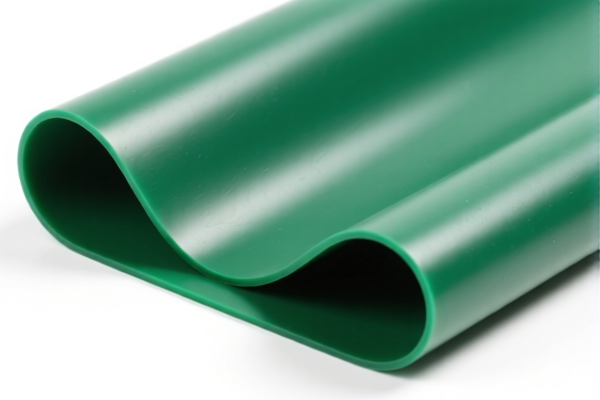
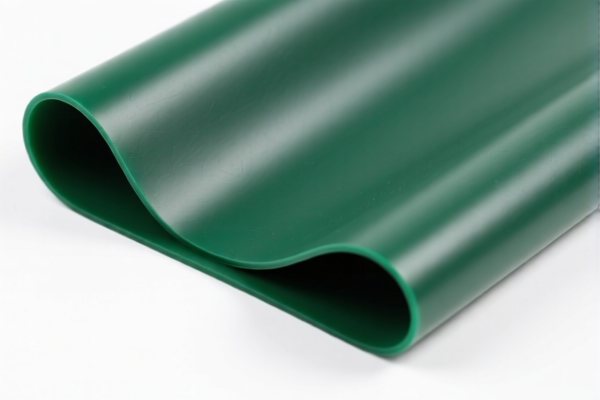
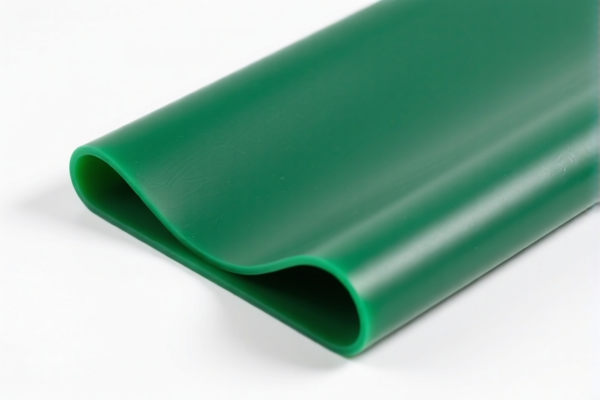

AI Analysis
🧪 Ethylene Plastic Pipe Sheet (Plastic Tubing/Sheets)
🌐 HS Code Reference & Customs Clearance Guide | 2026 Latest Tariff Analysis | Professional Compliance Strategy
📌 I. Product Definition & Classification: Do You Truly Understand "Ethylene Plastic Pipe"?
"Ethylene Plastic Pipe" typically refers to plastic pipes made from polyethylene (PE) or ethylene-based copolymers. In international trade, these products are primarily classified under Chapter 39: Plastics and Articles Thereof. The key distinction lies in the morphology (pipe/tube vs. sheet/film) and specific plastic resin type.
⚠️ Critical Classification Logic:
- If the product is a hollow structure (pipe/tube) made of plastics of heading 3901-3906 (including Polyethylene): It generally falls under Heading 3917.
- If the product is mistakenly identified as a sheet but is structurally a pipe, or if it is a rigid pipe not specifically listed elsewhere, it falls under 3917.29.
- Note on "Sheet" in Name: If the name "Sheet" implies a flat product, it might fall under 3926 (Other articles of plastic) if not a tube. However, "Pipe" strongly dictates 3917. The provided data indicates matches for both 3917 (Pipes) and 3926 (Other Plastic Articles) based on ambiguity.
📦 II. HS Code Classification Details (2026 Latest Tariff Authoritative Comparison)
Based on the provided data, here are the matching HS Codes with their logic and tax implications:
| HS Code | Product Description | Matching Logic | Total Tax Rate |
|---|---|---|---|
3917.29.00.90 |
Plastic Pipes & Tubes (Other) | Matches material (Plastic) and form (Pipe/Tube). Since length is not specified, it fits the "Other" category logic. | 38.1% |
3926.90.99.87 |
Other Plastic Articles (Rigid Pipes/Tubes) | Matches plastic material and pipe form. Fits the "Hard Tube" interpretation under 3926 due to "Other/Bottom-line" principle. No conflict. | 22.8% |
3917.21.00.00 |
Plastic Pipes & Tubes (Valves/Fittings) | Success Match: "Plastic" matches material; "Pipe" matches form. Note: 3917.21 is typically for "valves, couplings...". Data claims match, likely interpreting as plastic pipe accessories or specific PE pipe types. | 38.1% |
3926.90.99.89 |
Other Plastic Articles (General) | Success Match: Plastic material matches 3926909989. Although form is unclear, "Plastic Pipe" name infers plastic article. No conflict. | 22.8% |
3926.10.00.00 |
Plastic Tables/Kitchenware (Wait, Data says Polystyrene Sheet?) | Mismatch Alert in Data: The summary mentions "Polystyrene... Sheet". If the product is Ethylene (PE), this code is INCORRECT. If it is Polystyrene (PS) Sheet, it might fit. However, for Ethylene Pipe, this is likely a false positive in the source data due to shape confusion. | 15.3% |
🔍 Key Insight from Data:
- The data provides two main tax brackets: 38.1% (under 3917/3917.21) and 22.8% (under 3926.90).
- 3917.29.00.90 is the most standard classification for general plastic pipes (non-rigid or specific PE/PP pipes) in the US.
- 3926.90.99.87/89 are "Other" plastic articles, often used if the pipe doesn't fit specific 3917 subheadings (e.g., flexible tubing not classified elsewhere), but usually, pipes go to 3917.
💰 III. 2026 Latest Tariff Rate Breakdown (Including Surtaxes & Policy Add-ons)
✅ Applicable Country: United States (US)
✅ Origin: China (CN)
✅ Effective Date: From November 10, 2025 (and subsequent imports)
🎯 1. 3917.29.00.90 & 3917.21.00.00 —— Plastic Pipes (Higher Tax Bracket)
| Item | Content |
|---|---|
| Base Tariff Rate | 3.1% (Ad Valorem) |
| Section 301 Surtax | +25.0% (Due to USITC Footnote for China-origin plastics) |
| 122 Clause Surtax | +10.0% (Specific policy add-on for certain plastic products) |
| Total Tax Rate | 38.1% |
| Tax Calculation | CIF Value × 38.1% |
| De Minimis Eligibility | ❌ No (Denied) |
| Legal Basis Path | Base: 3917.29/3917.21 → 301 Clause: +25% → 122 Clause: +10% |
📌 Explanation:
- The 3.1% is the standard MFN (Most Favored Nation) duty for plastic pipes.
- The 25% is the standard Section 301 duty on Chinese plastic products.
- The 10% is a specific additional duty (122 Clause) applied to these items.
- Total: 38.1% is a significant cost factor.
🎯 2. 3926.90.99.87 & 3926.90.99.89 —— Other Plastic Articles (Lower Tax Bracket)
| Item | Content |
|---|---|
| Base Tariff Rate | 5.3% (Ad Valorem) |
| Section 301 Surtax | +7.5% (Reduced Section 301 rate for certain "Other" plastic items) |
| 122 Clause Surtax | +10.0% |
| Total Tax Rate | 22.8% |
| Tax Calculation | CIF Value × 22.8% |
| De Minimis Eligibility | ❌ No (Denied) |
| Legal Basis Path | Base: 3926.90 → 301 Clause: +7.5% → 122 Clause: +10% |
📌 Explanation:
- These codes fall under "Other articles of plastic," which may benefit from a lower Section 301 rate (7.5%) instead of 25%.
- Total: 22.8% is 15.3 percentage points lower than the 3917 classification.
- Strategic Note: If the product can be justified as an "Other Plastic Article" (e.g., specific industrial plastic tube not fitting 3917 definitions), this classification saves significant cost. However, customs may challenge this if it is clearly a "pipe."
🎯 3. 3926.10.00.00 —— Polystyrene Plastic Tables/Kitchenware (Lowest Tax Bracket)
| Item | Content |
|---|---|
| Base Tariff Rate | 5.3% |
| Section 301 Surtax | 0.0% (Exempt or specific exclusion) |
| 122 Clause Surtax | +10.0% |
| Total Tax Rate | 15.3% |
| Tax Calculation | CIF Value × 15.3% |
| De Minimis Eligibility | ❌ No (Denied) |
📌 Critical Warning:
- The data summary for this code mentions "Polystyrene" (PS) and "Sheet".
- If your product is Ethylene (PE) Pipe, this classification is highly risky and likely incorrect.
- Using this code for PE Pipe may lead to class errors, audits, or penalties. Only use if the product is actually Polystyrene Sheets/Tables.
🛠️ IV. Customs Clearance Practical Advice (Avoiding Pitfalls)
✅ 1. Documentation Checklist (Essential)
| Document | Required | Purpose |
|---|---|---|
| ✅ Product Specification Sheet | ✔️ | Must clearly state: Material (PE/PP/PS), Form (Pipe/Tube/Sheet), Dimensions, Length |
| ✅ Photos (Clear & Detailed) | ✔️ | Show cross-section (hollow vs. solid), ends, and any markings |
| ✅ Commercial Invoice | ✔️ | Describe as "Polyethylene Pipe" or "Plastic Tubing," not just "Sheet" if it's a pipe |
| ✅ Certificate of Origin (CO) | ✔️ | For potential MFN benefits (though US-China tariffs apply) |
| ✅ Material Test Report | ✔️ | Confirm polymer type (Polyethylene vs. Polystyrene) to avoid misclassification |
✅ 2. Classification Strategy (Key Mnemonics)
🔥 "Pipe goes to 3917, Sheet/Article to 3926, Check Material First!"
| Scenario | Correct HS Code | Tax Rate | Risk |
|---|---|---|---|
| Clear PE Pipe (Hollow) | 3917.29.00.90 |
38.1% | Low (Standard) |
| Ambiguous Plastic Tube | 3926.90.99.87 |
22.8% | Medium (Justification needed) |
| Polystyrene Sheet/Table | 3926.10.00.00 |
15.3% | High (If misidentified as PE Pipe) |
| Valves/Fittings (PE) | 3917.21.00.00 |
38.1% | Low (If specifically valves) |
📌 Advice:
- If the product is clearly a pipe, 3917.29.00.90 is the safest and most accurate classification, despite the higher tax.
- Attempting to classify a pipe as 3926 to save tax may trigger customs audits. Ensure you have technical justification for why it doesn't fit 3917.
✅ 3. Special Cases
| Situation | Recommendation |
|---|---|
| Mixed Shipment (Pipes + Sheets) | Declare separately. Pipes under 3917, Sheets under 3926. Do not bundle. |
| OEM Custom Pipes | Provide client drawings showing it's a pipe, not a sheet. |
| Small Diameter Tubing | Still 3917 if hollow and plastic. |
| Plastic Sheets (Flat) | Use 3926.90.99.87 or 3926.90.99.89. Do not use pipe codes. |
🌍 V. Global Market Customs Comparison (2026)
| Country/Region | Recommended HS Code | Tariff (China Origin) | Notes |
|---|---|---|---|
| 🇺🇸 USA | 3917.29.00.90 |
38.1% | High tariffs due to 301 + 122 clauses. |
| 🇨🇳 China | 3917.29.00.00 |
~6-13% | No additional surtaxes. |
| 🇪🇺 EU | 3917.29.90 |
0-6.5% | No Section 301 equivalent. |
| 🇦🇺 Australia | 3917.29.00 |
5% | Moderate tariff. |
📌 Conclusion:
- The USA is the most expensive market for plastic pipes due to Section 301 (25%) and 122 Clause (10%).
- Cost Optimization: If possible, consider sourcing from non-China origins to avoid these surtaxes, or explore HTS exclusion lists (if available).
📌 VI. Common Errors & Pitfalls (Lessons Learned)
❌ Error 1: Declaring a Pipe as a "Sheet" to use 3926.10.00.00 (15.3%)
👉 Consequence: Customs rejects declaration, classifies as 3917 (38.1%), plus penalties.
❌ Error 2: Mixing Polystyrene and Polyethylene in one HS Code
👉 Consequence: Misclassification. PE is 3917, PS Sheet might be 3926.10 or 3920. Must separate.
❌ Error 3: Ignoring the 122 Clause
👉 Consequence: Unexpected 10% surtax leads to cash flow issues. Always include in cost calculation.
✅ Correct Practice:
"Polyethylene Pipe, Outer Diameter 25mm, Length 10m, For Irrigation Use, Made in China"
🎯 VII. Conclusion: Accurate Classification Saves Money!
🎯 Key Takeaway:
🔹 "Pipes are 3917 (38.1%), Other Plastics are 3926 (22.8%). Don't force sheets into pipes!"
🔹 "US Tariffs are high: 3.1% + 25% + 10% = 38.1%. Plan accordingly!"
📌 Tip:
If your product is Polyethylene Pipe, 3917.29.00.90 is the most compliant code.
If you are unsure, request a Binding Tariff Information (BTI) or Advance Ruling from US Customs.
📣 Take Action:
📞 Contact a Customs Broker + Provide Product Photos + Verify Material Composition
🚀 Ensure Compliance, Avoid Penalties, Optimize Costs!
✨ Professional Clearance Starts with Accurate Classification!
💼 Every Percent of Tariff Matters!
Customer Reviews
About HS Code Classification
The Harmonized System (HS) is an internationally standardized nomenclature developed by the World Customs Organization (WCO) to classify traded products. Over 200 countries use the HS system as the basis for customs tariffs, trade statistics, and import/export regulations.
Each HS code follows a hierarchical structure:
- Chapter (2 digits) — Broad category of goods (e.g., Chapter 84: Machinery and Mechanical Appliances)
- Heading (4 digits) — More specific grouping within the chapter
- Subheading (6 digits) — Internationally standardized breakdown, used by all WCO member countries
- National subdivisions (8-10 digits) — Country-specific extensions for further classification, such as US HTSUS 10-digit codes
Correct HS code classification is essential for smooth customs clearance, accurate duty payment, and compliance with trade regulations. Misclassification can lead to customs delays, overpayment of duties, or penalties.
When importing from CN to US, the applicable tariff rates may include:
- Most-Favored-Nation (MFN) rate — The standard duty rate applied to WTO members
- General rate — Applied to countries without trade agreements
- Trade remedy duties — Additional tariffs such as Section 301 (anti-dumping), Section 232 (national security), or countervailing duties
The information provided on this page is for reference purposes only. For official classification, please consult with your local customs authority or a licensed customs broker.