Ethylene Polymer Blow Film Raw Material
CN → US| HS Code | Tariff Rate | Origin | Destination | Doc |
|---|---|---|---|---|
| 3901105020 | 41.5% | CN | US | Official Doc |
| 3920200055 | 39.2% | CN | US | Official Doc |
| 3919102055 | 40.8% | CN | US | Official Doc |
| 3919905060 | 40.8% | CN | US | Official Doc |
| 3920100000 | 39.2% | CN | US | Official Doc |
Product Images
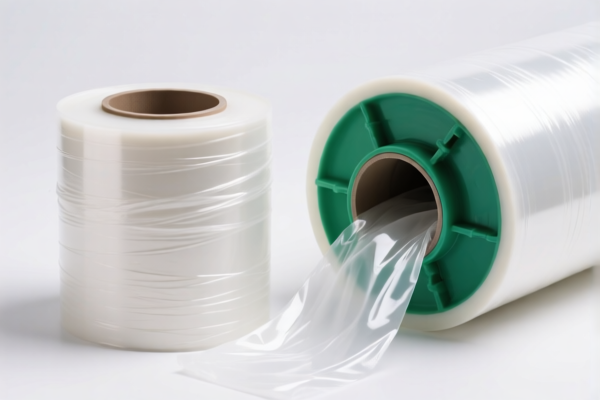
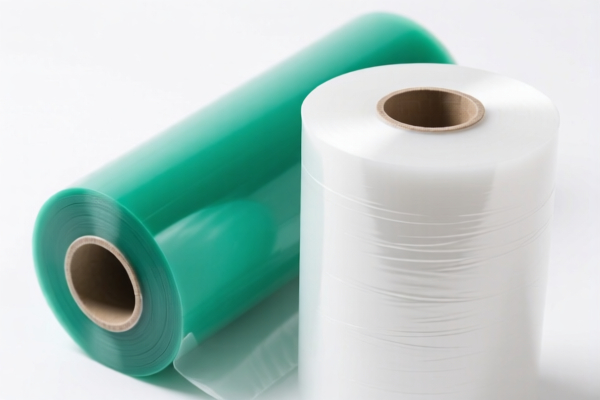
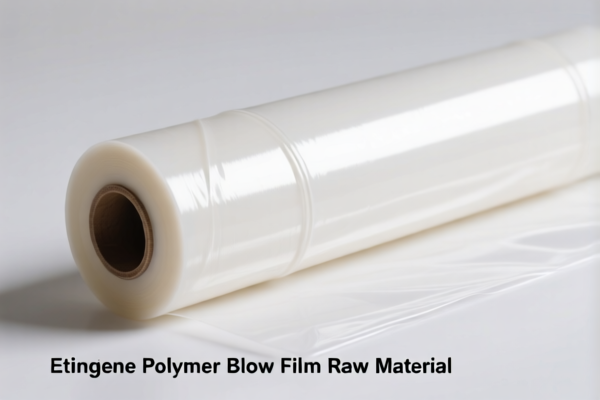
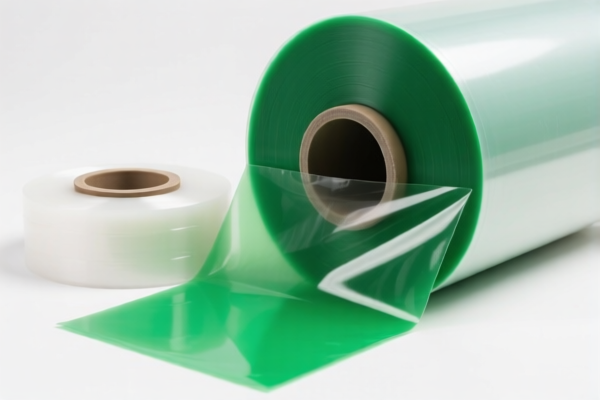
AI Analysis
🧪 Ethylene Polymer Blow Film Raw Material
🌐 HS Code Reference & Customs Clearance Guide | 2026 Latest Tariff Analysis | Professional Strategy for Polyethylene Films
📌 I. Product Definition & Classification: What Exactly is "PE Blow Film"?
Ethylene Polymer Blow Film refers to plastic films produced by the extrusion of polyethylene (PE) resins, inflated into a tube, and then flattened. It is a primary form of plastic product widely used in packaging, agriculture, and industrial applications. In international trade, classification depends on the physical state, shape, and chemical composition.
⚠️ Key Distinction Points:
- Primary Form vs. Processed Product: If the material is just raw resin pellets or granules, it falls under Chapter 3901. If it is already formed into a film, it falls under Chapter 3920 or 3919. - Shape & Application: Is it a simple sheet/film (Chapter 3920) or is it self-adhesive/wallpaper-like (Chapter 3919)? - Material Specificity: "Polyethylene" is the key chemical identifier here.
📦 II. HS Code Classification Details (2026 Latest Tariff Authority Comparison)
Based on the specific characteristics of Ethylene Polymer Blow Film, the following HS codes are applicable. Note that all listed codes below are subject to specific US import tariffs for Chinese origin goods.
| HS Code | Product Description | Key Characteristics | Tariff Profile |
|---|---|---|---|
3901.10.50.20 |
Polyethylene in Primary Forms; Films | Raw polyethylene resin/granules used for making films; Primary form characteristics. | 41.5% |
3920.20.00.55 |
Plastic Plates, Sheets, Film... Other than Polyethylene | Note: Summary indicates "Polyethylene Blow Film, belongs to polyolefin plastic film". | 39.2% |
3919.10.20.55 |
Self-Adhesive Plates, Sheets... in Rolls | Flat plastic film, possibly with adhesive backing or specific roll format. | 40.8% |
3919.90.50.60 |
Other Plates, Sheets, Film, Tape, Strip... | General flat plastic film products, not specifically other sub-items. | 40.8% |
3920.10.00.00 |
Other Plates, Sheets, Film, Tape, Strip... Of Polymers of Ethylene | Direct polymer of ethylene film; No other plastics added. | 39.2% |
🔍 Critical Insight:
-3901.10.50.20is for the raw material state (primary form), which is the actual "Raw Material" for blowing film. If you are importing pellets/resin, this is likely the correct code.
-3920.10.00.00and3920.20.00.55are for finished films. If the product is already blown into film, do not use 3901.
-3919codes apply if the film has adhesive properties or specific self-adhesive features. If it is plain packing film, these are likely incorrect.
💰 III. 2026 Latest Tariff Rate Breakdown (Including Surcharges & Policy Add-ons)
✅ Applicable Country: United States (US)
✅ Origin: China (CN)
✅ Effective Time: Includes subsequent imports subject to current trade measures
The tariff structure for these polyethylene products involves a cumulative effect of base duties and punitive tariffs.
🎯 1. 3901.10.50.20 — Polyethylene (Primary Form)
| Item | Content |
|---|---|
| Base Duty Rate | 6.5% |
| Additional Duty (Section 301) | +25.0% |
| Section 122 Duty | +10.0% |
| Total Effective Tax Rate | 41.5% |
| Tax Calculation | CIF Value × 41.5% |
| De Minimis Exemption | ❌ Not Applicable (High-value industrial chemical/plastic) |
| Legal Basis Path | Base: 3901.10 → Section 301: 25% → Sec 122: 10% |
📌 Explanation:
- The 6.5% is the standard Most Favored Nation (MFN) base tariff for polyethylene.
- The 25% is the Section 301 tariff, heavily impacting Chinese chemical products.
- The 10% is identified as "Section 122 Tariff" in the data source, adding further cost.
- Total 41.5% is a significant barrier. Pre-classification is essential to ensure you are not overpaying if an exemption applies.
🎯 2. 3920.20.00.55 — Polyolefin Plastic Film
| Item | Content |
|---|---|
| Base Duty Rate | 4.2% |
| Additional Duty (Section 301) | +25.0% |
| Section 122 Duty | +10.0% |
| Total Effective Tax Rate | 39.2% |
| Tax Calculation | CIF Value × 39.2% |
| Legal Basis Path | Base: 3920.20 → Section 301: 25% → Sec 122: 10% |
📌 Note:
- Although the base duty is lower (4.2% vs 6.5%), the surcharges remain the same.
- This code applies to "Polyolefin" films. Ensure your film is primarily polyethylene/polypropylene blend or pure PE as defined by this subheading.
🎯 3. 3919.10.20.55 & 3919.90.50.60 — Flat Plastic Films (Self-Adhesive/Other)
| Item | Content |
|---|---|
| Base Duty Rate | 5.8% |
| Additional Duty (Section 301) | +25.0% |
| Section 122 Duty | +10.0% |
| Total Effective Tax Rate | 40.8% |
| Legal Basis Path | Base: 3919.xx → Section 301: 25% → Sec 122: 10% |
📌 Note:
- These codes are for flat-shaped films, often implying adhesive or specific roll formats.
- If your "Blow Film" is just plain stretch wrap or packaging film without adhesive, 3920 codes are more accurate. Misclassifying a non-adhesive film as 3919 can lead to customs penalties.
🎯 4. 3920.10.00.00 — Polymers of Ethylene Film
| Item | Content |
|---|---|
| Base Duty Rate | 4.2% |
| Additional Duty (Section 301) | +25.0% |
| Section 122 Duty | +10.0% |
| Total Effective Tax Rate | 39.2% |
| Legal Basis Path | Base: 3920.10 → Section 301: 25% → Sec 122: 10% |
📌 Note:
- This is the most direct code for Polyethylene film (Ethylene polymer).
- If your product is 100% Polyethylene and not a blend, this is likely the most technically correct code among the film options.
🛠️ IV. Customs Clearance Practical Advice (Battle-Tested Pitfall Guide)
✅ 1. Required Documentation Checklist (Non-Negotiable)
| Document | Mandatory? | Explanation |
|---|---|---|
| ✅ Product Specification Sheet | ✔️ | Must specify: Resin Type (LDPE/HDPE/LLDPE), Density, Melt Flow Index, Additives. |
| ✅ Certificate of Origin (CO) | ✔️ | To prove origin. If not China, may avoid Section 301/122 duties. |
| ✅ Commercial Invoice | ✔️ | Must clearly state "Polyethylene Blow Film" or "PE Resin" and HS Code. |
| ✅ Packing List | ✔️ | Detail net/gross weight, number of pallets/boxes. |
| ✅ Material Safety Data Sheet (MSDS) | ✔️ | Required for chemical/plastic products to assess hazmat status (usually non-hazardous for PE). |
| ✅ Proof of Non-Adhesive (if claiming 3920) | ✔️ | To distinguish from 3919. A sample or technical sheet stating "No Adhesive" is helpful. |
✅ 2. Declaration Strategy (Key Mnemonics)
🔥 "Resin is Primary, Film is Processed. Adhesive is 3919, Plain is 3920."
| Scenario | Correct Declaration | Wrong Practice |
|---|---|---|
| Importing Pellets/Granules | 3901.10.50.20 |
Declaring as "Film" → Incorrect Form |
| Importing Plain PE Film | 3920.10.00.00 |
Declaring as "Plastic Sheet" generically → Delays |
| Importing Self-Adhesive Film | 3919.10.20.55 |
Declaring as plain film → Undervaluation Risk |
| Blown Film vs. Cast Film | Both fall under 3920 (usually) | Don't separate unless specs differ significantly |
✅ 3. Special Circumstances Handling
| Situation | Handling Advice |
|---|---|
| Transshipment via Vietnam/Malaysia | High Risk. US CBP actively investigates "circumvention". Ensure substantial transformation occurred. |
| Mixed Shipments (Film + Accessories) | Declare films separately. Do not bundle with straps or labels unless part of a kit. |
| Sample vs. Commercial | Samples may still be subject to duties if declared as commercial goods. Use proper "Sample" value. |
| Recycled PE Film | May have different HS codes or restrictions. Verify if it falls under "Waste" categories. |
🌍 V. Global Market Clearance Comparison (2026 Latest)
| Country/Region | Recommended HS Code | Estimated Duty (China Origin) | Certification Requirements | Notes |
|---|---|---|---|---|
| 🇺🇸 USA | 3920.10.00.00 / 3901.10.50.20 |
39.2% - 41.5% | FDA (if food contact), TSCA | Highest Duty Load. Section 301 + 122 apply. |
| 🇨🇳 China | 3920.10.00.00 |
~5-6% | CCC (if applicable) | No Section 301. Lower entry barrier. |
| 🇪🇺 EU | 3920.10.00 |
6.5% | REACH Registration | No Section 301. REACH compliance is critical. |
| 🇬🇧 UK | 3920.10.00 |
6.5% | UKCA Marking | Post-Brexit rules apply. |
| 🇦🇺 Australia | 3920.10.00 |
5% | AICIS Registration | No Section 301. |
📌 Conclusion:
- The US market is the most challenging due to the cumulative 40%+ tariff.
- EU/Asia markets are much more favorable for duty purposes, but Regulatory Compliance (REACH/TSCA) is stricter.
- For US imports, supply chain diversification or tariff engineering (if applicable) is highly recommended.
📌 VI. Common Errors & Pitfall Guide (Lessons from the Field)
❌ Error 1: Confusing "Polyethylene Resin" with "Polyethylene Film"
👉 Consequence: Wrong HS Code (3901 vs 3920). Results in misclassification penalties and delayed cargo.
👉 Fix: Check physical form. Pellets = 3901. Sheets/Rolls = 3920.
❌ Error 2: Ignoring the "Adhesive" characteristic
👉 Consequence: Declaring adhesive film as plain film (3920) to save duties.
👉 Fix: If there is any backing adhesive, use 3919. CBP can test for adhesion.
❌ Error 3: Underestimating Section 122 Impact
👉 Consequence: Budgeting only for Base + 301.
👉 Fix: The data clearly shows a 10% Section 122 add-on. Include this in your Landed Cost model.
❌ Error 4: Generic Description "Plastic Film"
👉 Consequence: Customs examiners will detain the shipment for clarification.
👉 Fix: Use precise description: "Ethylene Polymer Blow Film, LDPE, 50 Micron, Clear, Unprinted".
✅ Correct Practice:
"Polyethylene Film, Blow Moulded, LDPE, 0.05mm Thickness, For Packaging Use, HS 3920.10.00.00"
🎯 VII. Conclusion: Precision in Classification Saves Millions!
🎯 Remember the Mnemonic:
🔹 "Resin is Primary (3901), Film is Processed (3920). Adhesive is 3919. US Tariffs are High (40%+)."
🔹 "Check the Additives! Check the Form! Don't Guess the Code!"
📌 Pro Tip:
If your ethylene polymer film is exclusively for food contact, ensure you have FDA compliance documentation. While this doesn't change the HS code, it prevents holds at the border.
For US imports, consider Apply for Advance Ruling from CBP to lock in the classification and avoid post-import audits.
📣 Immediate Action:
📞 Consult your Customs Broker with the Product Specification Sheet.
📊 Calculate Landed Cost including 41.5% for raw materials and 39.2% for films.
🚀 Optimize your supply chain to mitigate US tariff risks!
✨ Professional Clearance, Start with Accurate Classification!
💼 Your Margins Depend on Every Percent of Duty!
Customer Reviews
About HS Code Classification
The Harmonized System (HS) is an internationally standardized nomenclature developed by the World Customs Organization (WCO) to classify traded products. Over 200 countries use the HS system as the basis for customs tariffs, trade statistics, and import/export regulations.
Each HS code follows a hierarchical structure:
- Chapter (2 digits) — Broad category of goods (e.g., Chapter 84: Machinery and Mechanical Appliances)
- Heading (4 digits) — More specific grouping within the chapter
- Subheading (6 digits) — Internationally standardized breakdown, used by all WCO member countries
- National subdivisions (8-10 digits) — Country-specific extensions for further classification, such as US HTSUS 10-digit codes
Correct HS code classification is essential for smooth customs clearance, accurate duty payment, and compliance with trade regulations. Misclassification can lead to customs delays, overpayment of duties, or penalties.
When importing from CN to US, the applicable tariff rates may include:
- Most-Favored-Nation (MFN) rate — The standard duty rate applied to WTO members
- General rate — Applied to countries without trade agreements
- Trade remedy duties — Additional tariffs such as Section 301 (anti-dumping), Section 232 (national security), or countervailing duties
The information provided on this page is for reference purposes only. For official classification, please consult with your local customs authority or a licensed customs broker.