Ethylene Polymer Granules Cable Grade
CN → US| HS Code | Tariff Rate | Origin | Destination | Doc |
|---|---|---|---|---|
| 3901105010 | 41.5% | CN | US | Official Doc |
| 3901101000 | 41.5% | CN | US | Official Doc |
Product Images
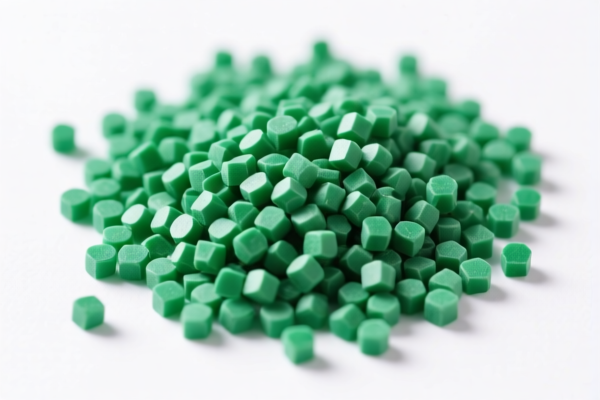
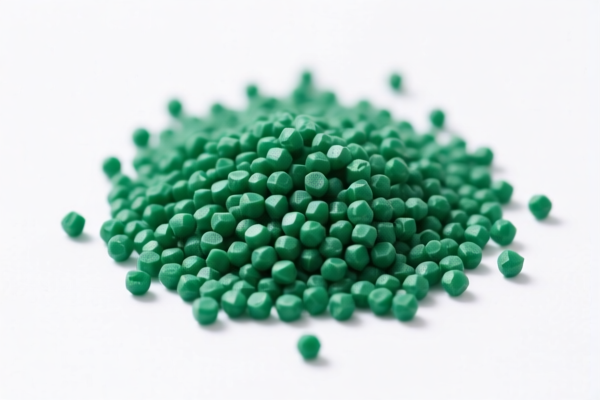
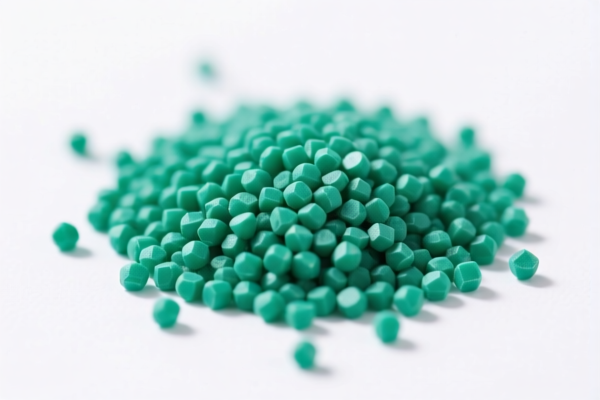
AI Analysis
🧪 Ethylene Polymer Granules – Cable Grade (Linear Low Density Polyethylene)
🌐 HS Code Reference & Customs Clearance Guide | 2026 Latest Tariff Analysis | Professional Clearance Strategy
📌 I. Product Definition & Classification: Do You Really Understand "Cable Grade Polyethylene"?
Polyethylene is the most widely used plastic in the world, and in primary forms, it is classified based on specific gravity, viscosity, and structural type. "Cable Grade" polyethylene granules typically refer to Linear Low Density Polyethylene (LLDPE) or specialized Low Density Polyethylene (LDPE) used for insulation and sheathing in electrical cables due to their excellent electrical properties, flexibility, and environmental stress crack resistance.
In international trade, these granules fall under Chapter 39: Plastics and Articles Thereof, specifically Heading 3901: Polymers of Ethylene, in Primary Forms.
⚠️ Key Distinction:
- If the polyethylene has a specific gravity less than 0.94 and is Linear Low Density Polyethylene (LLDPE) → It is classified under 3901.10.50.10.
- If the polyethylene has a specific gravity less than 0.94 but is defined by relative viscosity ≥ 1.44 (regardless of linear/branched structure, unless specified otherwise) → It is classified under 3901.10.10.00.📌 Critical Note:
The term "Cable Grade" is not a customs classification term. It describes the application. Customs classification depends strictly on physical properties (specific gravity, viscosity, polymer structure). Always declare based on technical specifications, not end-use.
📦 II. HS Code Classification Details (2026 Latest Tariff Authority对照)
Based on the provided data, here are the two possible HS codes for ethylene polymers with specific gravity < 0.94:
| HS Code | Product Description | Key Technical Parameters | Typical Application |
|---|---|---|---|
3901.10.50.10 |
Polymers of Ethylene, in Primary Forms: Polyethylene having a specific gravity of less than 0.94: Other Linear low density polyethylene | SG < 0.94, Linear structure, LLDPE | Cable insulation, film, packaging, wire & cable |
3901.10.10.00 |
Polymers of Ethylene, in Primary Forms: Polyethylene having a specific gravity of less than 0.94: Having a relative viscosity of 1.44 or more | SG < 0.94, Relative Viscosity ≥ 1.44 | High-molecular-weight PE, specialized cable compounds, masterbatches |
🔍 Important Reminder:
- If your cable-grade polyethylene is LLDPE (linear structure), it likely falls under 3901.10.50.10.
- If your product is defined by high viscosity (≥1.44) and does not explicitly state it is LLDPE (or is HDPE/LDPE with high viscosity), it may fall under 3901.10.10.00.
- Do not assume "Cable Grade = One Code." You must verify the specific gravity and viscosity/structure from the product specification sheet.
💰 III. 2026 Latest Tariff Rate Details (Including Surtaxes)
✅ Applicable Country: United States (US)
✅ Origin: China (CN)
✅ Effective Date: Current USITC/USMCA tariffs apply (2026 context)
🎯 1. 3901.10.50.10 – Linear Low Density Polyethylene (LLDPE)
| Item | Content |
|---|---|
| Base Tariff Rate | 6.5% (ad valorem) |
| Additional Surtax (Section 301) | +25.0% (China-origin goods) |
| Total Effective Tariff | 31.5% |
| Tax Calculation | CIF Value × 31.5% |
| De Minimis Exemption | ❌ Not Applicable (High value/industrial goods) |
| Legal Basis | HTSUS 3901.10.50.10 + Section 301 Footnote |
📌 Explanation:
- The 6.5% base tariff is the standard MFN (Most Favored Nation) rate for LLDPE.
- The 25% surtax is imposed under Section 301 of the Trade Act of 1974 on Chinese-origin goods.
- Total 31.5% is a significant cost burden. Importers must factor this into landed cost calculations.
🎯 2. 3901.10.10.00 – Polyethylene with Relative Viscosity ≥ 1.44
| Item | Content |
|---|---|
| Base Tariff Rate | 0.0% (ad valorem) |
| Additional Surtax (Section 301) | 0.0% |
| Total Effective Tariff | 0.0% |
| Tax Calculation | CIF Value × 0.0% = $0 |
| De Minimis Exemption | N/A (Tariff is already zero) |
| Legal Basis | HTSUS 3901.10.10.00 |
📌 Explanation:
- This subheading enjoys a 0% base tariff.
- Notably, it is also exempt from the 25% Section 301 surtax in the provided data (indicating a preferential or excluded category for certain high-viscosity ethylene polymers).
- Total 0% makes this a highly advantageous classification for cost-saving strategies, if technically applicable.
🛠️ IV. Customs Clearance Practical Advice (Avoid Pitfalls)
✅ 1. Required Documentation Checklist
| Document | Mandatory? | Description |
|---|---|---|
| ✅ Product Specification Sheet | ✔️ | Must include: Specific Gravity, Melt Flow Index (MFI), Relative Viscosity, Polymer Structure (Linear/Branched), Grade Name, Manufacturer |
| ✅ Commercial Invoice | ✔️ | Clearly state "Ethylene Polymer, Cable Grade, LLDPE" or "Polyethylene, High Viscosity" |
| ✅ Packing List | ✔️ | Weight, dimensions, number of bags/pallets |
| ✅ Certificate of Origin (CO) | ✔️ | Confirm Chinese origin to apply correct tariffs |
| ✅ Test Report | ✔️ | Third-party lab report verifying SG and Viscosity |
| ✅ SDS (Safety Data Sheet) | ✔️ | For hazardous material compliance (if applicable) |
✅ 2. Declaration Strategy (Key Tips)
🔥 "Declare by Spec, Not by Use! Viscosity Defines Zero, Linear Defines 31.5%!"
| Scenario | Correct HS Code | Tariff | Risk if Misdeclared |
|---|---|---|---|
| Product is LLDPE (Linear), SG < 0.94 | 3901.10.50.10 |
31.5% | Low risk, but high cost |
| Product is High Viscosity (≥1.44), SG < 0.94, not specified as LLDPE | 3901.10.10.00 |
0.0% | High risk if incorrectly classified as LLDPE → Back taxes + penalties |
| Product is HDPE (SG ≥ 0.94) | Different HS Code | Varies | Must not declare as SG < 0.94 |
| Product is LDPE (Branched, SG < 0.94, Viscosity < 1.44) | May fall under 3901.10.40.00 |
Check base rate | Misclassification can lead to 25% surtax |
📌 Key Advice:
- If you can prove your product is NOT LLDPE but has high viscosity (≥1.44), you may qualify for 0% duty.
- However, if your product is LLDPE, you must use 3901.10.50.10 and pay 31.5%.
- Do not arbitrarily choose the 0% code unless your technical data fully supports it. Customs may request lab tests.
✅ 3. Special Cases
| Situation | Handling Advice |
|---|---|
| OEM Custom Compound | Provide formulation data. If it contains additives, it may still be classified under 3901 if polymer is primary. |
| Mixed Shipment (LLDPE + HDPE) | Must separate and declare correctly. Mixing leads to audit risk. |
| Cable Grade vs. Film Grade | Same HS code if specs match. "Cable Grade" is just a marketing term. |
| Pre-approved Ruling | Apply for an Advance Ruling from CBP to lock in the HS code and tariff rate. |
🌍 V. Global Market Comparison (2026)
| Country/Region | Recommended HS Code | Tariff (China Origin) | Certification | Notes |
|---|---|---|---|---|
| 🇺🇸 USA | 3901.10.50.10 (LLDPE) |
31.5% | None specific | High tariff due to Section 301 |
| 🇺🇸 USA | 3901.10.10.00 (High Visc) |
0.0% | None specific | Best for cost savings if applicable |
| 🇪🇺 EU | 3901.10.50 |
~6.5% | REACH, RoHS | No Section 301 equivalent |
| 🇨🇳 China | 3901.10.50 |
0%–6.5% | CCC (if finished) | Import into China has different rules |
| 🇬🇧 UK | 3901.10.50 |
~6.5% | UKCA | Post-Brexit tariffs |
📌 Conclusion:
- USA is the highest-cost market for LLDPE due to the 25% surtax.
- Strategic Opportunity: If your cable-grade polyethylene can be technically defined as having relative viscosity ≥ 1.44 and is not LLDPE, you can achieve 0% duty in the US. This requires strict technical justification.
📌 VI. Common Mistakes & Pitfalls (Lessons Learned)
❌ Mistake 1: Declaring "Cable Grade Polyethylene" without specifying SG or Viscosity
👉 Consequence: CBP may classify it as the highest-duty subheading or hold shipment for clarification.
❌ Mistake 2: Using 0% code for LLDPE
👉 Consequence: Severe penalties, back taxes, and possible fraud charges. Only use 0% if the product truly meets the "Relative Viscosity ≥ 1.44" criteria and is not LLDPE.
❌ Mistake 3: Ignoring Specific Gravity
👉 Consequence: If SG ≥ 0.94, the product is HDPE, which falls under different headings with different tariffs. Misdeclaration leads to misclassification.
✅ Correct Practice:
"Polyethylene, Linear Low Density, SG 0.92, MFI 2.0, Cable Insulation Grade, Manufactured in China"
🎯 VII. Conclusion: Precision Classification Saves Money!
🎯 Remember the Golden Rule:
🔹 "LLDPE = 31.5% | High Viscosity (≥1.44) = 0% | Specify SG & Structure!"
🔹 "Don't guess. Test. Declare by spec. Save 31.5% if eligible."
📌 Pro Tip:
If your product qualifies for 0% duty (HS 3901.10.10.00), ensure your lab tests and spec sheets explicitly state:
- Relative Viscosity: ≥ 1.44
- Specific Gravity: < 0.94
- Polymer Type: Not explicitly LLDPE (or confirm it doesn't fit LLDPE definition)
Apply for a CBP Advance Ruling to secure this 0% rate legally.
📣 Take Action Now:
📞 Consult a licensed customs broker
📄 Provide technical data sheets
🚀 Optimize your supply chain with correct HS coding!
✨ Professional customs clearance starts with accurate classification!
💼 Every percentage point of duty matters – let us help you save!
Customer Reviews
About HS Code Classification
The Harmonized System (HS) is an internationally standardized nomenclature developed by the World Customs Organization (WCO) to classify traded products. Over 200 countries use the HS system as the basis for customs tariffs, trade statistics, and import/export regulations.
Each HS code follows a hierarchical structure:
- Chapter (2 digits) — Broad category of goods (e.g., Chapter 84: Machinery and Mechanical Appliances)
- Heading (4 digits) — More specific grouping within the chapter
- Subheading (6 digits) — Internationally standardized breakdown, used by all WCO member countries
- National subdivisions (8-10 digits) — Country-specific extensions for further classification, such as US HTSUS 10-digit codes
Correct HS code classification is essential for smooth customs clearance, accurate duty payment, and compliance with trade regulations. Misclassification can lead to customs delays, overpayment of duties, or penalties.
When importing from CN to US, the applicable tariff rates may include:
- Most-Favored-Nation (MFN) rate — The standard duty rate applied to WTO members
- General rate — Applied to countries without trade agreements
- Trade remedy duties — Additional tariffs such as Section 301 (anti-dumping), Section 232 (national security), or countervailing duties
The information provided on this page is for reference purposes only. For official classification, please consult with your local customs authority or a licensed customs broker.