Ethylene Polymer Granules Stretch Film Grade
CN → US| HS Code | Tariff Rate | Origin | Destination | Doc |
|---|---|---|---|---|
| 3901105010 | 41.5% | CN | US | Official Doc |
| 3901105020 | 41.5% | CN | US | Official Doc |
| 3902900050 | 41.5% | CN | US | Official Doc |
| 3902100000 | 41.5% | CN | US | Official Doc |
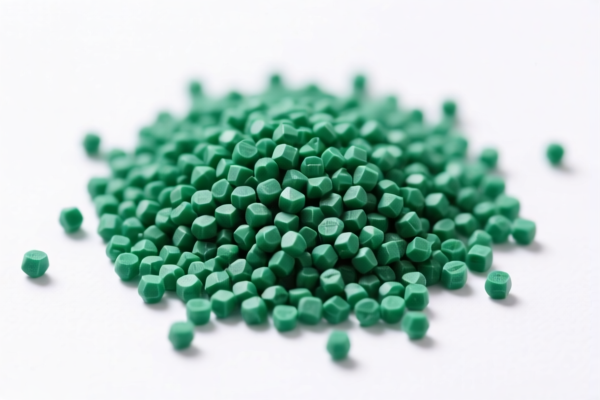
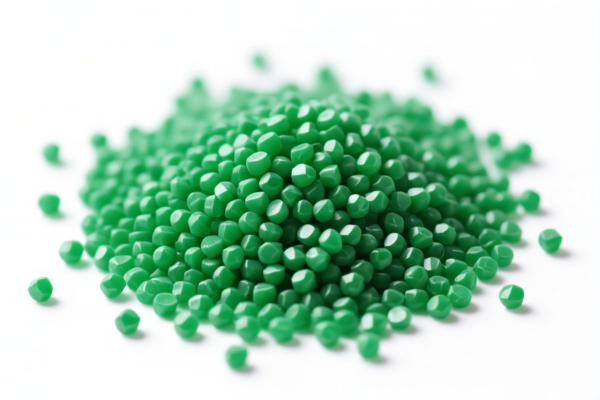
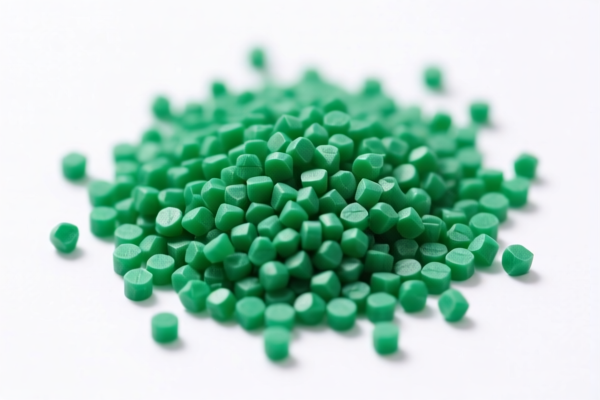
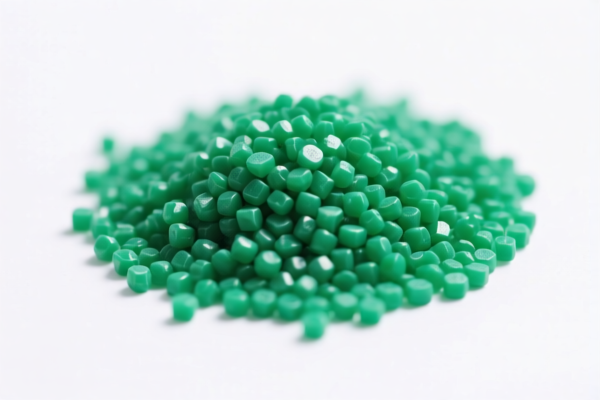
Product Images
AI Analysis
🧪 Ethylene Polymer Granules – Stretch Film Grade (LLDPE)
🌐 HS Code Reference & Customs Clearance Guide | 2026 Latest Tariff Analysis | Professional Clearance Strategy
📌 I. Product Definition & Classification: What Exactly Are "Stretch Film Grade" Granules?
Ethylene polymer granules in "stretch film grade" are typically Linear Low-Density Polyethylene (LLDPE) or Low-Density Polyethylene (LDPE), specifically engineered for extrusion into thin, elastic films used for packaging, pallet wrapping, and industrial covering.
These raw material pellets are classified under Chapter 39: Plastics and Articles Thereof, specifically under Heading 3901: Polymers of Ethylene.
⚠️ Key Distinction:
- If the specific gravity is < 0.94 and it is Linear Low Density Polyethylene (LLDPE) →归入 3901.10.50.10
- If the specific gravity is < 0.94 and it is LDPE (excluding LLDPE) → 归入 3901.10.50.20
- If the specific gravity is ≥ 0.94 or it is a different ethylene polymer type → 需进一步细分,但常见拉伸膜原料多为 < 0.94。
📦 II. HS Code Classification Details (2026 Latest Tariff Reference)
| HS Code | Product Description | Application Scenario | Specific Gravity | Tax Rate (China Origin to US) |
|---|---|---|---|---|
3901.10.50.10 |
Linear Low Density Polyethylene (LLDPE), < 0.94 sg | Stretch film, agricultural film, packaging film | < 0.94 | 0.0% |
3901.10.50.20 |
Low Density Polyethylene (LDPE), excluding LLDPE, < 0.94 sg | Blow-molded films, general packaging, coatings | < 0.94 | 0.0% |
🔍 Important Note:
- Both codes apply to primary forms (granules, powders, etc.).
- The critical factor is specific gravity and polymer type (LLDPE vs. LDPE).
- Stretch film grade is predominantly LLDPE due to its superior tensile strength and puncture resistance, so 3901.10.50.10 is the most common classification.
- No additional Section 301 tariffs apply to these items (0% total tax).
💰 III. 2026 Latest Tariff Rate Details (Including Additional Taxes)
✅ Applicable Country: United States (US)
✅ Country of Origin: China (CN)
✅ Effective Date: 2025–2026 (current policy)
🎯 1. 3901.10.50.10 —— Linear Low Density Polyethylene (LLDPE), < 0.94 sg
| Item | Content |
|---|---|
| Base Tariff Rate | 0% |
| Section 301 Additional Tariff | 0% |
| IEEPA Additional Tariff | 0% |
| Total Tax Rate | 0.0% |
| Tax Calculation | CIF Value × 0% = $0 |
| De Minimis Exemption Eligible | ❌ No (Deny De Minimis for Chinese origin goods under current US policy) |
| Legal Basis Path | USITC:3901.10.50.10 |
📌 Explanation:
- These polyethylene granules are exempt from all additional tariffs due to their inclusion in the 0% base duty category and exclusion from Section 301 lists.
- This is a significant cost advantage compared to other plastic articles or finished films.
🎯 2. 3901.10.50.20 —— Low Density Polyethylene (LDPE), < 0.94 sg
| Item | Content |
|---|---|
| Base Tariff Rate | 0% |
| Section 301 Additional Tariff | 0% |
| IEEPA Additional Tariff | 0% |
| Total Tax Rate | 0.0% |
| Tax Calculation | CIF Value × 0% = $0 |
| De Minimis Exemption Eligible | ❌ No |
| Legal Basis Path | USITC:3901.10.50.20 |
📌 Note:
- Same tax treatment as LLDPE.
- LDPE is less common for high-performance stretch films but still widely used in general packaging.
🛠️ IV. Customs Clearance Practical Advice (Best Practices & Pitfall Avoidance)
✅ 1. Required Documentation Checklist (Mandatory)
| Document | Must Provide | Notes |
|---|---|---|
| ✅ Product Specification Sheet | ✔️ | Include polymer type (LLDPE/LDPE), specific gravity, melt flow index (MFI), density |
| ✅ Certificate of Analysis (COA) | ✔️ | Confirm chemical composition and physical properties |
| ✅ Commercial Invoice | ✔️ | Clearly state "Ethylene Polymer Granules, Stretch Film Grade" |
| ✅ Packing List | ✔️ | Detail net/gross weight, number of bags, palletization |
| ✅ Bill of Lading / Airway Bill | ✔️ | Standard shipping documents |
| ✅ Origin Certificate | ✔️ | If from non-China origin, may benefit from FTAs (not applicable for CN) |
✅ 2. Declaration Tips (Key Mnemonics)
🔥 “Granules Not Films, SG Matters, LLDPE vs LDPE, 0% Duty Rule!”
| Scenario | Correct Declaration | Wrong Practice |
|---|---|---|
| Granules for stretch film | 3901.10.50.10 (LLDPE) or 3901.10.50.20 (LDPE) |
Declare as "films" → Wrong chapter |
| Blown film rolls | Chapter 39, Heading 3920/3921 | Declare as raw material → 0% |
| Polypropylene granules | 3902.10.00.00 |
Declare as ethylene → 31.5% |
| High-density polyethylene (HDPE) | 3901.10.10.00 |
Declare as LLDPE → Wrong SG |
✅ 3. Special Cases Handling
| Scenario | Handling Advice |
|---|---|
| Mixed Granules | If LLDPE and LDPE are mixed, consult with a customs broker; typically, the majority component determines classification |
| Additives Present | If filled with calcium carbonate or other fillers, classification may change; pure ethylene polymers are required for 0% duty |
| OEM/Private Label | No impact on HS code; ensure product specs match invoice |
| Recycled Pellets | May fall under different headings (e.g., 3902.90.00.50 for other olefin polymers); verify with CBP |
🌍 V. Global Market Comparison (2026 Latest)
| Country/Region | Recommended HS Code | Tariff (China Origin) | Certification Requirements | Notes |
|---|---|---|---|---|
| 🇺🇸 USA | 3901.10.50.10 / 3901.10.50.20 |
0.0% | No special certs required | No Section 301 tariffs |
| 🇨🇳 China | 3901.10.50.10 / 3901.10.50.20 |
0% (import) | N/A | Domestic use |
| 🇪🇺 EU | 3901.10.50 |
0% | REACH compliance | Free trade within EU |
| 🇬🇧 UK | 3901.10.50 |
0% | UK REACH | Post-Brexit alignment |
| 🇯🇵 Japan | 3901.10.50 |
0% | JIS standards | No additional duties |
📌 Conclusion:
- USA, EU, Japan, UK all apply 0% base tariff for these polyethylene granules.
- China origin goods face 0% additional tariffs in the US, making this a highly competitive import category.
- No de minimis exemption applies, so even small shipments are subject to full customs clearance procedures.
📌 VI. Common Errors & Pitfall Guide (Lessons Learned)
❌ Error 1: Declaring "stretch film" instead of "granules"
👉 Consequence: Incorrect HS code (e.g., 3920.10.00.00) → Potential 31.5% tariff → Back taxes + penalties!
❌ Error 2: Misidentifying LLDPE as HDPE or PP
👉 Consequence: Wrong HS code (e.g., 3902.90.00.50) → 31.5% total tariff instead of 0%
❌ Error 3: Omitting specific gravity in documentation
👉 Consequence: Customs may reclassify → Delay in clearance or incorrect duty assessment
❌ Error 4: Using generic terms like "plastic pellets"
👉 Consequence: CBP may request additional documentation → Clearance delays
✅ Correct Practice:
“Linear Low Density Polyethylene (LLDPE) Granules, Stretch Film Grade, Specific Gravity 0.92, MFI 2.0 g/10min, Pure Ethylene Polymer, No Fillers, Model XYZ, COA Attached”
🎯 VII. Conclusion: Precise Classification, Cost Savings, Smooth Clearance!
🎯 Remember the Mantra:
🔹 “Granules, Not Films; SG < 0.94; LLDPE/LDPE; 0% Duty!”
🔹 “Wrong Code = 31.5%; Right Code = 0%. Choose Wisely!”
📌 Pro Tip:
- Always verify specific gravity and polymer type with your supplier’s COA.
- Use CBP Pre-Rulings if unsure about classification.
- Maintain consistent documentation across invoices, packing lists, and specs.
📣 Immediate Action:
📞 Engage a licensed customs broker + Provide Product Specs + Apply for HS Code Pre-Ruling
🚀 Ensure smooth customs clearance, zero tariff burden, and maximum profit margins!
✨ Professional Clearance Starts with Accurate Classification!
💼 Every Dollar Saved Counts in International Trade!
Customer Reviews
About HS Code Classification
The Harmonized System (HS) is an internationally standardized nomenclature developed by the World Customs Organization (WCO) to classify traded products. Over 200 countries use the HS system as the basis for customs tariffs, trade statistics, and import/export regulations.
Each HS code follows a hierarchical structure:
- Chapter (2 digits) — Broad category of goods (e.g., Chapter 84: Machinery and Mechanical Appliances)
- Heading (4 digits) — More specific grouping within the chapter
- Subheading (6 digits) — Internationally standardized breakdown, used by all WCO member countries
- National subdivisions (8-10 digits) — Country-specific extensions for further classification, such as US HTSUS 10-digit codes
Correct HS code classification is essential for smooth customs clearance, accurate duty payment, and compliance with trade regulations. Misclassification can lead to customs delays, overpayment of duties, or penalties.
When importing from CN to US, the applicable tariff rates may include:
- Most-Favored-Nation (MFN) rate — The standard duty rate applied to WTO members
- General rate — Applied to countries without trade agreements
- Trade remedy duties — Additional tariffs such as Section 301 (anti-dumping), Section 232 (national security), or countervailing duties
The information provided on this page is for reference purposes only. For official classification, please consult with your local customs authority or a licensed customs broker.