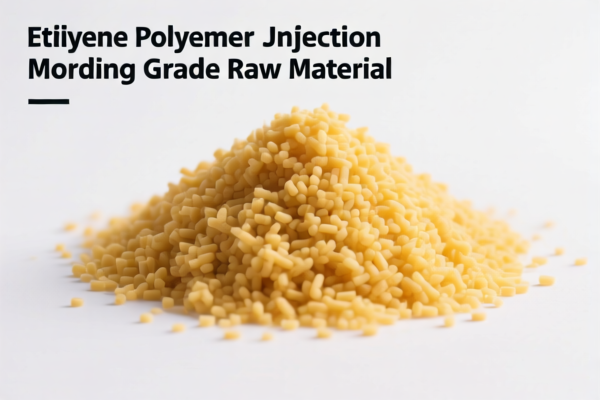
Ethylene Polymer Injection Molding Grade Raw Material
CN → US| HS Code | Tariff Rate | Origin | Destination | Doc |
|---|---|---|---|---|
| 3901101000 | 41.5% | CN | US | Official Doc |
| 3907690050 | 41.5% | CN | US | Official Doc |
| 3907290000 | 41.5% | CN | US | Official Doc |
| 3901105010 | 41.5% | CN | US | Official Doc |
| 3902900050 | 41.5% | CN | US | Official Doc |
Product Images


AI Analysis
🧪 Ethylene Polymer Injection Molding Grade Raw Material
🌐 HS Code Reference & Customs Clearance Guide | 2026 Latest Tariff Analysis | Professional Strategy
📌 1. Product Definition: What is Ethylene Polymer Injection Molding Material?
Ethylene polymer injection molding materials are primary form polymers derived from ethylene, specifically designed for injection molding processes. In international trade, these raw materials are classified based on their polymer structure and specific properties.
⚠️ Key Classification Point:
- If the material is strictly polyethylene (homopolymer or copolymer) in primary form, it generally falls under Chapter 39 (Plastics and Articles Thereof).
- Specific subheadings depend on density, branching (linear vs. branched), and whether it is a homopolymer or mixture.
- All categories below are subject to high tariffs due to Section 301 and IEEPA measures targeting Chinese-origin plastics.
📦 2. HS Code Classification Details (2026 Latest Tariff Authority)
Based on the provided data, the ethylene polymer injection molding material is classified under five potential HS codes. All share the same total tax rate due to identical tariff structures.
| HS Code | Product Description & Classification Logic | Applicability / Notes |
|---|---|---|
3901.10.10.00 |
Ethylene Polymer, Primary Form Specifically for injection molding, classified as a basic ethylene polymer. |
Standard classification for pure ethylene polymers (e.g., LDPE/LLDPE basics) used as raw resin. |
3907.69.00.50 |
Other Ethylene Polymers (Fallback Category) Primary form (pellets/resin), falls under "other" fallback subheadings. |
Used when the specific ethylene type doesn't fit narrower 3901 headings but is still a primary form polymer. |
3907.29.00.00 |
Polyolefin-Based Ethylene Polymer Material is polyolefin-based, primary form. |
Applies if the material is broadly defined as a polyolefin mixture or specific ethylene-copolymer not covered by 3901. |
3901.10.50.10 |
Linear Low-Density Polyethylene (LLDPE) Meets classification for linear low-density polyethylene. |
Specific for LLDPE, a common injection molding material. Fits within 3901.10 subheading. |
3902.90.00.50 |
Mixture of Ethylene Olefin Polymers Primary form, intended for injection molding. |
For mixtures or blends of ethylene-based olefin polymers, classified under 3902 (Other Polymers of Ethylene). |
🔍 Important Note:
- All five HS codes share the exact same tax structure.
- The choice between them depends on the technical data sheet (e.g., density, molecular weight, copolymer composition).
- Do not misclassify as "plastic waste" or "finished articles" – these are primary forms (resin/pellets).
💰 3. 2026 Latest Tariff Rate Breakdown (Including Surcharges & Policy Add-ons)
✅ Applicable Country: United States (US)
✅ Origin: China (CN)
✅ Effective Date: From November 10, 2025 (and subsequent imports)
✅ Total Tax Rate: 41.5% for ALL listed HS Codes
🎯 Unified Tariff Structure for All 5 HS Codes
| Component | Rate | Source / Legal Basis |
|---|---|---|
| Base Tariff | 6.5% | Standard US MFN (Most Favored Nation) rate for plastics under Chapter 39. |
| Section 301 Surcharge | 25.0% | USITC Footnote 9903.88.01 (Part 1 of 301 list affecting plastics/polymer imports). |
| IEEPA Section 122 Tariff | 10.0% | International Emergency Economic Powers Act (IEEPA) surcharge on Chinese products. |
| Total Effective Rate | 41.5% | 6.5% + 25.0% + 10.0% |
📌 Calculation Example:
For a CIF value of $10,000:
- Base Tax: $10,000 × 6.5% = $650
- Sec 301 Tax: $10,000 × 25.0% = $2,500
- IEEPA Tax: $10,000 × 10.0% = $1,000
- Total Tax Due: $4,150⚠️ De Minimis Exemption:
❌ NOT APPLICABLE.
- These HS codes do not qualify for the $800 de minimis exemption (Section 321).
- All shipments are subject to full duty collection at entry.
🛠️ 4. Customs Clearance Practical Advice (Real-World Pitfall Avoidance)
✅ 1. Required Documentation Checklist (Mandatory)
| Document | Required? | Purpose |
|---|---|---|
| ✅ Product Specification Sheet | ✔️ | Must detail: Polymer type (LDPE/LLDPE/HDPE), Melt Flow Index (MFI), Density, Additives. |
| ✅ Technical Data Sheet (TDS) | ✔️ | To prove it is primary form (resin/pellets) and not a finished plastic article. |
| ✅ Commercial Invoice | ✔️ | Clearly state: "Ethylene Polymer, Injection Molding Grade, Primary Form." Avoid vague terms like "plastic." |
| ✅ Bill of Lading / Air Waybill | ✔️ | Confirm packaging type (e.g., 25kg bags, jumbo bags) to support "bulk/primary form" claim. |
| ✅ Certificate of Origin | ✔️ | Essential to confirm Chinese origin (triggers 41.5% rate). If re-exported from 3rd country, may need proof of substantial transformation. |
| ✅ Additives List | ✔️ | If additives exceed 10% by weight, classification may shift – disclose to avoid customs valuation disputes. |
✅ 2. Declaration Best Practices
🔥 Golden Rule:
"Specify Polymer Type, Not Just 'Plastic'. Primary Form Only. No Finished Goods."
| Scenario | Correct Declaration | Incorrect Declaration | Risk |
|---|---|---|---|
| LLDPE Pellets for Injection Molding | "Linear Low-Density Polyethylene (LLDPE), Primary Form, Pellets, MFI 2.0, HS 3901.10.50.10" |
"Plastic Resin" or "Injection Molding Material" |
High risk of audit, delay, or misclassification penalty. |
| Mixture of Ethylene Polymers | "Ethylene-Olefin Polymer Mixture, Primary Form, HS 3902.90.00.50" |
"Plastic Granules" |
May be classified under higher tax or rejected. |
| Fallback Category | "Ethylene Polymer, Primary Form, HS 3907.69.00.50" |
"Plastic Waste" |
Severe Penalty: Waste imports face bans or much higher scrutiny. |
✅ 3. Special Situations & Mitigation
| Situation | Recommendation |
|---|---|
| OEM/Private Label | Provide contract with brand owner. Ensure TDS matches declared HS code to avoid discrepancies. |
| Blended Materials | If >5% additives (e.g., UV stabilizers), declare accurately. May affect weight-based duty calculations. |
| Transshipment | If shipped via Vietnam/Malaysia, provide proof of substantial transformation to avoid US origin determination. |
| Customs Valuation | Ensure CIF value includes freight & insurance. Undervaluation leads to penalties + back duties. |
🌍 5. Global Market Comparison (2026 Latest)
| Market | Recommended HS Code | Base Tariff | Additional Surcharge | Total Rate (China Origin) | Notes |
|---|---|---|---|---|---|
| 🇺🇸 USA | 3901.10.10.00 / 3901.10.50.10 / 3907.69.00.50 / 3907.29.00.00 / 3902.90.00.50 |
6.5% | 25% (Sec 301) + 10% (IEEPA) | 41.5% | Highest barrier. No de minimis. |
| 🇨🇳 China | Same | 5-6% | None | ~5-6% | Low entry cost, but export to US is costly. |
| 🇪🇺 EU | 3901.10.10 |
6.5% | None | 6.5% | No additional surcharges for plastics. |
| 🇬🇧 UK | 3901.10.10 |
6.5% | None | 6.5% | Post-Brexit, aligned with old EU rates mostly. |
| 🇻🇳 Vietnam | 3901.10.10 |
0-5% | None | ~0-5% | Potential for lower cost if shipped from Vietnam (verify origin rules). |
📌 Conclusion:
- USA is the most expensive market due to layered tariffs.
- EU/UK offer significantly lower duty rates (~6.5%).
- Consider supply chain restructuring (e.g., sourcing from Vietnam, Malaysia, or Mexico) to mitigate US tariffs, provided Rules of Origin are strictly met.
📌 6. Common Mistakes & Pitfalls (Lessons Learned)
❌ Mistake 1: Declaring as "Plastic Granules" without specifying polymer type.
👉 Consequence: Customs may reclassify under a different, potentially higher-tax subheading, or demand extensive technical documentation.
❌ Mistake 2: Assuming de minimis applies (under $800).
👉 Consequence: Incorrect. Polymeric materials from China are excluded from de minimis. All shipments are taxed at 41.5%.
❌ Mistake 3: Misclassifying as "Plastic Waste" or "Recycled Pellets" without proof.
👉 Consequence: Severe penalties, shipment detention, or rejection. Must provide Certificate of Non-Waste.
❌ Mistake 4: Ignoring IEEPA Section 122.
👉 Consequence: Failure to pay the 10% IEEPA surcharge results in debt collection and potential importer compliance audits.
✅ Best Practice:
"Primary Form Ethylene Polymer, Injection Molding Grade, LLDPE, HS 3901.10.50.10, Origin China, Subject to 41.5% Total Duty (6.5% Base + 25% Sec 301 + 10% IEEPA)"
🎯 7. Conclusion: Professional Declaration, Cost Optimization
🎯 Key Takeaways:
🔹 All 5 HS Codes = 41.5% Total Duty (for China-origin).
🔹 No De Minimis Exemption – every shipment is taxed.
🔹 Documentation is Critical – TDS, Specification Sheets, and accurate descriptions are mandatory.
🔹 Consider Supply Chain Shift – Sourcing from non-China origins (Vietnam, Mexico) can reduce costs significantly.
📌 Pro Tip:
If your ethylene polymer is sourced from Vietnam, Malaysia, or Mexico, verify if it meets Substantial Transformation rules. If yes, you may avoid Section 301 and IEEPA surcharges, reducing the rate to ~6.5% (US) or 0% (under FTAs).
📣 Immediate Action:
- Request Product TDS from supplier.
- Confirm HS Code with a licensed US customs broker.
- Calculate Landed Cost including 41.5% duty.
- Explore Alternative Origins if volume is high.
✨ Precision in Classification Saves Thousands!
💼 Every dollar of duty counts – optimize your supply chain today!
Customer Reviews
About HS Code Classification
The Harmonized System (HS) is an internationally standardized nomenclature developed by the World Customs Organization (WCO) to classify traded products. Over 200 countries use the HS system as the basis for customs tariffs, trade statistics, and import/export regulations.
Each HS code follows a hierarchical structure:
- Chapter (2 digits) — Broad category of goods (e.g., Chapter 84: Machinery and Mechanical Appliances)
- Heading (4 digits) — More specific grouping within the chapter
- Subheading (6 digits) — Internationally standardized breakdown, used by all WCO member countries
- National subdivisions (8-10 digits) — Country-specific extensions for further classification, such as US HTSUS 10-digit codes
Correct HS code classification is essential for smooth customs clearance, accurate duty payment, and compliance with trade regulations. Misclassification can lead to customs delays, overpayment of duties, or penalties.
When importing from CN to US, the applicable tariff rates may include:
- Most-Favored-Nation (MFN) rate — The standard duty rate applied to WTO members
- General rate — Applied to countries without trade agreements
- Trade remedy duties — Additional tariffs such as Section 301 (anti-dumping), Section 232 (national security), or countervailing duties
The information provided on this page is for reference purposes only. For official classification, please consult with your local customs authority or a licensed customs broker.