Ethylene Polymer Profile
CN → US| HS Code | Tariff Rate | Origin | Destination | Doc |
|---|---|---|---|---|
| 3901101000 | 41.5% | CN | US | Official Doc |
| 3901105010 | 41.5% | CN | US | Official Doc |
| 3907290000 | 41.5% | CN | US | Official Doc |
| 3907690050 | 41.5% | CN | US | Official Doc |
| 3901101000 | 41.5% | CN | US | Official Doc |
Product Images
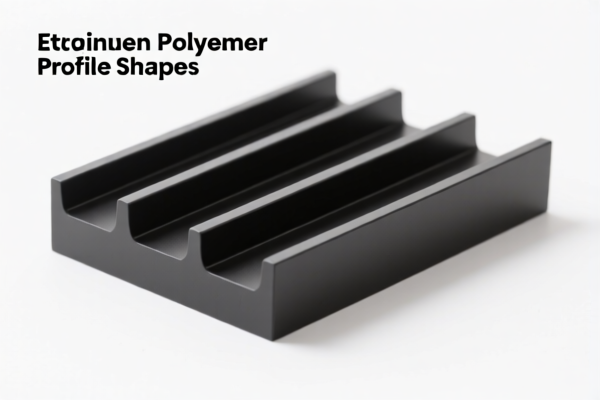
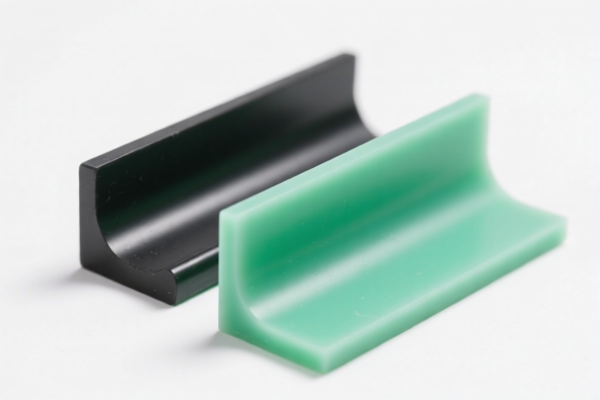
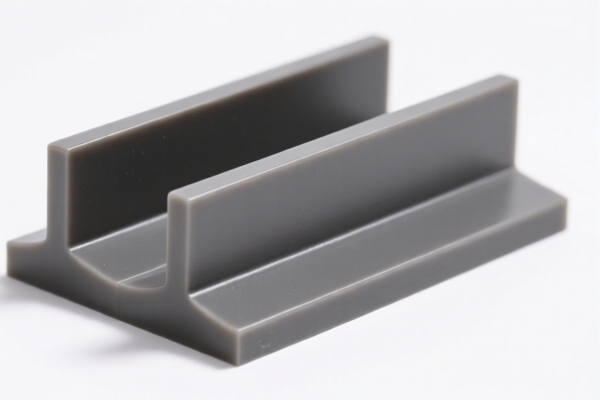
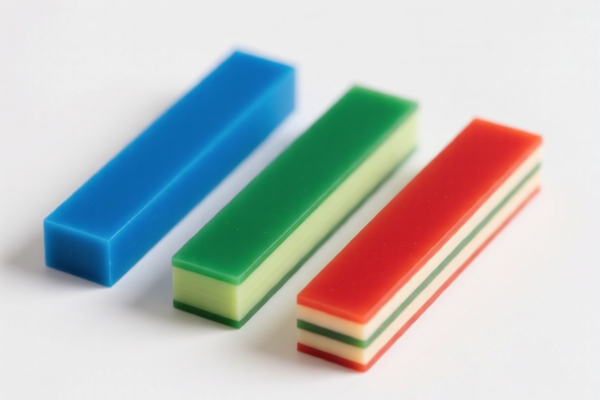
AI Analysis
⚗️ Ethylene Polymer Profile: Raw Materials & Resins
🌐 HS Code Reference & Customs Clearance Guide | 2026 Latest Tariff Analysis | Professional Clearance Strategy
📌 1. Product Definition: What is "Ethylene Polymer"?
Ethylene Polymer, in the context of international trade, refers to the basic raw material derived from the polymerization of ethylene. It is primarily used as an intermediate feedstock for manufacturing various plastics (such as packaging films, pipes, containers, and injection-molded parts).
Key Classification Characteristics: * Physical State: Usually supplied as primary forms (e.g., granules, powder, flakes, or liquids). It is not a finished consumer good. * Chemical Nature: It belongs to the Polyolefin family. * Usage: It serves as a base ingredient for further processing (extrusion, blow molding, injection molding).
⚠️ Critical Distinction:
- If the material is in primary form (unprocessed granules/powder) → It falls under Chapter 39 (Plastics and Articles Thereof).
- If it is a finished article (e.g., a pre-made plastic bottle or pipe) → It falls under different HS codes (e.g., 3917, 3926).
- This profile focuses on the raw material classification.
📦 2. HS Code Classification Matrix (2026 Latest Tariff Reference)
Based on the provided data, the Ethylene Polymer is classified into four primary HS Codes, all sharing the same tariff structure. These codes cover different sub-categories within the "Primary Form" umbrella.
| HS Code | Product Description | Classification Logic | Key Attributes |
|---|---|---|---|
3901.10.10.00 |
Ethylene Polymers, Primary Form (Injection Grade) | Matches the classification characteristics of injection molding materials. | High rigidity, suitable for precise molding. |
3901.10.50.10 |
Ethylene Polymers, Primary Form (Specific Grade) | Matches primary form characteristics; excludes Linear Low-Density Polyethylene (LLDPE) conflicts. | Specific density or melt index properties distinct from LLDPE. |
3907.29.00.00 |
Ethylene Polymers, Other Polyethers | Classified as a Polyolefin under Chapter 3907; fits the "Other" category for polyethers in primary form. | Broad category for ethylene-based polymers not specified elsewhere. |
3907.69.00.50 |
Ethylene Polymers, Other Primary Forms | Fits the broad category of other polymers in primary form under Chapter 3907. | General catch-all for unlisted ethylene polymers in raw form. |
🔍 Key Insight:
- All four codes represent Primary Forms of Ethylene Polymer.
- The distinction often lies in the specific application (e.g., injection vs. general use) or chemical sub-category (e.g., polyether vs. general polyolefin).
- Avoid Confusion: Do not confuse with Linear Low-Density Polyethylene (LLDPE) if specified otherwise; the code3901.10.50.10explicitly notes no conflict with LLDPE.
💰 3. 2026 Latest Tariff Rate Breakdown (Detailed)
✅ Applicable Country: United States (US)
✅ Origin: China (CN)
✅ Effective Date: Current 2026 Tariff Structure
🎯 1. All Applicable HS Codes (3901.10.10.00, 3901.10.50.10, 3907.29.00.00, 3907.69.00.50)
| Item | Detail |
|---|---|
| Base Tariff Rate | 6.5% (Most Favored Nation / MFN Rate) |
| Section 301 Additional Tariff | +25.0% (Targeting Chinese imports) |
| Section 122 Tariff | +10.0% (Specific provision for certain polymer imports) |
| Total Effective Tariff | 41.5% |
| Calculation Basis | (Base Value + Freight + Insurance) × 41.5% |
| De Minimis Exemption | ❌ Not Applicable (High tariff rates exclude small shipments from de minimis treatment) |
| Legal Reference Path | USITC:3901.xxxx.xxxx → Section 301: 25% → Section 122: 10% |
📌 Detailed Explanation of Tariffs:
- Base Tariff (6.5%): This is the standard WTO-bound rate for ethylene polymers in primary form. It applies to most importing countries unless a Free Trade Agreement (FTA) is in place.
- Section 301 Tariff (25%): Imposed by the U.S. Trade Representative (USTR) on goods originating from China. This is a retaliatory tariff on industrial raw materials.
- Section 122 Tariff (10%): A specific tariff provision (often related to national security or balance of payments) applied to certain polymer categories.
- Total Burden (41.5%): This is a significant cost increase. Importers must factor this into their landed cost calculations. No other standard exemptions apply.
🛠️ 4. Customs Clearance Practical Advice (Actionable Checklist)
✅ 1. Required Documentation (Strictly Enforced)
| Document | Mandatory? | Purpose |
|---|---|---|
| ✅ Product Specification Sheet | Yes | Must detail: Polymer Type (e.g., HDPE, LDPE, PP blend), Melt Flow Index (MFI), Density, and Additives. |
| ✅ Certificate of Analysis (COA) | Yes | Lab-tested proof of chemical composition to confirm it is Primary Form and not a finished plastic article. |
| ✅ Commercial Invoice | Yes | Must clearly state "Ethylene Polymer, Primary Form" and the HS Code. Do not use generic terms like "Plastic Granules." |
| ✅ Packing List | Yes | Specify net/gross weight and package type (e.g., jumbo bags, pallets). |
| ✅ Country of Origin Certificate | Yes | Crucial for applying Section 301 and Section 122 tariffs. If origin is disputed, penalties apply. |
⚠️ Warning:
- Do NOT describe the product as "Plastic Parts" or "Finished Goods." This will lead to misclassification and potential seizures.
- Do NOT omit the HS Code on the invoice. Customs will assign a code, potentially resulting in a higher duty rate.
✅ 2. Classification Strategy & Avoidance Pitfalls
| Scenario | Correct Approach | Incorrect Approach | Risk |
|---|---|---|---|
| Product is Granules/Powder | Classify under 3901 or 3907 (Primary Form) | Classify as "Plastic Containers" (3923) | Audit Risk: High. Customs may reject as "Finished Goods." |
| Product has Additives | Disclose additives in COA. If <5%, still primary form. | Claim "No Additives" falsely | Fraud Risk: Severe penalties if additives change chemical nature. |
| LLDPE Specific | If LLDPE, check if 3901.10.50.10 is the precise fit. |
Use 3901.10.10.00 for LLDPE |
Misclassification: LLDPE may have different sub-codes. |
| Mixed Shipment | Separate HS codes for different polymer types. | Mix all under one generic code | Customs Delay: Declaration error leads to inspection. |
🔥 Pro Tip:
"Primary Form is King!"
Always emphasize that the product is in primary form (unprocessed). If it is pre-cut, pre-molded, or has a specific shape for a final product, it is NOT an ethylene polymer raw material.
✅ 3. Cost Optimization & Supply Chain Advice
| Strategy | Action | Impact |
|---|---|---|
| 🔄 Supply Chain Diversification | Source from Vietnam, Mexico, or UAE if possible. | Avoids 25% Section 301 + 10% Section 122. Tariff drops to 6.5% (Base). |
| 📊 Volume Consolidation | Consolidate shipments to reduce per-unit logistics cost. | Mitigates the impact of the 41.5% total tariff on high-volume orders. |
| 📋 Advance Ruling | Apply for a Customs Ruling if product composition is complex. | Provides legal certainty on HS Code, preventing post-import audits. |
| 🏭 Local Processing | If possible, process the polymer in a USFTZ (Foreign Trade Zone). | Defer duty payment until goods enter U.S. commerce. |
📌 Conclusion:
- The 41.5% tariff is a major barrier for China-origin Ethylene Polymers.
- Primary Form classification is critical. Misclassification as "Finished Goods" can lead to higher duties or rejection.
- Documentation must be precise: COA, Specification Sheet, and Clear Invoice Description are non-negotiable.
🌍 5. Global Market Comparison (2026)
| Country/Region | Recommended HS Code | Base Tariff | Additional Tariffs | Total Est. Tariff | Notes |
|---|---|---|---|---|---|
| 🇺🇸 United States | 3901.10.10.00 etc. |
6.5% | +25% (Sec 301) +10% (Sec 122) | 41.5% | High barrier for China origin. |
| 🇨🇳 China | 3901.10.10.00 |
6.5% | None | 6.5% | Import duty for raw materials. |
| 🇪🇺 European Union | 3901.10.10.00 |
6.5% | None | 6.5% | No additional tariffs for China. |
| 🇯🇵 Japan | 3901.10.10.00 |
6.0% | None | 6.0% | Low tariff, high quality standards. |
| 🇮🇳 India | 3901.10.10.00 |
7.5% | SWS/Cess | ~9-10% | Additional health/education cess. |
📌 Strategic Insight:
- USA is the most expensive market due to geopolitical tariffs.
- EU & Japan offer low-cost entry but have strict REACH (EU) and JIS (Japan) quality regulations.
- China remains a key export hub, but buyers in the US face the 41.5% penalty.
📌 6. Common Errors & Pitfalls (Blood Lessons)
❌ Error 1: Calling Ethylene Polymer "Plastic Bags" or "Pipes"
👉 Consequence: Misclassification as Finished Goods → Higher Duty or Seizure.
✅ Fix: Always use "Ethylene Polymer, Primary Form."
❌ Error 2: Ignoring Section 122 Tariff
👉 Consequence: Underpayment of duties → Penalties + Back Taxes.
✅ Fix: Ensure the HS Code is checked against Section 122 applicability.
❌ Error 3: Vague Invoice Description ("Plastic Granules")
👉 Consequence: Customs request for additional info → Shipment Delay.
✅ Fix: Specify Polymer Type, Density, and MFI on the invoice.
❌ Error 4: Assuming All Ethylene Polymers are the Same
👉 Consequence: Wrong HS Code (e.g., confusing HDPE with LDPE) → Audit Flag.
✅ Fix: Use COA to verify the exact polymer type.
🎯 7. Conclusion: Professional Clearance, Cost Savings, Efficiency!
🎯 Remember the Golden Rule:
🔹 "Primary Form is Key, Documentation is King, Tariff is Cost!"
🔹 "HS Code 3901/3907, 41.5% Total Duty, No Exemptions for China!"
📌 Actionable Tip:
If your Ethylene Polymer is originating from Vietnam, Mexico, or the EU, you can avoid the 35% additional tariffs, reducing the total duty to just 6.5%.
Consider supply chain relocation or third-party invoicing to optimize costs.
📣 Immediate Action Required:
📞 Contact a Licensed Customs Broker
📄 Provide Detailed COA & Specification Sheet
🚀 Apply for Advance Ruling if Uncertain
💼 Your Landed Cost Depends on Precision!
✨ Professional Clearance Starts with Accurate Classification!
💼 Every Cent Counts in Global Trade!
Customer Reviews
About HS Code Classification
The Harmonized System (HS) is an internationally standardized nomenclature developed by the World Customs Organization (WCO) to classify traded products. Over 200 countries use the HS system as the basis for customs tariffs, trade statistics, and import/export regulations.
Each HS code follows a hierarchical structure:
- Chapter (2 digits) — Broad category of goods (e.g., Chapter 84: Machinery and Mechanical Appliances)
- Heading (4 digits) — More specific grouping within the chapter
- Subheading (6 digits) — Internationally standardized breakdown, used by all WCO member countries
- National subdivisions (8-10 digits) — Country-specific extensions for further classification, such as US HTSUS 10-digit codes
Correct HS code classification is essential for smooth customs clearance, accurate duty payment, and compliance with trade regulations. Misclassification can lead to customs delays, overpayment of duties, or penalties.
When importing from CN to US, the applicable tariff rates may include:
- Most-Favored-Nation (MFN) rate — The standard duty rate applied to WTO members
- General rate — Applied to countries without trade agreements
- Trade remedy duties — Additional tariffs such as Section 301 (anti-dumping), Section 232 (national security), or countervailing duties
The information provided on this page is for reference purposes only. For official classification, please consult with your local customs authority or a licensed customs broker.