Ethylene Polymer Reclosable Bags
CN → US| HS Code | Tariff Rate | Origin | Destination | Doc |
|---|---|---|---|---|
| 3923210011 | 38.0% | CN | US | Official Doc |
| 3923210030 | 38.0% | CN | US | Official Doc |
Product Images
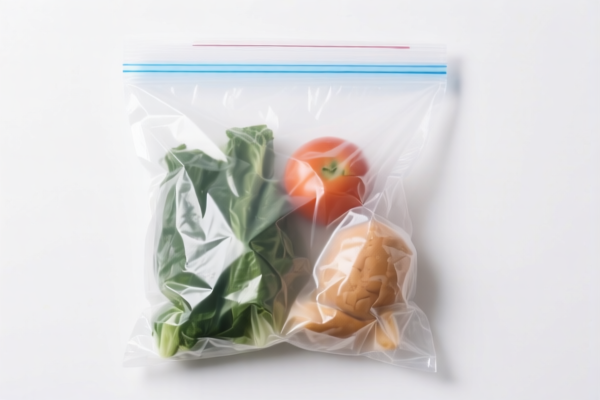
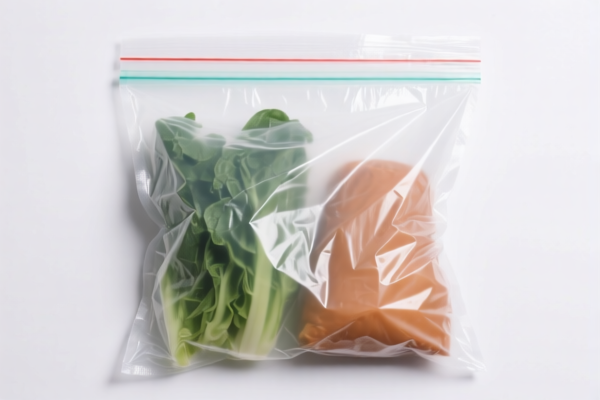
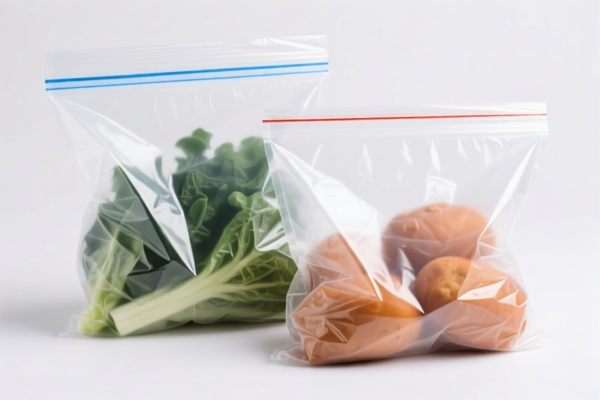
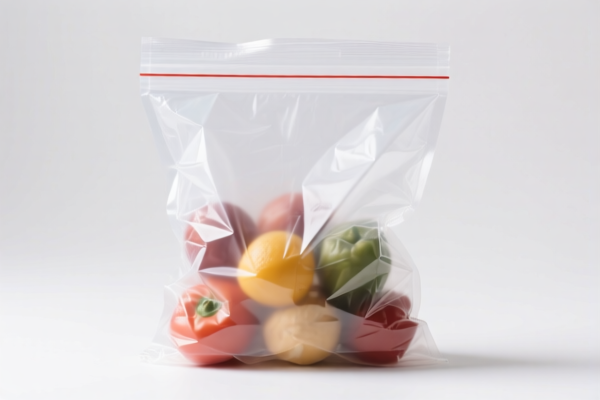
AI Analysis
🛍️ Ethylene Polymer Reclosable Bags (Plastic Sacks and Bags)
🌐 HS Code Reference & Customs Clearance Guide | 2026 Latest Tariff Analysis | Professional Compliance Strategy
📌 Part 1: Product Definition & Classification: Do You Really Know "Reclosable Plastic Bags"?
Ethylene polymer bags are ubiquitous in global logistics, retail, and consumer goods packaging. However, in international trade, they are strictly categorized by their closure mechanism and physical dimensions. Misclassification here can lead to significant tariff discrepancies or customs delays.
These products fall under Chapter 39: Plastics and Articles Thereof, specifically Heading 39.23: Articles for the conveyance or packing of goods, of plastics.
⚠️ Critical Distinction Point:
- Reclosable with Integral Extruded Closure: If the bag has a built-in zipper/seal created during the extrusion process (commonly called "zipper bags" or "reclosable bags"), it belongs to subheading 3923.21.
- Side Length Limit: A crucial technical criterion for duty rates in specific markets (like the US) is whether any single side exceeds 75 mm.
- ≤ 75 mm: Considered smaller/more specialized; often attracts lower base duties but high additional tariffs.
- > 75 mm: Considered larger general-purpose sacks; may have different tariff structures.
📦 Part 2: HS Code Classification Details (2026 Latest Tariff Authority对照)
Based on the provided data, the product is classified under two specific HS Codes within 3923.21.00 (Sacks and bags of polymers of ethylene, Reclosable, with integral extruded closure).
| HS Code | Product Description | Key Technical Criteria |适用场景 (Use Cases) |
|--------|--------------------------|--------------------------|
| 3923.21.00.11 | Reclosable bags with integral extruded closure; With no single side exceeding 75 mm in length | Side ≤ 75mm | Small retail packaging, snack bags, small garment bags, cosmetic samples |
| 3923.21.00.30 | Reclosable bags with integral extruded closure; Other | Any side > 75mm | Large grocery sacks, bulk food packaging, large garment storage bags, industrial packaging |
🔍 Key Reminder:
- Both codes fall under "Reclosable, with integral extruded closure". If your bag uses a separate adhesive strip, twist tie, or punch-hole seal, it DOES NOT fit this category (it would fall under "Other" subheadings like 3923.29).
- Material: Must be Polyethylene (PE) or polymers thereof. Polypropylene (PP) bags are classified differently (Heading 39.23.30).
💰 Part 3: 2026 Latest Tariff Rate Detail (Including Surcharges & Policy Add-ons)
✅ Applicable Country: USA (US)
✅ Origin: China (CN) (Assumed based on typical trade context; please verify if origin differs)
✅ Effective Time: 2025+ (Current 301 Tariff Regime)
🎯 1. 3923.21.00.11 — Reclosable Bags (≤ 75mm side)
| Item | Content |
|---|---|
| Base Tariff (MFN) | 3.0% |
| Section 301 Additional Tariff | +25.0% |
| Total Effective Rate | 28.0% |
| Tax Calculation | CIF Value × 28% |
| De Minimis Exemption? | ❌ NO |
| Legal Basis Path | USITC:3923.21.00.11 → Footnote 9903.88.01 (for 301 Tariff) |
📌 Explanation:
- The 3.0% is the standard Most Favored Nation (MFN) duty for plastic sacks.
- The 25.0% is the punitive tariff imposed under Section 301 of the Trade Act of 1974 against Chinese-origin goods.
- Total: 28%. This is a fixed ad valorem rate. No other complex IEEPA add-ons apply to this specific plastic category in the provided data.
🎯 2. 3923.21.00.30 — Reclosable Bags (Other, > 75mm side)
| Item | Content |
|---|---|
| Base Tariff (MFN) | 3.0% |
| Section 301 Additional Tariff | +25.0% |
| Total Effective Rate | 28.0% |
| Tax Calculation | CIF Value × 28% |
| De Minimis Exemption? | ❌ NO |
| Legal Basis Path | USITC:3923.21.00.30 → Footnote 9903.88.01 (for 301 Tariff) |
📌 Note:
- Despite the size difference, the tariff rate is identical (28%) for both reclosable ethylene bags in this classification.
- The distinction matters for customs inspection and product compliance (e.g., FDA food-contact regulations may differ based on bag size/usage), but not for the duty rate itself in this dataset.
🛠️ Part 4: Customs Clearance Operational Advice (Practical Pitfall Avoidance Guide)
✅ 1. Preparation Checklist (Mandatory)
| Document | Required? | Explanation |
|---|---|---|
| ✅ Product Specification Sheet | ✔️ | Must state: Material (PE/LLDPE), Closure Type (Zipper/Extruded), Dimensions (L x W), Thickness. |
| ✅ Photos of Closure | ✔️ | Clear image showing the "integral extruded closure" (zipper teeth molded into the plastic). |
| ✅ Commercial Invoice | ✔️ | Must clearly describe: "Ethylene Polymer Reclosable Bags, Size X, Qty Y". Do NOT just write "Plastic Bags". |
| ✅ Certificate of Origin | ✔️ | Essential to prove origin. If non-China origin, Section 301 tariffs may be avoided. |
| ✅ FDA Compliance (If for Food) | ✔️ | If bags are for food contact, provide FDA compliance statement or test reports. |
✅ 2. Declaration Tips (Key Mnemonics)
🔥 "Material is PE, Closure is Zip, Size Matters for Code, Tariff is 28%!"
| Scenario | Correct Declaration | Incorrect Practice |
|---|---|---|
| Bag has a zipper, made of PE | 3923.21.00.11 or .30 (based on size) |
Misclassify as "Plastic Containers" (3923.50) → Wrong duty, penalty risk |
| Bag uses adhesive tape or twist tie | Not 3923.21 | Classify under 3923.29 ("Other sacks and bags") → Different duty rate |
| Bag is Polypropylene (PP) | Not 3923.21 | Classify under 3923.30 → Different duty rate |
| Side length is 75mm exactly | Likely .11 (≤ 75mm) |
Ambiguity can lead to audit; provide precise measurements |
✅ 3. Special Handling
| Situation | Advice |
|---|---|
| Mixed Sizes in One Shipment | Declare separately by HS Code if possible. If mixed, customs may audit the larger portion. Best to segregate. |
| Non-China Origin | If manufactured in Vietnam, Thailand, or Mexico, you may be exempt from the 25% Section 301 tariff. The total rate could drop to 3.0% (or lower if FTA applies). Provide full manufacturing process evidence. |
| Food-Grade Bags | Ensure documentation states "FDA 21 CFR 177.1520 Compliant" if applicable. Customs may hold shipment for FDA review. |
🌍 Part 5: Global Market Customs Comparison (2026)
| Country/Region | Recommended HS Code | Base Duty | Additional Tariffs (China Origin) | Total Est. Rate | Notes |
|---|---|---|---|---|---|
| 🇺🇸 USA | 3923.21.00.11/.30 |
3.0% | +25% (Section 301) | 28.0% | Strict size classification. No de minimis. |
| 🇨🇳 China | 3923.21 |
5.0%-9.0%* | None | ~5-9% | Import into China has different rates. |
| 🇪🇺 EU | 3923.21 |
6.5% | None | 6.5% | VAT applies separately. |
| 🇨🇦 Canada | 3923.21 |
5.0% | None (CUSMA) | 5.0% | If originated in US/Mexico. |
| 🇬🇧 UK | 3923.21 |
3.5% | None (Post-Brexit) | 3.5% | Standard UK tariff. |
📌 Conclusion:
- USA is the highest cost market due to the 25% Section 301 surcharge.
- EU and UK are more favorable, but still have standard duties.
- Supply Chain Strategy: For US market, consider sourcing from non-China countries to avoid the 25% tariff.
📌 Part 6: Common Errors & Pitfall Guide (Lessons Learned)
❌ Error 1: Describing goods simply as "Plastic Bags"
👉 Consequence: Customs cannot classify correctly → Delay, Re-inspection, Potential Penalty.
✅ Fix: Use precise description: "Reclosable Polyethylene Bags with Integral Zipper Closure".
❌ Error 2: Ignoring the 75mm side length rule
👉 Consequence: Incorrect HS Code selection → Potential misdeclaration.
✅ Fix: Measure the longest side and the widest side. If any single side is > 75mm, use .30. If all sides ≤ 75mm, use .11.
❌ Error 3: Confusing Extruded Zipper with Adhesive Seal
👉 Consequence: Wrong Chapter/Heading. Adhesive seals go to "Other" (3923.29).
✅ Fix: Provide a photo showing the zipper is molded/extruded from the same plastic sheet.
❌ Error 4: Assuming De Minimis ($800) applies
👉 Consequence: Shipments under $800 from China are NOT exempt from Section 301 tariffs for these goods.
✅ Fix: Budget for 28% tariff even for small shipments.
🎯 Part 7: Conclusion: Precision in Packaging Means Precision in Profit
🎯 Remember the Rules:
🔹 "Zipper is Key: Extruded = 3923.21. Adhesive = 3923.29."
🔹 "Size Matters: ≤ 75mm = .11, > 75mm = .30."
🔹 "Tariff Reality: 3% Base + 25% 301 = 28% Total for China Origin."
📌 Pro Tip:
If your reclosable bags are non-food grade and you are shipping to the US, ensure you have the exact dimensions ready for customs entry. For food-grade bags, pre-clear with FDA standards to avoid detention.
📣 Immediate Action:
📞 Verify your bag's longest side dimension.
📷 Take a clear photo of the closure mechanism.
📝 Confirm Origin of Production to assess tariff exemption options.
🚀 Accurate classification saves 28% in duties!
✨ Professional Clearance Starts with Accurate Classification!
💼 Your Packaging Cost Control Depends on This!
Customer Reviews
About HS Code Classification
The Harmonized System (HS) is an internationally standardized nomenclature developed by the World Customs Organization (WCO) to classify traded products. Over 200 countries use the HS system as the basis for customs tariffs, trade statistics, and import/export regulations.
Each HS code follows a hierarchical structure:
- Chapter (2 digits) — Broad category of goods (e.g., Chapter 84: Machinery and Mechanical Appliances)
- Heading (4 digits) — More specific grouping within the chapter
- Subheading (6 digits) — Internationally standardized breakdown, used by all WCO member countries
- National subdivisions (8-10 digits) — Country-specific extensions for further classification, such as US HTSUS 10-digit codes
Correct HS code classification is essential for smooth customs clearance, accurate duty payment, and compliance with trade regulations. Misclassification can lead to customs delays, overpayment of duties, or penalties.
When importing from CN to US, the applicable tariff rates may include:
- Most-Favored-Nation (MFN) rate — The standard duty rate applied to WTO members
- General rate — Applied to countries without trade agreements
- Trade remedy duties — Additional tariffs such as Section 301 (anti-dumping), Section 232 (national security), or countervailing duties
The information provided on this page is for reference purposes only. For official classification, please consult with your local customs authority or a licensed customs broker.