Ethylene Polymer Self Sealing Bag
CN → US| HS Code | Tariff Rate | Origin | Destination | Doc |
|---|---|---|---|---|
| 3920100000 | 39.2% | CN | US | Official Doc |
| 3921190090 | 41.5% | CN | US | Official Doc |
| 3921190010 | 41.5% | CN | US | Official Doc |
| 3923210030 | 38.0% | CN | US | Official Doc |
| 3923210011 | 38.0% | CN | US | Official Doc |
| 3920992000 | 39.2% | CN | US | Official Doc |
Product Images

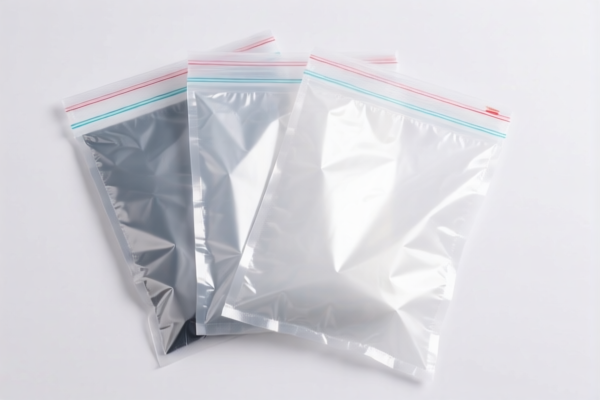

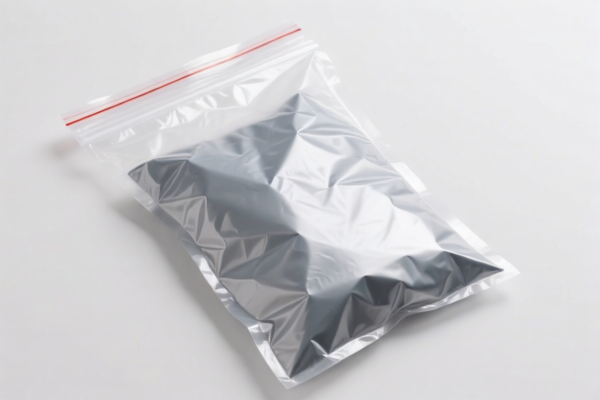
AI Analysis
📦 Ethylene Polymer Self-Sealing Bag (PE Ziplock Bag)
🌐 HS Code Reference & Customs Clearance Guide | 2026 Latest Tariff Analysis | Professional Clearance Strategy
📌 I. Product Definition & Classification: What Exactly is an "Ethylene Polymer Self-Sealing Bag"?
An Ethylene Polymer Self-Sealing Bag is a flexible packaging container made primarily from Polyethylene (PE) or similar ethylene-based polymers. It features an integrated zipper or self-sealing mechanism for easy opening and reclosing. In international trade, these are classified as plastic articles for the transport or packaging of goods.
⚠️ Key Classification Logic:
- Material: The core material is Ethylene Polymer (Plastic/PE). This is the primary driver for classification.
- Form: It is a bag/film structure, falling under "plates, sheets, film, foil, and strips" or "packaging articles."
- Function: Used for packaging, storage, or transport.
- No Major Conflict: Since the material is clearly plastic, it falls squarely within Chapter 39 (Plastics and Articles Thereof).
📦 II. HS Code Classification Details (2026 Latest Tariff Authority Mapping)
Based on the provided data, here are the most likely HS Codes for this product, categorized by their structural logic (Film vs. Packaging Article).
| HS Code | Product Description | Applicability Logic | Key Characteristics |
|---|---|---|---|
3920.10.00.00 |
Plates, sheets, film, foil, and strips, of plastics (Ethylene Polymers), not reinforced, laminated, supported, or similarly combined with other materials. | Best Fit for Film-Type Bags: If the bag is primarily viewed as a plastic film product (thin, flexible, no rigid components), this is the most accurate code. | ✅ Pure PE Film/Bag; No complex hardware. |
3921.19.00.90 |
Other plates, sheets, film, foil, and strips of plastics (Ethylene Polymers), not elsewhere specified. | Alternative Film Classification: Used if the bag does not fit strictly into the "ethylene polymer" specific line of 3920.10, acting as a "catch-all" for other plastic films. | ✅ General Plastic Film; Flexible. |
3921.19.00.10 |
Other plates, sheets, film, foil, and strips of plastics (Ethylene Polymers), not elsewhere specified. | Same as Above: Often a sub-category variation based on specific regional tariff lines. | ✅ General Plastic Film; Flexible. |
3923.21.00.30 |
Sacks and bags (including cones), of plastics. | Packaging Article Focus: If customs prioritizes the bag/cone shape and packaging function over the raw film nature, this code applies. | ✅ Sack/Bag form; Packaging use. |
3923.21.00.11 |
Sacks and bags (including cones), of plastics. | Specific Bag Type: Similar to above, but may refer to specific sub-types of plastic sacks/bags. | ✅ Sack/Bag form; Packaging use. |
3920.99.20.00 |
Other plates, sheets, film, foil, and strips of plastics. | Generic Plastic Film: If the specific ethylene polymer classification is disputed or less precise, this general plastic film code is used. | ✅ General Plastic; Flexible. |
🔍 Critical Distinction:
-3920vs3923:
-3920treats the product as a material/film (plates, sheets, film).
-3923treats the product as a finished article (sacks, bags).
- Recommendation: For standard thin self-sealing bags,3920.10.00.00is often the most precise for "Ethylene Polymers." However,3923.21codes are also common if the bag is marketed specifically as a "packaging bag" rather than a "film product."
💰 III. 2026 Latest Tariff Rate Breakdown (Including Surtaxes & Policy Add-ons)
✅ Applicable Country: United States (US)
✅ Country of Origin: China (CN)
✅ Effective Date: November 10, 2025 (and subsequent imports)
✅ Status: High Tariff Environment
🎯 1. 3920.10.00.00 – Plates, Sheets, Film, Foil, Strips of Plastics (Ethylene Polymers)
| Item | Details |
|---|---|
| Base Tariff | 4.2% (Ad Valorem) |
| Section 301 Surcharge | +25.0% (USITC Footnote) |
| Section 122 Tariff | +10.0% (Specific provision for certain plastic products) |
| Total Tariff Rate | 39.2% |
| Calculation | CIF Value × 39.2% |
| De Minimis Exemption | ❌ NOT Eligible (Denied under current IEEPA/USITC rules for China-origin plastic films) |
| Legal Basis Path | USITC:3920.10.00.00 → FOOTNOTE:301_Section → IEEPA:122_Clause |
📌 Explanation:
- The 4.2% is the standard Most Favored Nation (MFN) rate for PE films.
- The 25% is the Section 301 tariff, heavily impacting Chinese-made plastics.
- The 10% is an additional surcharge under Section 122, specifically targeting certain plastic packaging materials.
- Total: 39.2%. This is a very high effective tariff.
🎯 2. 3921.19.00.90 & 3921.19.00.10 – Other Plastic Plates, Sheets, Film, etc.
| Item | Details |
|---|---|
| Base Tariff | 6.5% (Ad Valorem) |
| Section 301 Surcharge | +25.0% |
| Section 122 Tariff | +10.0% |
| Total Tariff Rate | 41.5% |
| Calculation | CIF Value × 41.5% |
| De Minimis Exemption | ❌ NOT Eligible |
| Legal Basis Path | USITC:3921.19.00.90 → FOOTNOTE:301_Section → IEEPA:122_Clause |
📌 Note:
- Slightly higher base rate (6.5%) than3920.10.00.00.
- Same surcharges apply.
- Total: 41.5%.
🎯 3. 3923.21.00.30 & 3923.21.00.11 – Sacks and Bags of Plastics
| Item | Details |
|---|---|
| Base Tariff | 3.0% (Ad Valorem) |
| Section 301 Surcharge | +25.0% |
| Section 122 Tariff | +10.0% |
| Total Tariff Rate | 38.0% |
| Calculation | CIF Value × 38.0% |
| De Minimis Exemption | ❌ NOT Eligible |
| Legal Basis Path | USITC:3923.21.00.30 → FOOTNOTE:301_Section → IEEPA:122_Clause |
📌 Note:
- Lowest base rate (3.0%) among the options.
- Same surcharges apply.
- Total: 38.0%. This is the most cost-effective classification if customs accepts the "bag" designation over "film."
🛠️ IV. Customs Clearance Practical Advice (Real-World Pitfall Avoidance)
✅ 1. Essential Documentation Checklist (Non-Negotiable)
| Document | Must Provide | Description |
|---|---|---|
| ✅ Product Specification Sheet | ✔️ | Must explicitly state: "Material: Polyethylene (PE) / Ethylene Polymer," "Type: Self-Sealing Zipper Bag," "Usage: Packaging." |
| ✅ Material Composition Report | ✔️ | Third-party lab report confirming >85% Ethylene Polymer content. |
| ✅ Product Photos | ✔️ | Clear images showing the zipper mechanism, bag structure, and any labels. |
| ✅ Commercial Invoice | ✔️ | Accurate description: "Ethylene Polymer Self-Sealing Bag, Model XYZ, Country of Origin: China." |
| ✅ Packing List | ✔️ | Detail net/gross weight, dimensions, and quantity. |
| ✅ Customs Ruling (If Available) | ✔️ | If you have a prior HS Code ruling, include it to speed up clearance. |
✅ 2. Declaration Strategy (Key Mnemonic)
🔥 "Material First, Form Second, Surcharge Unavoidable!"
| Scenario | Correct Declaration | Incorrect Declaration |
|---|---|---|
| Standard PE Zip Bag | 3920.10.00.00 (Film) OR 3923.21.00.30 (Bag) |
Vague terms like "Plastic Bag" without material detail → Audit Risk |
| Bag with Non-PE Components | If zipper has metal/plastic mix, disclose fully. Misdeclaration leads to penalties. | Hiding non-PE parts → Seizure Risk |
| Origin Misdeclaration | Always declare "Made in China" accurately. | Claiming "Vietnam" to avoid tariffs → Fraud Risk |
✅ 3. Special Situations
| Situation | Handling Advice |
|---|---|
| Sample Shipments | Even small samples are subject to the same 38-41.5% tariffs. Do not assume de minimis applies. |
| Mixed Materials | If the bag has a foil layer or paper label, the classification may change. Disclose all materials. |
| Re-Exports | If goods are transshipped through a third country, the Country of Origin (China) remains the key factor for tariffs. |
🌍 V. Global Market Comparison (2026 Latest)
| Country/Region | Recommended HS Code | Tariff Rate (China Origin) | Key Certification | Notes |
|---|---|---|---|---|
| 🇺🇸 USA | 3920.10.00.00 / 3923.21.00.30 |
38.0% - 41.5% | FDA (if food contact), Prop 65 | High tariffs due to 301/122 clauses. |
| 🇨🇳 China | 3920.10.00.00 / 3923.21.00.30 |
0% - 5% (Import Duty) | CCC (if applicable) | Low import duty, but high VAT. |
| 🇪🇺 EU | 3920.10.00.00 / 3923.21.00.30 |
0% - 2% (Most cases) | REACH, LFGB (Food) | No Section 301 equivalent, but strict eco-standards. |
| 🇬🇧 UK | 3920.10.00.00 / 3923.21.00.30 |
0% - 2% | UKCA | Post-Brexit rules apply. |
📌 Conclusion:
- The US market is uniquely challenging due to the combination of Base Tariff + Section 301 + Section 122.
- EU/UK are far more favorable on tariff, but have stricter environmental and chemical regulations (REACH).
📌 VI. Common Errors & Pitfall Guide (Lessons Learned)
❌ Error 1: Declaring as "Plastic Bags" without specifying "Ethylene Polymer"
👉 Consequence: Customs may default to a higher tariff code or require additional documentation, causing delays.
❌ Error 2: Assuming "De Minimis" (Under $800) applies
👉 Consequence: High Risk! The provided data explicitly states these items are NOT eligible for de minimis exemption under current US trade policies for China-origin plastics. Expect full duty payment even for small parcels.
❌ Error 3: Using 3921 codes when 3920 is more accurate
👉 Consequence: Slightly higher base tariff (6.5% vs 4.2%), leading to overpayment. Always choose the most specific code (3920.10.00.00 for PE film).
❌ Error 4: Ignoring Section 122 Tariff
👉 Consequence: Underestimating total landed cost. The 10% surcharge is significant and must be budgeted for.
✅ Correct Approach:
"Ethylene Polymer Self-Sealing Bag, PE Material, For Packaging Use, Country of Origin: China, HS Code: 3920.10.00.00"
🎯 VII. Conclusion: Professional Declaration, Cost Control, Risk Mitigation
🎯 Remember the Mnemonic:
🔹 "PE Film is 3920, Bag is 3923, Check Both!"
🔹 "38% to 41.5% is the US Reality, No De Minimis, Stay Alert!"
🔹 "Section 122 adds 10%, Factor it in or Lose Profit!"
📌 Pro Tip:
- If possible, pre-apply for a Customs Ruling to confirm the best HS Code (
3920vs3923) for your specific bag structure.- Consider supply chain diversification if tariffs are prohibitive, though plastic manufacturing is global.
- Always budget for 38-41.5% total duty on China-origin ethylene polymer bags entering the US.
📣 Immediate Action:
📞 Consult with a licensed customs broker.
📦 Provide detailed material specs.
💰 Calculate landed cost with 38-41.5% duty included.
✨ Professional Clearance Starts with Accurate Classification!
💼 Your Profit Margin Depends on Precision!
Customer Reviews
About HS Code Classification
The Harmonized System (HS) is an internationally standardized nomenclature developed by the World Customs Organization (WCO) to classify traded products. Over 200 countries use the HS system as the basis for customs tariffs, trade statistics, and import/export regulations.
Each HS code follows a hierarchical structure:
- Chapter (2 digits) — Broad category of goods (e.g., Chapter 84: Machinery and Mechanical Appliances)
- Heading (4 digits) — More specific grouping within the chapter
- Subheading (6 digits) — Internationally standardized breakdown, used by all WCO member countries
- National subdivisions (8-10 digits) — Country-specific extensions for further classification, such as US HTSUS 10-digit codes
Correct HS code classification is essential for smooth customs clearance, accurate duty payment, and compliance with trade regulations. Misclassification can lead to customs delays, overpayment of duties, or penalties.
When importing from CN to US, the applicable tariff rates may include:
- Most-Favored-Nation (MFN) rate — The standard duty rate applied to WTO members
- General rate — Applied to countries without trade agreements
- Trade remedy duties — Additional tariffs such as Section 301 (anti-dumping), Section 232 (national security), or countervailing duties
The information provided on this page is for reference purposes only. For official classification, please consult with your local customs authority or a licensed customs broker.