Ethylene Vinyl Acetate Copolymer Extrusion Grade
CN → US| HS Code | Tariff Rate | Origin | Destination | Doc |
|---|---|---|---|---|
| 3901306000 | 40.3% | CN | US | Official Doc |
| 3901302000 | 35.0% | CN | US | Official Doc |
Product Images

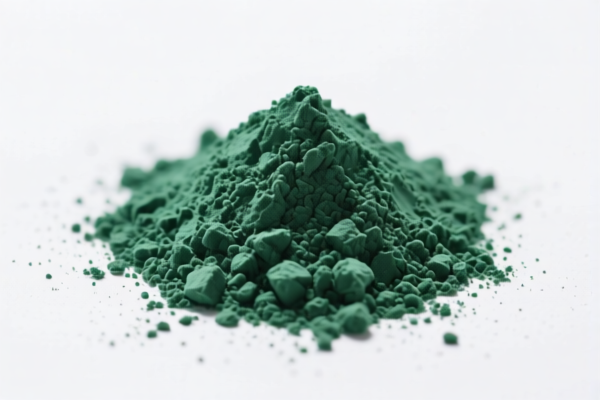
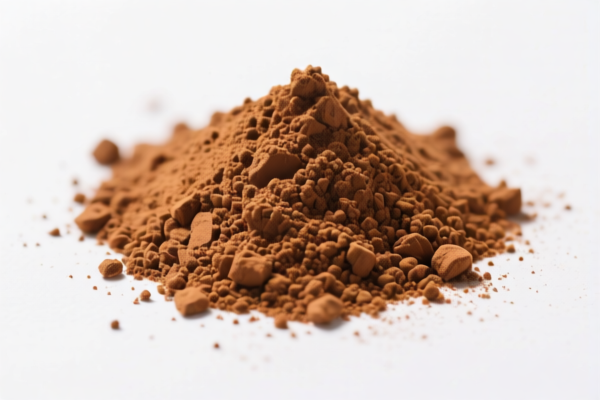

AI Analysis
🧪 Ethylene Vinyl Acetate (EVA) Copolymers – Extrusion Grade
🌐 HS Code Reference & Customs Clearance Guide | 2026 Latest Tariff Analysis | Professional Trade Strategy
📌 1. Product Definition & Classification: Do You Really Understand "EVA"?
Ethylene-Vinyl Acetate (EVA) Copolymer is a versatile thermoplastic polymer made from ethylene and vinyl acetate. In international trade, it is primarily classified under Chapter 39 (Plastics and Articles Thereof), specifically under heading 3901 (Polymers of Ethylene, in Primary Forms).
For Extrusion Grade EVA, the classification depends heavily on the Vinyl Acetate (VA) content and whether it is a simple copolymer or a terpolymer. The two most common HS Codes for this product are:
- 3901.30.60.00: For general Ethylene-Vinyl Acetate copolymers where VA content does not fall into the specific <50% terpolymer category.
- 3901.30.20.00: For specific Vinyl Acetate-Vinyl Chloride-Ethylene terpolymers with <50% VA content (less common for standard extrusion grades unless specified).
⚠️ Key Distinction Point:
- If the product is a standard Ethylene-Vinyl Acetate Copolymer (binary) used for extrusion (films, profiles, sheets) → Likely 3901.30.60.00 (if VA ≥ 40% or specific subheadings apply) or 3901.30.10/20 depending on exact VA weight %. Note: Based on the provided DATA, 3901.30.60.00 is listed for "Other" EVA copolymers.
- If the product is a Terpolymer (Ethylene-Vinyl Acetate-Vinyl Chloride) with <50% VA → 3901.30.20.00.
- Extrusion Grade implies it is in "Primary Forms" (granules, pellets, powders), fitting Chapter 39 perfectly.
📦 2. HS Code Classification Details (Based on Provided Data)
| HS Code | Product Description | Tax Details | Total Tax |
|---|---|---|---|
3901.30.60.00 |
Polymers of ethylene, in primary forms: Ethylene-vinyl acetate copolymers: Other | Basic Tariff: 0.0%, Additional Tariff: 0.0% | 0.0% |
3901.30.20.00 |
Polymers of ethylene, in primary forms: Ethylene-vinyl acetate copolymers: Vinyl acetate-vinyl chloride-ethylene terpolymers, containing by weight less than 50 percent derivatives of vinyl acetate, except those polymerized from aromatic or modified aromatic monomers | Basic Tariff: 0.0%, Additional Tariff: 25.0% | 25.0% |
🔍 Critical Analysis:
- 3901.30.60.00 is the preferred code for most standard EVA extrusion grades if they are binary copolymers (Ethylene + Vinyl Acetate only) and do not meet the specific terpolymer definition of 3901.30.20.00. It carries 0% tax, making it highly advantageous.
- 3901.30.20.00 applies only to terpolymers containing Vinyl Chloride. If your product is a standard EVA (no Chlorine), do NOT use this code, as it attracts a 25% additional tariff. Misclassification here can lead to significant duty overpayment or customs penalties.
💰 3. Tariff Rate Explanation (Detailed Breakdown)
✅ Applicable Country: United States (US)
✅ Origin: China (CN) (Assumed based on typical trade context for such HS codes; adjust if origin differs)
✅ Status: Current as of 2026 Data
🎯 1. 3901.30.60.00 — Ethylene-Vinyl Acetate Copolymers (Other)
| Item | Content |
|---|---|
| Basic Tariff | 0% |
| Additional Tariff | 0% |
| Total Effective Rate | 0% |
| Tax Calculation | CIF Value × 0% = $0 |
| Eligible for De Minimis? | ✅ Yes (Typically for low-value shipments, subject to CBP rules) |
| Legal Basis | Harmonized Tariff Schedule of the United States (HTSUS) 3901.30.60 |
📌 Explanation:
- This code captures "Other" EVA copolymers not specified elsewhere. For most Extrusion Grade EVA used in footwear, packaging, and adhesives, this is the correct classification if it is not a terpolymer.
- 0% Duty makes this a competitive entry point for US importers.
🎯 2. 3901.30.20.00 — Terpolymers (<50% VA)
| Item | Content |
|---|---|
| Basic Tariff | 0% |
| Additional Tariff | 25% |
| Total Effective Rate | 25% |
| Tax Calculation | CIF Value × 25% |
| Eligible for De Minimis? | ❌ No (Section 301 tariffs generally block de minimis for China-origin goods in this category) |
| Legal Basis | HTSUS 3901.30.20 + USITC Footnote 9903.88.01 (Section 301) |
📌 Explanation:
- The 25% Additional Tariff is imposed under Section 301 of the Trade Act of 1974 against China.
- This code is strictly for terpolymers (Ethylene + VA + Vinyl Chloride).
- Risk: If you are importing standard EVA (binary) but use this code, you may be flagged for undervaluation of duty if the value is low, or overpayment if you were eligible for 0%. However, if you use this code for binary EVA, you are incorrectly classifying and may face audits.
🛠️ 4. Customs Clearance Practical Advice (Expert Pitfall Guide)
✅ 1. Required Documentation Checklist
| Document | Mandatory? | Notes |
|---|---|---|
| ✅ Technical Data Sheet (TDS) | ✔️ Yes | Must clearly state Vinyl Acetate (VA) content % and Melt Flow Index (MFI). |
| ✅ Certificate of Analysis (COA) | ✔️ Yes | Confirms chemical composition (especially absence/presence of Vinyl Chloride). |
| ✅ Commercial Invoice | ✔️ Yes | Description must match HS Code exactly. Use "Ethylene-Vinyl Acetate Copolymer, Extrusion Grade". |
| ✅ Bill of Lading (B/L) | ✔️ Yes | Ensure packaging weight (Gross/Net) is accurate. |
| ✅ Country of Origin Certificate | ✔️ Yes | If claiming preferential treatment (if applicable) or for Section 301 determination. |
✅ 2. Classification Strategy & Naming Tips
🔥 Golden Rule: "Check the Chemistry, Not Just the Name!"
| Scenario | Correct HS Code | Why? |
|---|---|---|
| Standard EVA (Ethylene + VA only), VA < 40% | 3901.30.10.00 (Not in data, but common) OR 3901.30.60.00 if "Other" |
Binary copolymer. Check exact VA %. |
| Standard EVA (Ethylene + VA only), VA ≥ 40% | 3901.30.60.00 (per data) |
Classified as "Other" EVA copolymers in the provided dataset. |
| Terpolymer (Ethylene + VA + VCl), VA < 50% | 3901.30.20.00 |
Specifically defined as terpolymer with <50% VA. |
| EVA with Fillers/Additives | May change chapter | If fillers >10%, may move to Chapter 3909 or 3926. |
⚠️ Common Mistake:
- Using 3901.30.20.00 for standard EVA: This code is only for terpolymers. If your product is binary EVA, using this code is incorrect and may trigger an audit for misclassification, even though the tax is higher (25% vs 0%).
- Ignoring VA Content: VA content determines the subheading. A change from 28% VA to 40% VA can shift the code.
✅ 3. Special Cases & Optimization
| Situation | Recommendation |
|---|---|
| VA Content = 40% | Verify if it falls under 3901.30.60.00 ("Other") or a specific 40%+ bucket. In the provided data, 3901.30.60.00 is the only "Other" option for binary EVA. |
| Importing from China | For 3901.30.20.00, expect 25% duty. For 3901.30.60.00, duty is 0%. Ensure your product is not a terpolymer if you want the 0% rate. |
| Product Labeling | Clearly state "Ethylene-Vinyl Acetate Copolymer" on the package. Avoid vague terms like "Plastic Pellets" without chemical specification. |
🌍 5. Global Market Comparison (2026 Overview)
| Country/Region | Recommended HS Code | Tariff Rate | Notes |
|---|---|---|---|
| 🇺🇸 USA | 3901.30.60.00 |
0% | Best for binary EVA. 3901.30.20.00 = 25%. |
| 🇨🇳 China | 3901.30.60.00 |
0% | Standard import duty for EVA. |
| 🇪🇺 EU | 3901.30.40 (approx) |
6.5% | EU uses 8-digit codes differently. |
| 🇮🇳 India | 3901.30.00 |
7.5% - 10% | Additional customs duties may apply. |
📌 Conclusion:
- USA is the most tax-advantaged market for binary EVA if correctly classified under3901.30.60.00.
- Terpolymers face a 25% penalty in the US under Section 301.
- Always verify VA content and polymer type with the supplier.
📌 6. Common Errors & Pitfalls (Blood Lessons)
❌ Error 1: Using 3901.30.20.00 for standard EVA.
👉 Consequence: Overpaying 25% duty unnecessarily, or customs rejection for incorrect classification.
👉 Fix: Confirm if product contains Vinyl Chloride. If no, use 3901.30.60.00.
❌ Error 2: Vague description: "Plastic Granules".
👉 Consequence: Customs may assign a default higher duty code or require extensive inquiry.
👉 Fix: Use "Ethylene-Vinyl Acetate Copolymer, Extrusion Grade, [X]% VA Content".
❌ Error 3: Ignoring TDS/COA.
👉 Consequence: Inability to prove VA content or polymer type leads to clearance delays.
👉 Fix: Always attach chemical specification sheets.
✅ Correct Practice:
"Ethylene-Vinyl Acetate Copolymer, Extrusion Grade, 33% VA Content, Binary Polymer, Granules, Model EVA-330, No Vinyl Chloride"
🎯 7. Conclusion: Professional Classification Saves Money
🎯 Remember the Mantra:
🔹 "Binary EVA? Use .60 (0% Tax)."
🔹 "Terpolymer? Use .20 (25% Tax)."
🔹 "Check VA%, Check Chlorine, Avoid the 25% Trap!"
📌 Pro Tip:
If your EVA is Extrusion Grade and Binary (no Chlorine), insist on the 0% duty classification under
3901.30.60.00.
For large volumes, consider applying for an Advance Ruling from CBP to lock in the correct HS Code and avoid post-import audits.
📣 Immediate Action:
📞 Contact your customs broker with the Technical Data Sheet (TDS).
🚀 Ensure your commercial invoice specifies "Ethylene-Vinyl Acetate Copolymer, Binary, Extrusion Grade" to secure the 0% tariff.
✨ Professional Classification from the Start!
💼 Every Percent of Duty Counts in Your Margins!
Customer Reviews
About HS Code Classification
The Harmonized System (HS) is an internationally standardized nomenclature developed by the World Customs Organization (WCO) to classify traded products. Over 200 countries use the HS system as the basis for customs tariffs, trade statistics, and import/export regulations.
Each HS code follows a hierarchical structure:
- Chapter (2 digits) — Broad category of goods (e.g., Chapter 84: Machinery and Mechanical Appliances)
- Heading (4 digits) — More specific grouping within the chapter
- Subheading (6 digits) — Internationally standardized breakdown, used by all WCO member countries
- National subdivisions (8-10 digits) — Country-specific extensions for further classification, such as US HTSUS 10-digit codes
Correct HS code classification is essential for smooth customs clearance, accurate duty payment, and compliance with trade regulations. Misclassification can lead to customs delays, overpayment of duties, or penalties.
When importing from CN to US, the applicable tariff rates may include:
- Most-Favored-Nation (MFN) rate — The standard duty rate applied to WTO members
- General rate — Applied to countries without trade agreements
- Trade remedy duties — Additional tariffs such as Section 301 (anti-dumping), Section 232 (national security), or countervailing duties
The information provided on this page is for reference purposes only. For official classification, please consult with your local customs authority or a licensed customs broker.