Ethylene Vinyl Acetate Copolymer Film Forming Material
CN → US| HS Code | Tariff Rate | Origin | Destination | Doc |
|---|---|---|---|---|
| 3901306000 | 40.3% | CN | US | Official Doc |
| 3901302000 | 35.0% | CN | US | Official Doc |
Product Images
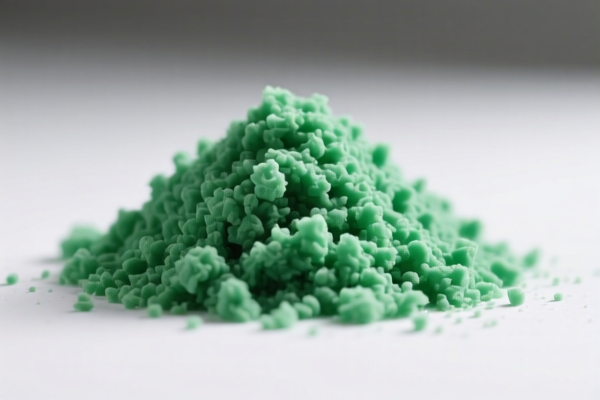
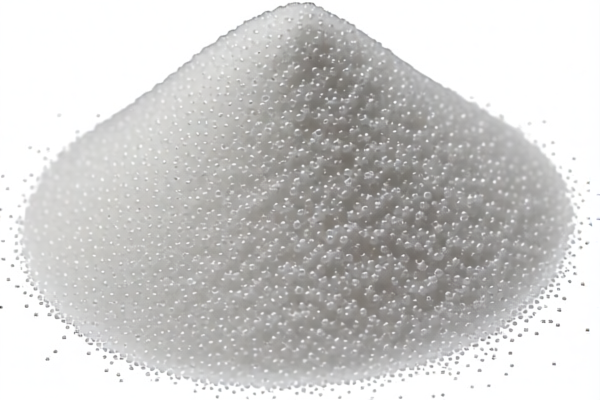
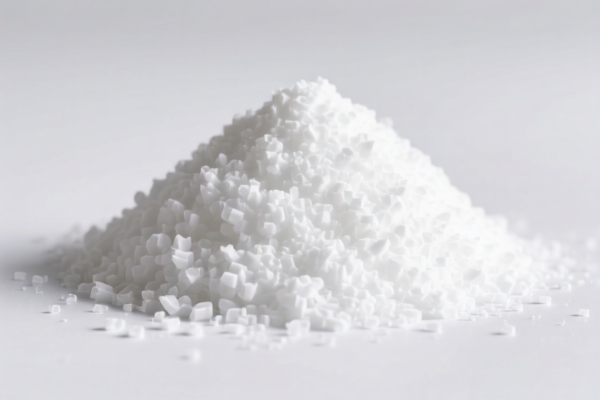

AI Analysis
🧪 EVA Film Forming Material (Ethylene-Vinyl Acetate Copolymers)
🌐 HS Code Reference & Customs Clearance Guide | 2026 Latest Tariff Analysis | Professional Clearance Strategy
📌 I. Product Definition & Classification: What is "EVA Film Forming Material"?
Ethylene-Vinyl Acetate (EVA) copolymers are versatile polymers widely used in packaging, construction, and footwear due to their flexibility, transparency, and adhesive properties. In international trade, when supplied as a film-forming material (typically in primary forms like granules, pellets, or films intended for further processing into sheets/films), they fall under Chapter 39: Plastics and Articles Thereof.
⚠️ Key Distinction Point:
- The classification depends strictly on the Vinyl Acetate (VA) content and whether it is a copolymer or terpolymer.
- If the material is a standard EVA Copolymer, it generally falls under 3901.30.
- If the material includes Vinyl Chloride (making it a Terpolymer), and the VA content is less than 50% by weight, it falls under a specific subheading within 3901.30.
📦 II. HS Code Classification Details (2026 Latest Tariff Authority Comparison)
Based on the provided <DATA>, two specific HS codes are available for EVA-related polymers.
| HS Code | Product Description | Applicable Scenario | VA Content Constraint |
|---|---|---|---|
3901.30.60.00 |
Ethylene-vinyl acetate copolymers: Other | Standard EVA copolymers (VA content typically ≥ 50% or unspecified but not falling into the 3901.30.20 definition) | General / Other |
3901.30.20.00 |
Vinyl acetate-vinyl chloride-ethylene terpolymers, containing by weight less than 50 percent derivatives of vinyl acetate | Specialized terpolymers used in specific industrial applications requiring lower VA content | < 50% VA |
🔍 Critical Note:
-3901.30.60.00is the "catch-all" for Ethylene-Vinyl Acetate Copolymers that do not fit into more specific subcategories (like those with >40% VA which might be elsewhere, though 3901.30 covers most standard EVAs). For most "EVA Film Forming" materials that are simple copolymers (Ethylene + Vinyl Acetate only), this is the likely code.
-3901.30.20.00is ONLY for Terpolymers (Ethylene + Vinyl Acetate + Vinyl Chloride) AND where Vinyl Acetate is < 50%. If your product is just EVA (no Vinyl Chloride), do not use this code.
💰 III. 2026 Latest Tariff Rate Details (Including Additional Taxes)
✅ Applicable Country: United States (US)
✅ Origin: China (CN) (Assumed based on typical trade context; adjust if origin differs)
✅ Effective Time: Current trade terms apply (Section 301 and IEEPA tariffs active)
🎯 1. 3901.30.60.00 —— Ethylene-Vinyl Acetate Copolymers: Other
| Item | Content |
|---|---|
| Base Tariff | 0.0% (Ad Valorem) |
| Section 301 Tariff (Additional) | 0.0% (Note: Some chemical intermediates are excluded, but check current USITC list. For this specific HS code in the provided data, it is 0%) |
| IEEPA Tariff (Additional) | 0.0% (As per provided data) |
| Total Tariff Rate | 0.0% |
| Tax Calculation | CIF Value × 0.0% = $0 |
| De Minimis Eligibility | ✅ Yes (Standard rules apply; shipments <$800 may enter duty-free if otherwise compliant) |
| Legal Authority Path | HTSUS:3901.30.60.00 → Base Rate 0% |
📌 Explanation:
- This is a highly favorable classification.
- Standard EVA copolymers often enjoy low or zero base duties.
- Crucially, the provided data indicates NO additional tariffs (0% total) for this specific subheading. This makes it a cost-effective option for standard EVA film materials.
🎯 2. 3901.30.20.00 —— Vinyl Acetate-Vinyl Chloride-Ethylene Terpolymers (< 50% VA)
| Item | Content |
|---|---|
| Base Tariff | 0.0% (Ad Valorem) |
| Section 301 Tariff (Additional) | 25.0% |
| IEEPA Tariff (Additional) | 0.0% (Not applicable to this specific 301 category in this dataset) |
| Total Tariff Rate | 25.0% |
| Tax Calculation | CIF Value × 25.0% |
| De Minimis Eligibility | ❌ No (Section 301 goods are generally excluded from de minimis exemption if total value exceeds threshold, or subject to strict enforcement) |
| Legal Authority Path | HTSUS:3901.30.20.00 → Section 301 Footnote: 9903.01.03 (or similar) |
📌 Explanation:
- Although the base duty is 0%, the 25% additional tariff significantly increases the landed cost.
- This code applies only to terpolymers with < 50% VA.
- Do not misclassify a standard EVA copolymer as this code to "save" on base rate, as the 25% penalty outweighs any benefit.
🛠️ IV. Customs Clearance Practical Advice (Real-World Pitfall Avoidance)
✅ 1. Documentation Checklist (Mandatory)
| Document | Required | Notes |
|---|---|---|
| ✅ Commercial Invoice | ✔️ | Must clearly state: "Ethylene-Vinyl Acetate Copolymer," CAS number (if applicable), and Vinyl Acetate % by weight. |
| ✅ Product Specification Sheet (COA) | ✔️ | Critical: Must declare the chemical composition (Ethylene vs. Vinyl Acetate ratio). If it contains Vinyl Chloride, it must be explicitly stated to avoid misclassification. |
| ✅ Proof of Primary Form | ✔️ | Confirm if it is granules, pellets, or films. "Film-forming material" usually implies it is processed into film later, so it is imported as primary form. |
| ✅ Manufacturer’s Declaration | ✔️ | State whether it is a Copolymer (2 components) or Terpolymer (3 components). |
| ✅ HS Code Pre-Ruling (Optional) | ✔️ | Recommended for large volumes to confirm 3901.30.60.00 vs 3901.30.20.00. |
✅ 2. Classification Strategy (Key Mnemonics)
🔥 “Check the Chemistry: Copolymer vs. Terpolymer!”
| Scenario | Correct HS Code | Total Tax | Reason |
|---|---|---|---|
| Standard EVA (Ethylene + VA only) | 3901.30.60.00 |
0.0% | Fits "Other" category; no additional tariffs. |
| EVA + Vinyl Chloride (VA < 50%) | 3901.30.20.00 |
25.0% | Specific terpolymer rule; subject to 301 tariffs. |
| EVA + Vinyl Chloride (VA ≥ 50%) | Not in Data | Check Further | May fall under different subheadings not listed here. |
| EVA Pellets (Primary Form) | 3901.30.60.00 |
0.0% | Ensure it is not "prepared" for direct use (e.g., pre-cut films might have different rules). |
⚠️ Critical Warning:
- If you import standard EVA film material (no Vinyl Chloride), you MUST use3901.30.60.00.
- Using3901.30.20.00incorrectly could lead to overpayment (25% vs 0%).
- Using3901.30.60.00for a terpolymer could lead to audits and penalties for misdeclaration.
✅ 3. Special Handling Tips
| Situation | Advice |
|---|---|
| OEM Custom EVA | Provide the supplier’s formula sheet. Even small changes in VA content (<50% vs >50%) can shift classification if Vinyl Chloride is present. |
| Blended Resins | If imported as a blend, it is often classified based on the principal material. If EVA is the main component, it falls under 3901. |
| Film vs. Resin | If imported as finished film (not "film-forming material"), it may fall under 3920 (Other plates, sheets, film, foil, and strip). This is a different chapter! Ensure the declaration says "Primary Form" or "Resin/Granules" if intending to use 3901 codes. |
| Anti-Dumping/Countervailing Duties | Check if specific EVA products from certain countries are subject to CVD. While base tax is 0%, verify no hidden duties apply. |
🌍 V. Global Market Comparison (2026 Update)
| Country/Region | Recommended HS Code | Tariff (China Origin) | Notes |
|---|---|---|---|
| 🇺🇸 USA | 3901.30.60.00 |
0.0% | Best option for standard EVA. Avoid 3901.30.20.00 unless necessary due to 25% tax. |
| 🇨🇳 China | 3901.30.60.00 |
5.0% | Standard import duty for EVA. |
| 🇪🇺 EU | 3901.30.10 |
5.3% | General rate; check for specific EPA preferences. |
| 🇬🇧 UK | 3901.30.00 |
5.0% | Post-Brexit tariff rates. |
| 🇯🇵 Japan | 3901.30.90 |
3.8% | Standard MFN rate. |
📌 Conclusion:
- The USA offers 0% duty for standard EVA copolymers (3901.30.60.00), making it highly competitive.
- Avoid3901.30.20.00unless the product is specifically a low-VA terpolymer, as the 25% tariff erodes margins.
📌 VI. Common Errors & Pitfalls (Lessons Learned)
❌ Error 1: Declaring Terpolymers as Copolymers to save tax.
👉 Consequence: Customs audit, penalty for misdeclaration, and retroactive payment of 25% + interest.
❌ Error 2: Declaring Finished EVA Films as Film-Forming Materials (Resins).
👉 Consequence: If it is already a finished film (not granules/pellets), it may fall under Chapter 39, Heading 3920, which has different duties and potentially anti-dumping duties. Misclassification leads to seizure.
❌ Error 3: Ignoring Vinyl Acetate Percentage.
👉 Consequence: If VA content is <50% in a terpolymer, it triggers 3901.30.20.00 (25% tax). If >50%, it might be 3901.30.90 (check full HTS). Precision is key.
✅ Correct Practice:
"EVA Resin, Ethylene-Vinyl Acetate Copolymer, Granular Form, Vinyl Acetate Content: 33% by Weight, CAS No: 9003-05-6, Primary Form for Film Extrusion."
🎯 VII. Conclusion: Precise Classification Saves Money!
🎯 Key Takeaway:
🔹 Standard EVA (No VC) =
3901.30.60.00→ 0% Tax 🎉
🔹 Low-VA Terpolymer (With VC) =3901.30.20.00→ 25% Tax ⚠️
🔹 Always verify Chemical Composition before declaring!
📌 Pro Tip:
If your EVA material is standard copolymer, ensure your commercial invoice explicitly states "Ethylene-Vinyl Acetate Copolymer" and not "Terpolymer" to secure the 0% duty rate.
For large shipments, consider applying for an HTSUS Advance Ruling from US CBP to lock in the3901.30.60.00classification and mitigate audit risks.
📣 Next Steps:
📞 Consult with a customs broker to verify your specific VA content and presence of Vinyl Chloride.
📄 Provide the Certificate of Analysis (COA) to your supplier to confirm the exact chemical makeup.
🚀 Optimize your landed cost by correctly selecting3901.30.60.00for standard EVA film materials!
✨ Clear Classification, Lower Duties, Faster Clearance!
💼 Your supply chain efficiency starts with the right HS Code!
Customer Reviews
About HS Code Classification
The Harmonized System (HS) is an internationally standardized nomenclature developed by the World Customs Organization (WCO) to classify traded products. Over 200 countries use the HS system as the basis for customs tariffs, trade statistics, and import/export regulations.
Each HS code follows a hierarchical structure:
- Chapter (2 digits) — Broad category of goods (e.g., Chapter 84: Machinery and Mechanical Appliances)
- Heading (4 digits) — More specific grouping within the chapter
- Subheading (6 digits) — Internationally standardized breakdown, used by all WCO member countries
- National subdivisions (8-10 digits) — Country-specific extensions for further classification, such as US HTSUS 10-digit codes
Correct HS code classification is essential for smooth customs clearance, accurate duty payment, and compliance with trade regulations. Misclassification can lead to customs delays, overpayment of duties, or penalties.
When importing from CN to US, the applicable tariff rates may include:
- Most-Favored-Nation (MFN) rate — The standard duty rate applied to WTO members
- General rate — Applied to countries without trade agreements
- Trade remedy duties — Additional tariffs such as Section 301 (anti-dumping), Section 232 (national security), or countervailing duties
The information provided on this page is for reference purposes only. For official classification, please consult with your local customs authority or a licensed customs broker.