Ethylene Vinyl Acetate Copolymer Granules Resin
CN → US| HS Code | Tariff Rate | Origin | Destination | Doc |
|---|---|---|---|---|
| 3905915000 | 40.3% | CN | US | Official Doc |
| 3905290000 | 39.0% | CN | US | Official Doc |
| 3901306000 | 40.3% | CN | US | Official Doc |
| 3901302000 | 35.0% | CN | US | Official Doc |
| 3901306000 | 40.3% | CN | US | Official Doc |
Product Images
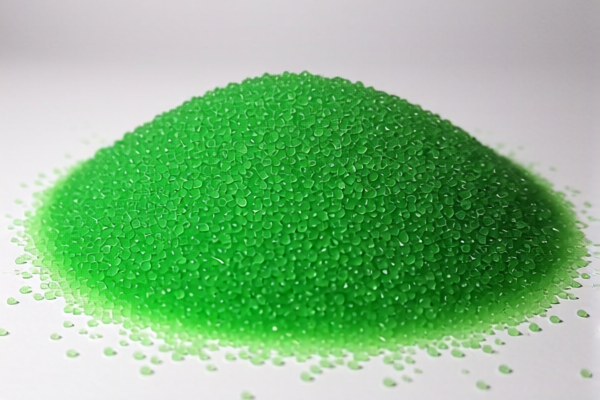
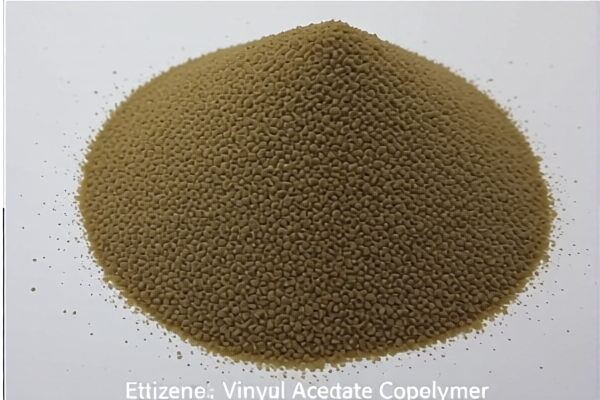
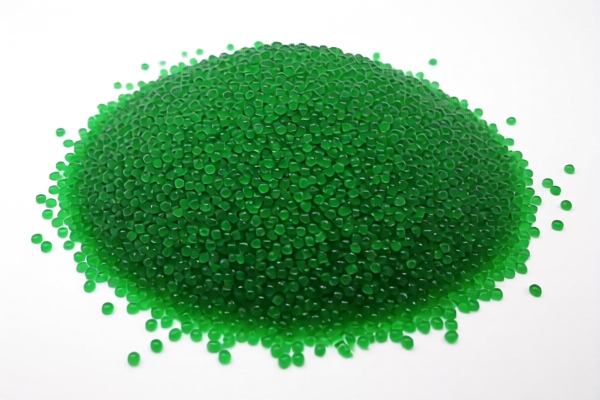
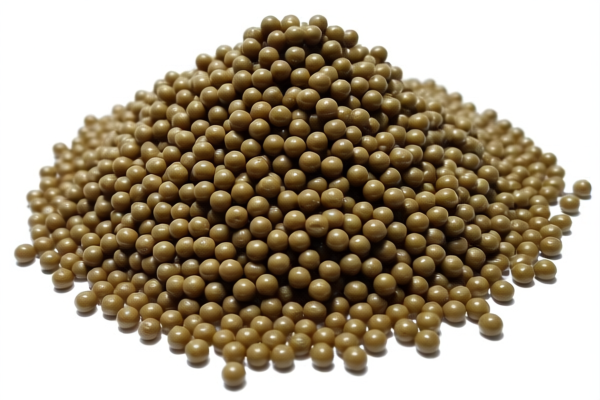
AI Analysis
🧪 Ethylene Vinyl Acetate (EVA) Copolymer Granules / Resin
🌐 HS Code Reference & Customs Clearance Guide | 2026 Latest Tariff Analysis | Professional Strategy for EVA Resin
📌 I. Product Definition & Classification: Do You Know Your EVA?
Ethylene Vinyl Acetate (EVA) copolymer is a versatile thermoplastic material widely used in footwear, packaging, solar cell encapsulation, and adhesives. In international trade, classification depends heavily on two factors: 1. Physical Form: Is it in "primary form" (granules, powder, flakes) or processed? 2. Chemical Composition: What is the Vinyl Acetate (VA) content? This determines whether it falls under Ethylene Polymers or other Vinyl Polymers.
⚠️ Key Distinction Points: - If the product is Vinylic Polymer (high VA content) or matches specific copolymer definitions under Heading 3905 → Look at 3905. - If the product is primarily an Ethylene Polymer in primary form → Look at 3901.
📦 II. HS Code Classification Details (Based on Provided Data)
| HS Code | Product Description | Key Classification Logic |
|--------|--------------------------|
| 3905.91.50.00 | EVA Resin: Matches definition of Ethyl Acetate Polymer (Copolymer) | Classifies as a specific vinyl polymer copolymer; Tax: 40.3% |
| 3905.29.00.00 | EVA Resin: Material & Primary Form Characteristics Consistent | Classified under "Other ethylene vinyl acetate copolymers"; Tax: 39.0% |
| 3901.30.60.00 | EVA Granules: Ethylene Polymer in Primary Form | Treated as an ethylene polymer due to primary form status; Tax: 40.3% |
| 3901.30.20.00 | EVA Resin: Consistent with Ethylene Polymer Primary Form Classification | Specific sub-category for ethylene polymers; Tax: 35.0% |
| 3901.30.60.00 | Viny Acetate Copolymer Granules: Matches Primary Form Characteristics | Duplicate code for granular ethylene-based copolymers; Tax: 40.3% |
🔍 Critical Note: - The divergence between 3905 (Vinyl Polymers) and 3901 (Ethylene Polymers) is the most common point of confusion. - 3901.30 codes apply when the material is deemed an "Ethylene Polymer" in primary form. - 3905 codes apply when the material is classified more broadly or specifically under vinyl copolymers not fitting the strict ethylene polymer definition.
💰 III. 2026 Latest Tariff Rate Breakdown (Including Additional Duties)
✅ Applicable Country: United States (US) ✅ Country of Origin: China (CN) ✅ Effective Time: Current (Post-2025 Trade Actions)
All listed HS Codes attract the same additional tariffs under current US trade policies for Chinese-origin goods.
🎯 General Tax Structure for All Listed Codes
| Tax Component | Rate | Legal Basis / Explanation |
|---|---|---|
| Basic Duty | Varies (0.0% – 5.3%) | Depends on specific HS sub-heading (e.g., 3901.30.20.00 has 0%, others have 5.3% or 4.0%). |
| Section 301 Duty (Section 301 Tariff) | +25.0% | Standard additional tariff on Chinese goods under US Trade Act Section 301. |
| Section 122 Tariff (122 Clause Tariff) | +10.0% | Specific additional tariff applicable to certain chemical/plastic goods from China. |
| Total Effective Tax Rate | 35.0% – 40.3% | Calculated as: Basic Duty + 25% + 10% |
📌 Detailed Breakdown by HS Code:
1. 3905.91.50.00 & 3901.30.60.00 (and the duplicate 3901.30.60.00)
- Basic Duty: 5.3%
- Additional Tariffs: 25.0% (Section 301) + 10.0% (Section 122)
- Total Tax: 40.3%
- Note: These codes carry the highest basic duty among the options, resulting in the maximum total tax burden.
2. 3905.29.00.00
- Basic Duty: 4.0%
- Additional Tariffs: 25.0% (Section 301) + 10.0% (Section 122)
- Total Tax: 39.0%
- Note: Slightly lower total tax compared to the 5.3% basic duty codes, due to a lower base rate.
3. 3901.30.20.00
- Basic Duty: 0.0%
- Additional Tariffs: 25.0% (Section 301) + 10.0% (Section 122)
- Total Tax: 35.0%
- Note: The most cost-effective option among the listed codes, as it enjoys a 0% basic duty. However, it requires strict compliance with the "Ethylene Polymer Primary Form" classification.
🛠️ IV. Customs Clearance Practical Advice (Real-World Pitfall Guide)
✅ 1. Documentation Checklist (Non-Negotiable)
| Document | Required | Purpose |
|---|---|---|
| Product Specification Sheet | ✔️ | Must specify Vinyl Acetate (VA) content %, molecular weight, and density. This determines if it’s 3901 or 3905. |
| COA (Certificate of Analysis) | ✔️ | Proves chemical composition and consistency with primary form. |
| Product Photos (Granules) | ✔️ | Visual proof of "primary form" (granules, not molded parts). |
| Commercial Invoice | ✔️ | Clearly state "Ethylene Vinyl Acetate Copolymer Resin, Granules". |
| Country of Origin Certificate | ✔️ | Essential for applying correct Section 301/122 duties. |
| ** MSDS (Safety Data Sheet)** | ✔️ | Required for chemical shipment compliance. |
✅ 2. Classification Strategy (Key Tactics)
🔥 "Primary Form is King, VA Content is Queen!"
| Scenario | Recommended HS Code | Why? |
|---|---|---|
| High VA Content (>40%) or Specific Copolymer Definition | 3905.91.50.00 |
Fits "Ethyl Acetate Polymer" definition. Higher tax (40.3%). |
| Standard EVA Granules, Classified as Vinyl Copolymer | 3905.29.00.00 |
General vinyl copolymer bucket. Moderate tax (39.0%). |
| Standard EVA Granules, Classified as Ethylene Polymer | 3901.30.60.00 |
Most common for industrial EVA. Higher tax (40.3%). |
| EVA Granules Qualifying for 0% Base Duty | 3901.30.20.00 |
Lowest Tax (35.0%). Must prove it fits this specific ethylene polymer sub-heading. |
✅ 3. Common Mistakes & How to Avoid Them
❌ Mistake 1: Misidentifying the product as a "plastic article" instead of "resin." 👉 Consequence: Wrong HS code, potential detention, and penalty. Always declare as "Resin" or "Granules" if in primary form.
❌ Mistake 2: Ignoring VA Content.
👉 Consequence: If VA content is high, 3901 codes may be rejected. Customs may reclassify to 3905, leading to a higher tax bill (e.g., 40.3% vs 35.0%).
❌ Mistake 3: Assuming all EVA is the same.
👉 Consequence: 3901.30.20.00 offers significant savings (35.0% total) but has strict classification criteria. Do not force this code if the product doesn’t meet the criteria.
🌍 V. Global Market Comparison (2026 Context)
| Market | Recommended HS Code | Est. Total Tax (China Origin) | Notes |
|---|---|---|---|
| 🇺🇸 United States | 3901.30.20.00 |
35.0% | Best case. Includes 25% (301) + 10% (122). |
| 🇨🇳 China (Import) | 3901.30.60.00 |
~5-10% | Low basic duty, no Section 301/122. |
| 🇪🇺 European Union | 3901.30.60.00 |
~0-5% | Standard EU duty, no US-style additional tariffs. |
| 🇬🇧 United Kingdom | 3901.30.60.00 |
~0-5% | Post-Brexit duty, generally favorable. |
| 🇨🇦 Canada | 3901.30.60.00 |
~0-2.5% | Low duty under CUSMA if originating. |
📌 Conclusion: - US Market is the most challenging due to the 10% Section 122 and 25% Section 301 tariffs. - Minimizing Basic Duty via correct classification (e.g., targeting
3901.30.20.00) is crucial.
📌 VI. Final Tips for Importers
- Pre-Ruling Request: If unsure between
3901and3905, submit a HS Code Binding Ruling to US Customs (CBP) before shipment. - Verify VA Content: Ensure your supplier’s COA matches the classification. A slight change in VA content can shift the HS code.
- Cost Calculation: Always calculate landed cost using the Total Tax Rate (Basic + 301 + 122), not just the basic duty.
- Supplier Communication: Clearly specify "Primary Form: Granules" to avoid misclassification as finished plastic parts.
🎯 VII. Conclusion: Precision in Classification Saves Money
🎯 Remember:
🔹 "Granules are Primary, Resin is Key."
🔹 "Check VA Content, Choose 3901 or 3905."
🔹 "Section 301 & 122 are Unavoidable, So Minimize Base Duty!"
🔹 "35.0% Total Tax is the Goal, 40.3% is the Risk."
📌 Pro Tip:
If you can classify your EVA resin under 3901.30.20.00, you save 5.3% in basic duties, reducing your total tax burden from 40.3% to 35.0%. This is a significant cost-saving opportunity for large volumes.
📣 Action Step:
📞 Consult with a licensed customs broker. 📄 Provide VA content data and material safety data sheets. 🚀 Optimize your classification to minimize total landed cost!
✨ Accurate Classification, Efficient Clearance, Competitive Edge!
💼 Your supply chain success starts with the right HS Code!
Customer Reviews
About HS Code Classification
The Harmonized System (HS) is an internationally standardized nomenclature developed by the World Customs Organization (WCO) to classify traded products. Over 200 countries use the HS system as the basis for customs tariffs, trade statistics, and import/export regulations.
Each HS code follows a hierarchical structure:
- Chapter (2 digits) — Broad category of goods (e.g., Chapter 84: Machinery and Mechanical Appliances)
- Heading (4 digits) — More specific grouping within the chapter
- Subheading (6 digits) — Internationally standardized breakdown, used by all WCO member countries
- National subdivisions (8-10 digits) — Country-specific extensions for further classification, such as US HTSUS 10-digit codes
Correct HS code classification is essential for smooth customs clearance, accurate duty payment, and compliance with trade regulations. Misclassification can lead to customs delays, overpayment of duties, or penalties.
When importing from CN to US, the applicable tariff rates may include:
- Most-Favored-Nation (MFN) rate — The standard duty rate applied to WTO members
- General rate — Applied to countries without trade agreements
- Trade remedy duties — Additional tariffs such as Section 301 (anti-dumping), Section 232 (national security), or countervailing duties
The information provided on this page is for reference purposes only. For official classification, please consult with your local customs authority or a licensed customs broker.