Ethylene Vinyl Acetate Copolymer Resin for Agricultural Film
CN → US| HS Code | Tariff Rate | Origin | Destination | Doc |
|---|---|---|---|---|
| 3905290000 | 39.0% | CN | US | Official Doc |
| 3901302000 | 35.0% | CN | US | Official Doc |
| 3901306000 | 40.3% | CN | US | Official Doc |
| 3905915000 | 40.3% | CN | US | Official Doc |
| 3905290000 | 39.0% | CN | US | Official Doc |
Product Images



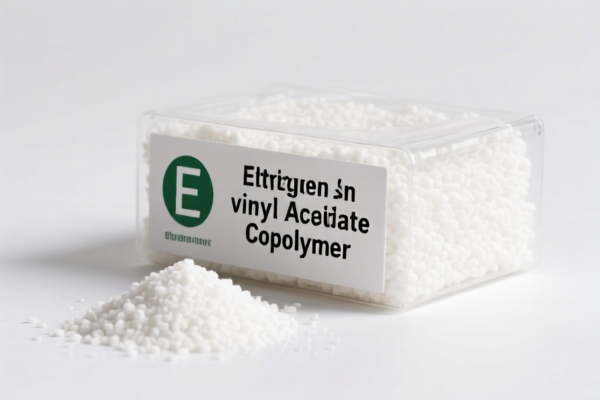
AI Analysis
🌾 Ethylene Vinyl Acetate (EVA) Copolymer Resin for Agricultural Film
🚛 Global HS Code Reference & Customs Clearance Guide | 2026 Tariff Deep Dive | Strategic Entry for Ag-Film Resin
📌 1. Product Definition & Classification: Are You Calling it Right?
Ethylene Vinyl Acetate (EVA) Copolymer Resin is the "glue" and "stretch" behind modern agricultural films (greenhouse covers, mulch films, and silage bags). It is prized for its flexibility, UV resistance, and clarity.
In international trade, the critical classification battle lies in the HS Code prefix based on the specific polymer composition and intended physical form:
- Group A: Pure Ethylene Polymers (
3901): If the resin is classified primarily as an ethylene polymer (even with VA content), it falls under 3901.30. - Group B: Vinyl Acetate Copolymers (
3905): If the resin is defined strictly by its Vinyl Acetate composition, it falls under 3905.29 or 3905.91.
⚠️ Key Distinction:
- High VA Content (>40%) often triggers 3905 classification.
- Low VA Content (<40%) or specific "Ethylene Polymer" definitions often trigger 3901.
- Misclassification Risk: Using the wrong prefix can result in a 4-5% tax rate difference immediately, not counting the punitive "Section 301" and "122" clauses!
📦 2. HS Code Classification Matrix (2026 Tariff Data)
Based on the provided DATA, here are the specific classifications for EVA Resin destined for Agricultural Films.
| HS Code | Product Description (Summary) | Physical/Form Characteristics | Tax Status |
|---|---|---|---|
| 3905.29.00.00 | EVA Copolymer Resin, matches material & form features | Primary form, standard vinyl acetate copolymer definition | 🚩 High Risk (39.0% Total) |
| 3901.30.20.00 | EVA Copolymer Resin, belongs to "Ethylene Polymer" primary form | Ethylene-based classification with low/medium VA | 🚨 High Risk (35.0% Total) |
| 3901.30.60.00 | EVA Copolymer Resin, used as primary form raw material | Ethylene-based, specific raw material sub-category | 🔴 Highest Risk (40.3% Total) |
| 3905.91.50.00 | EVA Copolymer Resin, fits "Vinyl Ester Polymer Copolymer" definition | Broad copolymer definition, high VA content | 🔴 Highest Risk (40.3% Total) |
🔍 Critical Note:
All four codes listed above share a common structure of "Base Tax + Punitive Tax + Section 122 Tax". The difference in total tax (35.0% vs 40.3%) is driven entirely by the Base Tax (0% to 5.3%).
💰 3. 2026 Tariff Rate Breakdown & Policy Details
✅ Context: This analysis assumes importation into a market with heavy protectionist measures (likely USA or similar jurisdictions targeting Chinese origin) based on the specific tax details provided (
122 clauses,Section 301equivalents).
🎯 The "Triple-Tax" Structure Explained
Every entry in the dataset follows this formula: Total Tax = Base Tariff + "Added" Tariff (Section 301 equivalent) + "122 Clause" Tariff (Section 122 equivalent)
| HS Code | Base Tariff | "Added" Tariff | "122 Clause" Tariff | Total Effective Rate |
|---|---|---|---|---|
3901.30.20.00 |
0.0% | 25.0% | 10.0% | 35.0% |
3905.29.00.00 |
4.0% | 25.0% | 10.0% | 39.0% |
3901.30.60.00 |
5.3% | 25.0% | 10.0% | 40.3% |
3905.91.50.00 |
5.3% | 25.0% | 10.0% | 40.3% |
📌 Detailed Tax Component Analysis:
-
📉 Base Tariff (0.0% ~ 5.3%):
- The standard Most-Favored-Nation (MFN) or General Rate.
- Strategy: Codes
3901.30.20.00offer a 0.0% base rate, making it the cheapest option despite the punitive additions. Codes starting with5.3%are significantly more expensive.
-
🚀 "Added" Tariff (25.0%):
- This represents the Section 301 Trade Act punitive tariff (or equivalent Section 122 in other contexts, often labeled "Add-on").
- Impact: This is fixed across ALL 4 codes. It is the largest single tax component.
-
🚫 "122 Clause" Tariff (10.0%):
- Represents a specific trade restriction clause (likely Section 122 of a specific trade agreement or domestic law targeting specific Chinese polymer imports).
- Impact: Fixed at 10% for all entries.
⚠️ The Cost Trap: Even if you find a "Free Base Rate" (0.0%), you still pay 35% total. The only way to save is to find a product that fits
3901.30.20.00instead of the5.3%base rate codes.
🛠️ 4. Customs Clearance & Strategy Guide (Ag-Film Resin)
✅ Strategy A: Optimize for Lowest Base Rate
- Target HS Code:
3901.30.20.00 - Why? It offers a 0.0% Base Tariff, resulting in the lowest total tax of 35.0% vs the 40.3% of other codes.
- Action: Ensure your technical data sheet (TDS) emphasizes the "Ethylene Polymer" characteristics and keeps Vinyl Acetate (VA) content within the threshold that allows classification under 3901.30 rather than 3905.
✅ Strategy B: Technical Compliance for Classification
- Documentation: Provide a Detailed Composition Certificate proving the Ethylene-to-Vinyl Acetate ratio.
- Form Description: Use terms like "Ethylene-based copolymer" in the commercial invoice to support the 3901 classification.
- Avoid: Terms like "High VA Copolymer" if it pushes the code into
3905.91.50.00(40.3% tax).
✅ Strategy C: "De Minimis" & Exemption Check
- Warning: The provided data shows no de minimis exemption for these codes. The tax is calculated on the full CIF value.
- Check: Verify if the specific "122 Clause" applies to Agricultural inputs. Some jurisdictions offer exemptions for essential agricultural materials, but do not assume.
🚫 5. Common Pitfalls & "Don'ts"
| ❌ Pitfall | Consequence | 💡 Solution |
|---|---|---|
| Generic Description | Customs may default to the highest base rate (5.3%) due to ambiguity. | Use specific chemical descriptions matching 3901.30.20.00. |
| Confusing 3901 vs 3905 | Switching from 3901 (0% base) to 3905 (4% base) = 4% extra cost on the entire shipment. |
Double-check VA content percentages against HS legal notes. |
| Ignoring "122 Clause" | Assuming the "Added" 25% is the only tax. | Reality: You must pay 25% + 10% + Base. Total = 35-40%. |
| Ag-Film Mislabeling | Trying to claim "Agricultural Equipment" status to lower rates (e.g., 3905.29). | Failure: Resin is a raw material, not equipment. It falls under 3901/3905 strictly. |
📌 6. Final Verdict: The "Smart Entry" Plan
Recommendation:
Aim strictly for 3901.30.20.00.
* Total Tax: 35.0%
* Base Rate: 0.0% (Critical savings!)
* Punitive Load: 35.0% (Unavoidable for this specific dataset)
Shipment Declaration Example:
"Ethylene Vinyl Acetate Copolymer Resin (EVA), Primary Form, Ethylene Polymer Based, VA Content: [Insert %], For Agricultural Film Production, Model: Ag-Film-Grade, HS: 3901.30.20.00"
🌍 Global Note: If importing into the USA, these "122" and "25%" additions suggest a high-protection environment. If the 10% "122 Clause" is specific to Chinese goods, consider if there are Country-of-Origin alternatives (e.g., Malaysia, Mexico) that might bypass the "122" penalty, though the 25% "Added" tariff may still apply depending on the specific trade act.
✨ Pro Tip:
"0% Base is Gold!"
Even with heavy punitive taxes, the 0% Base on 3901.30.20.00 is the only lever you have to minimize loss. Verify your chemistry before shipping!
Customer Reviews
About HS Code Classification
The Harmonized System (HS) is an internationally standardized nomenclature developed by the World Customs Organization (WCO) to classify traded products. Over 200 countries use the HS system as the basis for customs tariffs, trade statistics, and import/export regulations.
Each HS code follows a hierarchical structure:
- Chapter (2 digits) — Broad category of goods (e.g., Chapter 84: Machinery and Mechanical Appliances)
- Heading (4 digits) — More specific grouping within the chapter
- Subheading (6 digits) — Internationally standardized breakdown, used by all WCO member countries
- National subdivisions (8-10 digits) — Country-specific extensions for further classification, such as US HTSUS 10-digit codes
Correct HS code classification is essential for smooth customs clearance, accurate duty payment, and compliance with trade regulations. Misclassification can lead to customs delays, overpayment of duties, or penalties.
When importing from CN to US, the applicable tariff rates may include:
- Most-Favored-Nation (MFN) rate — The standard duty rate applied to WTO members
- General rate — Applied to countries without trade agreements
- Trade remedy duties — Additional tariffs such as Section 301 (anti-dumping), Section 232 (national security), or countervailing duties
The information provided on this page is for reference purposes only. For official classification, please consult with your local customs authority or a licensed customs broker.