Ethylene Vinyl Acetate Granule Resin
CN → US| HS Code | Tariff Rate | Origin | Destination | Doc |
|---|---|---|---|---|
| 3905915000 | 40.3% | CN | US | Official Doc |
| 3905290000 | 39.0% | CN | US | Official Doc |
| 3901306000 | 40.3% | CN | US | Official Doc |
| 3901302000 | 35.0% | CN | US | Official Doc |
| 3904306000 | 40.3% | CN | US | Official Doc |
Product Images
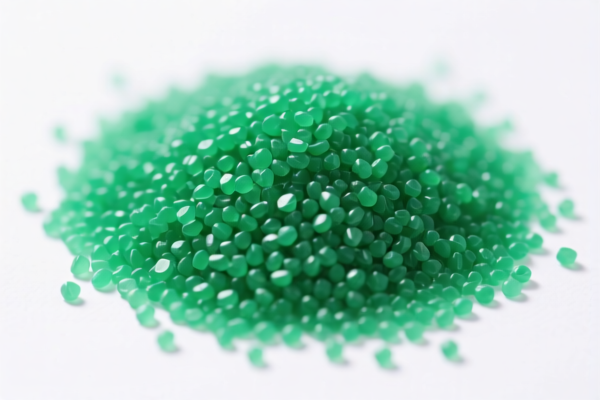
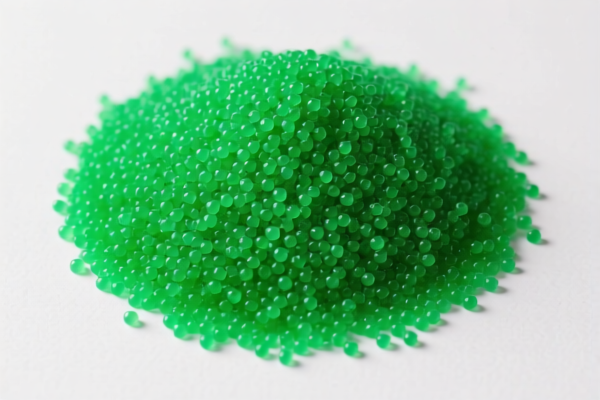


AI Analysis
🧪 Ethylene Vinyl Acetate (EVA) Granule Resin
🌐 HS Code Reference & Customs Clearance Guide | 2026 Latest Tariff Analysis | Professional Entry Strategy
📌 I. Product Definition & Classification: What Exactly is "EVA Resin"?
Ethylene Vinyl Acetate (EVA) copolymer resin is a versatile thermoplastic elastomer, widely used in footwear, photovoltaic modules, packaging films, and adhesives. In international trade, it is primarily classified under Chapter 39 (Plastics and Articles Thereof).
The critical distinction for customs purposes lies in the specific polymer structure and physical form: * True EVA Copolymers: Defined by the specific chemical bond between ethylene and vinyl acetate. If the vinyl acetate content is significant, it falls under heading 39.05. * Ethylene Polymers with Additives: Sometimes, products marketed as "EVA" are technically classified as "Ethylene Polymers" (Heading 39.01) if the primary characteristic aligns more with polyethylene or if the classification rules prioritize the ethylene base structure in certain contexts. * Physical State: "Granules," "Pellets," or "Powder" usually indicate Primary Forms (Heading 39.01, 39.04, or 39.05), distinguishing them from finished plastic articles.
⚠️ Key Distinction:
- If the product is strictly defined as an Ethylene-Vinyl Acetate Copolymer, it typically falls under HS 3905.
- However, due to specific national tariff interpretations (e.g., US ITC rulings), certain EVA granules may be misclassified or alternatively classified under HS 3901 (Ethylene Polymers) depending on the exact chemical composition and manufacturer declaration.
- Note: The provided data shows a mix of 3905 and 3901 codes, indicating that classification can vary based on precise technical specifications.
📦 II. HS Code Classification Details (2026 Latest Tariff Authority Comparison)
| HS Code | Product Description | Application Scenario | Classification Logic |
|--------|----------|--------------------------|
| 3905.91.50.00 | Ethylene Vinyl Acetate Copolymer Resin, classified under Ethylene Esters (Copolymers) | Standard EVA granules, flexible packaging, sealants | ✅ Primary: Direct match for EVA copolymer. |
| 3905.29.00.00 | Ethylene Vinyl Acetate Copolymer Resin,符合 Primary Form (Intermediate State) features | Bulk EVA resin, raw material for molding | ✅ Primary: Emphasizes "Primary Form" status within 3905. |
| 3901.30.60.00 | Ethylene Vinyl Acetate Copolymer Resin, classified as Primary Form (Raw Material) | Industrial raw EVA, often treated as ethylene-based for tariff purposes | ⚠️ Alternative: Classified under Ethylene Polymers (3901) due to specific trade rulings or composition thresholds. |
| 3901.30.20.00 | Ethylene Vinyl Acetate Copolymer Resin, conforms to Ethylene Polymer (Primary Form) classification | High-density EVA variants or specific formulations | ⚠️ Alternative: Treated as Ethylene Polymer (3901) for tariff advantages or regulatory reasons. |
| 3904.30.60.00 | Polyvinyl Acetate Powder Resin, categorized under Vinyl Chloride-Vinyl Acetate Copolymers | Specific VA-rich powders or blended resins | ❓ Niche: Potentially misclassified or specific variant; lower EA content may shift classification. |
🔍 Important Note:
- The coexistence of 3905 (Ethylene-Vinyl Acetate Copolymers) and 3901 (Ethylene Polymers) in the data suggests that product specification sheets are crucial.
- Customs authorities may scrutinize whether the "Vinyl Acetate" content is sufficient to justify Heading 3905, or if it should be deemed primarily an "Ethylene Polymer" under 3901.
- 3904.30.60.00 is listed for "Polyvinyl Acetate Powder," which is chemically distinct from standard EVA granules but may be included if the product is a specific blend or powder form.
💰 III. 2026 Latest Tariff Rate Details (Including Surtaxes & Policy Surcharges)
✅ Applicable Country: United States (US)
✅ Origin: China (CN)
✅ Effective Date: 2025–2026 (Based on current Section 301 and IEEPA rules)
🎯 1. 3905.91.50.00 & 3901.30.60.00 —— EVA Resin (High Tariff Category)
| Item | Content |
|---|---|
| Base MFN Rate | 5.3% (Ad Valorem) |
| Section 301 Surcharge | +25.0% (USITC Footnote 9903.88.01) |
| IEEPA Surcharge (122 Clause) | +10.0% (Targeting Chinese products) |
| Total Tax Rate | 40.3% |
| Tax Calculation | CIF Value × 40.3% |
| De Minimis Exemption | ❌ Not Eligible (Section 301 taxes apply regardless of value) |
| Legal Path | 3905.91.50.00 → USITC:9903.88.01 → IEEPA:9903.01.25 |
📌 Explanation:
- This is the standard and most common classification for genuine EVA copolymer resins imported from China.
- The 40.3% rate is a combination of the standard duty, the heavy Section 301 tariff (25%), and the additional IEEPA tariff (10%).
- Warning: This is a high-cost entry point. Buyers must factor this into their landed cost calculations.
🎯 2. 3905.29.00.00 —— EVA Resin (Primary Form)
| Item | Content |
|---|---|
| Base MFN Rate | 4.0% (Ad Valorem) |
| Section 301 Surcharge | +25.0% |
| IEEPA Surcharge | +10.0% |
| Total Tax Rate | 39.0% |
| Tax Calculation | CIF Value × 39.0% |
| De Minimis Exemption | ❌ Not Eligible |
| Legal Path | 3905.29.00.00 → USITC:9903.88.01 → IEEPA:9903.01.24 |
📌 Note:
- Slightly lower base rate (4.0% vs 5.3%) results in a 39.0% total.
- Applicable if the product is clearly defined as "Primary Form" without other specific characteristics requiring the 3905.91 subheading.
🎯 3. 3901.30.20.00 —— EVA Resin (Ethylene Polymer Classification)
| Item | Content |
|---|---|
| Base MFN Rate | 0.0% (Ad Valorem) |
| Section 301 Surcharge | +25.0% |
| IEEPA Surcharge | +10.0% |
| Total Tax Rate | 35.0% |
| Tax Calculation | CIF Value × 35.0% |
| De Minimis Exemption | ❌ Not Eligible |
| Legal Path | 3901.30.20.00 → USITC:9903.88.01 → IEEPA:9903.01.24 |
📌 Strategic Insight:
- If your product can be legally and technically justified as an "Ethylene Polymer" (3901) rather than "EVA Copolymer" (3905), you can save 5.3% in base duties.
- Risk: Misclassification can lead to audits, penalties, and back taxes. Ensure your Technical Data Sheet (TDS) supports this classification (e.g., lower VA content or specific structural properties).
🎯 4. 3904.30.60.00 —— Polyvinyl Acetate Powder
| Item | Content |
|---|---|
| Base MFN Rate | 5.3% |
| Section 301 Surcharge | +25.0% |
| IEEPA Surcharge | +10.0% |
| Total Tax Rate | 40.3% |
| Tax Calculation | CIF Value × 40.3% |
| De Minimis Exemption | ❌ Not Eligible |
📌 Note:
- This code is for PVAc Powder, not standard EVA granules.
- Only use if your product is specifically PVAc powder or a blend that falls under this specific subheading. Misuse here is a common audit trigger.
🛠️ IV. Customs Clearance Practical Advice (Real-World Pitfall Guide)
✅ 1. Documentation Checklist (Non-Negotiable)
| Document | Required | Explanation |
|---|---|---|
| ✅ Technical Data Sheet (TDS) | ✔️ | Must clearly state: Chemical Structure, VA Content %, Melt Flow Index (MFI), Density. |
| ✅ Formula/Composition Statement | ✔️ | Explicitly declare: "Ethylene-Vinyl Acetate Copolymer, Primary Form." |
| ✅ Commercial Invoice | ✔️ | HS Code must be clearly marked. Description should be precise (e.g., "EVA Granules, 18% VA"). |
| ✅ Certificate of Origin (CO) | ✔️ | Critical for proving Chinese origin to apply (or challenge) surcharges. |
| ✅ Packaging List | ✔️ | Show net/gross weight. Ensure packaging is consistent with "Primary Form" (bulk bags, pallets). |
| ✅ MSDS (Safety Data Sheet) | ✔️ | Required for safe handling and customs health/safety checks. |
✅ 2. Classification Strategy (Key Tips)
🔥 “VA Content is King: High VA = 3905, Low VA = 3901?!”
| Scenario | Recommended HS Code | Risk Level |
|---|---|---|
| Standard EVA (10-40% VA) | 3905.91.50.00 or 3905.29.00.00 |
⚠️ Medium (40.3% / 39.0% Tariff) |
| High Ethylene / Low VA (<10%) | 3901.30.20.00 |
✅ Lower Tax (35.0%) but high scrutiny |
| PVAc Powder (No Ethylene) | 3904.30.60.00 |
❌ High Risk if mislabeled as EVA |
| Finished EVA Articles (e.g., Shoes) | Not in Data (Different Chapters) | N/A |
📌 Critical Warning:
- Do not simply label all "EVA" as3901to save tax. Customs requires proof that the product’s essential character is that of an ethylene polymer, not an EVA copolymer.
- If the VA content is significant (e.g., >10%), 3905 is the correct legal classification.
✅ 3. Special Cases & Mitigation
| Situation | Handling Advice |
|---|---|
| Product is "EVA Blend" | Provide a detailed breakdown of all components. If it contains other copolymers, classification may change. |
| OEM for US Brand | Provide end-user documentation. Does not change HS code or tariff, but helps in audit defense if quality/composition is disputed. |
| Transshipment via Vietnam/Malaysia | ❌ High Risk. US Customs strictly enforces "Substantial Transformation" rules. Simple transshipment will result in 301 tariffs + penalties. |
| De Minimis (Section 321) | ❌ Not Available. Section 301 surcharges cannot be avoided via the $800 de minimis rule. |
🌍 V. Global Market Comparison (2026 Latest)
| Country/Region | Recommended HS Code | Tariff (China Origin) | Certification | Note |
|---|---|---|---|---|
| 🇺🇸 USA | 3905.91.50.00 |
40.3% (301 + IEEPA) | No special cert | Highest tax; consider alternative markets. |
| 🇨🇳 China | 3905.91.00.00 |
5.3% (MFN) | None | Import duty is standard. |
| 🇪🇺 EU | 3905.29.00.00 |
6.5% (Standard) | REACH | No Section 301 equivalent; much cheaper. |
| 🇬🇧 UK | 3905.29.00.00 |
6.5% (Standard) | UKCA | Post-Brexit rules apply. |
| 🇮🇳 India | 3905.29.00.00 |
7.5% + BCD | BIS | Basic Customs Duty may vary. |
📌 Conclusion:
- USA is the most expensive market for Chinese EVA resin due to 40.3% total duty.
- EU/UK offer significantly lower tariffs (~6.5%) if sourcing from China, making them attractive for cost-sensitive buyers.
- Strategy: If exporting to the US, consider third-country manufacturing (e.g., Vietnam, Thailand) to avoid 301 tariffs, but ensure substantial transformation occurs.
📌 VI. Common Mistakes & Pitfall Guide (Blood Lessons)
❌ Mistake 1: Calling "EVA Granules" generic names on Invoice
👉 Consequence: Customs may classify under worst-case scenario or request additional fees for examination.
✅ Fix: Use precise chemical names: "Ethylene-Vinyl Acetate Copolymer Resin, Primary Form, 18% VA Content."
❌ Mistake 2: Attempting to use 3901.30.20.00 for High-VA EVA
👉 Consequence: Audit, back taxes of 5.3% + penalties.
✅ Fix: Only use 3901 if you have technical proof that the ethylene structure dominates.
❌ Mistake 3: Ignoring IEEPA 10% Surcharge
👉 Consequence: Underpayment of duties by 10%.
✅ Fix: Always calculate total landed cost as Base + 301 + IEEPA.
❌ Mistake 4: Claiming De Minimis Exemption for Small Batches
👉 Consequence: Seizure of goods, fines. Section 301 taxes apply to all shipments from China.
✅ Fix: Pay taxes on every entry, regardless of value.
🎯 VII. Conclusion: Professional Classification, Cost Savings!
🎯 Remember the Golden Rule:
🔹 "3905 for True EVA, 3901 for Ethylene-Rich, 3904 for PVAc Powder."
🔹 "US Tariff = 40.3% on True EVA; Plan Ahead!"
🔹 "No De Minimis Exemption for Section 301 Goods!"
📌 Pro Tip:
If you are importing EVA Granules into the US:
1. Verify VA Content: If it is low, explore 3901 classification with legal counsel.
2. Consider Alternative Origins: If possible, source from Vietnam, Malaysia, or Thailand to mitigate 301 tariffs (ensure no Chinese raw material is used).
3. Pre-Ruling: Apply for a Binding Ruling from US Customs and Border Protection (CBP) before large shipments.
📣 Immediate Action:
📞 Contact your Customs Broker + Provide TDS + Request HS Code Pre-Ruling
🚀 Ensure Smooth Clearance, Avoid Seizures, and Manage Costs!
✨ Professional Classification Starts with Precision!
💼 Your Landed Cost Depends on the First Four Digits!
Customer Reviews
About HS Code Classification
The Harmonized System (HS) is an internationally standardized nomenclature developed by the World Customs Organization (WCO) to classify traded products. Over 200 countries use the HS system as the basis for customs tariffs, trade statistics, and import/export regulations.
Each HS code follows a hierarchical structure:
- Chapter (2 digits) — Broad category of goods (e.g., Chapter 84: Machinery and Mechanical Appliances)
- Heading (4 digits) — More specific grouping within the chapter
- Subheading (6 digits) — Internationally standardized breakdown, used by all WCO member countries
- National subdivisions (8-10 digits) — Country-specific extensions for further classification, such as US HTSUS 10-digit codes
Correct HS code classification is essential for smooth customs clearance, accurate duty payment, and compliance with trade regulations. Misclassification can lead to customs delays, overpayment of duties, or penalties.
When importing from CN to US, the applicable tariff rates may include:
- Most-Favored-Nation (MFN) rate — The standard duty rate applied to WTO members
- General rate — Applied to countries without trade agreements
- Trade remedy duties — Additional tariffs such as Section 301 (anti-dumping), Section 232 (national security), or countervailing duties
The information provided on this page is for reference purposes only. For official classification, please consult with your local customs authority or a licensed customs broker.