Ethylene Vinyl Acetate Vinyl Chloride Resin Extrusion Grade
CN → US| HS Code | Tariff Rate | Origin | Destination | Doc |
|---|---|---|---|---|
| 3901306000 | 40.3% | CN | US | Official Doc |
| 3901302000 | 35.0% | CN | US | Official Doc |
| 3901105010 | 41.5% | CN | US | Official Doc |
Product Images
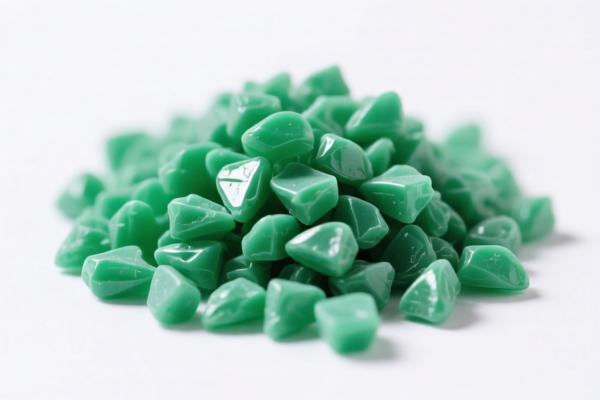
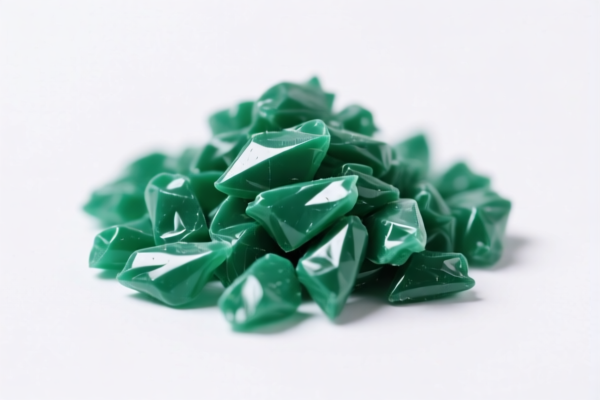
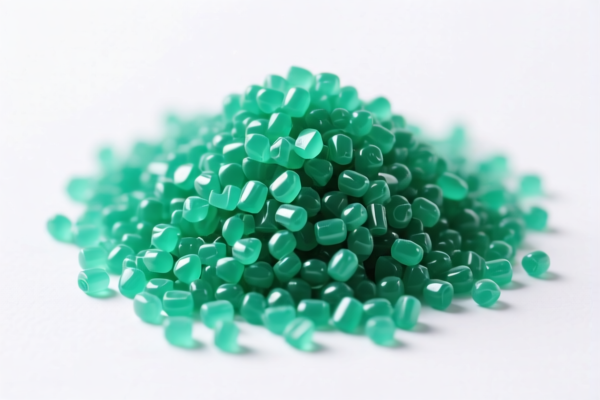
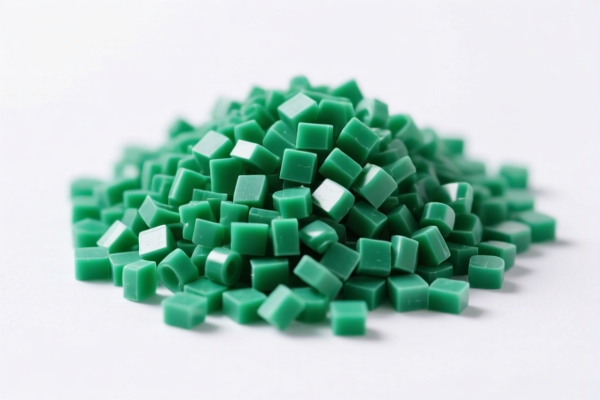
AI Analysis
🧪 Ethylene Vinyl Acetate (EVA) & Copolymer Resins (Extrusion Grade)
HS Code Classification & Customs Clearance Guide | 2026 Latest Tariff Analysis
🌐 HS Code Reference & Clearance Guide | 2026 Latest Tariff Full Analysis | Professional-Grade Clearance Strategy
📌 I. Product Definition & Classification: Do You Truly Understand "EVA/Resin"?
The input term "ethylene vinyl acetate vinyl chloride resin extrusion grade" is a hybrid and potentially conflicting description. In chemical trade, Ethylene Vinyl Acetate (EVA) and Vinyl Chloride (PVC) are distinct polymer families. However, importers often confuse the two or mislabel EVA Copolymers (which contain vinyl acetate, not vinyl chloride) as containing chloride.
For US Customs (CBP) and tariff purposes, we must distinguish between: 1. EVA Copolymers: Ethylene + Vinyl Acetate. Classified under Chapter 39, Heading 3901. 2. Ethylene Polymers (Powders): Classified under Chapter 39, Heading 3901 but different subheadings.
⚠️ Critical Distinction:
- EVA (Ethylene Vinyl Acetate): A copolymer of ethylene and vinyl acetate. Used in shoe soles, films, adhesives.
- Vinyl Chloride (PVC): A polymer of vinyl chloride monomer. Classified under Heading 3904, NOT 3901.
- Ethylene Powder: If the material is pure ethylene polymer (HDPE/LLDPE) in powder form, it falls under 3901.10.
Based on the provided <DATA>, the items are classified under Heading 3901 (Ethylene Polymers in Primary Forms), implying the goods are EVA Copolymers or Ethylene Powders, not PVC. The mention of "Vinyl Chloride" in the prompt is likely a mislabeling error by the user or supplier, as EVA does not contain chloride.
📦 II. HS Code Classification Details (2026 Latest Tariff Authority对照)
The provided <DATA> lists three specific HS Codes under Heading 3901. Here is the breakdown:
| HS Code | Product Description (from DATA) | Key Characteristics | Form |
|---|---|---|---|
3901.30.60.00 |
Ethylene Vinyl Acetate Copolymer (Extrusion Grade) Material: Ethylene-Vinyl Acetate Copolymer |
Specific EVA copolymer for extrusion processes | Primary Form (Extrusion Grade) |
3901.30.20.00 |
Ethylene Vinyl Acetate Copolymer (Extrusion Grade) Material: Ethylene-Vinyl Acetate Copolymer |
General EVA copolymer for extrusion | Primary Form (Extrusion Grade) |
3901.10.50.10 |
Ethylene Polymer Powder (Extrusion Grade) Material: Ethylene Polymer |
Pure ethylene polymer, not a copolymer with VA | Powder (Primary Form) |
🔍 Key Clarification:
-3901.30specifically covers Copolymers of Ethylene with Vinyl Acetate. This matches the "Ethylene Vinyl Acetate" part of the input.
-3901.10covers Ethylene Polymers in Primary Forms, typically used for powders (like LLDPE powder).
- Neither code applies to Vinyl Chloride (PVC). If the product actually contains Vinyl Chloride, it would be classified under 3904.21 or 3904.30, which are NOT in the provided data. Therefore, we assume the product is EVA, and "Vinyl Chloride" is a descriptive error.
💰 III. 2026 Latest Tariff Rate Breakdown (Including Surtaxes & Policy Add-ons)
✅ Applicable Country: United States (US)
✅ Origin: China (CN)
✅ Effective Time: 2025-11-10 onwards (including subsequent imports)
🎯 1. 3901.30.60.00 —— Ethylene Vinyl Acetate Copolymer (Specific Extrusion Grade)
| Item | Detail |
|---|---|
| Base Tariff | 5.3% |
| Section 301 Surcharge | +25.0% |
| Section 122 Surcharge | +10.0% |
| Total Tax Rate | 41.5% |
| Tax Calculation | CIF Value × 41.5% |
| De Minimis Eligibility | ❌ No (Deny de minimis for Section 301/122 goods) |
| Legal Basis Path | USITC:3901.30.60.00 → Footnote 9903.01.25 (301) + Footnote 9903.01.24 (122) |
📌 Explanation:
- 5.3% is the standard Most Favored Nation (MFN) rate for EVA copolymers.
- 25% is the Section 301 tariff on Chinese chemical products.
- 10% is the Section 122 tariff (a specific add-on for certain industrial materials).
- Total: 41.5%. This is a high-cost classification. Misdeclaring as "non-Chinese origin" without proof will result in severe penalties.
🎯 2. 3901.30.20.00 —— Ethylene Vinyl Acetate Copolymer (General Extrusion Grade)
| Item | Detail |
|---|---|
| Base Tariff | 0.0% |
| Section 301 Surcharge | +25.0% |
| Section 122 Surcharge | +10.0% |
| Total Tax Rate | 35.0% |
| Tax Calculation | CIF Value × 35.0% |
| De Minimis Eligibility | ❌ No |
| Legal Basis Path | USITC:3901.30.20.00 → Footnote 9903.01.25 (301) + Footnote 9903.01.24 (122) |
📌 Note:
- While the base tariff is 0%, the surtaxes still apply, bringing the total to 35.0%.
- This is 6.5% cheaper than3901.30.60.00due to the lower base rate.
- Crucial: The distinction between60.00and20.00often lies in the specific chemical composition (e.g., VA content percentage, melt flow index) or physical form (pellets vs. specific extrusion grade). You must provide technical data sheets to justify the0%base rate.
🎯 3. 3901.10.50.10 —— Ethylene Polymer Powder (Extrusion Grade)
| Item | Detail |
|---|---|
| Base Tariff | 6.5% |
| Section 301 Surcharge | +25.0% |
| Section 122 Surcharge | +10.0% |
| Total Tax Rate | 42.5% |
| Tax Calculation | CIF Value × 42.5% |
| De Minimis Eligibility | ❌ No |
| Legal Basis Path | USITC:3901.10.50.10 → Footnote 9903.01.25 (301) + Footnote 9903.01.24 (122) |
📌 Explanation:
- This code is for Ethylene Polymers (not copolymers) in Powder Form.
- If your product is EVA (a copolymer), this code is incorrect. Misclassification can lead to audits.
- Total 42.5% is the highest among the three options. Only use if the product is strictly pure ethylene powder.
🛠️ IV. Customs Clearance Practical Advice (Avoid Pitfalls)
✅ 1. Preparation Checklist (Must-Haves)
| Document | Required | Explanation |
|---|---|---|
| ✅ Technical Data Sheet (TDS) | ✔️ | Must specify: VA Content %, Melt Flow Index (MFI), Density, and Form (Pellet/Powder). Crucial to distinguish between 3901.30.20.00 and 3901.30.60.00. |
| ✅ Product Photo | ✔️ | Clear image of packaging showing "Ethylene Vinyl Acetate Copolymer" (NOT "Vinyl Chloride"). |
| ✅ Bill of Lading / Commercial Invoice | ✔️ | Must clearly state: HS Code, Product Name (EVA), Origin (China), Gross/Net Weight. |
| ✅ Certificate of Origin (CO) | ✔️ | Proof of Chinese origin to apply correct Section 301/122 surcharges. |
| ✅ Non-Vinyl Chloride Declaration | ✔️ | Explicitly state: "This product is Ethylene Vinyl Acetate (EVA), NOT Polyvinyl Chloride (PVC). No Chlorine content." |
✅ 2. Declaration Tips (Key Mnemonic)
🔥 "EVA is not PVC, Powder is not Copolymer, Base Rate Matters, Total Tax is High!"
| Situation | Correct Declaration | Wrong Approach |
|---|---|---|
| Product is EVA Pellets, 20% VA Content | 3901.30.20.00 or 3901.30.60.00 |
Claiming PVC → Wrong Chapter (3904) |
| Product is Ethylene Powder (LLDPE) | 3901.10.50.10 |
Claiming EVA → Wrong Subheading |
| Product is EVA with 10% VA | 3901.30.20.00 (Likely 0% base) |
Claiming 3901.30.60.00 → Overpaying 6.5% |
| Product is PVC (Vinyl Chloride) | NOT LISTED in DATA | Using EVA codes → Smuggling/Fraud |
✅ 3. Special Handling
| Scenario | Advice |
|---|---|
| "Vinyl Chloride" mentioned in input | STOP! Correct the product name to Ethylene Vinyl Acetate (EVA). If it is truly PVC, the provided data is inapplicable, and you must re-classify under 3904. |
| Misclassification Risk | If you declare 3901.30.20.00 (0% base) but your VA content is higher than specified for that subheading, CBP may assess 3901.30.60.00 (5.3% base) + back taxes. |
| Section 122 & 301 | These are mandatory for Chinese origin. No exemptions for de minimis (under $800). All shipments must pay the surtax. |
🌍 V. Global Market Comparison (2026 Latest)
| Country/Region | Recommended HS Code (EVA) | Tariff (China Origin) | Notes |
|---|---|---|---|
| 🇺🇸 USA | 3901.30.20.00 / 3901.30.60.00 |
35.0% / 41.5% | High surcharges due to 301/122. |
| 🇨🇳 China | 3901.30.20.00 / 3901.30.60.00 |
~5-7% | Standard MFN rate. No surcharges. |
| 🇪🇺 EU | 3901.30.20 / 3901.30.60 |
0% - 1.7% | No surcharges. CE certification required. |
| 🇬🇧 UK | 3901.30.20 / 3901.30.60 |
0% - 1.7% | Post-Brexit rules apply. |
| 🇻🇳 Vietnam | 3901.30.20 / 3901.30.60 |
0% - 1.7% | ASEAN trade agreements may apply. |
📌 Conclusion:
- USA is the most expensive market for Chinese-origin EVA due to Section 301 and 122 tariffs.
- No De Minimis Exemption: Unlike electronics, these chemical materials do not qualify for the $800 de minimis exemption if subject to 301/122. Full declaration is required.
📌 VI. Common Errors & Pitfalls (Lessons Learned)
❌ Error 1: Confusing EVA (Ethylene Vinyl Acetate) with PVC (Polyvinyl Chloride).
👉 Consequence: Wrong HS Code, potential fraud charges, and product rejection.
✅ Fix: Always use "Ethylene Vinyl Acetate Copolymer" in documentation.
❌ Error 2: Claiming 3901.30.20.00 (0% base) for all EVA.
👉 Consequence: CBP may audit and reclassify to 3901.30.60.00 (5.3% base) + penalties.
✅ Fix: Provide technical specs proving the product meets the criteria for 3901.30.20.00.
❌ Error 3: Ignoring Section 122 (10%).
👉 Consequence: Underpayment of taxes.
✅ Fix: Always calculate Base + 301 (25%) + 122 (10%).
❌ Error 4: Declaring "Vinyl Chloride" for EVA products.
👉 Consequence: CBP may classify as PVC (3904), which has different restrictions (e.g., phthalates, lead content).
✅ Fix: Correct the product name to EVA.
🎯 VII. Conclusion: Professional Declaration, Save Time & Money
🎯 Remember the Key Takeaways:
🔹 "EVA is NOT PVC. Check VA Content. Base Rate Determines Cost."
🔹 "Total Tax = Base + 25% (301) + 10% (122). No De Minimis."
🔹 "If it's Powder, it's 3901.10. If it's Copolymer, it's 3901.30."
📌 Pro Tip:
If your product is EVA with low VA content (<20%), it may qualify for 3901.30.20.00 (0% base). If it's high VA content or specific extrusion grades, it may fall under 3901.30.60.00 (5.3% base). Provide your TDS to your customs broker to ensure correct classification.
📣 Immediate Action Required:
📞 Contact Your Customs Broker + Provide TDS + Verify "Vinyl Chloride" vs "Ethylene Vinyl Acetate".
🚀 Ensure Accurate Classification to Avoid 100% Penalty Rates!
✨ Professional Clearance Starts with Accurate Classification!
💼 Your Every Penny Counts in Tariff Calculations!
Customer Reviews
About HS Code Classification
The Harmonized System (HS) is an internationally standardized nomenclature developed by the World Customs Organization (WCO) to classify traded products. Over 200 countries use the HS system as the basis for customs tariffs, trade statistics, and import/export regulations.
Each HS code follows a hierarchical structure:
- Chapter (2 digits) — Broad category of goods (e.g., Chapter 84: Machinery and Mechanical Appliances)
- Heading (4 digits) — More specific grouping within the chapter
- Subheading (6 digits) — Internationally standardized breakdown, used by all WCO member countries
- National subdivisions (8-10 digits) — Country-specific extensions for further classification, such as US HTSUS 10-digit codes
Correct HS code classification is essential for smooth customs clearance, accurate duty payment, and compliance with trade regulations. Misclassification can lead to customs delays, overpayment of duties, or penalties.
When importing from CN to US, the applicable tariff rates may include:
- Most-Favored-Nation (MFN) rate — The standard duty rate applied to WTO members
- General rate — Applied to countries without trade agreements
- Trade remedy duties — Additional tariffs such as Section 301 (anti-dumping), Section 232 (national security), or countervailing duties
The information provided on this page is for reference purposes only. For official classification, please consult with your local customs authority or a licensed customs broker.