Eucalyptus Construction Logs Stripped of Bark
CN → US| HS Code | Tariff Rate | Origin | Destination | Doc |
|---|---|---|---|---|
| 4401490090 | 35.0% | CN | US | Official Doc |
| 4401394290 | 35.0% | CN | US | Official Doc |
| 4407290296 | 35.0% | CN | US | Official Doc |
| 4403980095 | 35.0% | CN | US | Official Doc |
| 4403980023 | 35.0% | CN | US | Official Doc |
Product Images
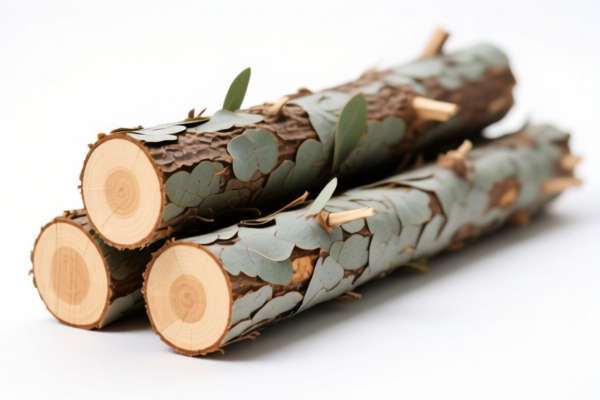
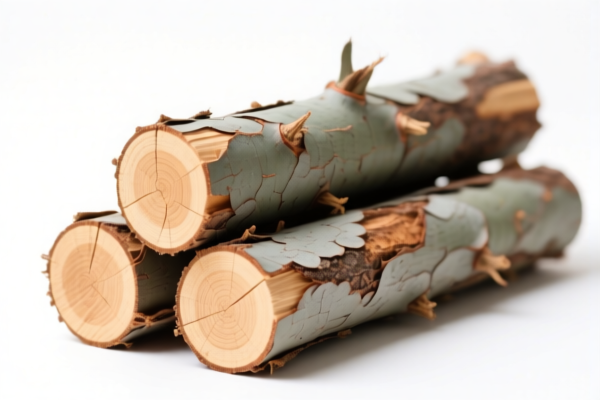
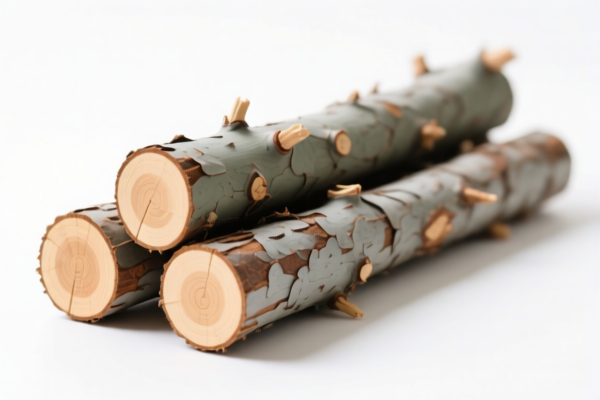

AI Analysis
🌳 Eucalyptus Construction Logs Stripped of Bark (Bark-Stripped Eucalyptus)
🌐 HS Code Reference & Customs Clearance Guide | 2026 Latest Tariff Analysis | Professional Clearance Strategy
📌 I. Product Definition & Classification: Understanding "Bark-Stripped Eucalyptus"
Bark-stripped eucalyptus logs are a versatile raw material widely used in the wood industry. In international trade, their classification depends heavily on their physical state, intended use, and processing level. They are primarily categorized under Chapter 44 (Wood and articles of wood; wood charcoal).
⚠️ Key Distinction Points:
- If intended as fuel (wood chips, logs for burning) → Classified under 4401.
- If intended as raw timber for construction, sawing, or veneer → Classified under 4403 or 4407.
- If considered waste/scrap → Classified under 4401.39.42.90 (specific waste category).
📦 II. HS Code Classification Details (2026 Latest Tariff Alignment)
Based on the provided data, here are the five specific HS Codes applicable to bark-stripped eucalyptus, along with their logical justifications:
| HS Code | Product Description | Logical Justification (Why this code?) | Total Tax Rate |
|---|---|---|---|
4401.49.00.90 |
Wood, whether or not chipped, in logs, in billets or in similar bulk forms; Wood in the form of wood chips or particles; Wood waste and scrap (excluding tarred wood, etc.) | Fuel Classification: Stripped eucalyptus is often used as wood fuel. This code covers wood fuel that fits the material definition of Chapter 44. | 35.0% |
4401.39.42.90 |
Wood waste and scrap | Waste/Scrap Classification: If the eucalyptus logs are considered wood waste or scraps (e.g., off-cuts, unusable segments), they fall under this specific subheading for wood waste/scrap. | 35.0% |
4407.29.02.96 |
Wood sawn or chipped lengthwise, sliced or peeled, whether or not planed, sanded or finger-jointed, of a thickness exceeding 6 mm | Tropical Timber Category: Eucalyptus is classified as tropical wood. This code serves as a fallback/category for other tropical woods that do not fit more specific subheadings, covering sawn/chipped timber. | 35.0% |
4403.98.00.95 |
Wood treated with paint or varnish or otherwise mechanically surface-treated, or impregnated, of a thickness exceeding 6 mm | Rough Sawn Timber: Covers eucalyptus in a rough-sawn or processed state suitable for construction. It fits the category of mechanically surface-treated or processed timber shapes. | 35.0% |
4403.98.00.23 |
Wood treated with paint or varnish or otherwise mechanically surface-treated, or impregnated, of a thickness exceeding 6 mm | Eucalyptus/Pulpwood Specific: Specifically covers Eucalyptus material classified under pulpwood or similar categories within the eucalyptus-specific subheadings. | 35.0% |
🔍 Critical Note:
- All five codes listed above carry the same total tax rate of 35.0% due to current trade policies.
- The choice of HS Code depends on documented intent (fuel vs. construction) and physical presentation (logs, chips, waste).
- Misclassification risk: Declaring construction logs as "fuel" (4401) when intended for building may trigger scrutiny. Conversely, declaring waste as "timber" (4407) may lead to penalties.
💰 III. 2026 Latest Tariff Rate Breakdown (Including Additional Duties & Policy Surcharges)
✅ Applicable Country: United States (US)
✅ Country of Origin: China (CN) (Note: Eucalyptus is often imported from China, Vietnam, or other tropical regions; tax details below assume CN origin based on "122 Clause" reference)
✅ Effective Date: Current applicable rates under Section 301 and IEEPA.
🎯 1. Universal Tax Structure for All Listed HS Codes
| Component | Rate | Legal/Policy Basis |
|---|---|---|
| Base Tariff | 0.0% | Most wood products from China have a base MFN rate of 0% or low rates, but this is overridden by surcharges. |
| Section 301 Additional Tariff | +25.0% | USITC Footnote: Tariffs imposed on Chinese goods under Section 301 of the Trade Act of 1974. |
| IEEPA / Section 122 Clause Tariff | +10.0% | Additional surcharge under the International Emergency Economic Powers Act (IEEPA), often referred to as the "122 Clause" in some internal compliance systems for specific high-risk categories. |
| Total Effective Tariff | 35.0% | Sum of Base (0%) + Section 301 (25%) + IEEPA/122 Clause (10%). |
📌 Explanation:
- The 25% surcharge is standard for most Chinese-origin wood products under Section 301.
- The 10% IEEPA surcharge is applied specifically to certain categories, including some wood products, under current emergency economic powers.
- Combined Effect: Any declaration of bark-stripped eucalyptus logs will face a flat 35% tariff, regardless of whether it’s classified as fuel, waste, or timber.
🛠️ IV. Customs Clearance Practical Advice (Expert Pitfall Avoidance Guide)
✅ 1. Required Documentation Checklist
| Document | Mandatory? | Purpose |
|---|---|---|
| ✅ Product Specifications | ✔️ | Must detail: Species (Eucalyptus), Treatment (Bark-Stripped), Form (Logs/Chips), Dimensions, Moisture Content. |
| ✅ Commercial Invoice | ✔️ | Clearly state: "Bark-Stripped Eucalyptus Logs" – do not use vague terms like "Wood" or "Fuel" unless accurate. |
| ✅ Packing List | ✔️ | Specify weight, number of packages, and whether logs are bundled or loose. |
| ✅ Phytosanitary Certificate | ✔️ | Critical: Eucalyptus is susceptible to pests. Must include treatment records (e.g., heat treatment, fumigation) to meet ISPM 15 standards. |
| ✅ Bill of Lading/Air Waybill | ✔️ | Must match invoice description and HS Code. |
| ✅ Certificate of Origin | ✔️ | To prove origin (China vs. other). If from Vietnam, different tariffs may apply (check for FTA benefits). |
✅ 2. Declaration Strategy & Key Tips
🔥 “Accurate Description, Correct Intent, Phyto-Safe, Tariff Fixed!”
| Scenario | Recommended HS Code | Declaration Tip |
|---|---|---|
| Logs for Wood Chips/Fuel | 4401.49.00.90 |
Declare as "Wood Fuel" or "Eucalyptus for Chipping". Provide proof of intended use if asked. |
| Waste/Off-Cuts | 4401.39.42.90 |
Declare as "Wood Waste/Scrap". Must show non-commercial quality or processing byproducts. |
| Sawn Timber for Construction | 4407.29.02.96 or 4403.98.00.95 |
Declare as "Sawn Tropical Timber". Provide sawmill documentation. |
| Eucalyptus Pulpwood | 4403.98.00.23 |
Declare as "Eucalyptus Pulpwood". Specify if intended for paper pulp production. |
⚠️ Critical Warning:
- Do not misdeclare construction timber as "fuel" to avoid certain inspections. US Customs (CBP) may request proof of end-use.
- Phytosanitary Compliance: Eucalyptus logs are high-risk for invasive pests. Without a valid Phytosanitary Certificate, the shipment will be held, treated at your cost, or rejected.
✅ 3. Special Cases & Handling
| Situation | Handling Advice |
|---|---|
| Mixed Loads (Fuel + Timber) | Do not mix in one shipment. Different HS Codes and inspection requirements. Ship separately. |
| Heat-Treated Logs | Ensure IPPC Mark (HT) is visible on logs or packaging. Without it, CBP will reject. |
| Treated with Chemicals | Declare if preservative-treated (e.g., for construction). May require MSDS or additional permits. |
| Origin from Non-China Countries | If from Vietnam/Indonesia, IEEPA 10% may not apply. Check current tariff lists for preferential rates. |
🌍 V. Global Market Comparison (2026 Latest)
| Country/Region | Recommended HS Code | Approx. Tariff (China Origin) | Key Requirements | Notes |
|---|---|---|---|---|
| 🇺🇸 USA | 4401.49.00.90 / 4403.98.00.95 etc. |
35% (0% base + 25% + 10%) | Phytosanitary Cert, IPPC Mark | High scrutiny on wood pests. 35% is fixed for all listed codes. |
| 🇨🇳 China | 4403.98.00.95 |
5% - 10% | Fumigation Cert | Lower tariffs for domestic trade; imports face different rules. |
| 🇪🇺 EU | 4403.49.95 |
0% - 6% (varies) | Fumigation/Heat Treatment | No Section 301. Strict phytosanitary rules. |
| 🇯🇵 Japan | 4403.49.95 |
2.5% - 6% | Phytosanitary Cert | Low base tariffs. Focus on pest control. |
📌 Conclusion:
- USA imposes the highest total tariff (35%) due to combined Section 301 and IEEPA surcharges.
- Phytosanitary compliance is non-negotiable for eucalyptus globally.
- Tariff Arbitrage: Consider sourcing from non-China countries (e.g., Vietnam, Brazil) to potentially reduce tariffs, but verify IEEPA applicability.
📌 VI. Common Errors & Pitfall Guide (Lessons Learned)
❌ Error 1: Declaring construction logs as "Wood Chips" to avoid inspection
👉 Consequence: CBP inspection reveals whole logs → Penalty + Delay + Possible Seizure.
❌ Error 2: Missing Phytosanitary Certificate
👉 Consequence: Shipment quarantined or rejected. Cost of re-export or destruction exceeds tariff.
❌ Error 3: Misclassifying "Bark-Stripped" as "Unprocessed"
👉 Consequence: Incorrect HS Code → 35% tariff still applies, but may trigger additional documentation requests.
❌ Error 4: Using generic "Wood" in Invoice Description
👉 Consequence: CBP may assess 180% duty for misdeclaration or require detailed breakdown → High Risk.
✅ Correct Practice:
“Bark-Stripped Eucalyptus Logs, Heat-Treated, IPPC Marked, HS Code: 4403.98.00.95, Origin: China”
🎯 VII. Conclusion: Precision Classification for Smooth Clearance
🎯 Remember the Key Points:
🔹 “35% is the floor”: All listed HS Codes for eucalyptus from China carry 35% total tariff.
🔹 “Phyto is Priority”: Without phytosanitary clearance, no amount of tax planning will save your shipment.
🔹 “Describe Precisely”: Use exact terms: “Bark-Stripped Eucalyptus Logs” – avoid vague terms.
📌 Pro Tip:
- If your eucalyptus is sourced from Vietnam or Indonesia, investigate IEEPA exemptions or FTA benefits.
- Consider Advance Ruling from CBP if your product has unique characteristics to avoid post-import audits.
📣 Immediate Action Required:
📞 Engage a Licensed Customs Broker + Verify Phytosanitary Status + Confirm HS Code Accuracy
🚀 Ensure Your Eucalyptus Logs Clear Smoothly, Minimize Costs, and Avoid Delays!
✨ Professional Customs Clearance Starts with Accurate Classification!
💼 Every Percent of Tariff Matters – Protect Your Margin!
Customer Reviews
About HS Code Classification
The Harmonized System (HS) is an internationally standardized nomenclature developed by the World Customs Organization (WCO) to classify traded products. Over 200 countries use the HS system as the basis for customs tariffs, trade statistics, and import/export regulations.
Each HS code follows a hierarchical structure:
- Chapter (2 digits) — Broad category of goods (e.g., Chapter 84: Machinery and Mechanical Appliances)
- Heading (4 digits) — More specific grouping within the chapter
- Subheading (6 digits) — Internationally standardized breakdown, used by all WCO member countries
- National subdivisions (8-10 digits) — Country-specific extensions for further classification, such as US HTSUS 10-digit codes
Correct HS code classification is essential for smooth customs clearance, accurate duty payment, and compliance with trade regulations. Misclassification can lead to customs delays, overpayment of duties, or penalties.
When importing from CN to US, the applicable tariff rates may include:
- Most-Favored-Nation (MFN) rate — The standard duty rate applied to WTO members
- General rate — Applied to countries without trade agreements
- Trade remedy duties — Additional tariffs such as Section 301 (anti-dumping), Section 232 (national security), or countervailing duties
The information provided on this page is for reference purposes only. For official classification, please consult with your local customs authority or a licensed customs broker.