Eucalyptus Logs
CN → US| HS Code | Tariff Rate | Origin | Destination | Doc |
|---|---|---|---|---|
| 4403980028 | 35.0% | CN | US | Official Doc |
| 4401120000 | 35.0% | CN | US | Official Doc |
| 4403980095 | 35.0% | CN | US | Official Doc |
| 9401698090 | 35.0% | CN | US | Official Doc |
| 9403608093 | 35.0% | CN | US | Official Doc |
Product Images
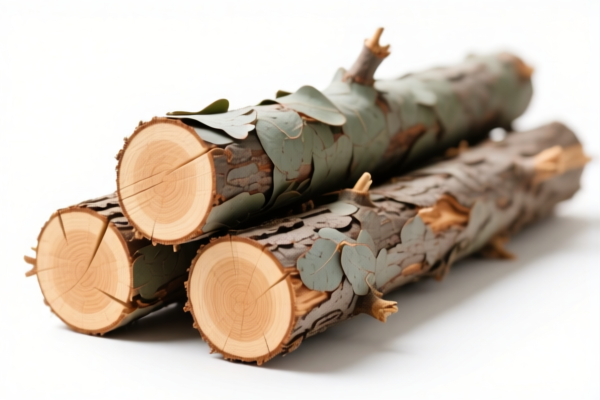
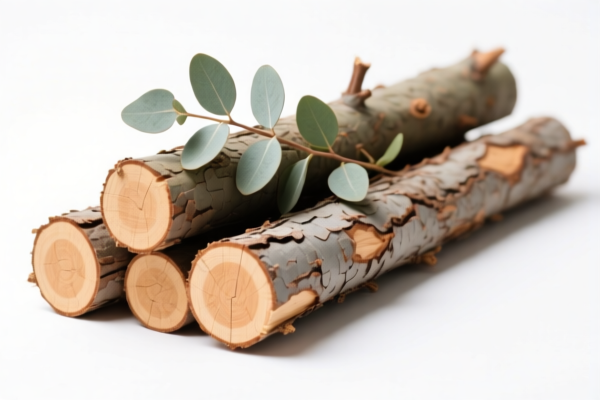
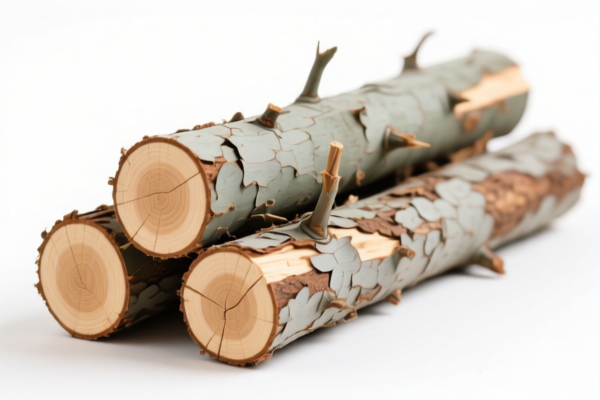
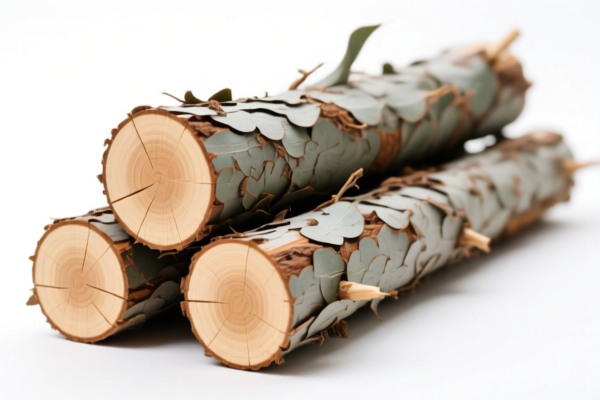
AI Analysis
🌿 Eucalyptus Logs (桉木原木) & 🪑 Eucalyptus Furniture
🌐 HS Code Reference & Customs Clearance Guide | 2026 Latest Tariff Analysis | Professional Clearance Strategy
📌 One, Product Definition and Classification: Do You Really Understand "Eucalyptus"?
Eucalyptus is a fast-growing timber species widely used in international trade. In customs classification, it is strictly divided based on its processing state and end-use. It is not just "wood"; it is either raw material (logs/sawn timber) or finished goods (furniture).
1. Raw Timber Category (Logs & Sawn Wood):
Unroughly Sawn: Raw logs, simply debarked or slightly squared.
Fuel Wood: Logs cut to lengths suitable for burning (e.g., <18cm diameter).
2. Finished Furniture Category:
Seating: Chairs, stools, benches made of eucalyptus wood frames.
General Furniture: Tables, cabinets, shelves made of eucalyptus wood.
⚠️ Key Distinction Point:
- If the item is raw, unprocessed, or merely roughly squared → Classify under Chapter 44 (Wood).
- If the item is manufactured into a specific shape (chair, table) → Classify under Chapter 94 (Furniture).
- Critical Risk: Misclassifying finished furniture as raw logs (or vice versa) can lead to severe penalties due to the 35% combined tariff burden.
📦 Two, HS Code Classification Details (2026 Latest Tariff Authority Comparison)
| HS Code | Product Description | Application Scenario | Tax Rate (Total) |
|---|---|---|---|
4403.98.00.28 |
Eucalyptus Logs/Planks, Roughly Sawn | Raw timber, construction material, unfinished wood | 35.0% |
4401.12.00.00 |
Eucalyptus Logs (Fuel Wood) | Small diameter logs, firewood, biomass fuel | 35.0% |
4403.98.00.95 |
Eucalyptus Logs (General) | Standard eucalyptus timber, sawn but not finely worked | 35.0% |
9401.69.80.90 |
Eucalyptus Furniture (Seating) | Chairs, stools, benches with eucalyptus frames | 35.0% |
9403.60.80.93 |
Eucalyptus Furniture (Other) | Tables, cabinets, shelves, general wooden furniture | 35.0% |
🔍 Key Reminder:
- All listed items above carry a uniform total tax rate of 35.0%.
- This rate is NOT just the base tariff; it includes multiple surcharges. See below for the breakdown.
💰 Three, 2026 Latest Tariff Rate Detailed Explanation (Including Surcharges & Policy Add-ons)
✅ Applicable Country: United States (US)
✅ Country of Origin: China (CN)
✅ Effective Time: Current rates apply (Post-Section 301 & 122 adjustments)
🎯 1. 4403.98.00.28 / 4403.98.00.95 / 4401.12.00.00 — Eucalyptus Timber & Logs
| Item | Content |
|---|---|
| Base Tariff Rate | 0.0% (Ad Valorem) |
| Section 301 Surcharge | +25.0% (Additional Duty on Chinese Goods) |
| Section 122 Surcharge | +10.0% (Additional Duty under 19 U.S.C. 1677j) |
| Total Tax Rate | 35.0% |
| Tax Calculation | CIF Value × 35% |
| De Minimis Exemption | ❌ Not Available (Deny De Minimis) |
| Legal Basis Path | HTSUS:4403.98 → USITC Footnote 9903.88.01 → IEEPA/301/122 |
📌 Explanation:
- "Base Tariff 0%": Eucalyptus logs generally have a low or zero base Most Favored Nation (MFN) tariff.
- "301 Tariff 25%": Imposed under U.S. Trade Law Section 301 against China.
- "122 Tariff 10%": Imposed under Section 122 of the Trade Act of 1974 (for national security/economic reasons).
- Combined 35%: This is a high-cost classification. Importers must factor this into their landed cost immediately.
🎯 2. 9401.69.80.90 / 9403.60.80.93 — Eucalyptus Furniture
| Item | Content |
|---|---|
| Base Tariff Rate | 0.0% (Ad Valorem) |
| Section 301 Surcharge | +25.0% (Additional Duty on Chinese Goods) |
| Section 122 Surcharge | +10.0% (Additional Duty under 19 U.S.C. 1677j) |
| Total Tax Rate | 35.0% |
| Tax Calculation | CIF Value × 35% |
| De Minimis Exemption | ❌ Not Available (Deny De Minimis) |
| Legal Basis Path | HTSUS:9401/9403 → USITC Footnote 9903.88.01 → IEEPA/301/122 |
📌 Note:
- Whether it is a chair (9401) or a table (9403), the tariff structure is identical.
- No preferential treatment is available for eucalyptus furniture from China under current policies.
- High Risk Area: Furniture is often misdeclared as "Wood Parts" to avoid 35%. This is a major audit target.
🛠️ Four, Customs Clearance Practical Advice (Battle-Tested Pitfall Avoidance Guide)
✅ 1. Required Documents Checklist (None Can Be Missing)
| Document | Mandatory? | Description |
|---|---|---|
| ✅ Commercial Invoice | ✔️ | Must clearly state "Eucalyptus" (scientific name: Eucalyptus sp.) and HS Code. |
| ✅ Packing List | ✔️ | Detail weight, volume, and number of packages. |
| ✅ Bill of Lading (B/L) | ✔️ | Standard shipping document. |
| ✅ Phytosanitary Certificate | ✔️ | Critical for Wood! Issued by origin country to prove no pests/diseases. |
| ✅ ISPM 15 Marking Proof | ✔️ | Logs/furniture must bear the IPPC mark if packaged in wood. |
| ✅ Product Photos | ✔️ | Show raw logs vs. finished furniture to support HS classification. |
✅ 2. Declaration Tips (Key Mantras)
🔥 "Logs vs. Furniture: Don't Mix! Phytosanitary is Key! Tariff is 35%!"
| Scenario | Correct Declaration | Wrong Practice |
|---|---|---|
| Raw Eucalyptus Logs | 4403.98.00.28 or 4401.12.00.00 |
Declaring as "Furniture Parts" → Customs rejection |
| Finished Eucalyptus Chair | 9401.69.80.90 |
Declaring as "Wood Planks" → 35% tariff + Penalty |
| Eucalyptus Table | 9403.60.80.93 |
Declaring as "Wood Waste" → Illegal Smuggling |
| Packaging Material | Separate line item | Mixing packaging with goods → Inspection delay |
✅ 3. Special Situations Handling
| Situation | Handling Advice |
|---|---|
| Pest Control | Provide valid Phytosanitary Certificate. Without it, goods will be destroyed or returned. |
| Wood Packaging | Ensure all pallets/boxes have ISPM 15 stamp. Non-compliant packaging causes clearance holds. |
| Brand/Model | For furniture, include brand and model number. Helps distinguish from generic "wood". |
| Value Declaration | Declare accurate CIF value. Under-declaration triggers audits and potential fines. |
🌍 Five, Global Major Market Clearance Comparison (2026 Latest)
| Country/Region | Recommended HS Code | Tariff (China Origin) | Certification Requirements | Notes |
|---|---|---|---|---|
| 🇺🇸 USA | 4403.98.00.95 / 9403.60.80.93 |
35% (Base 0% + 301 25% + 122 10%) | Phytosanitary + ISPM 15 | Highest barrier. No de minimis. |
| 🇨🇳 China | 4403.98.00.95 / 9403.60.80.93 |
5-10% (Import) | Phytosanitary | Lower tariffs than US. |
| 🇪🇺 EU | 4403.98.00.95 / 9403.60.80.93 |
0-5% | EUTM (EUDR) Compliance | New Regulation: Deforestation-free proof required. |
| 🇦🇺 Australia | 4403.98.00.95 |
5% | Biosecurity Declaration | Strict biosecurity controls. |
| 🇯🇵 Japan | 4403.98.00.95 |
5-6% | Phytosanitary | Standard import procedures. |
📌 Conclusion:
- USA: 35% tariff is the dominant cost factor. Phytosanitary compliance is the primary operational hurdle.
- EU: New EUDR (EU Deforestation Regulation) requires proof that the eucalyptus did not contribute to deforestation. Traceability is key.
- Other Markets: Generally lower tariffs but strict biosecurity.
📌 Six, Common Mistakes & Pitfall Avoidance (Blood-Tears Lessons)
❌ Mistake 1: Declaring finished furniture as "Wood Logs" to avoid higher processing fees
👉 Consequence: Customs inspection reveals furniture. Back-tax 35% + Fine + Storage Fees!
❌ Mistake 2: Ignoring Phytosanitary Certificate
👉 Consequence: Goods detained at port. Re-export or Destruction at importer's cost.
❌ Mistake 3: Missing ISPM 15 Mark on Pallets
👉 Consequence: Entire shipment held until wood packaging is fumigated or replaced. Delay 7-14 days.
❌ Mistake 4: Using vague descriptions like "Wood Product"
👉 Consequence: Customs classifies under highest duty rate. 35% is standard, but vague descriptions increase audit risk.
✅ Correct Practice:
"Eucalyptus Logs, Scientific Name: Eucalyptus sp., HS Code: 4403.98.00.95, Phytosanitary Cert No. [XXX], ISPM 15 Marked"
🎯 Seven, Conclusion: Professional Declaration Saves Money and Time!
🎯 Remember the Mantra:
🔹 "Logs vs. Furniture: Be Precise!"
🔹 "35% is the Price of Truth (China to US)!"
🔹 "No Phyto Cert? No Entry!"
🔹 "ISPM 15 on Pallets Avoids Delays!"
📌 Pro Tip:
If your eucalyptus products are sourced from Vietnam, Malaysia, or Indonesia, check for preferential tariffs under FTAs (e.g., CPTPP, RCEP). However, for China-origin goods, the 35% tariff is fixed.
Recommendation: Apply for a Pre-Ruling from CBP if the product type is borderline between "log" and "furniture part".
📣 Immediate Action:
📞 Contact your freight forwarder + Provide Phytosanitary Certificate + Verify ISPM 15 on packaging.
🚀 Let your eucalyptus products clear customs smoothly, avoid 35% surprises, and maximize profits!
✨ Professional clearance starts with precise classification!
💼 Every cent of tariff is worth calculating!
Customer Reviews
About HS Code Classification
The Harmonized System (HS) is an internationally standardized nomenclature developed by the World Customs Organization (WCO) to classify traded products. Over 200 countries use the HS system as the basis for customs tariffs, trade statistics, and import/export regulations.
Each HS code follows a hierarchical structure:
- Chapter (2 digits) — Broad category of goods (e.g., Chapter 84: Machinery and Mechanical Appliances)
- Heading (4 digits) — More specific grouping within the chapter
- Subheading (6 digits) — Internationally standardized breakdown, used by all WCO member countries
- National subdivisions (8-10 digits) — Country-specific extensions for further classification, such as US HTSUS 10-digit codes
Correct HS code classification is essential for smooth customs clearance, accurate duty payment, and compliance with trade regulations. Misclassification can lead to customs delays, overpayment of duties, or penalties.
When importing from CN to US, the applicable tariff rates may include:
- Most-Favored-Nation (MFN) rate — The standard duty rate applied to WTO members
- General rate — Applied to countries without trade agreements
- Trade remedy duties — Additional tariffs such as Section 301 (anti-dumping), Section 232 (national security), or countervailing duties
The information provided on this page is for reference purposes only. For official classification, please consult with your local customs authority or a licensed customs broker.