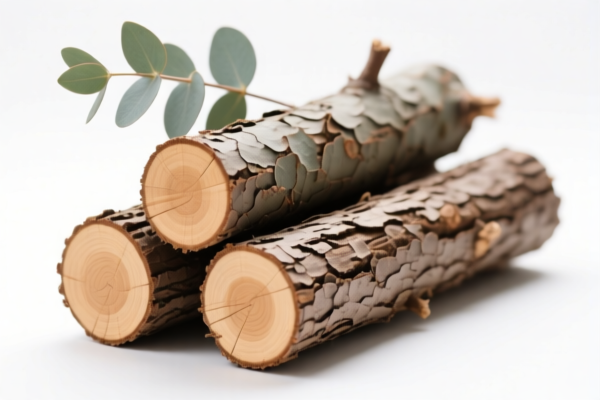
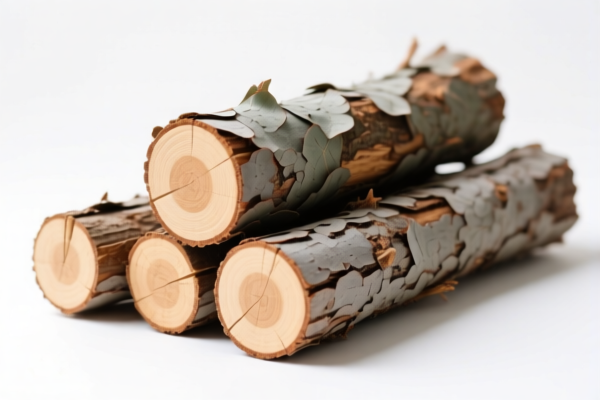
Eucalyptus Logs (Debarked or Bark on)
CN → US| HS Code | Tariff Rate | Origin | Destination | Doc |
|---|---|---|---|---|
| 4403980023 | 35.0% | CN | US | Official Doc |
| 4403980028 | 35.0% | CN | US | Official Doc |
| 4403980095 | 35.0% | CN | US | Official Doc |
Product Images


AI Analysis
🌳 Eucalyptus Logs (Rough Wood)
Whether or not stripped of bark or sap-wood, or roughly squared: Poles, Piles, Posts & Pulpwood
🌐 HS Code Reference & Customs Clearance Guide | 2026 Latest Tariff Analysis | Professional Clearance Strategy
📌 一、 Product Definition & Classification: What Exactly Are "Eucalyptus Logs"?
Eucalyptus logs are raw timber materials, the primary source for pulp, paper, construction, and furniture industries. In international trade, "wood in the rough" is strictly defined under Chapter 44 of the Harmonized System (HS).
These logs are categorized based on their specific use and physical form:
1. Structural Logs (Poles, Piles, Posts): - Used for construction, fencing, railway ties, or marine pilings. - Typically retains a cylindrical shape or is roughly squared. - May be debarked or retain bark.
2. Industrial Logs (Pulpwood): - Used primarily for paper pulp production. - Cut to specific lengths for chipping or processing. - Can be debarked or with bark.
⚠️ Key Distinction Point:
- If the wood is roughly squared or used for structural purposes (poles/posts) → Classified under 4403.98.00.28
- If the wood is intended for pulp production → Classified under 4403.98.00.23
- Note: Even if debarked or stripped of sapwood, as long as it is not sawn, planed, or otherwise worked beyond "rough squaring," it remains in Chapter 44.
📦 二、 HS Code Classification Details (2026 Latest Tariff Authority对照)
| HS Code | Product Description | Application Scenario | Wood Type |
|---|---|---|---|
4403.98.00.28 |
Eucalyptus Wood, Rough: Poles, Piles, and Posts | Construction materials, fencing, railway sleepers, marine use | Eucalyptus spp. |
4403.98.00.23 |
Eucalyptus Wood, Rough: Pulpwood | Paper pulp industry, chipboard production | Eucalyptus spp. |
🔍 Critical Reminder:
- Both codes fall under HS Chapter 44 (Wood and articles of wood).
- "Roughly squared" means the wood has been hewn or cut into a square/rectangular shape but not planed or smoothed.
- Debarked vs. Barked: Does not change the HS code, but must be clearly declared in the invoice.
- Species: Must be explicitly stated as Eucalyptus (Eucalyptus spp.). Misdeclaring species can lead to severe penalties.
💰 三、 2026 Latest Tariff Rate Breakdown (Including Surcharges & Policy Add-ons)
✅ Applicable Country: United States (US)
✅ Origin: China (CN) (Assumed based on common trade context; adjust if origin differs)
✅ Effective Time: Current rates apply as per 2026 trade policies.
🎯 1. 4403.98.00.28 — Eucalyptus Poles, Piles, Posts
| Item | Content |
|---|---|
| Base Tariff | 0.0% (ad valorem) |
| Additional Tariff (Section 301 / USITC) | +25.0% |
| Total Tax Rate | 25.0% |
| Tax Calculation | CIF Value × 25% |
| De Minimis Exemption | ❌ Not Applicable (High-value raw material) |
| Legal Basis Path | USITC:4403.98.00.28 → FOOTNOTE:301.4403 |
📌 Explanation:
- Although the base tariff is 0%, the 25% additional tariff applies due to US Trade Law Section 301 measures against Chinese-origin wood products.
- This is a flat 25% on the total CIF value.
- No other surcharges (such as IEEPA) are listed for this specific HS code in the provided data.
🎯 2. 4403.98.00.23 — Eucalyptus Pulpwood
| Item | Content |
|---|---|
| Base Tariff | 0.0% (ad valorem) |
| Additional Tariff (Section 301 / USITC) | +25.0% |
| Total Tax Rate | 25.0% |
| Tax Calculation | CIF Value × 25% |
| De Minimis Exemption | ❌ Not Applicable |
| Legal Basis Path | USITC:4403.98.00.23 → FOOTNOTE:301.4403 |
📌 Note:
- Same tariff rate as poles/posts.
- Even though pulpwood is often less processed, it is still subject to the 25% additional duty.
- Origin is critical: If sourced from Vietnam, Mexico, or other free-trade partners, 0% may apply. Do not assume origin = China.
🛠️ 四、 Customs Clearance Practical Advice (Avoid Pitfalls)
✅ 1. Required Documentation Checklist
| Document | Required? | Description |
|---|---|---|
| ✅ Commercial Invoice | ✔️ | Must clearly state: "Eucalyptus spp. Logs, Debarked/With Bark, Pulpwood/Poles" |
| ✅ Packing List | ✔️ | Detail gross/net weight, volume (CBM), and number of logs |
| ✅ Phytosanitary Certificate | ✔️ | Mandatory for wood products. Issued by the country of origin’s plant quarantine authority |
| ✅ Fumigation Certificate | ✔️ | If required by destination country (e.g., ISPM 15 compliant if packed in wood pallets) |
| ✅ Species Declaration | ✔️ | Explicitly state Eucalyptus spp. to avoid misclassification |
| ✅ Bill of Lading | ✔️ | Ensure HS Code 4403.98.00.28 or 4403.98.00.23 is noted |
✅ 2. Declaration Tips (Key Mnemonics)
🔥 “Raw Wood, Not Sawn; HS 4403, Tax 25%; Species Must Be Clear!”
| Scenario | Correct Declaration | Wrong Practice |
|---|---|---|
| Poles/Posts | 4403.98.00.28 |
Misdeclare as furniture parts → Higher tax |
| Pulpwood | 4403.98.00.23 |
Misdeclare as processed lumber → Delay + Penalty |
| Debarked Logs | Clearly state "Debarked" | Vague description "Wood Logs" → Reinspection |
| Roughly Squared | Describe as "Roughly Squared" | Claim as "Planed" → Wrong Chapter (4403 vs 4407) |
✅ 3. Special Situations
| Situation | Handling Advice |
|---|---|
| Mixed Loads | If poles and pulpwood are shipped together, separate HS codes on the invoice to avoid confusion. |
| Origin Change | If Eucalyptus is harvested in Australia or Indonesia, verify if 0% tariff applies (US has specific FTAs or duty-free rates for some species). China-origin = 25%. |
| ISPM 15 Compliance | If wood pallets/crates are used, they must be heat-treated or fumigated and marked with the ISPM 15 stamp. |
| Value Fluctuation | Tariff is ad valorem. Monitor CIF value closely; small changes in freight/insurance affect final tax. |
🌍 五、 Global Market Comparison (2026 Latest)
| Country/Region | Recommended HS Code | Tariff (China Origin) | Certification | Notes |
|---|---|---|---|---|
| 🇺🇸 USA | 4403.98.00.28 / .23 |
25% (Section 301) | Phytosanitary + ISPM 15 | High tax due to trade policies |
| 🇨🇳 China | 4403.98.00.28 / .23 |
0% (MFN) | Phytosanitary | Import duty-free for raw wood |
| 🇪🇺 EU | 4403.98.00.28 / .23 |
2.5% (Typical) | EUTR Compliance | No 25% surcharge, but strict EUTR rules |
| 🇦🇺 Australia | 4403.98.00.28 / .23 |
0% (GSP/MFN) | Biosecurity Permit | Strict biosecurity checks |
📌 Conclusion:
- USA is the most costly market due to the 25% additional tariff.
- EU and China have much lower or zero tariffs, but EUTR (EU) and Phytosanitary requirements are strict.
- Always verify origin certificates to avoid paying 25% if the wood is from a non-China source.
📌 六、 Common Mistakes & Pitfalls (Blood & Tears Lessons)
❌ Mistake 1: Declaring "Eucalyptus Wood" without specifying Poles, Posts, or Pulpwood
👉 Consequence: Customs may assign a generic code with higher default tariff (e.g., 5-10%) or hold shipment for inspection.
❌ Mistake 2: Failing to provide a Phytosanitary Certificate
👉 Consequence: Shipment rejected or destroyed at port. Wood products are high-risk for pests.
❌ Mistake 3: Misdeclaring species (e.g., calling Eucalyptus "Acacia")
👉 Consequence: Fines for fraud, plus potential biosecurity violations.
❌ Mistake 4: Ignoring Section 301 for China-origin wood
👉 Consequence: Underpayment of 25% tax → Back taxes + penalties.
✅ Correct Practice:
"Eucalyptus spp. Logs, Roughly Squared, Debarked, Intended for Pulp/Poles, Origin: China, HS Code: 4403.98.00.23/28, Phytosanitary Certificate Attached"
🎯 VII. Conclusion: Precision in Declaration Saves Money!
🎯 Remember the Mnemonic:
🔹 "Raw Wood, HS 4403, 25% Tax if China, Phytosanitary is Key!"
🔹 "Pulp vs. Posts, Code Changes, But Tax Stays 25%!"
📌 Pro Tip:
If your Eucalyptus logs are sourced from Vietnam, Malaysia, or Indonesia, apply for Certificate of Origin to potentially qualify for 0% or lower tariffs under US Trade Agreements.
Pre-clearance consultation with a licensed customs broker is highly recommended for high-volume wood shipments.
📣 Immediate Action:
📞 Contact a Customs Broker + Provide Species Details + Obtain Phytosanitary Certificate
🚀 Ensure smooth clearance, avoid port delays, and optimize your supply chain costs!
✨ Professional clearance starts with accurate classification!
💼 Every dollar of tax saved is pure profit!
Customer Reviews
About HS Code Classification
The Harmonized System (HS) is an internationally standardized nomenclature developed by the World Customs Organization (WCO) to classify traded products. Over 200 countries use the HS system as the basis for customs tariffs, trade statistics, and import/export regulations.
Each HS code follows a hierarchical structure:
- Chapter (2 digits) — Broad category of goods (e.g., Chapter 84: Machinery and Mechanical Appliances)
- Heading (4 digits) — More specific grouping within the chapter
- Subheading (6 digits) — Internationally standardized breakdown, used by all WCO member countries
- National subdivisions (8-10 digits) — Country-specific extensions for further classification, such as US HTSUS 10-digit codes
Correct HS code classification is essential for smooth customs clearance, accurate duty payment, and compliance with trade regulations. Misclassification can lead to customs delays, overpayment of duties, or penalties.
When importing from CN to US, the applicable tariff rates may include:
- Most-Favored-Nation (MFN) rate — The standard duty rate applied to WTO members
- General rate — Applied to countries without trade agreements
- Trade remedy duties — Additional tariffs such as Section 301 (anti-dumping), Section 232 (national security), or countervailing duties
The information provided on this page is for reference purposes only. For official classification, please consult with your local customs authority or a licensed customs broker.