Eucalyptus Logs Unstripped or Unpeeled
CN → US| HS Code | Tariff Rate | Origin | Destination | Doc |
|---|---|---|---|---|
| 4403980023 | 35.0% | CN | US | Official Doc |
| 4403980028 | 35.0% | CN | US | Official Doc |
| 4401120000 | 35.0% | CN | US | Official Doc |
| 4403980095 | 35.0% | CN | US | Official Doc |
| 4403210130 | 35.0% | CN | US | Official Doc |
Product Images
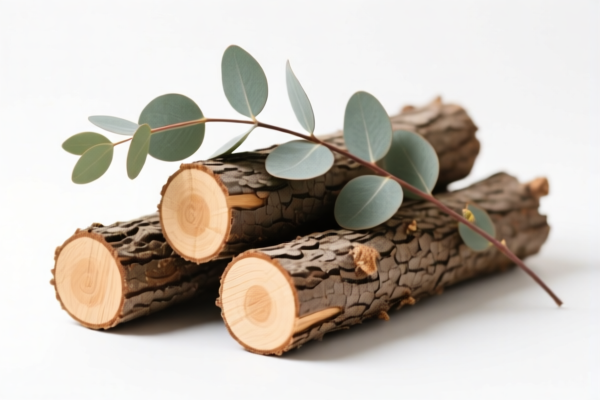
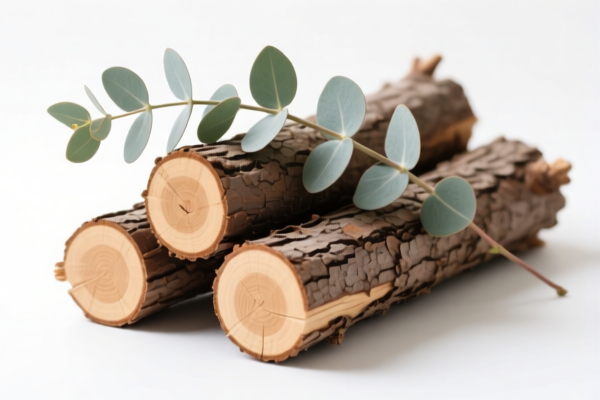
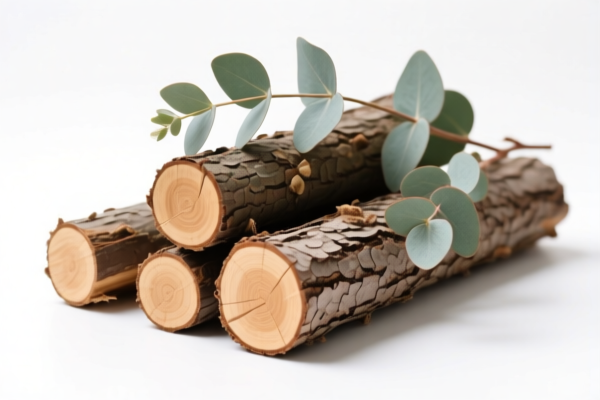

AI Analysis
🌲 Eucalyptus Logs: Unstripped/Unpeeled (Raw Timber Trade Guide)
🌐 HS Code Reference & Customs Clearance Guide | 2026 Latest Tariff Analysis | Professional Level Clearance Strategy
📌 1. Product Definition & Classification: What Exactly Are "Unstripped/Unpeeled Logs"?
Eucalyptus logs (unstripped or unpeeled) refer to timber harvested from Eucalyptus trees that has been felled, delimbed (if necessary), but has not had the bark removed (unstripped) or peeled to reveal the smooth wood beneath. In international trade, these are categorized as Primary Wood Products or Roughly Squared Timber.
They are distinct from processed wood because they retain their natural form and bark. Their classification depends heavily on the intended use: 1. For Paper/Pulp Production: Often classified under Chapter 44 as "wood in the rough" or specific sub-headings for pulpwood. 2. For Fuel: Classified as "fuel wood." 3. For General Timber/Construction: Classified as "roughly squared" or other timber.
⚠️ Key Distinction:
- Unstripped/Unpeeled: Bark is present. Falls under 4403 (Wood freshly felled, whether or not stripped of bark or sapwood).
- Peeled/Stripped: No bark. May fall under different sub-categories or face different phytosanitary rules.
- Processed: Planks, boards, etc. → Fall under Chapter 44 Sections 2/3, not 4403.
📦 2. HS Code Classification Matrix (2026 Latest Tariff Reference)
Based on the provided data, here are the four possible HS Codes for Eucalyptus Logs depending on their specific material state and declared end-use. All share the same tax structure.
| HS Code | Product Description | Scenario / Use Case | Key Characteristics |
|---|---|---|---|
4403.98.00.23 |
Eucalyptus Roughly Squared Timber (Pulp/Paper Grade) | Material: Eucalyptus. Form: Roughly squared. Intended for: Pulp/Paper wood. | Matches "Roughly Squared" definition + Eucalyptus Pulpwood requirement. |
4403.98.00.28 |
Eucalyptus Logs (General Timber) | Material: Eucalyptus. Form: Logs/Roughly Squared. No conflict with poles/telegraph posts. | General purpose Eucalyptus logs, not specifically for pulp or fuel. |
4401.12.00.00 |
Eucalyptus Fuel Wood | Material: Non-coniferous (Eucalyptus is hardwood). Form: Fuel wood. | Specifically declared as fuel. Must meet "fuel wood" physical criteria. |
4403.98.00.95 |
Other Eucalyptus Roughly Squared Timber | Material: Eucalyptus. Form: Roughly Squared. Catch-all for other uses. | General "Other" category for roughly squared Eucalyptus timber. |
🔍 Critical Note:
- All four codes fall under Chapter 44, Section 1, heading 4403 (except 4401.12 which is Chapter 44 Heading 4401 for Fuel).
- The "Non-Coniferous" (Hardwood) classification is crucial. Eucalyptus is a hardwood, so it never falls under "Coniferous" (Softwood) codes like 4403.11-4403.19.
💰 3. 2026 Latest Tariff Rate Breakdown (Including Surcharges & Policy Add-ons)
✅ Applicable Country: USA (US)
✅ Origin: China (CN)
✅ Effective Date: November 10, 2025 (for subsequent imports)
All listed HS Codes share an identical tax structure:
| Item | Rate/Details |
|---|---|
| Base Tariff (MFN) | 0.0% |
| Section 301 Additional Tariff | +25.0% |
| Section 122 Tariff (IEEPA) | +10.0% |
| Total Effective Tariff | 35.0% |
| Tax Calculation | CIF Value × 35% |
| De Minimis Exemption | ❌ Not Eligible (Deny De Minimis) |
| Legal Basis Path | USITC:4403.98.00.xx → FOOTNOTE:301 → IEEPA:122 |
📌 Explanation:
- 0% Base: Wood products often have low or zero base MFN rates.
- +25% Section 301: Standard trade war tariff on Chinese wood products.
- +10% Section 122: Additional tariff under the International Emergency Economic Powers Act (IEEPA) targeting Chinese imports.
- Total 35%: This is a high-cost import. Profit margins must account for this.
- No De Minimis: Shipments under $800 do not escape these tariffs. Full documentation is required for every shipment.
🛠️ 4. Customs Clearance Practical Advice (Avoiding Pitfalls)
✅ 1. Required Documentation Checklist
| Document | Mandatory? | Notes |
|---|---|---|
| Phytosanitary Certificate | ✔️ YES | Issued by the country of origin. Must state: "Free from live wood-boring insects and wood-infesting pathogens." |
| Commercial Invoice | ✔️ YES | Must clearly state: "Eucalyptus Logs, Unstripped/Unpeeled" and specify HS Code. |
| Packing List | ✔️ YES | Detail volume (CBM), weight (lbs/kg), and number of logs. |
| Bill of Lading (B/L) | ✔️ YES | Must match invoice and packing list. |
| Proof of Treatment (Fumigation) | ✔️ Recommended | ISPM 15 compliance is critical. Even if bark is present, fumigation may be required by US Customs and Border Protection (CBP) or USDA APHIS. |
| End-Use Declaration | ✔️ Optional but Helpful | Specify if used for Pulp, Fuel, or Timber to support HS Code selection (e.g., 4401.12 vs 4403). |
✅ 2. Declaration Tips (Key Mantra)
🔥 "Bark On, HS 4403; Fuel Declaration, HS 4401; Be Precise, Avoid Penalties!"
| Scenario | Correct Declaration | Incorrect Declaration |
|---|---|---|
| General Eucalyptus Logs | 4403.98.00.28 - "Eucalyptus Logs, Unstripped" |
"Wood Logs" (Too vague → Audit Risk) |
| Logs for Pulp | 4403.98.00.23 - "Eucalyptus Roughly Squared for Pulp" |
"Timber" (May be misclassified) |
| Logs for Burning | 4401.12.00.00 - "Eucalyptus Fuel Wood" |
"Logs" (Fuel wood has specific size/format rules) |
✅ 3. Special Considerations
| Issue | Solution |
|---|---|
| Phytosanitary Inspection | USDA APHIS may physically inspect logs for bark beetles. Ensure logs are clean, free of soil, and properly fumigated if required. |
| Bark Retention | Since the logs are "unstripped," ensure the bark is intact. If bark is partially removed, it may change the classification or trigger additional inspection. |
| Volume Measurement | Use standard volume measurement methods (e.g., Scribner, Doyle, or Metric CBM) as specified in the invoice. Discrepancies between stated and actual volume can lead to fines. |
🌍 5. Global Market Comparison (2026)
| Country/Region | Recommended HS Code | Tariff (CN Origin) | Key Requirements | Notes |
|---|---|---|---|---|
| 🇺🇸 USA | 4403.98.00.xx or 4401.12.00.00 |
35% (Total) | Phytosanitary Cert, ISPM 15 | High tariff. Strict biosecurity. |
| 🇨🇳 China | 4403.98.00.xx |
0% - 10% (Varies) | Inspection & Quarantine | Import duties vary by trade agreement. |
| 🇪🇺 EU | 4403.98.00 |
0% (Most Favored Nation) | Fumigation Certificate, EUTR | EU Timber Regulation requires Due Diligence. |
| 🇬🇧 UK | 4403.98.00 |
0% | FUM Certificate, UK Timber Regulation | Similar to EU post-Brexit. |
| 🇯🇵 Japan | 4403.98.00 |
0% - 3% | Phytosanitary Cert | Strict insect inspection. |
📌 Conclusion:
- USA is the most expensive market due to 35% total tariffs.
- EU/UK/JP have lower or zero base tariffs but require strict phytosanitary and due diligence documentation.
- Biosecurity is the biggest non-tariff barrier globally. Never underestimate the importance of the Phytosanitary Certificate.
📌 6. Common Mistakes & Pitfalls (Lessons Learned)
❌ Mistake 1: Declaring Eucalyptus as "Softwood" (Coniferous)
👉 Consequence: Wrong HS Code → Refused Entry + Return/Destroy. Eucalyptus is a Hardwood (Non-Coniferous).
❌ Mistake 2: Ignoring the "Unstripped/Unpeeled" Detail
👉 Consequence: If bark is present but declared as "peeled," customs may suspect misclassification or hidden value. Be accurate.
❌ Mistake 3: Missing Phytosanitary Certificate
👉 Consequence: Quarantine Hold. Logs may be fumigated at your expense, stored, or destroyed. Delays of 2-4 weeks are common.
❌ Mistake 4: Assuming De Minimis Applies
👉 Consequence: Small shipments (LCL) still face 35% tariffs. No exemption.
✅ Correct Approach:
"Eucalyptus Logs, Unstripped, Non-Coniferous, For [Pulp/Fuel/General Use], Fumigated per ISPM 15, Origin: [Country]"
🎯 7. Conclusion: Professional Clearance, Cost Control, Efficiency!
🎯 Remember the Mantra:
🔹 "Bark On = 4403; Fuel = 4401; Hardwood = Non-Coniferous;"
🔹 "35% Tariff for USA, Zero for EU; Phytosanitary is Key, No Certificate, No Entry!"
🔹 "HS Code Determines Duty, Accuracy Saves Money, Clarity Speeds Clearance!"
📌 Pro Tip:
If you are importing into the USA, calculate the 35% tariff into your landed cost before signing the contract. Consider tariff engineering (e.g., processing wood in a third country to change origin, if applicable and legal) or duty drawback programs if eligible.
📣 Immediate Action:
📞 Contact a licensed customs broker + Provide Phytosanitary Certificate Draft + Apply for Pre-arrival Processing
🚀 Ensure Smooth Clearance, Avoid Delays, Maximize Profit!
✨ Professional Customs Clearance Starts with Accurate Classification!
💼 Every Dollar of Tariff Saved is Pure Profit!
Customer Reviews
About HS Code Classification
The Harmonized System (HS) is an internationally standardized nomenclature developed by the World Customs Organization (WCO) to classify traded products. Over 200 countries use the HS system as the basis for customs tariffs, trade statistics, and import/export regulations.
Each HS code follows a hierarchical structure:
- Chapter (2 digits) — Broad category of goods (e.g., Chapter 84: Machinery and Mechanical Appliances)
- Heading (4 digits) — More specific grouping within the chapter
- Subheading (6 digits) — Internationally standardized breakdown, used by all WCO member countries
- National subdivisions (8-10 digits) — Country-specific extensions for further classification, such as US HTSUS 10-digit codes
Correct HS code classification is essential for smooth customs clearance, accurate duty payment, and compliance with trade regulations. Misclassification can lead to customs delays, overpayment of duties, or penalties.
When importing from CN to US, the applicable tariff rates may include:
- Most-Favored-Nation (MFN) rate — The standard duty rate applied to WTO members
- General rate — Applied to countries without trade agreements
- Trade remedy duties — Additional tariffs such as Section 301 (anti-dumping), Section 232 (national security), or countervailing duties
The information provided on this page is for reference purposes only. For official classification, please consult with your local customs authority or a licensed customs broker.