Eucalyptus Wood for Pallets
CN → USProduct Images
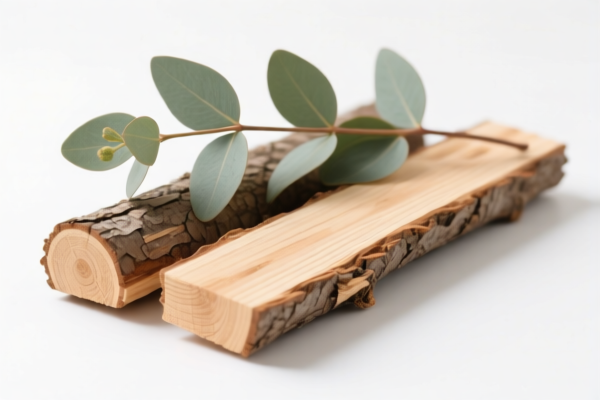
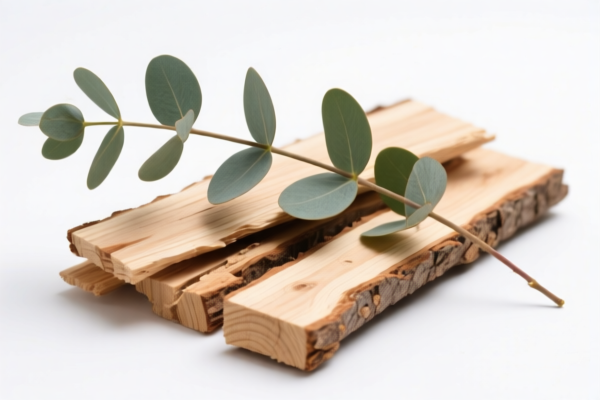
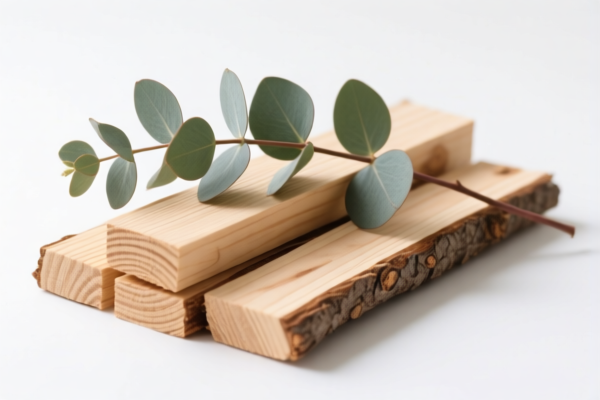
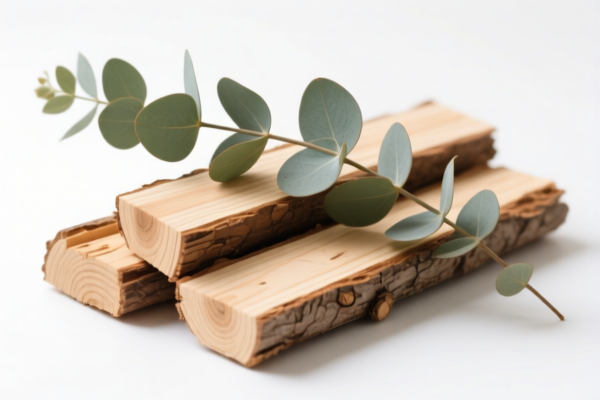
AI Analysis
🪵 Eucalyptus Wood for Pallets (Wood Packaging Material)
🌐 HS Code Reference & Customs Clearance Guide | 2026 Latest Tariff Analysis | Professional-Level Clearance Strategy
📌 I. Product Definition & Classification: Do You Really Understand "Eucalyptus Wood for Pallets"?
Eucalyptus wood, renowned for its high strength, rapid growth, and pest resistance, is a premium material for manufacturing pallets and wooden packaging. In international trade, it is primarily classified under Chapter 44 (Wood and Articles of Wood) or Chapter 46 (Woven Vegetables), depending on the form. However, for standard "pallets" (structural units), the classification is critical for ISPM 15 compliance and tariff purposes.
Key Distinction:
- Raw/Semi-processed Eucalyptus Lumber: Unworked or simply planed wood → Chapter 44
- Finished Pallets: Assembled wood packages → Chapter 44 (Specifically 44.15)
- Wood Wool/Chips: Raw material for other uses → Chapter 44 (44.01/44.02)
⚠️ Critical Note:
- If the wood is merely "lumber" intended for pallet manufacturing, it falls under 4407/4409.
- If it is a finished pallet (ready for use), it falls under 4415.20.
- Phytosanitary Importance: All wooden packaging material must comply with ISPM 15 (International Standards for Phytosanitary Measures No. 15). Failure to mark with the IPPC logo can lead to immediate rejection or fumigation costs.
📦 II. HS Code Classification Details (2026 Latest Tariff Authority Comparison)
| HS Code | Product Description | Application Scenario | Processing Level |
|---|---|---|---|
4407.21.00 |
Wood sawn lengthwise, chipped or split, of Eucalyptus | Raw lumber for pallet manufacturing | ❌ Semi-processed |
4409.21.00 |
Wood continuously shaped along any edge, of Eucalyptus | Tongue-and-groove planks for specialized pallets | ✅ Processed |
4415.20.00 |
Pallets, box pallets, and other packings, of wood | Finished pallets ready for shipping | ✅ Finished |
4421.99.80 |
Other articles of wood (e.g., wooden crates, non-standard) | Custom wooden containers not classified as pallets | ✅ Finished |
4401.31.00 |
Wood chips and sawdust, whether or not agglomerated | Raw biomass, not for pallets | ❌ Raw Material |
🔍 Key Reminder:
- Finished Pallets must be declared under4415.20.00.00(Pallets of wood). Do not misdeclare as "lumber" (4407) to avoid higher duties or inspection flags.
- If the pallet is treated (heat-treated or fumigated), it must carry the IPPC Mark.
- For ISPM 15 compliance, ensure the wood moisture content is below 20% to prevent mold during transit.
💰 III. 2026 Latest Tariff Rate Breakdown (Including Surtaxes, Policy Surcharges)
✅ Applicable Country: United States (US)
✅ Country of Origin: China (CN)
✅ Effective Date: November 10, 2025 (including subsequent imports)
🎯 1. 4415.20.00.00 —— Finished Pallets of Wood (Eucalyptus)
| Item | Content |
|---|---|
| Base Tariff Rate | 0% (ad valorem) |
| USITC Surtax (Section 301) | +25% (from USITC Footnote 9903.44.20) |
| IEEPA Surtax | +10% (for China/HK products, effective Nov 10, 2025) |
| Total Tariff Rate | 35% |
| Tax Calculation | CIF Value × 35% |
| De Minimis Eligibility | ❌ Not Eligible (deny_de_minimis) |
| Legal Basis Path | IEEPA:9903.01.25 → IEEPA:9903.01.24 → USITC:4415.20.00.00 → FOOTNOTE:9903.44.20 |
📌 Explanation:
- The 25% USITC surtax applies to "wooden crates, boxes, pallets, and spools" under Section 301.
- The 10% IEEPA surtax is a general additional duty on Chinese wood products.
- Total 35% is significant. Do not attempt to split the declaration into "lumber + hardware" to avoid this; US Customs will reclassify based on essential character.
🎯 2. 4407.21.00.00 —— Eucalyptus Lumber (Unfinished)
| Item | Content |
|---|---|
| Base Tariff Rate | 5.3% |
| USITC Surtax (Section 301) | +25% |
| IEEPA Surtax | +10% |
| Total Tariff Rate | 40.3% |
| Tax Calculation | CIF Value × 40.3% |
| De Minimis Eligibility | ❌ Not Eligible |
📌 Note:
- If you import raw eucalyptus logs or lumber to assemble pallets in the US, the duty is higher (40.3%) than finished pallets (35%)? Actually, base rate is higher, but Section 301 applies similarly.
- Strategic Advice: Importing finished pallets (4415) may be slightly more cost-effective than importing raw lumber (4407) if labor costs in the US are high, but the tariff difference is marginal. The main cost driver is the 35-40% total rate.
🛠️ IV. Customs Clearance Practical Advice (Combat Pitfall Guide)
✅ 1. Required Documentation Checklist (None Can Be Omitted)
| Document | Required | Explanation |
|---|---|---|
| ✅ IPPC Mark Certificate | ✔️ | Proof of phytosanitary treatment (Heat Treatment FT or Fumigation MB). Mandatory for entry. |
| ✅ Phytosanitary Certificate | ✔️ | Issued by the country of origin's plant protection organization. |
| ✅ Commercial Invoice | ✔️ | Clearly state "Eucalyptus Wood Pallets" and HS Code 4415.20.00.00. |
| ✅ Packing List | ✔️ | Detail the number of pallets, weight, and dimensions. |
| ✅ Bill of Lading | ✔️ | Ensure consignor/consignee details match invoice. |
| ✅ ISPM 15 Compliance Declaration | ✔️ | Supplier must confirm compliance with international standards. |
✅ 2. Declaration Tips (Key Mnemonic)
🔥 “Pallets not lumber, IPPC mark is key! Treat or reject!”
| Scenario | Correct Declaration | Wrong Practice |
|---|---|---|
| Finished Eucalyptus Pallets | 4415.20.00.00 |
Misdeclare as 4407 (Lumber) → Higher duty + Inspection |
| Raw Eucalyptus Planks | 4407.21.00.00 |
Misdeclare as "Pallets" → Rejection for lacking IPPC mark |
| Treated Wood with IPPC Mark | 4415.20.00.00 + IPPC Copy |
No IPPC Mark → Fumigation at port (Costly & Delay) |
| Wooden Crates (Non-Pallet) | 4421.99.80.00 |
Misdeclare as Pallets → Misclassification Risk |
✅ 3. Special Case Handling
| Scenario | Handling Advice |
|---|---|
| Reused Pallets | Must be clean, free of soil, and carry a valid IPPC mark. Old marks may be rejected. |
| Composite Wood Pallets | If >95% wood, classified as wood. If significant non-wood components, may fall under other chapters. |
| Heat-Treated vs. Fumigated | HT (HT mark) is preferred; Methyl Bromide (MB mark) is being phased out in many markets. |
| ISPM 15 Non-Compliance | Goods may be refused entry, re-exported, or destroyed. Always verify supplier’s compliance. |
🌍 V. Global Customs Clearance Comparison (2026 Latest)
| Country/Region | Recommended HS Code | Tariff | Certification Requirement | Notes |
|---|---|---|---|---|
| 🇺🇸 USA | 4415.20.00.00 |
35% (China) | ISPM 15 + IPPC Mark | High tariff; strict phytosanitary checks |
| 🇨🇳 China | 4415.20.00.00 |
5% | N/A (Export) | No additional surtax |
| 🇪🇺 EU | 4415.20.00.00 |
0% (if GSP) | ISPM 15 + Phytosanitary Cert | Strict on invasive pests |
| 🇦🇺 Australia | 4415.20.00.00 |
5% | ISPM 15 + Biosecurity Declaration | Very strict biosecurity; may require pre-shipment inspection |
| 🇯🇵 Japan | 4415.20.00.00 |
0% | ISPM 15 + Phytosanitary Cert | No tariff, but rigorous inspection |
📌 Conclusion:
- The US and EU are the most tariff-sensitive, but the EU has no additional surtax for wood pallets.
- Australia and Japan have zero tariff but strict phytosanitary requirements.
- China exports face 35-40% total duty in the US. Consider third-party processing in Vietnam/Mexico to benefit from IEEPA exemptions.
📌 VI. Common Errors & Pitfall Guide (Lessons Learned)
❌ Error 1: Importing pallets without an IPPC Mark
👉 Consequence: Rejected at port, fumigation cost (~$500–$1,000 per container) or return.
❌ Error 2: Misdeclaring "Pallets" as "Lumber" (4407)
👉 Consequence: Higher duty (40.3% vs 35%) and potential penalty for misdeclaration.
❌ Error 3: Using Fumigated (MB) pallets in markets banning Methyl Bromide
👉 Consequence: Rejection in EU/Australia. Use Heat-Treated (HT) pallets instead.
❌ Error 4: Not checking ISPM 15 compliance for used pallets
👉 Consequence: Biosecurity violation. Used pallets must be clean and re-marked if necessary.
✅ Correct Practice:
“Eucalyptus Wood Pallets, Heat-Treated (HT), ISPM 15 Compliant, IPPC Mark: CN-XXX, Model: GMA 48x40, Quantity: 1,000 pcs”
🎯 VII. Conclusion: Professional Declaration, Time-Saving, Cost-Effective!
🎯 Remember Mnemonic:
🔹 “Pallets are 4415, IPPC Mark is life!”
🔹 “HT is best, MB is risky, 35% duty in US, don’t be lazy!”
📌 Pro Tip:
If your pallets are sourced from Vietnam, Mexico, or Thailand, you can apply for IEEPA exemption, reducing the total tariff to 0%–5%.
Consider Advance Ruling for complex cases to avoid customs disputes.
📣 Immediate Action:
📞 Contact a licensed customs broker + Provide IPPC Certificate + Apply for HS Code Advance Ruling
🚀 Let your eucalyptus pallets clear customs smoothly, boost efficiency, and maximize profit!
✨ Professional clearance starts with accurate classification!
💼 Every dollar you save is worth precise calculation!
Customer Reviews
About HS Code Classification
The Harmonized System (HS) is an internationally standardized nomenclature developed by the World Customs Organization (WCO) to classify traded products. Over 200 countries use the HS system as the basis for customs tariffs, trade statistics, and import/export regulations.
Each HS code follows a hierarchical structure:
- Chapter (2 digits) — Broad category of goods (e.g., Chapter 84: Machinery and Mechanical Appliances)
- Heading (4 digits) — More specific grouping within the chapter
- Subheading (6 digits) — Internationally standardized breakdown, used by all WCO member countries
- National subdivisions (8-10 digits) — Country-specific extensions for further classification, such as US HTSUS 10-digit codes
Correct HS code classification is essential for smooth customs clearance, accurate duty payment, and compliance with trade regulations. Misclassification can lead to customs delays, overpayment of duties, or penalties.
When importing from CN to US, the applicable tariff rates may include:
- Most-Favored-Nation (MFN) rate — The standard duty rate applied to WTO members
- General rate — Applied to countries without trade agreements
- Trade remedy duties — Additional tariffs such as Section 301 (anti-dumping), Section 232 (national security), or countervailing duties
The information provided on this page is for reference purposes only. For official classification, please consult with your local customs authority or a licensed customs broker.