Eucalyptus construction logs (stripped of bark)
CN → US| HS Code | Tariff Rate | Origin | Destination | Doc |
|---|---|---|---|---|
| 4403980028 | 35.0% | CN | US | Official Doc |
| 4403980095 | 35.0% | CN | US | Official Doc |
Product Images
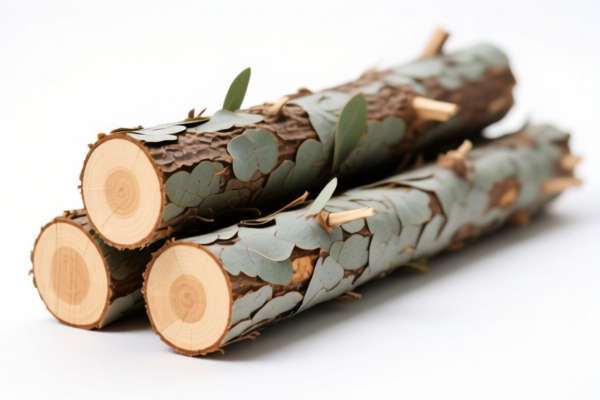
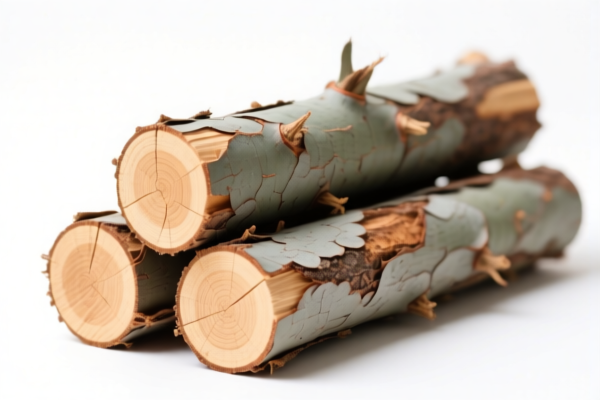
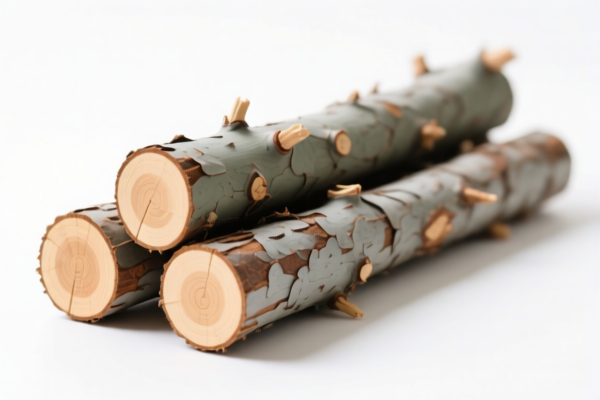

AI Analysis
🌳 Eucalyptus Construction Logs (Stripped of Bark / De-barked)
🌐 HS Code Reference & Customs Clearance Guide | 2026 Latest Tariff Analysis | Professional Clearance Strategy
📌 I. Product Definition and Classification: Do You Really Understand "De-barked Eucalyptus Logs"?
Eucalyptus logs are a primary source of hardwood timber used in construction, furniture, and pulp. In international trade, the distinction between "barked," "partially barked," and "fully stripped (de-barked)" is critical for classification.
Key Definition:
"Stripped of bark" (De-barked): The outer bark has been completely removed, exposing the heartwood/sapwood. This often changes the product from a raw forest product to a processed semi-finished timber.
* "Construction Logs"*: Implies logs prepared for structural use, typically retaining a round shape or simply shaped (scanned/rough-sawn), distinct from planks or veneers.
⚠️ Critical Classification Point:
- If the logs are unprocessed (round) but de-barked, they generally fall under Chapter 44 (Wood and Articles of Wood), specifically heading 4403 (Wood treated with preservatives or not, whether or not stripped of bark or sapwood). - If the logs are simple sawn (even if rough), they may fall under 4403.98 (Other wood, simply sawn). - Note: The provided data indicates two main HS codes for Eucalyptus logs/sawn wood, both attracting the same high tariff rate due to US trade policies.
📦 II. HS Code Classification Details (2026 Latest Tariff Authority Reference)
Based on the provided data, Eucalyptus logs (whether stripped of bark or not) are classified under two primary HS codes depending on the exact physical state (Round vs. Sawn/Processed) and specific customs interpretation.
| HS Code | Product Description | Application Scenario | Bark Status |
|---|---|---|---|
| 4403.98.00.23 | Other non-coniferous wood, simply sawn, rough or quartered (Eucalyptus) | Eucalyptus logs classified as "Other Non-Coniferous Wood Rough Sawn Timber" | ✅ Stripped of Bark / De-barked |
| 4403.98.00.95 | Other Eucalyptus wood (including stripped of bark/sapwood) classified under Eucalyptus category | Eucalyptus rough-sawn timber (including de-barked) specifically categorized under Eucalyptus subheadings | ✅ Stripped of Bark / De-barked |
| 4401.12.00.00 | Eucalyptus logs as non-coniferous fuel wood | If the logs are intended solely for fuel/biomass rather than construction/timber | ⚠️ Note: Usually for fuel, not construction |
🔍 Key Reminder:
- The term "Stripped of bark" explicitly triggers classification under 4403.98.00.23 or 4403.98.00.95 in the provided data. - 4401.12.00.00 is listed but described as "Fuel Wood." If the product is for construction, avoid this code unless customs permits reclassification based on end-use, as it is intended for burning. - Both 4403.98.00.23 and 4403.98.00.95 apply to construction-grade eucalyptus logs that are stripped of bark.
💰 III. 2026 Latest Tariff Rate Details (Including Surcharges and Policy Add-ons)
✅ Applicable Country: United States (US)
✅ Origin: China (CN) (Implied by "122 Clause" and typical US-China trade context in the data)
✅ Effective Time: Current as per provided data
🎯 1. 4403.98.00.23 —— Eucalyptus Logs (Stripped of Bark) Classified as Other Non-Coniferous Rough Sawn Timber
| Item | Content |
|---|---|
| Base Tariff Rate | 0% (ad valorem) |
| USITC Additional Tariff | +25% (Section 301 Tariff) |
| Section 122 Tariff | +10% (Specific to certain wood products or general additional duties as per local regulation) |
| Total Tariff Rate | 35.0% |
| Tax Calculation | CIF Value × 35% |
| De Minimis Exemption | ❌ Not Available (deny_de_minimis) |
| Legal Basis Path | Section 301: 4403.98.00.23 → Section 122: 10% |
📌 Explanation:
- The 0% base rate applies to most wood products. - However, Section 301 adds 25% on Chinese-origin wood products. - Section 122 adds another 10% (often related to specific bilateral trade agreements or counter-measures). - Total: 35%. This is a high tariff for timber, significantly impacting cost competitiveness.
🎯 2. 4403.98.00.95 —— Eucalyptus Rough-Sawn Timber (Including Stripped of Bark)
| Item | Content |
|---|---|
| Base Tariff Rate | 0% |
| USITC Additional Tariff | +25% |
| Section 122 Tariff | +10% |
| Total Tariff Rate | 35.0% |
| Tax Calculation | CIF Value × 35% |
| De Minimis Exemption | ❌ Not Available |
| Legal Basis Path | Section 301: 4403.98.00.95 → Section 122: 10% |
📌 Note:
- Identical tax structure to4403.98.00.23. - The distinction between.23and.95is purely administrative within the US HTSUS for "Other Eucalyptus" vs. "Other Non-Coniferous." - Both are subject to the 35% total duty.
⚠️ Special Case: 4401.12.00.00 — Eucalyptus as Fuel Wood
| Item | Content |
|---|---|
| Base Tariff Rate | 0% |
| USITC Additional Tariff | +25% |
| Section 122 Tariff | +10% |
| Total Tariff Rate | 35.0% |
| Note | Only if classified as fuel. If used for construction, this classification may be challenged by customs as misdeclaration. |
🛠️ IV. Customs Clearance Practical Advice (Pitfall Avoidance Guide)
✅ 1. Preparation Checklist (Essential Documents)
| Document | Mandatory? | Notes |
|---|---|---|
| ✅ Product Specifications | ✔️ | Must specify: Species (Eucalyptus), Processing State (De-barked/Stripped), Dimensions, Moisture Content. |
| ✅ Photographs | ✔️ | Clear images showing no bark on the surface. Contrast with barked logs. |
| ✅ Commercial Invoice | ✔️ | Must clearly state: "Eucalyptus Logs, De-barked, for Construction Use." Avoid vague terms like "Wood." |
| ✅ Packing List | ✔️ | Detail weight, volume (CBM), and packaging type. |
| ✅ Phytosanitary Certificate | ✔️ | Mandatory for all wood products entering the US. Must confirm treatment (e.g., heat treatment MB or fumigation). |
| ✅ ISPM 15 Marking | ✔️ | If packaged in wooden pallets/crates, they must bear the ISPM 15 stamp. |
✅ 2. Classification Strategy (Key Tips)
🔥 “De-barked logs go to 4403, not 4401; Accuracy prevents penalties!”
| Scenario | Recommended HS Code | Risk if Incorrect |
|---|---|---|
| Construction Logs, De-barked | 4403.98.00.23 or 4403.98.00.95 |
Low Risk (Correct) |
| Logs intended for Burning/Fuel | 4401.12.00.00 |
Misclassification if used for construction |
| Logs with Bark Still Attached | Still 4403.98.xxxx but different subheading |
Ensure description matches "Barked" vs "De-barked" |
| Sawn Planks (not logs) | Chapter 4403 or 4407 | Ensure shape is "Log" (round/rough) not "Lumber" |
📌 Important:
- Do not use4401.12.00.00(Fuel Wood) if the logs are for construction. Customs may flag this as an attempt to evade duties or misdeclare end-use, leading to audits. - The 35% rate applies regardless of whether you use.23or.95. Focus on accurate description rather than code shopping.
✅ 3. Special Considerations
| Issue | Advice |
|---|---|
| Bark Removal Verification | Customs may inspect for residual bark. Ensure "stripped" means >95% bark removed. |
| Moisture Content | High moisture can affect weight-based duties and phytosanitary compliance. Ensure proper drying if specified. |
| Pest Control | Eucalyptus is prone to certain borers. Ensure Phytosanitary Certificate is valid and treatment is documented. |
| Origin Declaration | Must clearly state Country of Origin (e.g., China). If from Vietnam/Thailand, IEEPA exemptions may apply (reducing tax to 0-5%). |
🌍 V. Global Market Comparison (2026 Latest)
| Country/Region | Recommended HS Code | Tariff Rate (China Origin) | Certification | Notes |
|---|---|---|---|---|
| 🇺🇸 USA | 4403.98.00.23/95 |
35% (Base 0% + 25% + 10%) | Phytosanitary + ISPM 15 | High tariff due to Section 301 & 122 |
| 🇨🇳 China | 4403.98.00.23 |
5-8% | CCC (if processed) | Lower duty, standard import |
| 🇪🇺 EU | 4403.98.00 |
0% (if EUTR compliant) | EUTR + FLEGT | No additional tariffs if legal sourcing proven |
| 🇬🇧 UK | 4403.98.00 |
0-5% | UK Timber Regulation | Post-Brexit rules apply |
| 🇦🇺 Australia | 4403.98.00 |
5% | Biosecurity Permit | Strict biosecurity entry requirements |
📌 Conclusion:
- The US market is the most expensive for Chinese-origin Eucalyptus logs due to 35% total tariffs. - EU and UK offer better tariff conditions but require strict legal sourcing documentation (EUTR/UKTR). - Consider supply chain diversification (e.g., sourcing from Southeast Asia) if targeting the US to avoid 301/122 tariffs.
📌 VI. Common Mistakes & Pitfalls (Lessons Learned)
❌ Mistake 1: Declaring "De-barked Logs" as "Fuel Wood" (4401) to confuse customs.
👉 Consequence: Customs may reject the classification, impose penalties, or seize goods.
❌ Mistake 2: Not providing Phytosanitary Certificate.
👉 Consequence: Immediate refusal of entry or destruction of goods.
❌ Mistake 3: Ignoring "Section 122" tariff impact.
👉 Consequence: Underestimating landed cost by 10%. Total tax is 35%, not 25%.
❌ Mistake 4: Using vague descriptions like "Wood Logs."
👉 Consequence: Customs may assign a higher duty rate or require extensive documentation, causing delays.
✅ Correct Approach:
“Eucalyptus Logs, De-barked, Round, For Construction, HS Code 4403.98.00.23, Country of Origin: China.”
🎯 VII. Conclusion: Professional Clearance, Cost Optimization, Risk Mitigation
🎯 Remember:
🔹 “De-barked logs are 4403, not 4401; 35% is the US price!”
🔹 “Phytosanitary Certificate is mandatory; no cert, no entry!”
🔹 “Section 301 + 122 = 35% Tax; plan your pricing accordingly!”
📌 Pro Tip:
If your Eucalyptus logs are originating from Vietnam, Thailand, or Malaysia, you may qualify for IEEPA Exemptions, reducing the tariff to 0%–5%.
✅ Action: Apply for Pre-Ruling with US Customs and Border Protection (CBP) to confirm classification and tax liability before shipment.
📣 Immediate Action:
📞 Contact your freight forwarder + Provide Product Photos + Verify Phytosanitary Status
🚀 Ensure smooth clearance, minimize duties, and maximize profit!
✨ Professional clearance starts with accurate classification!
💼 Every percentage point matters in timber trade!
Customer Reviews
About HS Code Classification
The Harmonized System (HS) is an internationally standardized nomenclature developed by the World Customs Organization (WCO) to classify traded products. Over 200 countries use the HS system as the basis for customs tariffs, trade statistics, and import/export regulations.
Each HS code follows a hierarchical structure:
- Chapter (2 digits) — Broad category of goods (e.g., Chapter 84: Machinery and Mechanical Appliances)
- Heading (4 digits) — More specific grouping within the chapter
- Subheading (6 digits) — Internationally standardized breakdown, used by all WCO member countries
- National subdivisions (8-10 digits) — Country-specific extensions for further classification, such as US HTSUS 10-digit codes
Correct HS code classification is essential for smooth customs clearance, accurate duty payment, and compliance with trade regulations. Misclassification can lead to customs delays, overpayment of duties, or penalties.
When importing from CN to US, the applicable tariff rates may include:
- Most-Favored-Nation (MFN) rate — The standard duty rate applied to WTO members
- General rate — Applied to countries without trade agreements
- Trade remedy duties — Additional tariffs such as Section 301 (anti-dumping), Section 232 (national security), or countervailing duties
The information provided on this page is for reference purposes only. For official classification, please consult with your local customs authority or a licensed customs broker.