Eucalyptus pulpwood
CN → US| HS Code | Tariff Rate | Origin | Destination | Doc |
|---|---|---|---|---|
| 4403980028 | 35.0% | CN | US | Official Doc |
| 4401120000 | 35.0% | CN | US | Official Doc |
| 4403980095 | 35.0% | CN | US | Official Doc |
Product Images

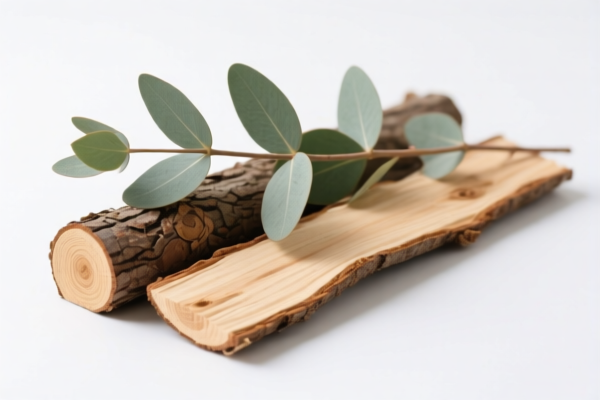
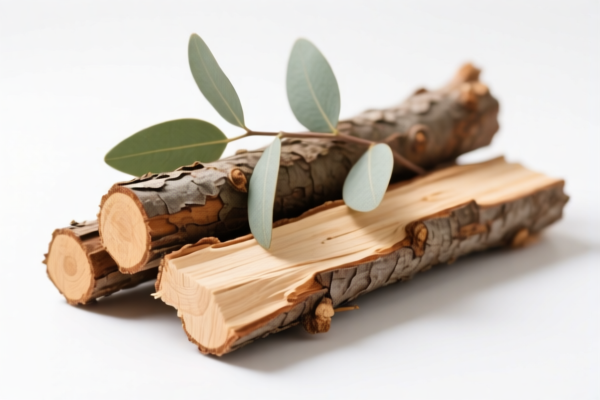
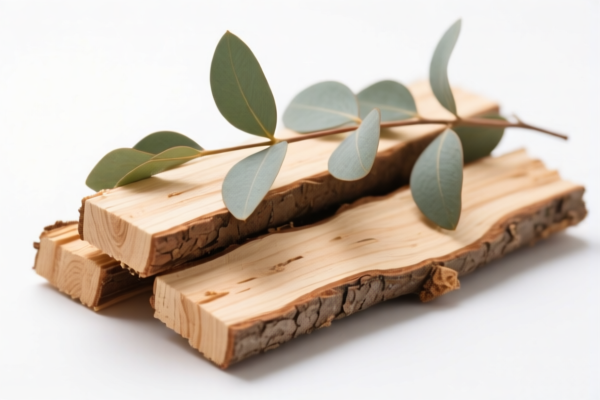
AI Analysis
🌳 Eucalyptus Pulpwood (桉木原木/薪材)
🌐 HS Code Reference & Clearance Guide | 2024 Tax Regime Analysis | Professional Customs Strategy
📌 一、Product Definition & Classification: Do You Know What "Eucalyptus Pulpwood" Really Is?
Eucalyptus Pulpwood refers to logs of eucalyptus trees primarily intended for use as fuel (firewood) or for industrial processing (such as pulp and paper production). In international trade, the classification depends strictly on the physical form and intended use of the wood.
It is generally divided into two main categories based on the HS Code structure:
- Fuel Wood (Firewood): Logs cut into lengths suitable for burning. Even if intended for industrial fuel, if it is in "log" form, it may fall under fuel wood codes.
- Sawn/Unsawed Wood: Logs that are rough-sawn or unsawed, intended for further industrial processing (like chipping for pulp).
⚠️ Key Distinction Point:
- If the wood is intended for burning (fuel) or sold as fuel wood, it falls under 4401.
- If the wood is rough-sawn, chipped, or in log form for industrial processing (not primarily for fuel), it falls under 4403.
- Shape matters: "Rough-sawed" vs. "Un-sawed" vs. "Fuel logs" triggers different sub-headings.
📦 二、HS Code Classification Details (2024 Latest Tariff Data)
Based on the provided data, here are the precise HS Codes for Eucalyptus logs/pulpwood:
| HS Code | Product Description | Applicable Scenario | Form/State |
|---|---|---|---|
4403.98.00.28 |
Eucalyptus Logs, Material: Eucalyptus, Form: Rough-sawed or unsawed wood | Industrial processing (pulp, plywood), rough-sawed logs | ✅ Rough-sawed/Un-sawed |
4401.12.00.00 |
Eucalyptus Logs, Material: Non-coniferous wood, Form: Fuel wood | Firewood, biomass fuel, or sold specifically as fuel | ✅ Fuel Wood |
4403.98.00.95 |
Eucalyptus Logs, Material: Eucalyptus, Form: Rough-sawed wood | Industrial processing, specifically rough-sawn timber | ✅ Rough-sawed |
🔍 Critical Reminder:
- 4401 is for Fuel Wood (firewood). If you declare industrial logs as "fuel wood" incorrectly, or vice versa, it leads to misclassification.
- 4403 covers wood for further processing (like pulp). Within 4403, the distinction between00.28(unsawed/rough) and00.95(specifically rough-sawn) is subtle but important for accurate customs entry.
- Always specify the exact form: "Rough-sawed," "Un-sawed," or "Fuel Wood" in your commercial invoice.
💰 三、2024/2026 Latest Tariff Rate Breakdown (Including Additional Taxes)
✅ Applicable Country: United States (US)
✅ Country of Origin: China (CN)
✅ Effective Date: From November 10, 2025 (and subsequent imports)
All three HS codes listed below carry the same total tax burden due to current US trade policies against Chinese timber products.
🎯 1. 4403.98.00.28 —— Eucalyptus Logs (Rough-sawed/Un-sawed)
| Item | Detail |
|---|---|
| Base Tariff | 0% (ad valorem) |
| Section 301 Tariff | +25% (Additional Duty under US Trade Act Section 301) |
| Section 122 Tariff | +10% (Specific duty under Section 122 for certain wood products) |
| Total Tax Rate | 35.0% |
| Tax Calculation | CIF Value × 35% |
| De Minimis Exemption | ❌ Not Eligible (deny_de_minimis) |
| Legal Basis Path | USITC:4403.98.00.28 → Section 301: 25% → Section 122: 10% |
📌 Explanation:
- The 25% is the standard "Section 301" tariff on Chinese goods.
- The 10% is a specific additional duty under Section 122, which targets imports that threaten US domestic industry (often timber/wood).
- No de minimis exemption means even small packages are subject to full taxation.
🎯 2. 4401.12.00.00 —— Eucalyptus Fuel Wood (Non-coniferous)
| Item | Detail |
|---|---|
| Base Tariff | 0% |
| Section 301 Tariff | +25% |
| Section 122 Tariff | +10% |
| Total Tax Rate | 35.0% |
| Tax Calculation | CIF Value × 35% |
| De Minimis Exemption | ❌ Not Eligible |
| Legal Basis Path | USITC:4401.12.00.00 → Section 301: 25% → Section 122: 10% |
📌 Note:
- Even though it is "fuel wood," it is still subject to the same high tariffs.
- Some might assume fuel wood has lower duties, but under current US-China trade rules, Section 122 and 301 apply uniformly to this category.
🎯 3. 4403.98.00.95 —— Eucalyptus Logs (Rough-sawed)
| Item | Detail |
|---|---|
| Base Tariff | 0% |
| Section 301 Tariff | +25% |
| Section 122 Tariff | +10% |
| Total Tax Rate | 35.0% |
| Tax Calculation | CIF Value × 35% |
| De Minimis Exemption | ❌ Not Eligible |
| Legal Basis Path | USITC:4403.98.00.95 → Section 301: 25% → Section 122: 10% |
📌 Note:
- Identical tax treatment to4403.98.00.28.
- Ensure the description matches the actual physical state: if it is truly "rough-sawed," use95; if "unsawed or rough-sawed," use28.
🛠️ 四、Clearance Operational Advice (Practical Pitfall Avoidance)
✅ 1. Required Documentation Checklist (No Exceptions)
| Document | Mandatory? | Notes |
|---|---|---|
| ✅ Commercial Invoice | ✔️ | Must clearly state: "Eucalyptus Logs/Fuel Wood," HS Code, and Country of Origin (China). |
| ✅ Packing List | ✔️ | Detail weight, volume, and number of bundles/logs. |
| ✅ Phytosanitary Certificate | ✔️ | Crucial for wood products. Must be issued by the exporting country's plant protection agency. |
| ✅ Bill of Lading/Air Waybill | ✔️ | Standard shipping documents. |
| ✅ Species Declaration | ✔️ | Explicitly state "Eucalyptus" (not just "Wood"). |
| ✅ Form & Intent Declaration | ✔️ | Specify if it is "Fuel Wood" (4401) or "Industrial Log" (4403). Mislabeling causes delays. |
✅ 2. Declaration Tips (Key Mantra)
🔥 "Specify Form, Declare Origin, Phyto is King, Tax is Fixed!"
| Scenario | Correct Declaration | Wrong Practice |
|---|---|---|
| Logs for Pulp/Industrial Use | 4403.98.00.28 or .95 + "Rough-sawed/Un-sawed" |
Declare as "Pulp" → Wrong HS Code (4703) |
| Logs for Firewood | 4401.12.00.00 + "Fuel Wood" |
Declare as "Logs" → Misclassification risk |
| Mixed Bundle (Fuel + Industrial) | Split Declaration | Mixed declaration → Customs rejection |
| Origin: China | Clearly state "Made in China" | Hide origin → Severe penalties |
✅ 3. Special Handling Cases
| Case | Handling Advice |
|---|---|
| Bark Removal | If bark is partially removed, still declare as "logs." Do not claim "chips" unless processed. |
| Pest Inspection | Eucalyptus is prone to pests. Ensure ISPM 15 compliance if pallets are used. Wood itself must have a valid Phytosanitary Certificate. |
| Valuation | The 35% tax is calculated on the CIF value (Cost, Insurance, Freight). Ensure freight and insurance are accurately declared to avoid under-valuation penalties. |
| Transshipment | Do not transship through third countries to mask origin. US Customs aggressively audits wood products for origin fraud. |
🌍 五、Global Market Comparison (2024-2026)
| Country/Region | Recommended HS Code | Tariff (China Origin) | Key Requirement | Notes |
|---|---|---|---|---|
| 🇺🇸 USA | 4401.12.00.00 / 4403.98.00.xx |
35% (25% + 10%) | Phytosanitary Cert | High barrier due to Section 301 & 122 |
| 🇨🇳 China (Import) | Same HS Codes | ~5-6% | Phytosanitary Cert | Lower tax, strict quarantine |
| 🇪🇺 EU | 4401 / 4403 |
0% - 2.5% | EUTR Compliance | No Section 301/122, but strict EUTR |
| 🇯🇵 Japan | 4401 / 4403 |
0% - 1.5% | IPPC Mark | Generally favorable |
📌 Conclusion:
- The US market is the most challenging for Chinese Eucalyptus wood due to the 35% combined tariff.
- Europe and Asia have much lower tariffs but strict environmental and phytosanitary regulations.
- Cost Advantage Lost: The 35% US tariff significantly erodes the price competitiveness of Chinese eucalyptus pulpwood.
📌 Six. Common Mistakes & Pitfall Guide (Blood Lessons)
❌ Mistake 1: Declaring "Eucalyptus Logs" as "Wood Chips" (4401.02) to avoid tariffs
👉 Consequence: Customs inspection reveals log shape → Smuggling accusation + fines + cargo seizure!
❌ Mistake 2: Omitting "Fuel Wood" specification when using 4401
👉 Consequence: Customs questions intent → Delay + Potential reclassification to 4403 (similar tax, but administrative burden)
❌ Mistake 3: Providing a generic "Phytosanitary Certificate" without stating "Eucalyptus"
👉 Consequence: Rejection at port → Demurrage charges + Return shipment!
❌ Mistake 4: Assuming "De Minimis" ($800) applies
👉 Consequence: 35% tax applied to every single shipment, regardless of value. No small package escapes.
✅ Correct Practice:
"Eucalyptus Pulpwood Logs, Rough-sawed, Non-coniferous, Country of Origin: China, HS Code: 4403.98.00.28, Attached: Valid Phytosanitary Certificate"
🎯 Seven. Conclusion: Professional Declaration, Cost Control!
🎯 Remember the Mantra:
🔹 "Form determines HS, Origin determines Tax, Phyto determines Entry!"
🔹 "35% is the US Price, 0% is the Dream, Declare Correctly, Save Your Team!"
📌 Pro Tip:
- If you are exporting to the US, consider pre-consulting with a US Customs Broker to verify if your specific wood processing qualifies for any exclusions (rare for wood, but possible).
- For Europe, ensure your supply chain is EUTR-compliant (no illegal logging).
- Always pay for a professional Phyto Inspection before shipment.
📣 Immediate Action:
📞 Contact a licensed Customs Broker + Provide Species Details + Secure Phytosanitary Certificate
🚀 Ensure your Eucalyptus Logs clear customs smoothly, efficiently, and without hidden costs!
✨ Professional Clearance Starts with Accurate Classification!
💼 Every Percent of Tax Matters!
Customer Reviews
About HS Code Classification
The Harmonized System (HS) is an internationally standardized nomenclature developed by the World Customs Organization (WCO) to classify traded products. Over 200 countries use the HS system as the basis for customs tariffs, trade statistics, and import/export regulations.
Each HS code follows a hierarchical structure:
- Chapter (2 digits) — Broad category of goods (e.g., Chapter 84: Machinery and Mechanical Appliances)
- Heading (4 digits) — More specific grouping within the chapter
- Subheading (6 digits) — Internationally standardized breakdown, used by all WCO member countries
- National subdivisions (8-10 digits) — Country-specific extensions for further classification, such as US HTSUS 10-digit codes
Correct HS code classification is essential for smooth customs clearance, accurate duty payment, and compliance with trade regulations. Misclassification can lead to customs delays, overpayment of duties, or penalties.
When importing from CN to US, the applicable tariff rates may include:
- Most-Favored-Nation (MFN) rate — The standard duty rate applied to WTO members
- General rate — Applied to countries without trade agreements
- Trade remedy duties — Additional tariffs such as Section 301 (anti-dumping), Section 232 (national security), or countervailing duties
The information provided on this page is for reference purposes only. For official classification, please consult with your local customs authority or a licensed customs broker.