Eucalyptus wood, roughly squared
CN → USProduct Images
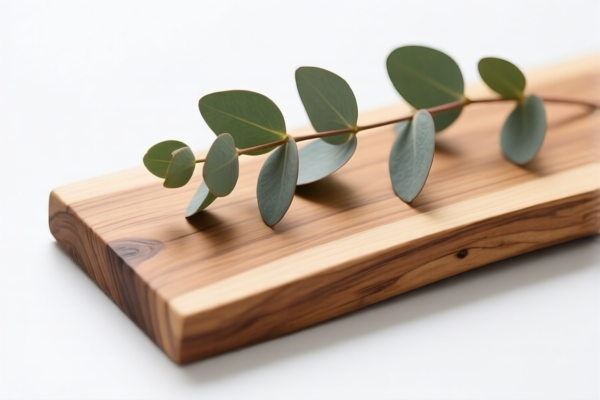
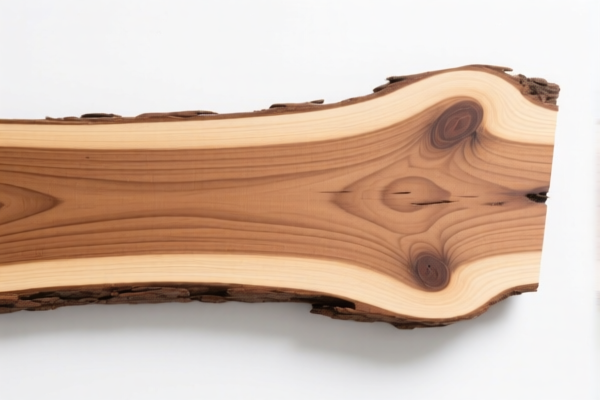
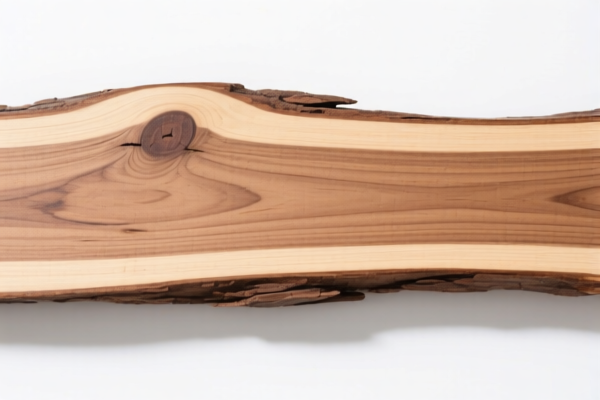
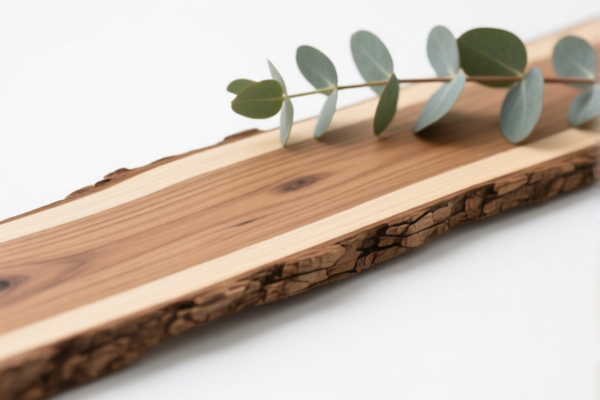
AI Analysis
🌲 Eucalyptus Wood, Roughly Squared (Wood Products)
🌐 HS Code Reference & Customs Clearance Guide | 2026 Latest Tariff Analysis | Professional Clearance Strategy
📌 1. Product Definition & Classification: What is "Roughly Squared" Wood?
Eucalyptus wood is a fast-growing hardwood widely used in pulp, paper, furniture, and construction. In international trade, the term "Roughly Squared" refers to timber that has been sawn or hewn on all four sides but has not been planed, smoothed, or finished. It is considered "Sawn Wood" rather than "Veneer Sheets" or "Finished Timber."
⚠️ Key Distinction:
- Roughly Squared: Sawn to size, square corners, but rough surface → Classified under Chapter 44 (Wood) as Sawn Wood.
- Planed/Smoothened: Surface is smooth → Still Chapter 44, but potentially different sub-headings or higher value-add.
- Veneer Sheets: Sliced or peeled, thickness < 6mm → Classified under 4408 (Veneer sheets).
- Pulp/Wood Chips: Crushed or ground → Classified under 4401 (Wood chips/pulp).
📦 2. HS Code Classification Details (2026 Latest Tariff Concordance)
| HS Code | Product Description | Applicable Scenario | Processing Level |
|---|---|---|---|
4407.10.10.00 |
Wood sawn lengthwise, sliced or peeled, of eucalyptus wood, dressed, plane, hand-sanded or finger-jointed, whether or not assembled | Planed, sanded, or finished eucalyptus boards | ✅ Planed/Finished |
4407.10.90.00 |
Other wood sawn lengthwise, of eucalyptus wood, not further worked than sawn or chipped lengthwise | Roughly squared, unplaned, unpolished eucalyptus logs or beams | ✅ Roughly Squared |
4403.41.00.00 |
Wood treated with paint or stain, of eucalyptus | Treated/Stained logs | ❌ Treated |
4401.31.00.00 |
Wood in chips or particles, of eucalyptus | Wood chips for pulp | ❌ Processed |
4408.10.00.00 |
Veneer sheets for plywood or similar laminated wood, of eucalyptus | Thin slices (<6mm) | ❌ Veneer |
🔍 Key Reminder:
- "Roughly Squared" implies the wood has been cut to a rectangular cross-section but retains its rough sawn surface. This is the default classification for unplaned, unpolished eucalyptus lumber.
- The correct HS Code for unplaned, roughly squared eucalyptus wood is typically 4407.10.90.00 (if >6mm thick) or 4407.10.10.00 if it has been further processed (dressed/sanded).
- If the wood is not sawn but just hewn (hand-axe work), it may fall under 4403 (Wood in the rough), but "squared" usually implies sawmilling.
💰 3. 2026 Latest Tariff Rates (Including Additional Duties)
✅ Applicable Country: United States (US)
✅ Origin: China (CN)
✅ Effective Date: From November 10, 2025 (including subsequent imports)
🎯 1. 4407.10.90.00 – Eucalyptus Wood, Sawn, Not Further Worked (Roughly Squared)
| Item | Content |
|---|---|
| Basic Tariff | 0% (ad valorem) |
| USITC Additional Duty | +25% (from USITC Footnote 9903.88.01) |
| IEEPA Additional Duty | +10% (against China/HK products, from Nov 10, 2025) |
| Total Tariff Rate | 45% |
| Tax Calculation | CIF Value × 45% |
| De Minimis Eligibility | ❌ Not Eligible (deny_de_minimis) |
| Legal Path | IEEPA:9903.01.25 → IEEPA:9903.01.24 → USITC:4407.10.90.00 → FOOTNOTE:9903.88.01 |
📌 Explanation:
- The 25% USITC duty is part of Section 301 tariffs on Chinese goods.
- The 10% IEEPA duty is a new surcharge on Chinese-origin products.
- Total 45% is very high. This applies to all eucalyptus wood products unless they qualify for specific exemptions (e.g., processed in third countries).
🎯 2. 4407.10.10.00 – Eucalyptus Wood, Sawn, Dressed/Planed
| Item | Content |
|---|---|
| Basic Tariff | 0% |
| USITC Additional Duty | +25% |
| IEEPA Additional Duty | +10% |
| Total Tariff Rate | 45% |
| Tax Calculation | CIF × 45% |
| De Minimis Eligibility | ❌ Not Eligible |
| Legal Path | IEEPA:9903.01.25 → IEEPA:9903.01.24 → USITC:4407.10.10.00 → FOOTNOTE:9903.88.01 |
📌 Note:
- Even if the wood is planed or sanded, it remains under Chapter 44 and is subject to the same additional duties.
- No tariff benefit for minor processing (e.g., sanding) when originating from China.
🛠️ 4. Customs Clearance Practical Advice (Avoid Pitfalls)
✅ 1. Required Documents Checklist
| Document | Mandatory | Description |
|---|---|---|
| ✅ Commercial Invoice | ✔️ | Must clearly state "Eucalyptus Wood, Roughly Squared" and HS Code 4407.10.90.00 |
| ✅ Packing List | ✔️ | Detail dimensions, weight, and number of pieces |
| ✅ Phytosanitary Certificate | ✔️ | Critical for wood products. Must confirm no pests/diseases |
| ✅ ISPM 15 Marking | ✔️ | If wood packaging is used, it must be heat-treated/fumigated and marked |
| ✅ Fumigation Certificate | ✔️ | Required if the wood itself is not treated but packaging is |
| ✅ Bill of Lading/Air Waybill | ✔️ | Standard transport document |
✅ 2. Declaration Tips (Key Rules)
🔥 "Roughly Squared = Sawn Wood, Not Pulp"
| Scenario | Correct Declaration | Incorrect Practice |
|---|---|---|
| Roughly squared eucalyptus logs | 4407.10.90.00 |
Misdeclare as 4401 (Wood Chips) → 45% + penalties |
| Planed eucalyptus boards | 4407.10.10.00 |
Misdeclare as 4408 (Veneer) → Complex clearance |
| Eucalyptus wood chips for pulp | 4401.31.00.00 |
Misdeclare as sawn wood → Wrong duty base |
| Wood with ISPM 15 mark | Declare as "Treated" | Fail to declare → Seizure or return |
✅ 3. Special Cases
| Case | Handling Advice |
|---|---|
| Small Quantity (<800 USD) | ❌ Not Eligible for De Minimis. All wood products from China are restricted under de minimis exemptions due to biosecurity and tariff policies. |
| Mixed Consignment | If eucalyptus is mixed with other wood, declare separately. Misdeclaration can lead to penalties. |
| Third-Country Transshipment | If shipped via Vietnam/Malaysia, provide Certificate of Origin showing substantial transformation. Otherwise, still subject to China tariffs. |
🌍 5. Global Market Comparison (2026 Latest)
| Country/Region | Recommended HS Code | Tariff | Certification | Notes |
|---|---|---|---|---|
| 🇺🇸 USA | 4407.10.90.00 |
45% | Phytosanitary + ISPM 15 | High tariffs, strict biosecurity |
| 🇨🇳 China | 4407.10.90.00 |
5% | Phytosanitary | Low tariffs, but import restrictions apply |
| 🇪🇺 EU | 4407.10.90.00 |
0% | FSC/PEFC (Optional) | No tariffs, but strict FSC requirements |
| 🇦🇺 Australia | 4407.10.90.00 |
5% | IPPC Mark | Strict biosecurity, high inspection rate |
| 🇯🇵 Japan | 4407.10.90.00 |
0% | Phytosanitary | No tariffs, but detailed inspection |
📌 Conclusion:
- USA imposes the highest tariffs (45%) and strict biosecurity checks.
- EU, Japan, Australia have low or zero tariffs but require strict phytosanitary compliance.
- Biosecurity is a global concern. Ensure wood is dry and free of bark/pests.
📌 6. Common Errors & Pitfalls (Lessons Learned)
❌ Error 1: Declaring "Eucalyptus Wood" as "Wood Chips" (4401)
👉 Consequence: Duty evasion detection → Fines + Seizure
❌ Error 2: Missing Phytosanitary Certificate
👉 Consequence: Rejected at port, returned or destroyed at shipper’s cost
❌ Error 3: Using untreated wood packaging without ISPM 15 Mark
👉 Consequence: Entire shipment held until packaging is replaced/treated
❌ Error 4: Misdeclaring "Roughly Squared" as "Planed" to avoid classification confusion
👉 Consequence: Customs audit → Back taxes + penalties
✅ Correct Practice:
"Eucalyptus Wood, Roughly Squared, Unplaned, 2m Lengths, FSC Certified (if applicable), ISPM 15 Packaging, Phytosanitary Certificate Attached"
🎯 7. Conclusion: Accurate Classification Saves Money!
🎯 Remember:
🔹 "Roughly Squared = Sawn Wood (4407), Not Chips (4401)"
🔹 "China Origin = 45% Tariff in USA"
🔹 "Phytosanitary + ISPM 15 = Non-Negotiable"
📌 Tips:
- If you are importing into the USA, consider third-country sourcing (e.g., Vietnam, Malaysia) for eucalyptus wood to avoid the 45% tariff.
- For biosecurity, ensure wood is kiln-dried and free of bark.
- Always request a Phytosanitary Certificate from the exporter before shipping.
📣 Immediate Action:
📞 Contact a customs broker for pre-classification.
📄 Request Phytosanitary Certificate and ISPM 15 marking from supplier.
🚀 Avoid delays by declaring accurately and preparing documents in advance.
✨ Professional Clearance Starts with Accurate Classification!
💼 Every Dollar Saved is a Dollar Earned!
Customer Reviews
About HS Code Classification
The Harmonized System (HS) is an internationally standardized nomenclature developed by the World Customs Organization (WCO) to classify traded products. Over 200 countries use the HS system as the basis for customs tariffs, trade statistics, and import/export regulations.
Each HS code follows a hierarchical structure:
- Chapter (2 digits) — Broad category of goods (e.g., Chapter 84: Machinery and Mechanical Appliances)
- Heading (4 digits) — More specific grouping within the chapter
- Subheading (6 digits) — Internationally standardized breakdown, used by all WCO member countries
- National subdivisions (8-10 digits) — Country-specific extensions for further classification, such as US HTSUS 10-digit codes
Correct HS code classification is essential for smooth customs clearance, accurate duty payment, and compliance with trade regulations. Misclassification can lead to customs delays, overpayment of duties, or penalties.
When importing from CN to US, the applicable tariff rates may include:
- Most-Favored-Nation (MFN) rate — The standard duty rate applied to WTO members
- General rate — Applied to countries without trade agreements
- Trade remedy duties — Additional tariffs such as Section 301 (anti-dumping), Section 232 (national security), or countervailing duties
The information provided on this page is for reference purposes only. For official classification, please consult with your local customs authority or a licensed customs broker.